





1
All Blacks coach on Sam Darry: 'We've just got amazing depth in that position'
12


 Share
Share 
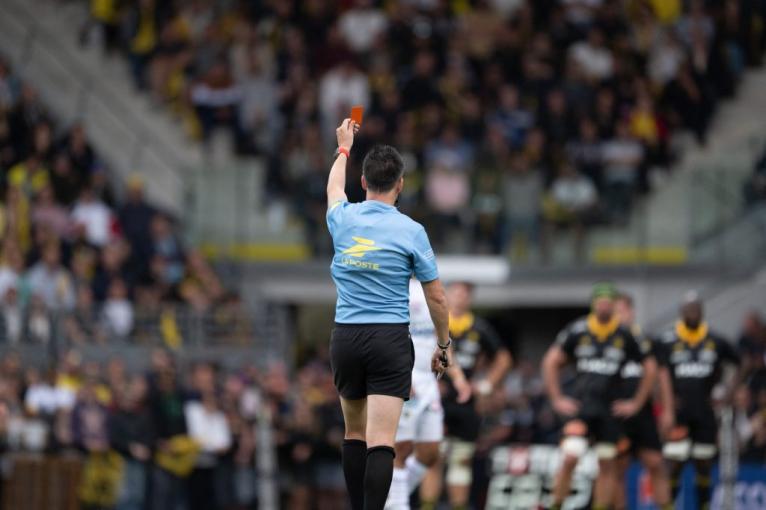
The two 20-minute red cards on the opening weekend of the new Gallagher PREM season show there’s still room for improvement.
There has been a shift back towards emphasising the exciting nature of the physicality in the sport, which seemed to be frowned upon not so long ago, in order to market the product better and that can definitely be a positive, once it’s not at the expense of player welfare.
I’m glad we’re not seeing red cards for innocuous incidents like the one where Rory Scannell ran into Danny Cipriani’s upper arm in Gloucester’s Champions Cup defeat at Munster seven years ago but it does feel like we’ve gone too far in the opposite direction now.
I think we all understand the reasons for the law trial, and it is still a trial at this stage even though it’s being used in an increasing number of competitions, but I’ve never agreed with those who believe red cards ruin games.
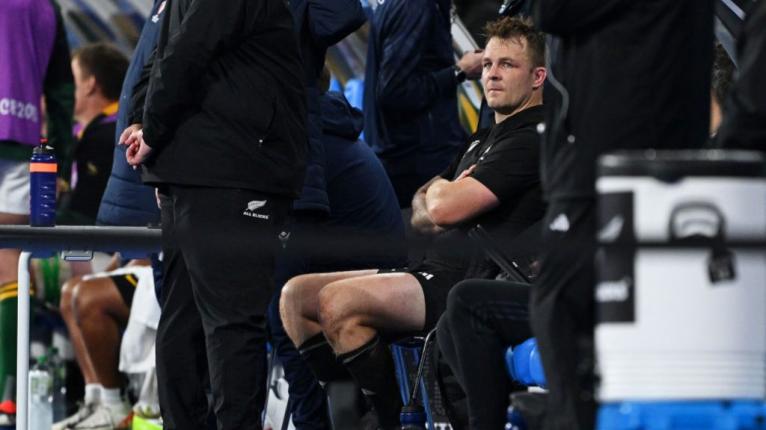
You only have to look at the biggest game in the sport and what happened after Sam Cane’s 27th minute sending off in the 2023 World Cup final for New Zealand against South Africa to see that isn’t the case.
There are other reasons for the change, of course, but I just don’t think it’s enough of a punishment, it certainly isn’t as big a deterrent for players and we are still looking for them to change their behaviour and tackle technique.
Nathan Michelow’s red card on Friday night was a case in point as Saracens are able to keep it tight for 20 minutes and then return to their normal game plan after that. As it happened they managed it particularly effectively and were ahead when the numbers were level again.
Who knows if Newcastle Red Bulls would have won the game under the old laws and that isn’t really the main point but I think if an offence is worthy of a red card, then the team should be punished fully and not just partially, while the individual remains sidelined.
In Michelow’s case, you can certainly argue it was “deliberate or intentional” but that is somewhat subjective and the wording means we’re hardly ever going to see a red card that isn’t just for 20 minutes.
You hardly ever see an obvious bite, punch, gouge or other such act in the modern game with cameras covering every angle and I think referees are, perhaps understandably, going to err on the side of caution for all other offences now.
Decisions shouldn’t be made based on the outcome either but Michelow’s lifting of George McGuigan’s leg and putting him down on his neck could have resulted in serious injury and that’s surely deserving of more than a 20-minute numerical disadvantage.
The wording is definitely an issue for me in the PREM version of the law trial and perhaps if the word reckless was included in relation to issuing a full red card, it might help the situation.
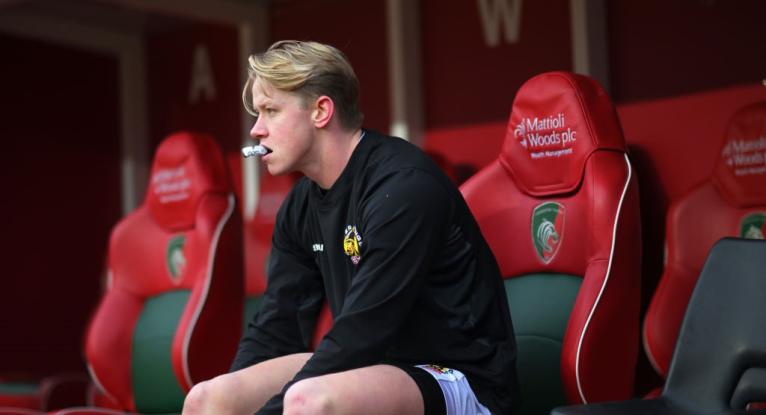
If that was the case, the other red card in the English top flight at the weekend wouldn’t have been considered a 20-minute one either as Josh Hodge was out of control in his high tackle on Sam Graham in Exeter’s draw at Northampton.
Consistency is what everyone is after when it comes to officiating and it doesn’t help that various leagues have differences when it comes to both the wording and implementation of the 20-minute red card either.
In the URC, permanent red cards still apply where foul play is highly dangerous, intentional, or “always illegal” so a shoulder to the head with high force and direct contact or a very dangerous clear out will still be met with a traditional sending off.
The URC also has the system whereby the referee can show a yellow card with arms crossed above the head, allowing the TMO time to upgrade it to a red if necessary, whereas the decision has to be made at the time in the PREM.
We saw that in action on Saturday when Giovanni Licata was given a yellow card in the 16th minute of Zebre’s win over Edinburgh before it was upgraded to a 20-minute red card.
The Top 14 and Pro D2 have their own interpretations as well and are even using an orange card as opposed to a red one.
In an ideal world, there would probably be a bunker system in place for every game in every league around the world but that costs money and it just isn’t possible at the moment.
It should be possible for everyone to get around the table and agree to play by the same laws though as it isn’t good for players, fans or the game as a whole to have such inconsistencies depending on where in the world you’re playing or watching.
Trials are there to see if the game can be improved, it’s vital to get the wording right though and it shouldn’t be unreasonable to expect everyone to sing from the same hymn sheet.
Former All Blacks centre Ma'a Nonu broke his own record on Sunday for being the oldest player to score a try in the Top 14.
Read Now
Hemispheres collide in the new Nations Championship. Stream live, replays and highlights free on RugbyPass TV.
Join free and tell us what you really think!
Sign up for freeAfter trial in South Africa, the young Californian centre is open to offers and knows the Nations Cup will be a shop window for his talents
Young talent which has made an eye-catching start to the URC campaign is conspicuous by its absence a year out from the Rugby World Cup.
The England enforcer missed 14 months of rugby through shoulder and knee injuries, and after moving to North London, is eyeing a big November.
Hannah has the classic blindside height and build!
I hope you are right Nick, because I like all those other qualities of Lonergan
Unfortunate timing again for Ringrose. Henshaw at 13 and Osborne on the bench?
I actually feel sorry for my step cousin ( Sam Darry )
It’s number of game wins, then points difference, then tries scored.
What a funny ragebait, congratulations xD


 Clear
Clear 


 Copy link
  Facebook
  X/Twitter
  WhatsApp
  Messenger