
Trying to plot a way forward for Welsh rugby is nothing new, as all who sat through the six-hour session that passed for an emergency general meeting of the WRU prior to the establishment of regional rugby might testify.
NEW: Follow Your favourites in the App 📱
You can now follow their favourite teams, tournaments and players in the RugbyPass App!
Indeed, those who long for immortality might be tempted to reconsider if they were able to time-travel back to that Sunday in Cardiff in 2002. Earnest speeches followed earnest speeches, motions hurried after motions, votes came and went with bewildering rapidity. When rugby’s version of War and Peace finished, there were still some who seemed unsure what they had voted for or if a clear path to betterment had been mapped out.
In earlier times, former Wales captain Mike Watkins had offered a far simpler course to perceived clarity. “What’s the future for Welsh rugby?” he was asked during his reign as national skipper. “Over to The Angel for a lot of pints,” came the reply.
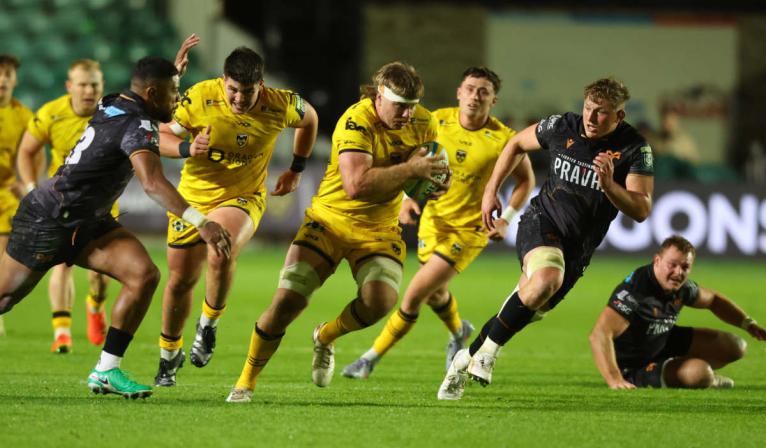
Can we say the WRU in their current guise have identified the right route out of the mess the Welsh game finds itself in? No, we cannot. Possibly, when they ponder matters as heads hit pillows last thing at night, even those driving the exercise to slice away a quarter of the regional game as we know it might not be 100 per cent sure they are making the correct call.
There are still hurdles to overcome in the process, after all, not least over the amount of control the governing body want over the regions, while no-one can say for sure that doing away with either Ospreys or Scarlets will assist Welsh rugby’s interminable trek to a brighter future (though the certainty is plenty will say such a move would amount to a swerve clean off the road, maybe pointing to the loss of arguably the Welsh game’s biggest derby as well as noting the potential disenfranchisement of a significant swathe of the rugby public and the historical on-pitch achievements of the jeopardised two).
Well done Welsh rugby. In Beatles terms, we’re canning Lennon or McCartney and keeping George and Ringo.
Dissatisfaction seems to have reached the area where I live, with the talk in the shop where I pick up my Saturday newspaper not of the newly defenestrated Prince Andrew, or, as he is now known, Andrew Mountbatten Windsor, nor even of the upcoming autumn rugby Tests, but of the prospect that one of the traditional western rugby powers in Wales could soon be no more. It would be less than accurate to report that all present agreed the course likely to be embarked upon was the right one.
On social media, too, the mood in some quarters at the decision to have only one professional team covering a traditionally fertile rugby area remains militant. “Well done Welsh rugby. In Beatles terms, we’re canning Lennon or McCartney and keeping George and Ringo,” wrote one poster on X. That may be harsh on Cardiff, who have enjoyed cup success in the regional era, but then so is the de facto move to cull one of the two regions who boast six league titles between them. It is hard to imagine much good coming from such a move.
You felt particularly sorry for Jac Morgan, Wales’ captain but possibly facing the loss of the Ospreys region he ‘loves’, when he attended a recent Wales press conference.
What must be running through his mind? It’s certainly no way for him to head into the autumn Tests, with much the same applying to the other Ospreys and Scarlets players in Steve Tandy’s national squad. There again, maybe all concerned will reason that they are playing for their country rather than for the WRU.
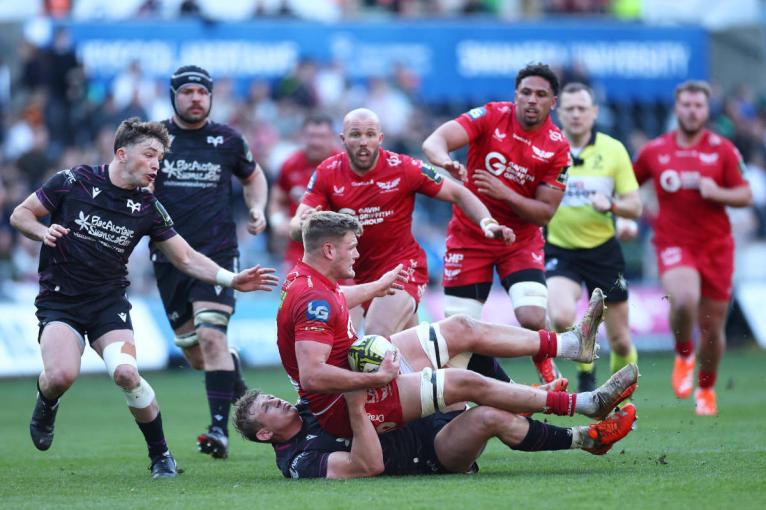
Against such a backdrop, Tandy will lead Wales into their programme of November games, starting with a fixture against Argentina on Sunday. Already, the former flanker has earned high marks for his man-management skills, with players commenting on his approachability and desire to promote a collaborative squad environment. Every one per cent helps, especially when South Africa and New Zealand are among upcoming opponents.
But the new head coach will not be thinking of those two this weekend. Argentina are capable of posing enough problems without Welsh minds straying to challenges further down the line.
The Pumas have beaten the British and Irish Lions, Australia and New Zealand this year, while a month ago they gave a decent account of themselves against world champions South Africa at Twickenham. On their day, they are a handful for anyone.
When the Pumas scrum faced Wales in Llanelli in 1998, they crashed through the Welsh pack like a bulldozer powering through a garden shed.
But they have also yet to completely root out the curse of inconsistency, evidenced by two defeats against a second-string England in the summer and a spanking off the Springboks in Durban in September, when they conceded 67 points.
Their scrum, even in the game against the Boks in London, is a long-haul flight from where it used to be in the days when Mauricio Reggiardo, Federico Mendez and Roberto Grau or Omar Hasan packed down in their front row. Then, the South Americans came close to seeing the set-piece as a symbol of their rugby virility. When they faced Wales in Llanelli in 1998, they crashed through the Welsh pack like a bulldozer powering through a garden shed. It was, reported Jonathan Humphreys later, akin to having “100-head of cattle stampeding all over you – I aged about 20 years in 80 minutes”.
The only people who might have aged a couple of decades in Argentina’s Twickenham date with South Africa four Saturdays ago were the Pumas’ front row of Mayco Vivas, Julian Montoya and Francisco Coria Marchetti as the Boks forced seven scrum penalties on the day. Mind you, Rassie Erasmus’s side started with Ox Nche and Thomas du Toit at prop and introduced Jan-Hendrik Wessels and Wilco Louw as replacements. Opponents facing that crew could be forgiven for wondering whether it was such a good idea to take up rugby in the first place.
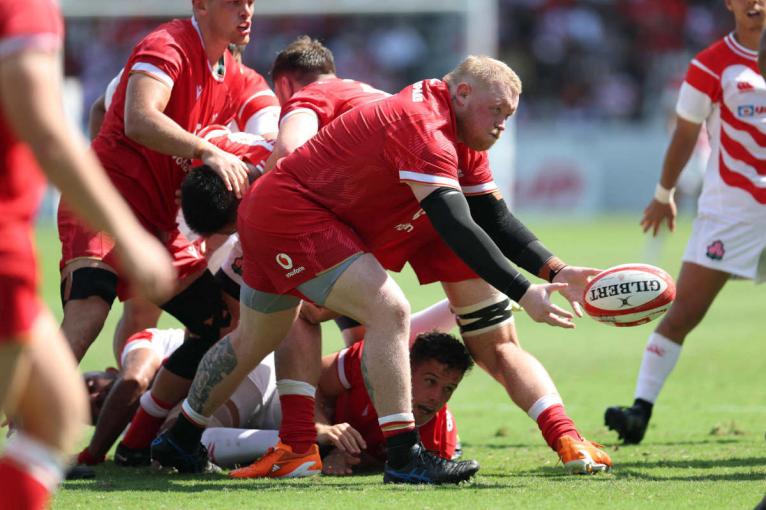
It’s a late submission for Understatement of the Year to suggest Wales don’t have anything like the scrum firepower of the Springboks. Indeed, they found it hard to dominate Japan’s set-piece in the summer, with neither side truly achieving a sustained advantage in the pushing and shoving game.
Tighthead has long been a primary concern for Wales. They took Keiron Assiratti, Christian Coleman and Archie Griffin with them to Japan and the same players were named in the squad for the current campaign. Of the trio, Griffin is widely seen as having significant potential, but he has begun just two Gallagher Premiership games for his club Bath, who have the aforementioned Du Toit and England’s Will Stuart on their books.
Maybe the 6ft 3in, 19st 7lb Wales international can learn much from working in close proximity to the pair, but there’s a strong case for believing he needs to start more games. Whatever, Wales could do with him taking a significant stride forward this autumn.
Suffice to say that at 31, Smith is playing the best rugby of his career. All he needs now is for Wales to get the other side of their scrum right.
At least Wales have Nicky Smith in their ranks, a player who has enhanced his reputation over the past two years with Leicester Tigers. Last month against Bath, the former Osprey underlined his worth with an effort that the Planet Rugby website classed as “utterly ridiculous”. Smith “tore through” Stuart in the scrums, the site noted.
Suffice to say that at 31, the Swansea man is playing the best rugby of his career. All he needs now is for Wales to get the other side of their scrum right.
Tandy could also do with settling down a midfield triangle in the coming weeks. Five starting fly-halves since Dan Biggar retired from Test rugby startlingly highlights the extent of the problem Wales have had in a position once filled by legends, among them Barry John, Phil Bennett and Jonathan Davies.
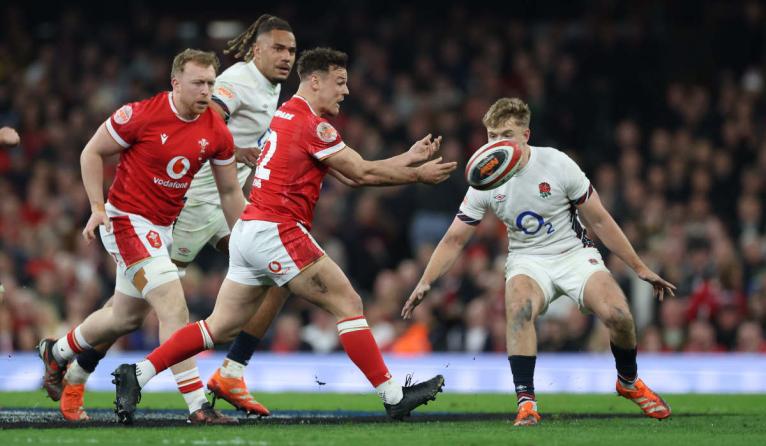
It says much that the coach called up two players who haven’t worn the Welsh No.10 jersey post-Biggar, Callum Sheedy and Jarrod Evans, for the autumn games. Uncertainty rules in such a key position, then, with Dan Edwards also in the mix and the role there to be nailed down.
The challenge will be for one of the fly-halves to assert himself in the coming weeks. It wouldn’t hurt, as well, if a Welsh tighthead gave an unequivocal indication of Test quality and if a centre combination could emerge.
Is it asking too much for a couple of uplifting results, too?
What about a change of tack on wider regional matters?
Memo to self: this is Welsh rugby. Never expect too much.
Plenty will continue to hope, however.


It’s a great shame but the reality is rugby isnt as popular as it once was in Wales and the game is consequently shrinking. All the hand ringing in the world can’t change that. Unless the relentless rise of the vacuous game of Premiership Football can be reversed in Wales there isnt much hope.
Sorry to be Debbie Downer
It seems Rhys Carre is down to start ahead of Nicky Smith. This is to ensure that Rhys Carre is not available to the other home nations when his 3 years expires next year. If you thought Carre was ineligible for Wales, as he is short of the 25-cap rule, you would be right. However, we are talking Welsh rugby here, so anything goes. He is allowed to play as the WRU say that Carre didn’t receive a suitable offer to stay in Wales, even though Carre himself says he did. Another game, another farce. The joys of Welsh rugby!
I didn’t expect Rhys Carre to start ahead of Nicky Smith, who has been in form for Leicester, scrummaging superbly, but it’s hard to second-guess anything in Welsh rugby any more. I can only assume the selectors are trying to add to Wales’ ball-carrying options in the front five. There are one or two other debatable picks, but I guess selection is always subjective. From a Welsh perspective, the hope is they all come off, because if Argentina turn up in the right mood they can be a serious handful.