
Another year and another Bledisloe Cup campaign falls at the first hurdle. Australia fans and the Wallabies themselves have seen this movie so many times before, and the proof remains that it’s the hope that really does kill you in the end.
NEW: Follow Your favourites in the App 📱
You can now follow their favourite teams, tournaments and players in the RugbyPass App!
Frustratingly, for the way it ended, it actually started so well. When the Australians scored first at Eden Park and then withstood the inevitable All Blacks fightback to score again before half-time, bringing a 10-point losing margin back to three, the hope was still very much there.
Yes, this was the first time this year the Wallabies had trailed at the interval, but they have have been in much worse positions at the break in Bledisloe Tests. This time, 17-14 was a pretty fair reflection of the contest, and with the exception of the Wallabies’ 43% possession – which coincidently was all they managed for the entire match – the first-half stats sheet confirmed the same tight contest we saw on the ground.
But trailing at half-time for the first time in 2026 also presented a different mental challenge. Coming into the game, Australia had led at half-time in six of their eight Tests this year and were level with Japan in Osaka, and Argentina in Mendoza. It meant the Wallabies came back onto the field for the second half not already chasing the scoreboard.
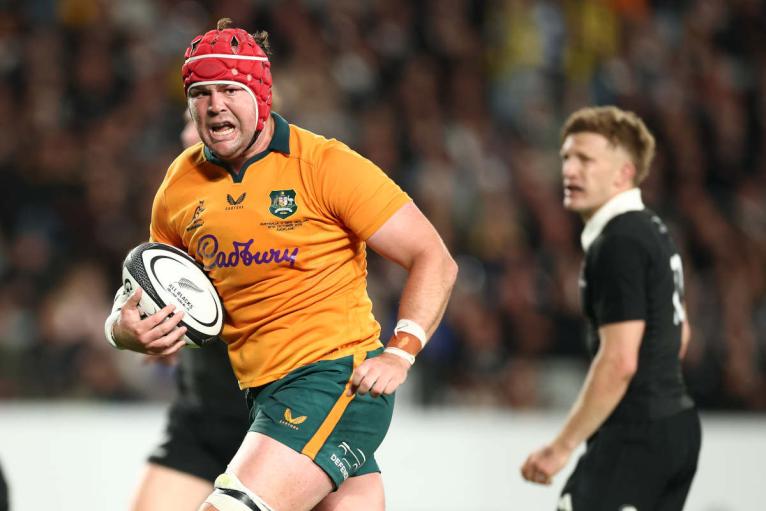
Contrast this with 2025, where they only led at the break in five of their 15 Tests, and only twice in the 11 Tests following the British & Irish Lions series. Only once in that time did they overcome a first-half deficit to win – against Argentina in Townsville – and chasing the scoreboard proved to be something they actually got worse at, despite all the practice, with some large second-half blowouts to finish the year.
And this is indicative of how things played out on Saturday.
After the Wallabies conceded that crucial five-metre lineout obstruction penalty on the New Zealand line, the All Blacks scored the first of their four straight second-half tries within a few minutes.
At precisely the point in the game Australia made most of their replacements, the All Blacks were running in tries. The more replacements the Wallabies made, the more each new player had to try and make an impact in the face of a growing scoreboard deficit.
This highlights the shortfalls of Australia’s playing stocks, and only having four professional teams – at home, at least – from which to pick squads from.
This has been a growing and concerning trend throughout the year, where Australia’s bench has been unable to hold out opposition teams as they hoist the wet sail, and/or have been unable to close out games themselves.
This was the fourth time this season the Wallabies have allowed the opposition to score more points in the second half than the first, and the second time in those four occasions they’ve lost the game.
The way the yellow cards flowed in Perth a fortnight ago, that game could easily have ended in a loss as well, had the game continued for even just a few more minutes.
Unfortunately, this also highlights the shortfalls of Australia’s playing stocks, and only having four professional teams – at home, at least – from which to pick squads from.
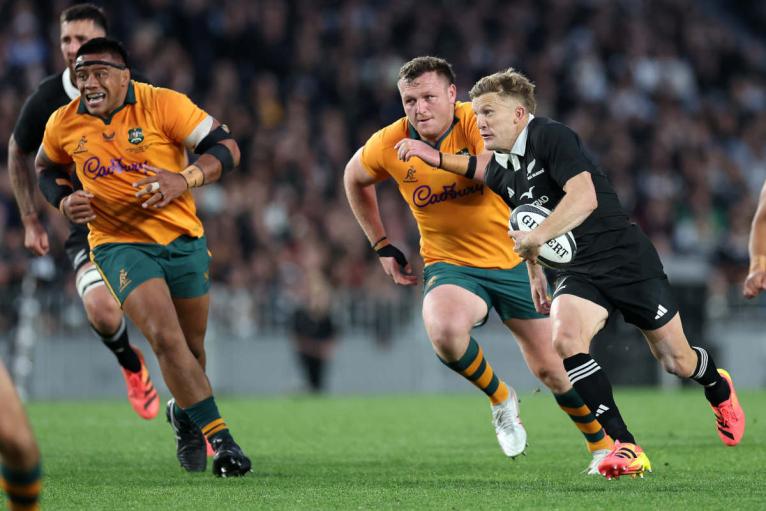
As soon as injuries hit, or the availability of players overseas was compromised – as was the case for Saturday’s game in Auckland – the Wallabies squad and bench depth issues are laid bare for all to see.
Missing from the win over South Africa were Exeter back-rower Tom Hooper and Racing 92 tighthead Taniela Tupou, who, along with suspended Queensland centre Hunter Paisami, account for 129 Test caps between them.
In their place came Isaac Henry (four Tests before this match), Massimo de Lutiis (three) and Nick Champion de Crespigny (five). It’s a significant downgrade.
Australia’s bench brought a total of just 111 Test caps, compared to the 206 on New Zealand’s bench. Five of the Wallabies’ eight replacements had seven or fewer caps to their name, and outside of Tate McDermott (56), none of the other seven had played more than 16 Tests.
It’s not like there is suddenly a mystery group of 10-12 forgotten 30-40 cappers hiding under a bush somewhere; everyone known to be or thought to be of international standard is in the squad now.
The All Blacks’ 33-point second half, to the Wallabies’ five points, was the unsurprising result.
From this match, Len Ikitau (56 caps) will miss the return match in Sydney after failing an HIA, while Jordan Petaia (31), who was curiously recalled for the first time since the 2023 Rugby World Cup and hadn’t played since the end of the French season in June, was revealed on Sunday to have suffered an ankle injury late in the Auckland preparations.
The Wallabies recalled six-Test ACT Brumbies flyer Corey Toole, while his uncapped Brumbies team-mate Kadin Pritchard has also been called into an Australian squad for the first time.
While this doesn’t present a great picture overall, it’s something those throwing the ‘time to bring in some new blood’ trope too often overlook.
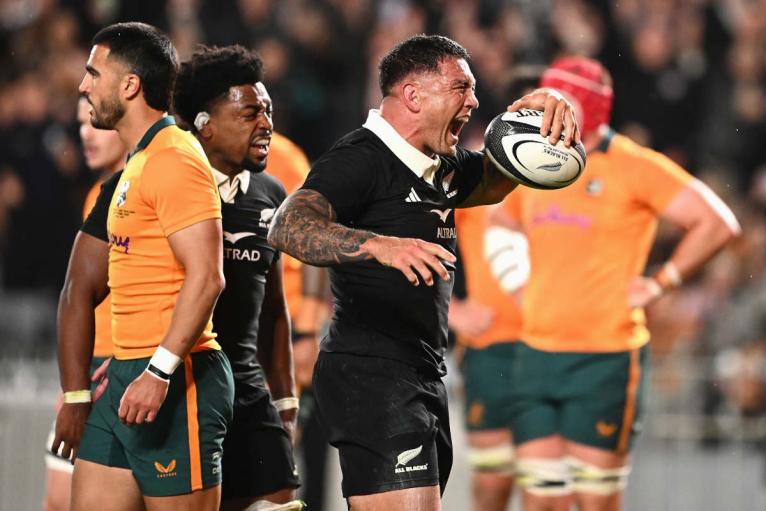
Frankly, the Wallabies bench lacks much-needed experience because of that aforementioned lack of options. It’s not like there is suddenly a mystery group of 10-12 forgotten 30-40 cappers hiding under a bush somewhere; everyone known to be or thought to be of international standard is in the squad now.
Nick Frost has played 38 Tests and Filipo Daugunu 24. Both are in the current squad and could easily come into the matchday 23 for the Sydney Test.
About the only player not in the squad who arguably should be is 11-Test winger Dylan Pietsch. The Western Force flyer picked up a foot injury in Argentina, but returned to action in Super Rugby AUS, scoring three tries in the Force’s big win over NSW in the final a few weeks ago.
Quite why he was overlooked in favour of Toole and/or Pritchard is one of the biggest wonders in Australian rugby right now. He would certainly slot into the current systems a lot easier than the Brumbies pair would.
Kiss has to find a solution. Just hoping the Test rookies will get better at coming off the bench together isn’t going to arrest this current trend of leaking second-half points.
For this week at least, it will be interesting to see how Les Kiss tinkers around at the selection table in order to try and find some bench impact that has been increasingly lacking. Previously, that hasn’t mattered as much, as the Wallabies had built up big enough leads to not get run down.
But with one more Bledisloe Test, and at least a couple of tricky Nations Championship matches to come in November, the Wallabies desperately need to find a way to get more second-half bench impact than they’re currently producing.
It’s not going to come with new personnel; the options just aren’t out there. And experience can only build with time and exposure.
But Kiss has to find a solution. Just hoping the Test rookies will get better at coming off the bench together isn’t going to arrest this current trend of leaking second-half points.

1 YEAR TO GO
The countdown is on until the biggest Men’s Rugby World Cup ever kicks off in Australia. Go All Out and secure your seats with tickets now available!


Comments
Join free and tell us what you really think!
Sign up for free