
Better to travel in hope? That philosophy might serve you well for a fluffy outing to the beach but not when you’re travelling to New Zealand to take on the All Blacks. The only thing worth packing for a trip into the deep depths of a southern hemisphere winter is a little shiver of fear, the sort of elemental frisson that ensures you are permanently on edge, permanently on your guard, locked and loaded for whatever will come your way – and, yes, it does help you know full well what is coming your way – all topped off with a burning desire to show those Kiwi buggers you deserve a modicum of respect.
That’s it. That’s where England need to be as they prepare for the first Test in Dunedin, in a state of heightened emotion, half anxiety, half excitement, about all at stake. Forget the mitigating nonsense being peddled that the All Blacks are under new management, they haven’t played in yonks and yonks, they are without Him and Him and Him (insert a great All Black as you see fit), this is the start of their international season and they are bound to be rusty.
Why, they have even tried to kill England with kindness on their arrival, noting what a jolly splendid job Steve Borthwick has done since taking over from Eddie Jones. This would be the same Borthwick who less than a year ago was in the same oh-for-God’s-sake territory as Gareth Southgate is now, in charge of an England team scuffling its way through a tournament, nicking results, winning games but not hearts and minds. The upturn in English fortunes, and the acclaim for Borthwick, is a recent thing and it is relative to how dull and unloved they had been. English sport across the board is in need of a pick-me-up.
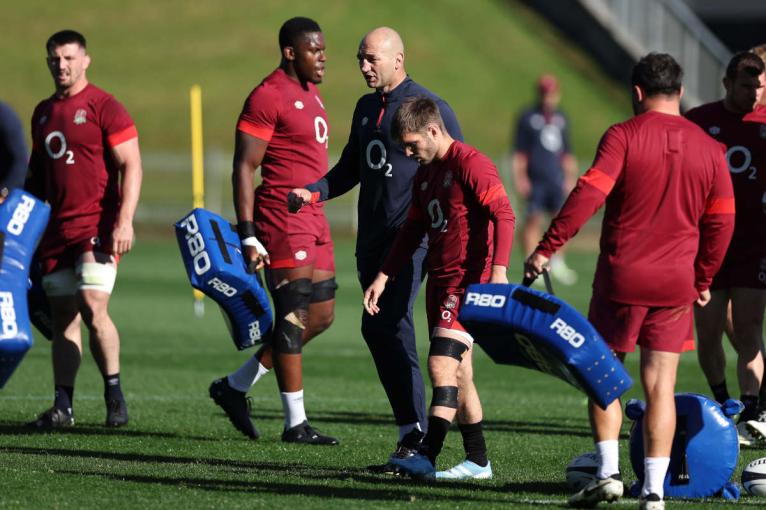
There was a fascinating clip on The Times Ruck podcast this week with Lawrence Dallaglio and Neil Back recalling the mood prior to their Test in Wellington in 2003. We all know how it panned out with England holding strong to win 15-13 despite having bad boys Back and Dallaglio in the sin-bin at the same point in the second half. This was a well established England line-up. This was an England team that had been ranked number one in the world for at least a couple of years. These were the world champions-elect, Grand Slammers who had racked up double-digit successive wins against the southern hemisphere. Yet Dallaglio recalls going for coffee a couple of days before that Test and realising the locals had zero knowledge of just who they were. It was all about the All Blacks. Respect? You have to chisel it from them.
And that’s absolutely as it should be. England are probably in the worst possible position as they contemplate this two Test series (with a third fixture to come in succession at the start of the autumn programme at Twickenham). They are neither completely unknown but nor are they a proven force, a real Cunis as was once said of a New Zealand cricketer, neither one thing nor the other.
The last time England toured New Zealand the squad hardly raised a peep of recognition beyond their own borders. Stuart Lancaster’s selection was compromised by the late-running date of the Premiership final and the crass inability of administrators to find a solution to the clash.
The last time England toured New Zealand (in 2014) the squad hardly raised a peep of recognition beyond their own borders. Stuart Lancaster’s selection was compromised by the late-running date of the Premiership final and the crass inability of administrators to find a solution to the clash. And yet Lancaster’s line-up for that first Test in Auckland almost pulled off the impossible and beat an All Black team which had not lost at Eden Park in 20 years and was on a run of 14 successive victories. Joe Marler was on duty that day. England were unheralded and unfancied yet it took a 78th minute try from Conrad Smith to keep those runs and records intact. Freddie Burns was at fly-half, Kyle Eastmond at centre and England could summon only 299 caps to New Zealand’s 779.
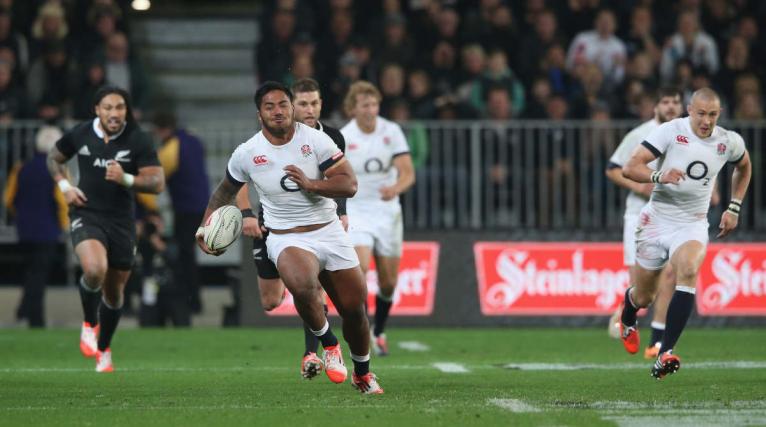
The second was at this Saturday’s venue, the Forsyth Barr Stadium. Again, England almost caught New Zealand on the hop. They led 10-6 at half-time and might have been further ahead but for a tremendous claw-back tackle from Ben Smith on Manu Tuilagi. Then came the All Blacks rattle, that all-too-familiar deluge of scores, a three-try blitz early in the second half, one of those periods of play when the entire team seems to be handled by a puppet-master, strings pulled so everyone is in the right place at the right time, devilishly orchestrated, a symphony in black.
That was as good it got for England with the third Test a 36-13 pasting in Hamilton.
If that scoreline is repeated over the next ten days then the tour will have proven a rude awakening for England. No matter how you might try to box and cox it, the reality is England need to perform to the opening scorelines of a decade ago (a late Chris Ashton try at the Waikato Stadium helped them close at 28-27) for there to be any mitigation in defeat. Defeat is just about acceptable as long as it is close, mighty close, and not of Labour-Tory proportions.
The one thing for certain is the All Blacks will come for them, and come for them hard. That is a given in New Zealand.
The one thing for certain is the All Blacks will come for them, and come for them hard. That is a given in New Zealand. In every match I have ever either covered or even just watched on a casual afternoon over the last 30 or so years, the one aspect about New Zealanders playing rugby is just how intense the play is, be it Test level or schools or even junior club rugby. For all the garlands hung round Kiwi necks for the sharpness of their skills, their passing, their handling, their support lines, their cleverness in making decisions, none of this is as striking as the ferocity with which they compete for the ball. Every ball. The Springboks are renowned for it. The Kiwis ought to be too.
That is what is coming the way of a Ben Earl or Tommy Freeman or Immanuel Feyi-Waboso or Marcus Smith. That is why England should be wary of pleasantries in the build-up. That is why they should not take too much from their eight-try win in Tokyo. That was a useful run-out. Little more.
New Zealand have had a tricky few years, partly Covid-induced with all the attendant fall-out from that, the sense of reinforced isolation, the loss of regular contact with South African sides in particular. The All Blacks need to reinvigorate their public and reclaim their status.
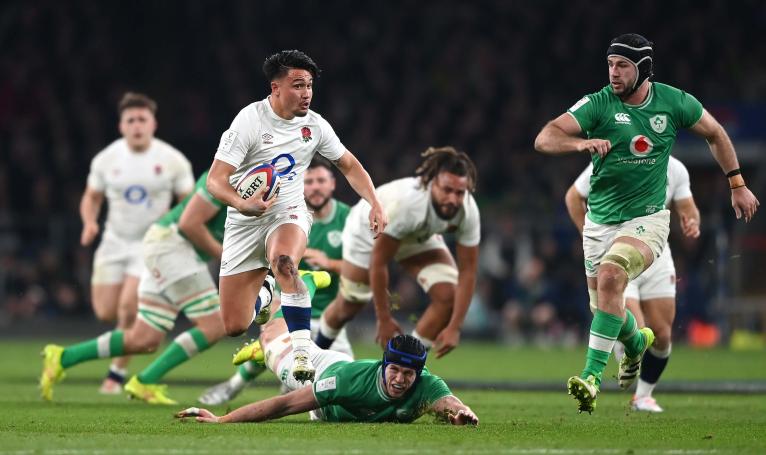
England have had their transitional teething phase. That period is over. Now is the time for the forwards to pack a proper punch. And now is the time for Smith to show he is the man to lead the line into the next Rugby World Cup. No longer the young pup plucked from the Brighton College playing fields, no longer the poster boy, no longer in the shadows of Owen Farrell and George Ford, no longer the coming man.
England have been on a journey under Borthwick. Saturday would be a fine time to show that they have arrived someplace meaningful.
If there is one thing against which the success or otherwise of this trip to New Zealand might be measured against it is in the performance of Smith. We all know he needs a hit-job done by his forwards if he is to thrive, although it will also be interesting to see him scramble and react to adversity. But if Smith does flourish, does manage to play as a Johnny Sexton did here two years ago or Jonny Wilkinson 20 years before, imbue England’s play with direction and purpose and conviction, then the job will be done and the tour can be judged a success.
England have been on a journey under Borthwick. Saturday would be a fine time to show they have arrived someplace meaningful.


Comments
Join free and tell us what you really think!
Sign up for free