
You could sort of understand where Dan Biggar was coming from when he remarked that if Wales’ autumn series had finished straight after the New Zealand game, there would have been lots of positives.
For those whose glasses tend to be half full, the match against the All Blacks wasn’t a complete disaster, notwithstanding that Steve Tandy’s team were on the wrong end of a 52-26 beating. In these chastening times for the oval-ball sport west of the River Severn, it takes more than leaking a half-century of points at home to merit the billing of an authentic Welsh rugby calamity.
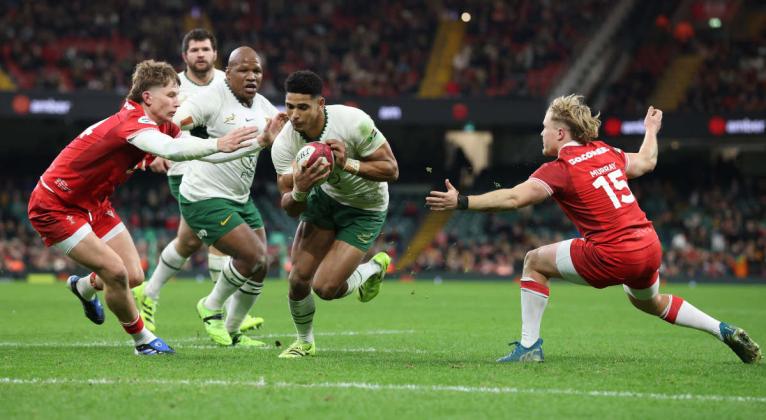
But, glory be, as no one ever said in the old Sawyers Arms in Maesteg on a lively Friday night back in the day: we witnessed one of those tales of sporting woe against South Africa, who didn’t even need to be at their best to carry out a fully fledged demolition job in Cardiff.
Where do we start? The Welsh scrum was regularly crumpled like an accordion, players in the defensive line were frequently scattered backwards and 11 tries were run in as the visitors powered to a 73-0 win. Someone later observed that Wales fell away, but that is to imply they got going in the first place, which they didn’t, really.
We already knew South Africa were a formidable proposition: they pretty much always have been. The mind tracked back to the summer of 1999 when a journalist brought up on the notion that a Welsh victory over the Springboks was one of life’s unattainables reported tears rolling down his face as he heard the news on his car radio that Wales had finally achieved that goal, 93 years after the countries had first met. More tears were likely shed across Wales last weekend, and not just among reporters, and not happy tears, either.
Criticism of the man in charge has been relatively muted – of course it has, with Tandy a head coach rather than a miracle worker. One of his predecessors, Steve Hansen, was thought to have inherited a challenging hand when he succeeded Graham Henry in 2002, after Wales had fallen to home defeats by Argentina and Australia and conceded 89 points to Ireland over two games in the space of four months, but compared to Tandy, the Hansen was operating with the rugby equivalent of a royal flush.
Not only were players of the calibre of Gethin Jenkins, Adam Jones, Shane Williams, Dwayne Peel, Mike Phillips and Jonathan Thomas coming through when Hansen assumed control, but there were also seasoned performers such as Colin Charvis, Robin McBryde, Gareth Thomas, Mark Taylor and Brent Cockbain in place, while Iestyn Harris, a supreme passer of a ball, had switched across from rugby league: so, no comparison, then.
Making life immeasurably harder for Tandy against the Springboks was the unavailability of the 13 players in his squad who play their club rugby in England and France.
South Africa were missing multiple personnel themselves, but they have depth that the Wales head coach can only dream of. Rassie Erasmus has at least five tight-heads to call on who would walk into the Wales side, among them Thomas du Toit and the monstrous Wilco Louw, with much the same applying on the other side of the scrum and in the second row and further back again.
Skill still matters and always will but without strength in an impact sport you will come second. Always.
Shaun Edwards
No, Tandy has to make the best out of what he has got. The question for him now is what he can do to advance matters in 2026. It goes without saying that the bar is set exceptionally low in terms of expectation: 20 defeats over the last 22 Tests has seen to that.
Few will expect him to oversee a water-into-wine job, but he will somehow need to bring about a situation where Wales become more competitive.
His first priority should be to reinforce his pack. “Skill still matters and always will but without strength in an impact sport you will come second. Always.” Those were the words of Shaun Edwards almost two decades ago, and they still apply. Are there significant options out there for Wales? Not too many, but it was heartening to see Mackenzie Martin showing up well for the Dragons against Leinster.
There is still an element of uncertainty about Martin’s all-round game at the highest level, but 6ft 5in, 18st-plus No. 8s who can eat up ground off the back of scrums are not exactly commonplace in Welsh rugby right now, so Tandy could do worse than track the Cardiffian’s progress.
Another back rower with potential is Exeter Chiefs youngster Kane James. He has been part of the England age-grade system but is Haverfordwest-born and was quoted last summer as saying he was ‘open’ to representing Wales at senior level should the chance arise.
You’d consider such thinking wise, given that England boast upwards of 15 major back-row options, as documented in a list put together by RugbyPass in August, not including their France-based players or a crop of promising uncapped youngsters.
Of course, James might surge to the front of the queue, but more chances would likely come were he to opt for the land of his birth. Nothing is decided, though, and we await further developments.
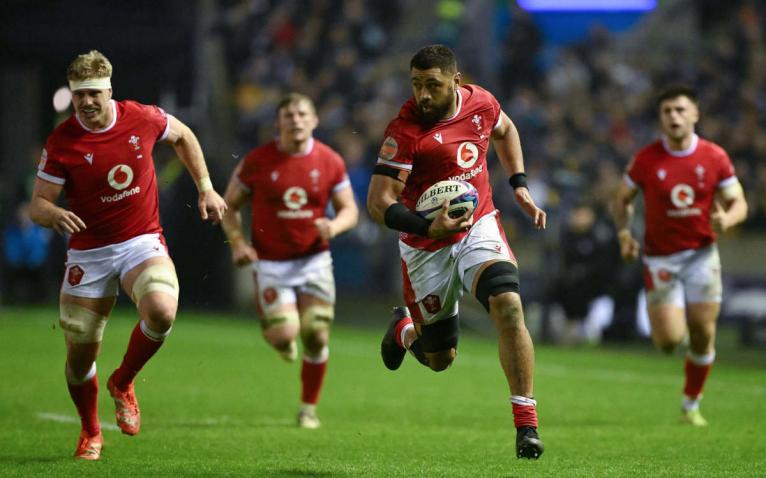
Then there’s the question of whether Wales can keep Taulupe Faletau going until the next World Cup. Injuries have followed the great man around in recent years, but he still more than looked the part when starting for Cardiff against the Dragons in October, making good decisions, appearing in the right areas in attack and defence and wasting zero energy on lost causes, traits that have stamped his career.
Wales have used 10 different midfield partnerships since the last World Cup, but we still can’t be sure that they have found what they are looking for, or indeed what they should be looking for.
And what of other 30-somethings such as Ross Moriarty, Tomas Francis and Jake Ball? Francis has declared himself off limits while playing in France, but the tighthead is in the final year of his contract with Provence. Might it be worth Tandy enquiring about his plans heading into the new year?
South Africa don’t rush to pension off their over-30s. For them, it’s a case of utilising their experience fully while bringing in younger players alongside them. As Wales found last weekend, it’s a formula that works.
But let’s consider issues behind the scrum for Tandy. Wales have used 10 different midfield partnerships since the last World Cup, but we still can’t be sure that they have found what they are looking for, or indeed what they should be looking for.
The return to fitness of Mason Grady and Eddie James adds to the mix moving forward, while Louie Hennessey remains a significant prospect, albeit he is a player still waiting for his chance to show what he can do at Test level, and at some stage Owen Watkin will return from injury.
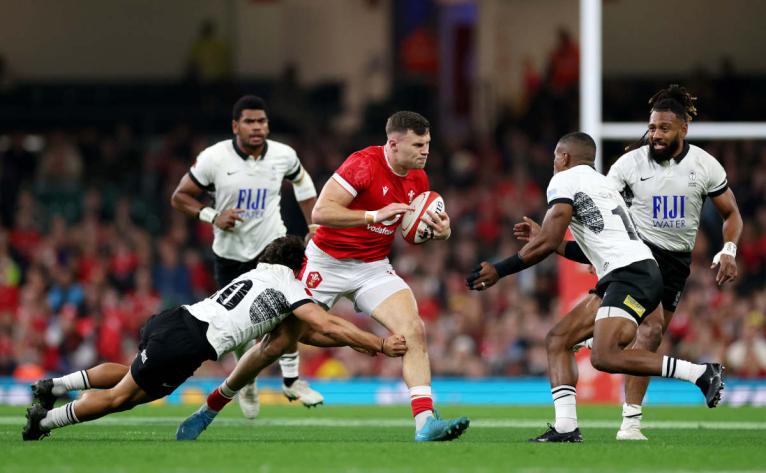
Watkin has attracted mixed reviews over his Test career, but he is powerful and he can defend, something Wales didn’t do fantastically well over the campaign that’s just finished, with 116 tackles missed over four games, a grim statistic if ever there was one.
Talking of unfortunate numbers, Wales conceded 49 penalties and were on the wrong end of six yellow cards and one red in the autumn. If they weren’t quite lawless, nor were they anywhere near consistently law-abiding, and discipline will need to improve in the Six Nations.
So will the Welsh aerial game have to get better. But it’s a quandary for the selectors. They will presumably want to keep Blair Murray in the set-up for his attacking skills, but opponents are peppering the 5ft 8in Scarlet with high kicks.
Nerve is not a problem for him, but when there are significantly taller opponents involved the contests are not being played out on equal terms.
As we all know, there are good reasons why short men are rarely found in lineouts; increasingly, relatively diminutive individuals won’t be found at full-back, either. Could Murray figure out wide? It may be an option, but wings, too, are frequently targets for steepling kicks.
The other big question is whether the WRU can navigate a path through the off-field turmoil that looks certain to ensue in the coming months as the call to close down a west Wales region draws closer.
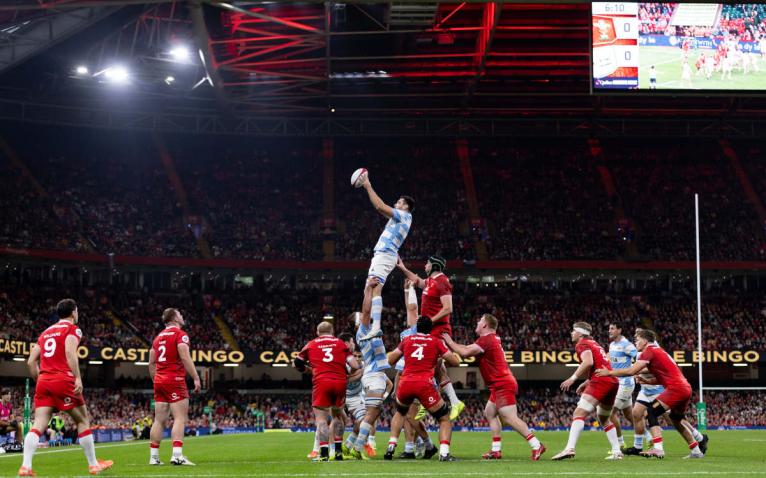
Let’s return to the forwards and in particular the lineout. Dewi Lake has been one of his side’s hardest workers in the recent games, but Wales still haven’t kicked their frustrating habit of breakdowns between thrower and jumper in the opposition 22, one that seems to have been with them on and off since the late steam age, with only occasional spells when things have gone completely to plan lineout-wise.
Of course, the multiple moving parts to a lineout make it difficult to get right, but every one of Wales’ recent opponents boasted a 100 percent set-piece against them this November. It is an area, then, that the Welsh coaches and players need to work overtime on.
The other big question is whether the WRU can navigate a path through the off-field turmoil that looks certain to ensue in the coming months as the call to close down a west Wales region draws closer. Is such a decision needed at all? We’ll just leave that one out there.
But from here, the concerns of supporters at the four professional sides over where the game in Wales is heading appear well founded.
How much time do we have to discuss positives? It shouldn’t take too long.
Tandy will console himself that at some point Jac Morgan will return from his shoulder injury, while Dafydd Jenkins seems to have taken a significant step forward. We also know that Louis Rees-Zammit will cause opponents problems if given ball, Lake’s appetite for hard work appears ravenous and Tomos Williams can hold his own in high-class company.
Alex Mann deserves mention, too, with no other Welsh player putting in more tackles than the 77 he managed over the four games.
Fine personal contributions, but Wales need more as a team. “They say what doesn’t kill you makes you stronger,” wrote union president Terry Cobner in his programme notes for the South Africa game. You wouldn’t expect a former Wales captain, and an inspirational one at that, to say otherwise.
But can we be sure of the sentiment?
Development is key for Wales to make progress, but development takes time. Stability is also important, but it has proven elusive in Welsh rugby for longer than most can remember.
Against such a backdrop, and after last weekend’s pounding, Wales start the Six Nations with games against their 2027 World Cup opponents, England and France.
Sometimes, the fixture gods just don’t play fair.


SA’s depth is so much greater than that of Wales that the difference in quality between SA A and Wales A is not as great as the difference between SA B and Wales B.
When we look at this problem in perspective, bringing players from other countries has never being a solution, I rather say is the begining of a problem no matter what you can fix in the short term. My country, Argentina who now are going threw good results had to go threw a very difficult period in results a had to learn the hard way that took a long and difficult path to get here. I think some top rugby nations will have to have patience, go back to the basics and start again, is the long road but the safest.
In other news today, Wales U18 captain Will Moore has just signed on for the England U18 Men’s Development Camp, in preparation for the 2026 U18s Six Nations Festival in April. Will’s father, Andy, is a former captain of Wales. The exodus is gaining momentum.
That's the elephant in the room. The problem won't be Wales trying to identify talent at schools level, it will be keeping the talent on their own pathways and developing them.
A young Welsh player might target the fact they could get senior caps at 20 but why bother. They've been driven into the ground like tent pegs in their last run of games against tier 1’s.
They are a way off even being a competitive tier 2.
That’s a bit ominous. You’d hope from a Welsh perspective he would decide to commit to Wales when definitive push comes to shove a few years down the line, because he’s a big prospect at outside centre, and it’s not as if England need more players, is it? Sadly, the turmoil engulfing Welsh rugby is not exactly a plus for any young player, with the ill-advised plan to do away with one region, and one of the historically successful west Wales regions at that.