
If Wallabies fans these last few days have found themselves in familiar territory, and a mindset that makes us nervous, it’s because we are.
A few days after Australia’s six-decade, drought-breaking win over South Africa in the cauldron of Ellis Park, Johannesburg, that same nervous feeling is something we’ve endured numerous times before.
It’s exactly like those past occasions where the Wallabies won the first Bledisloe Cup game of the series in Sydney and then had to back it up a week later in the cauldron of Auckland’s Eden Park.
It’s a horrible feeling that lingers in the background because of what comes next – the knowledge and the absolute certainty that there is a reaction coming this weekend in Cape Town, and that the Springboks will be nothing like the team the Wallabies so comprehensively put away in Johannesburg.

In a Bledisloe Cup context, the problem has been resolved in recent years not by actually winning in Auckland, but by not playing in Sydney to start with. Or by New Zealand being kind and not scheduling the return match in Auckland. So sure, it’s a technicality thing.
There’s no such luck this weekend. The game will be played in the shiny and still new-ish stadium in Cape Town, and there will be a South African reaction. It’s not a question of whether it is coming or not, only how extreme the reaction will be.
The real shame is that the Wallabies have to play again this weekend at all. If ever there was a time when fans should be allowed more than seven days to enjoy a win, surely it’s this week. A first victory at Ellis Park since 1963 should be celebrated for much longer than a week. My heart-rate has only just returned to normal levels in the last day or so, because there really was so much to love about a win no-one saw coming.
Nick Frost is fast becoming a world-class lineout thief
He finished the Super Rugby Pacific season as one of, if not the, best winners of opposition lineout ball and carried it through the Lions series to the point the tourists either threw to the front or kept the ball in play. Now he’s rendered arguably the best lineout unit in the world completely ineffective.
The official numbers say Frost won five Australian lineouts at Ellis Park, and another three on the South African throw. But the numbers don’t really tell the full story.
Overall, the Springboks won only 69% on their own throw, losing five of 16, but even so much of the ball they still won was disrupted and slow to clear, because of the work of Frost as Australia’s lineout leader.
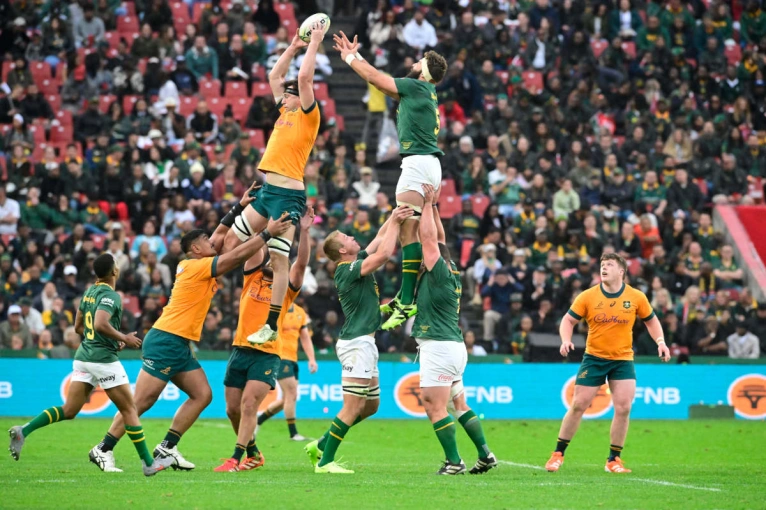
The Brumbies enjoyed great success competing on opposition put-ins in 2025, pressuring their throwing accuracy and jump-timing alike, and winning plenty of free lineout ball in the process. The disruption this causes complements the defensive systems in use and forces opposition teams into hurried exits, or playing differently to their intended method. If this pressure creates turnovers and turnover attack opportunities, then that’s just the cherry on top.
The Wallabies have been building this through the Lions Tests and used it to great effect in Melbourne and especially Sydney. Now they’ve done it to the Springboks, of all teams, at Ellis Park of all venues.
Fraser McReight was the official Player of the Match on Saturday, and it was very well earned, but Frost can’t have been far behind him. He’s now claimed some serious international lineout scalps in the last 12 months, and his combination with Will Skelton appears to be getting better within every match they play.
Breakdown patience became a Wallabies reward
On McReight, it was noticeable that the Springboks ran at him a lot early in the game, replicating old tactics aimed at nullifying the likes of predecessors George Smith and David Pocock, forcing the hard on-ball flanker into making tackles that perhaps reduces their ability to pilfer ruck ball.
But like Pocock and Smith before him, McReight is becoming very good at adjusting to opposition attack, repositioning himself as needed, and picking his moments to fly head-first, hands-second into rucks. Officially, the stats sheet also has McReight down for two turnovers won, but like Frost in the lineouts, McReight’s ability to disrupt goes much further than the amount of actual ball won.
Patience is absolutely a virtue when it comes to the breakdown contest. And Australia becoming more patient is certainly a welcome development.
And a lot this is his great patience. You can see him not hitting this ruck, not hitting this next one either, because he now recognises his moments to attack better. It makes his turnovers won all the more important, because invariably they are in the right moment, and the impact it has on crushing opposition momentum is as immediate as it is clinical.
This is perhaps the lesson for Carlo Tizzano, who is already much improved by this measure. He found out so heartbreakingly in the Second Lions Test that his timing still needs a little bit of work. Not a lot; we’re talking maybe not even full seconds here.
Patience is absolutely a virtue when it comes to the breakdown contest. And Australia becoming more patient is certainly a welcome development.
God bless Nic White’s unnatural box-kick angle
I don’t want to fall into stereotype and put this all down to the… well, let’s be nice and call it the ‘curved nature’ of Whitey’s legs. I’m not going to do that.
But whatever it comes down to, no other scrum-half in Australia, and maybe anywhere, is able to replicate the unnaturally shallow kick angle that White finds in the face of advancing opposition blockers.
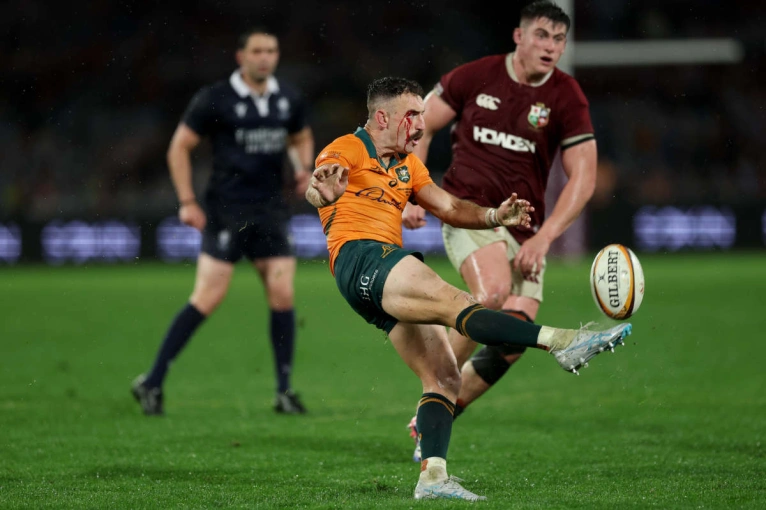
At one point on Saturday, with Eben Etzebeth closing in rapidly, White took his customary left foot step-and-plant and swung his right kicking foot around to create a launch angle of no more than 45 degrees, seemingly kicking the ball under Etzebeth’s armpits. From well inside the Australian 22, White found touch up near halfway, and the Wallabies had yet again exited out of the danger zone.
No-one else can do that. No-one else can keep a launch angle so low, while generating that kind of length. I’m not going to say it’s because of his legs, but it might be.
So many times in Johannesburg, like in Sydney in what was theoretically supposed to be his final Test, White was able to get the Wallabies out of their own end with a box-kick length and accuracy that other Australian nines just don’t have.
White has shown in the last few weeks that his core skills – his pass and kick – remain the best of the all the Australian half-backs.
White is playing with the kind of freedom that comes with an end date in sight. If Sydney was supposed to be his last Test, before Jake Gordon’s hamstring pinged, extending White’s career for at least another month, the 35-year-old is now playing what amounts to bonus international rugby. And what’s more, it’s some of the best he’s played in several years.
It’s all fine and good to push younger, faster players through in front of the veterans, but White has shown in the last few weeks that his core skills – his pass and kick – remain the best of the all the Australian half-backs.
More time at 12 might make Len Ikitau an even better 13
Len Ikitau was a reluctant inside centre at the back end of 2024. Rugby Australia’s prize recruit Joseph-Aukuso Suaalii was going on the UK tour, and Ikitau’s comfortable No.13 jersey was being measured up for him.
Anticipating the change, Brumbies coaches started planting the seed of playing inside centre with Ikitau, and to say he was less than enthused about the idea would be a significant understatement. His logic being that he was such a strong defender because of the extra second he got to look at the coming attack, allowing him that little bit more time to make his read and execute the tackle.
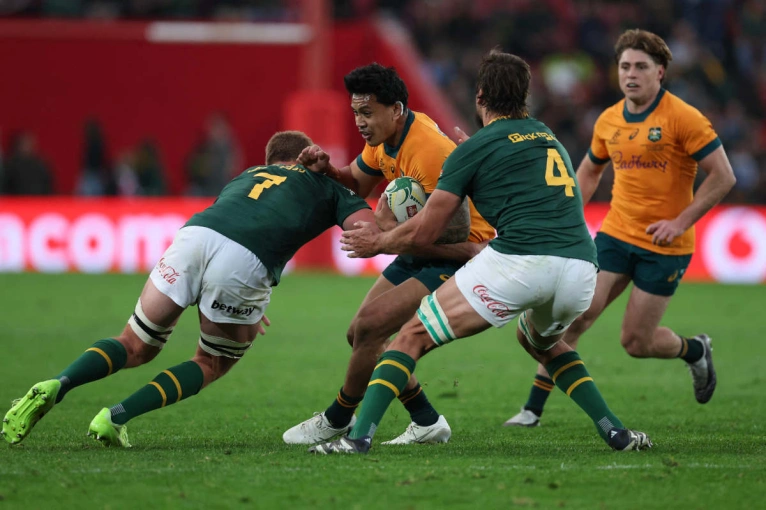
But being the quiet, humble man he is, Ikitau also knows the value of team, and was willing to sacrifice his own on-field comfort if it meant the rugby world could see Suaalii make one of the more memorable Test debuts at Twickenham in that incredible win over England.
To hear Ikitau talk about playing 12 now is a different story. He now reasons that because he knows what he wants from his centre partner, and where on the field he wants the ball in attack when playing 13 himself, he’s well-placed to deliver that from the inside to Suaalii at outside centre.
The Brumbies utilised that more regularly than people may realise this year, with Ikitau regularly playing second receiver in attack, and defending more in the centre channel, too. His combination with David Feliuai become so good, so quickly that the two of them regularly switched and interchanged between inside and outside centre, even playing as rugby league-style left and right centres at times.
He’s teaching himself new ways of playing his preferred position, and his evolution at outside centre in the future could be really exciting as a result.
That versatility, and the gained experience at 12, can only help whenever he does get back to 13, whether that’s for Australia at some point this season, or for Exeter when he finally lands in the West Country.
There was a shift during the Lions series to play through the midfield earlier and get the ball to Suaalii well before the gain line, allowing him to use his athleticism more naturally, which has definitely brought him into games more.
Already armed with great instinct at 13 himself, Ikitau is now finding better ways to feed the outside channels from the inside. He’s teaching himself new ways of playing his preferred position, and his evolution at outside centre in the future could be really exciting as a result.
What about a second chapter?
The Wallabies certainly know the Boks won’t capitulate like that again, and it was instructive to read that a few quiet celebratory beers in Johannesburg were enjoyed while looking at clips and thinking ahead to Cape Town.
They’ll find time to celebrate probably the greatest win of all their careers at a later date.
But they will also know they can gear up for the second leg against the Springboks comfortable in the knowledge that Australian rugby fans will continue to enjoy this incredible, quite unbelievable and completely unexpected win for a good while yet.
And how good would it be to add a second chapter to this remarkable story this weekend?


Comments
Join free and tell us what you really think!
Sign up for free