
Oscar Wilde, one of Dublin’s most famous sons, famously said: “I have the simplest tastes. I am always satisfied with the best.” We have to assume that were the master wordsmith around today, the Wales rugby team wouldn’t quite tick every box for him.
Cutting all concerned some slack, we are talking about a work in progress.
But Ireland? Well, they looked pretty polished when helping themselves to a record away win against England. More evidence is needed to say they have reclaimed their position among the elite, given they were humbled by France at the start of this Six Nations and laboured to a home victory over Italy, but they were superb in winning at Twickenham: accomplished in their passing, committed in contact and impressively together in all areas.
They were quicker in thought and deed than the hosts and had at least six players operating at a different level, none more so than Jamison Gibson-Park, who conducted matters with the skill and authority of André Rieu on a good night at the Wiener Stadthalle.
Let’s suggest there’s potential for quite an examination for Steve Tandy’s team in the match-up at the Aviva Stadium on Friday evening, then.
The Wales head coach has made three changes from the side that started against Scotland, two of them enforced, with Sam Costelow and Taine Plumtree sidelined by injuries and Dan Edwards and James Botham coming in, while Ellis Mee takes over out wide from Gabriel Hamer-Webb.
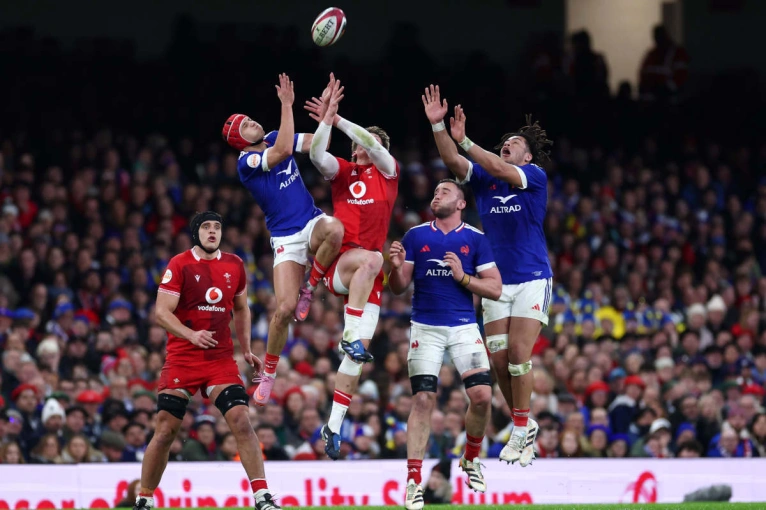
Edwards’ brief will involve not just helping Wales contest the territory battle but also trying to spark their three-quarters. Botham, an early replacement against Scotland, will be asked for largely more of the same after a robust effort in Cardiff, while the 6ft 4in Mee will have an important role in contesting the aerial battle that is sure to unfold, with Ireland boasting a battery of players who are adept at claiming steepling kicks.
It will be Mee’s seventh Test cap. The quiet and unassuming wing can sometimes look like a bloke who has wandered into a game down at his local park, but appearances can be deceptive: he has been a strong performer for the Scarlets, scoring important tries, and anyone who does a decent marking job on Louis Bielle-Biarrey, as Mee did for Wales last month, deserves respect.
But recent history is against Wales, who haven’t won a Six Nations game in the city of Molly Malone since 2012. For Welsh supporters, ‘alive, alive, oh’ has become ‘alive, alive, oh no’. How Tandy will want to correct that this weekend.
He would have been encouraged by Wales’ performance in round three. They may have won just two of their past 26 internationals, but the forward basics were largely in place against the Scots with the Welsh lineout working – three words that haven’t been strung together too often over the past 145 years – and the scrum also functioning well aside from the glitch near the end that saw Archie Griffin concede a penalty.
Yet they still ended up on the wrong side of the result. When he coached Wales, Steve Hansen used to reckon it was easier to go into a Test off a defeat than off a win, presumably on the grounds that there’s more scope for a struggling side to learn lessons.
The hope from a Welsh perspective this Friday is that the improvements evident against the Scots are not undone by an Ireland side who will be feeling ultra-positive themselves after their tuning of England.
But Wales keep finding new ways to come unstuck. Against England, there was a collapse in discipline with four yellow cards and 16 penalties conceded; against France individual errors and defensive mistakes were ruthlessly exploited by imperious opponents; against Scotland, second-half Welsh replacements found it hard to keep momentum going and there were lapses in focus.
The hope from a Welsh perspective this Friday is that the improvements evident against the Scots are not undone by an Ireland side who will be feeling ultra-positive themselves after their tuning of England. And if they are doing their jobs right, the Welsh coaches will have spent the time since the last match reinforcing a number of essentials that Wales will neglect at their peril in Dublin.
Whole-game concentration would undoubtedly have been high on the list of messages Tandy would have wanted to underline, because it matters: it truly does.
A fortnight after the Scotland game, you are still wondering what was going through the minds of the 10 Welsh players who had their backs turned when Finn Russell set up Darcy Graham’s game-turning try with an audaciously quick drop-out after a Jarrod Evans penalty in the game in Cardiff.
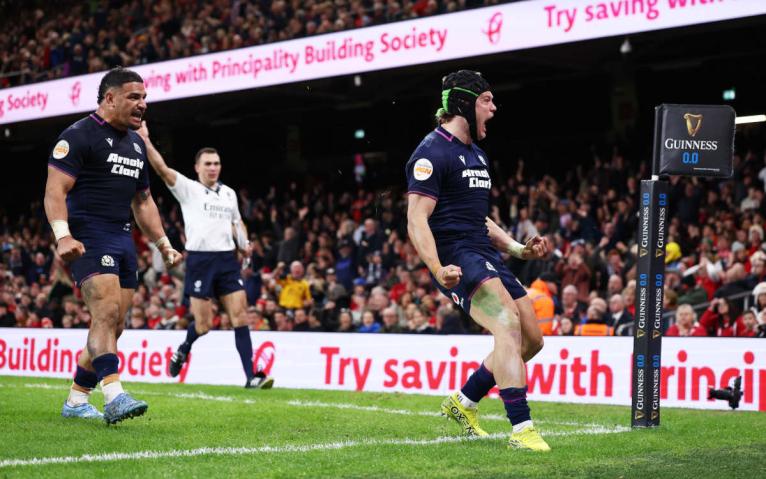
Did Russell need to run through his pre-game warm-up with ‘Expect the Unexpected’ emblazoned across the front of his training top for the Wales squad to realise that here might be a player capable of doing things differently?
The man is renowned for his unpredictability. Possibly, it is written into his DNA. If there’s life on distant planets, all concerned are likely to have heard that opponents on a rugby field shouldn’t take their eyes off Russell for a single second.
Anyway, Wales have to learn from the lapse that cost them so dearly in Cardiff, and learn quickly. In an insightful piece of post-game analysis, Sam Warburton revealed that former New Zealand lock Sam Whitelock had told him at the height of the All Blacks 2010s rugby hegemony that what set them apart was their ability to concentrate for the every second of every game. Tandy could do worse than impart that pearl of wisdom to his players.
Wales defended better against Scotland after their saloon-door effort against France, but they have still missed 75 tackles over three games so far in this championship. For the avoidance of doubt, that’s too many.
From minute one this weekend, the Welsh defence Wales will need to be on the ball, with Ireland having caused England so many problems. Twenty-eight tackles were missed by men in white, testimony to the potency of Ireland’s attack.
Wales defended better against Scotland after their saloon-door effort against France, but they have still missed 75 tackles over three games so far in this championship. For the avoidance of doubt, that’s too many.
No fingers should be pointed at Dafydd Jenkins and Ben Carter, with the locks piling up 44 hits between them in the Scottish match – 22 each, without a single miss. Aaron Wainwright, Wales’ best player in this Six Nations, hauled down Scottish players 18 times (as well as making 22 carries, sending out three passes and beating three defenders – maybe he drove the bus home, too).
But Andy Farrell’s team are immensely difficult to shackle. They weren’t especially elaborate in attack in London, but the man who described simplicity as the ultimate sophistication would have enjoyed Ireland’s A* execution of the basics against the English. In centre Stuart McCloskey they had a gain-line busting player while wing Robert Baloucoune found ways to go around the English defence and Gibson-Park just befuddled it. The running was frequently hard and the passing crisp.
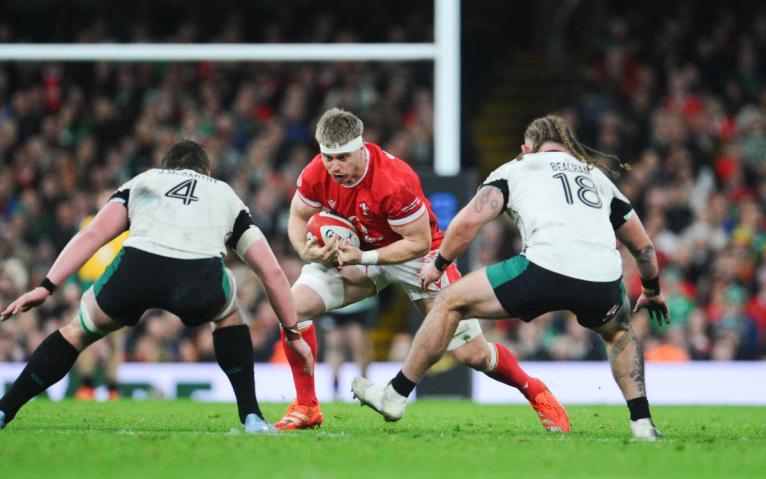
The set-pieces will be important. Not so long ago the likelihood of seeing Tadhg Furlong being fired up into the air at a scrum was probably in the same ballpark as the chances of witnessing Dick Turpin handing out gold coins to travellers on English roads circa 1735.
But, lo and behold, the Lions Test prop suffered such an ignominy in the game against Italy in Dublin. Nor was it just the big man being given a high-rise view of the old city, with Dan Sheehan also lifted clean off his feet.
There were three scrum penalties conceded against Italy and five against England. However you look at it from an Irish angle, those are not great figures.
Do Wales have a strong enough scrum to cause more problems? It would be a big call to be certain on that one, but Tomas Francis and Rhys Carre did well enough against the Scots and Nicky Smith won a set-piece penalty off the bench. OK, it’s not exactly Argentina circa 2014 – Ayerza, Creevy, Herrera and all – but there are signs the Welsh front row are getting their act together.
They have to find a way of countering Beirne, McCloskey and Co at the breakdown and match Ireland’s physicality and aerial prowess while exerting control from half-back.
Ireland will want to test Wales’ new-found lineout proficiency which has seen Tandy’s team return 100 percent efforts on their own throw over the past two games – kudos to the hooker Dewi Lake.
But the Irish caused England all kinds of headaches in that phase of play, stealing a couple of throws and making life so difficult for hooker Luke Cowan-Dickie that he was subbed before half-time. In Tadgh Beirne, James Ryan and Joe McCarthy they have three top operators in the air, while drinkers in any pub that Ronan Kelleher might visit for a quiet half of shandy may be inclined to stay and watch when he reaches for his darts rather than dash for the exits: the man knows how to throw.
So much for Wales to think about, but no one said Test rugby was easy.
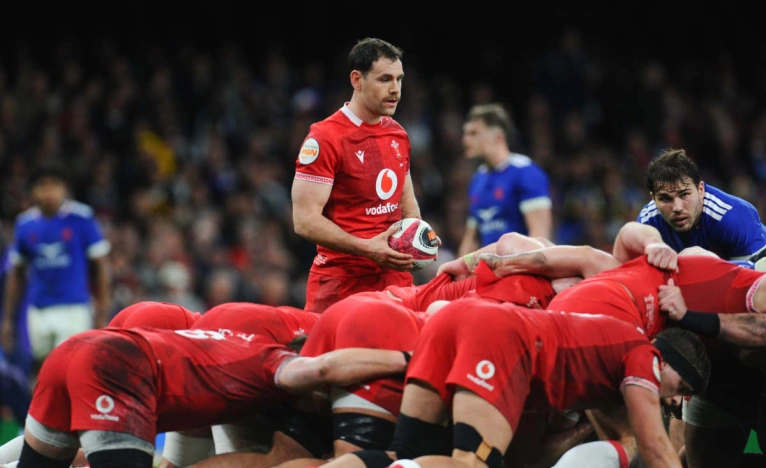
They have to find a way of countering Beirne, McCloskey and Co at the breakdown and match Ireland’s physicality and aerial prowess while exerting control from half-back. On its own, the scrum-half battle between Williams v Gibson-Park should be worth the entrance money alone.
Were the pools panel running the rule over this one, their deliberations would be unlikely to stretch long into the night.
But realists will note the two sides are at different stages of their development.
It’s a case of hope rather than expectation for Wales, then, and perhaps only hope that nothing goes badly awry ahead of the game with Italy in the final round of matches.
A significant challenge awaits.

Create your ticketing account and unlock presale access for Rugby World Cup 2027 now!


The line-out may prove to be the most interesting part of the game. Wales were brilliant in this area against France and Scotland, but poor at the Allianz stadium. Can the line-out function for two games running? Which Welsh line-out will turn up? It’s not quite at travelling French teams for inconsistency, but the Welsh line-out continues to baffle those watching.