
Two’s company, but three is a crowd. It’s an uncomfortable truth, but events at the weekend highlighted the new triangular rivalry at the head of the game only too well. The grand final of the URC will be played out between two teams from Ireland and South Africa, just as it was last season. The All Blacks, meanwhile, have won the tug-of-war for the services of attacking mastermind Tony Brown, at least after his current contract with the Springboks expires at the end of the 2027 World Cup.
Official World Rankings in the App 📱
You can now check the official International World Rankings in the RugbyPass App!
Between the last two World Cups, South Africa and Ireland were the dominant forces in the international game, with the Boks spending 908 days at No.1 in the World Rugby rankings, and Ireland 417 days. There were only 21 days in the entire four-year cycle when one of those two was not leading the pack of chasers.
There has been plenty of extra heat between teams from the two countries at all levels ever since South Africa hoisted the Webb Ellis Cup in Paris, and Ireland won the consolation prize as the only team to beat the Boks en route to the title. Ireland has won six of the last 10 encounters between the two nations over the last dozen years, and even Rassie Erasmus admitted before the 2023 World Cup group game that ‘Ireland is our bogey team’.
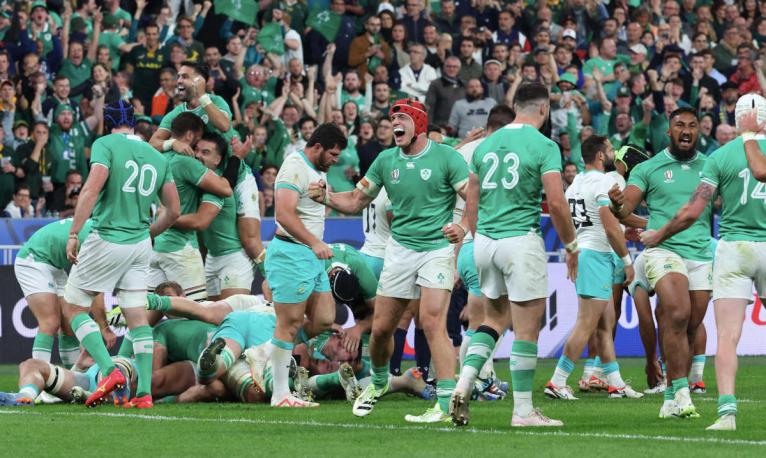
Around 30,000 Irish supporters started belting out the Cranberries’ 1994 anthem ‘Zombie’, orchestrated by senior pros Peter O’Mahony and Johnny Sexton at pitch-side, in the wake of that pool stage victory, then Springbok fans co-opted the chorus with a ‘Rassie, he’s in your head’ revision after South Africa’s triumph in a final Ireland never reached. Right back at you.
‘They are singing our song’. For better or worse, it suggests a complex intimacy in the relationship, a passion powder primed to explode, ready to love or leave. As Ulster centre Stuart McCloskey explained: “We were the top two teams in the world coming into that World Cup. We beat them in the group stages, but they went on and won it, and that probably stoked the rivalry even more. It [the Zombie makeover] is not really craic either. Come on, that’s your own craic. In general, not great craic.”
There was another boil-over at last weekend’s URC semi-final between Leinster and the Stormers in Dublin, with players squabbling in the tunnel at half-time and a ferocious cleanout by Ruan Ackermann on Ronan Kelleher sanctioned by a red card. Last November, James Ryan saw red for the same shoulder-to-head challenge on Malcolm Marx in the game between Ireland and the Springboks. Both Ryan and Ackermann are selfless workers, hard-but-fair, honest-as-the-day-is-long types – but that is typical of the friction these contests now engender. Players tread closer to the edge and there is more likelihood of emotional over-spill.
The recent joust with Ireland is no more than a babbling brook compared to the roar of the river-deep, mountain-wide rivalry between the Springboks and All Blacks. Historically, it is a no-contest.
The more positive face of the love-in can be felt via a regular crossover of coaches and players. Erasmus and Jacques Nienaber cut their coaching teeth overseas in Limerick, before handing on the provincial reins to Johann van Graan, a Springboks supremo of the future. Felix Jones and Jerry Flannery are both men of Munster who have added significantly to South African I.P. in recent times.
The Westerners, along with Ulster up north, became a favoured home-from-home for Springbok forwards in Europe like B.J. Botha, Johan Muller, Duane Vermeulen, Pedrie Wannenburg, Marcell Coetzee, Jean Kleyn and R.G. Snyman. Kleyn went even further, donning the shamrock before he ever wore the leaping bok and a wreath of king proteas on his chest.
But the recent joust with Ireland is no more than a babbling brook compared to the roar of the river-deep, mountain-wide rivalry between the Springboks and All Blacks. Historically, it is a no-contest. The greatest rivalry of all dates back 105 years, to the inauguration at Carisbrook Park in Dunedin on 13 August 1921. That first series was symbolically drawn, one win apiece with the deadlock of a 0-0 tie in the deciding Test in Wellington.
It has been nip-and-tuck, achingly close between the two nations throughout rugby history.
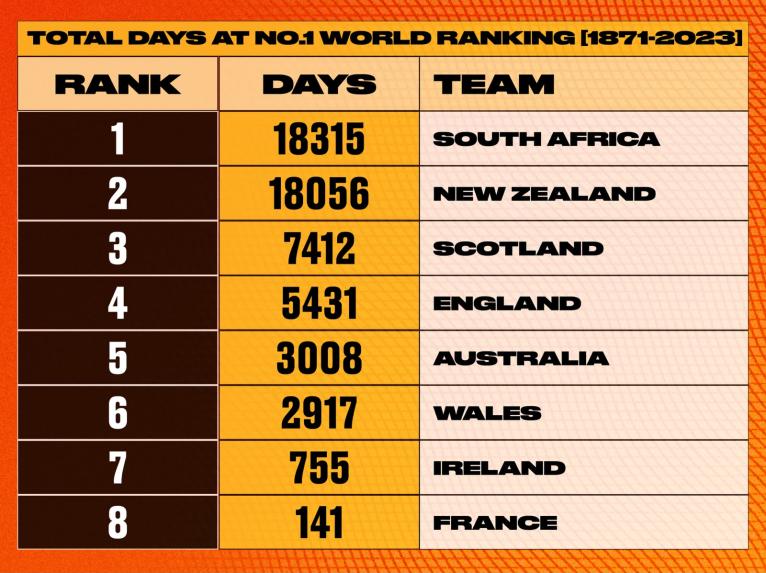
South Africa has won four World Cups to New Zealand’s three, and new head coach Dave Rennie will be looking to even up the score in Australia next year. If Scott Robertson’s All Blacks had a failing, it lay in the uniformity of the coaching ticket, which lacked a feature name with any real experience of the game outside New Zealand. Where Razor’s staff were largely insular and parochial, Rassie’s group is cosmopolitan and international. It features two coaches from Ireland [Jones and Flannery], one from New Zealand [Brown] and a strength and conditioning overseer from Wales [Andy Edwards].
With the signing of Tony Brown after the 2027 World Cup, the All Blacks will be adding a man with intimate knowledge of the dynamic of coaching life under Erasmus, while subtracting his considerable I.P from the attacking component within the Springbok machine Rassie created. It is a proper double-whammy. Brown is widely credited with the development of South African attacking methods since the last World Cup and the rise of the young guns at No.10, like the Stormers duo of Manie Libbok and Sacha Feinberg-Mngomezulu.
Ex-All Blacks’ wing turned TV pundit Jeff Wilson explained on Sky Sport’s The Breakdown the strong impression Brown had left on him during their time together as players:
“He always came up with ideas and I think the really important part about this for me though, is that what Tony does is he makes sure that you understand the fundamentals well, and you execute those well.
“He drives players to have those expectations. So, when they can execute, the skill-set is there. He doesn’t go away from that first. He builds that foundation of the fact that you need to have the handing skills, the kicking skills, the vision for the game.
“What he does do is he motivates his players, and he gives them the freedom to play, and I think that’s the big ticket for me about him; I get the sense I can pull the trigger, that ‘Brownie’ trusts me to go out and play my game.”
Over the last two World Cup cycles, it is Ireland and South Africa who have shaped the trends in the game, with Irish innovations on attack and Springbok developments on defence ruling the roost. The appointment of Brown will finally give the All Blacks the opportunity to make up some lost ground.
In the meantime, the Bulls will enjoy their chance to balance the ledger in the other great modern rivalry, when they face Leinster in an encore of the 2025 grand finale at Croke Park. Not many expected the men from the Northern Transvaal to turn the odds on the casino at Murrayfield last Saturday, but the game proved to be another object lesson in the South African facility at adapting defensive structures to cope with advanced attacking methods over the course of the game.
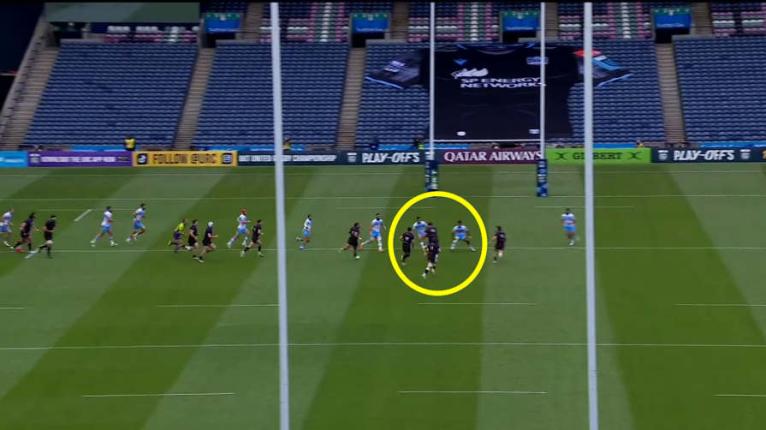
In the first half, the Glasgow Warriors threatened to first overlap, then overrun the Bulls’ rush defence out wide:
— William Bishop (@RPvids1994) June 9, 2026
— William Bishop (@RPvids1994) June 9, 2026
In both instances, No.10 Handré Pollard is off the field on a yellow card but there is a near-suicidal insistence on stepping up-field and implementing the rush defence. That played into the hands of one of Glasgow’s greatest attacking strengths – their ability to run screen plays off both their centres, No.13 Stafford McDowall and No.12 Sione Tuipulotu, on first-phase strikes. Both are exceptionally good at running straight, sitting down the key defender in front of them and transferring the ball as late as possible to the attackers ghosting in behind them.
The principal target is Bulls centre Canan Moodie, who obligingly plants straight in front of first McDowall, then Tuipulotu to give Glasgow the space they want to exploit on the outside. It is like a free donation to Scottish crowd-funding for walk-in tries.
Only a last-gasp intervention by Kurt-Lee Arendse in cover prevented a third rinse-and-repeat in the first period:
— William Bishop (@RPvids1994) June 9, 2026
Moodie bites in, falls down and the Warriors are away and running free on the left.
The success of the Warriors on first-phase attacks changed for the worse after the break:
— William Bishop (@RPvids1994) June 9, 2026
— William Bishop (@RPvids1994) June 9, 2026
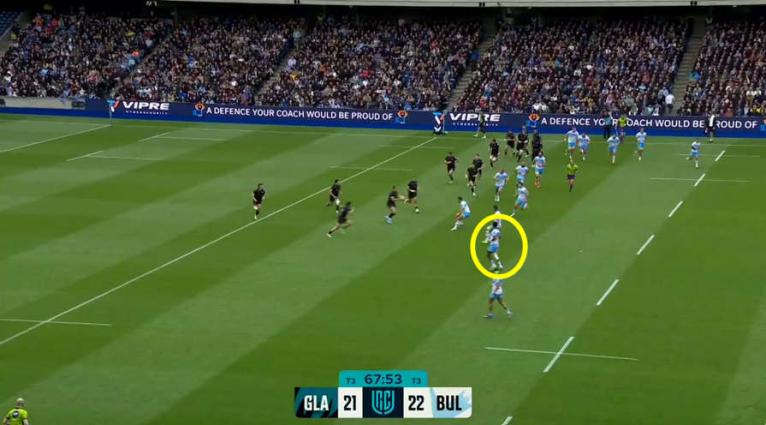
With Pollard back on the field, and Stedman Gans filling in for Moodie in the first example, the pattern of defence has shifted. In both clips either Gans or Moodie are keeping width and playing off rather than rushing up, and ensuring that there is plenty of time to react to the pull-back pass off either Tuipulotu or McDowall. The Bulls No.13 stays in the game rather than removing himself from the equation, and that means turnover ball via the kick or on the deck.
The Bulls won the tactical battle of South African defence versus Scottish attack in the second period and they fully deserved their passage through to the final at Croke Park:
— William Bishop (@RPvids1994) June 9, 2026
Three into two won’t go, as every school-child knows only too well. Andy Farrell has signed on the dotted line to steer Ireland around for the next two World Cup cycles, and Tony Brown will return to New Zealand after coaching the Bokke to the end of 2027. The testy triangle between the Springboks, All Blacks and the men from the Emerald Isle will be alive and well for some time to come. There may be more trouble ahead. If you can’t make them see the light, make them feel the heat instead.
 Register your interest to receive priority updates on RWC27 ticket releases. Don't miss out, stay in the loop!


The All Blacks….Ireland is nothing more than a footnote team. The World Rankings are nothing more than hot-air rubbish. Ireland, good team……No show in the big event. South Africa is watching the ABs at RWC…not Ireland.
Asking if you used the dots correctly, finishing a statement like that normally means you’re deriding his performances. Hope he was good as he deserves it, 100% footballer.
I don’t understand the hesitancy in selecting him, he’s probably the best scrummager of the 3 at the moment with the size to cope with the International game.
He would be my bench option until Will Stuart returns and then bring the other two in when they are ready who will likely be the long term options when they hit the desired size.
🤣🤣🤣
What is remarkable is that both the Kiwis & the Kellys are in the conversation. The ‘much bemoaned’ (initially) ‘reborn’ South Africa (Bok rugby is dead🤪😂) is not the beast of yore. In those days, the playing populations were ‘like’. Now, South Africa has a population of 50m+. And, thanks to the genius of folks like Mandela &, latterly, Rassie, the entire 50m+ have bought in. It is a player juggernaut! (…& Rassie understood that, hence the NFL-style squad, with phalanxes lined up beyond the squad.) The Saffers are actually a bit of the ‘under-performers’…
I think it is safe to say that the Boks’ N.1 rival is currently Ireland, while their past rivalry was with the All Blacks. The All Blacks were a huge competition before, but then Ireland set their feet in the field, and leveled up their competition,
No, I’m pretty sure it won’t too. If he can seriously contend quickly or even win, then he won’t be short of offers at the highest levels. There’s always more to things but if they do make a change on who is top dog down Leinster way, they’d be mad not to roll out the carpet coz they won’t get better…
I’m sure the story won’t end there but not convinced it will take him back to Dublin…
In that case I’m sure you’re right but winds can change direction, and often unexpectedly. Either way it just doesn’t quite stack up for a clearly ambitious mindset that takes him from such success in Dublin, over to Paris and then almost on to Sydney for a World Cup tilt, to conclude in Galway of all places! Nice part of the world but rugby central, it ain’t!
Looks like they are still lukewarm on Afo Fasogbon judging by the latest squad shenanigans!
Ouch! Cut right to the heart of ti there P.
But I doubt the wind will take him in that direction!
What do you mean? He’s only been at Connacht for the current season.
Yes a very strange thing for you to say wasn’t it?
I’ve got no idea what you’re talking about, care to explain?
Obviously talking about 2nd5s.
I got the total opposite feeling drilling into AIs summary, if anything (I guess he was having to weigh up comparable options and only being an AB could make the NH) it was purely the quality of the likes of SBW at the top that he thought he couldn’t beat.
So it’s basically just another Fergus Burke/Harry Plummer (and perhaps we can add Love and Reihana to the list soon) type situation where going out of their way to bring back a big name like Richie Mounga (then SBW) caused the potential loss of the next gen.
Yes Blues were good for depth with Nonu, Moala, and Ahki (a good SR level baller) but had to switch to the likes of Piers Francis later, then the Chiefs ended up using Horrell again, and until Ngani came along Canes had Ray Lee-lo and Halaholo, Crusaders Fonotia and I think just a pure lack of options that had a 10 and 15 used at 12 from one season to the next, alongside Crotty of course. Highlanders had Shaun Treeby and Phil Burleigh, before moving either Fekitoa or Buckmen in further. Plenty of starting options, in 3 of the 5 teams. And with a 18/20 game season, and SBW having 10 full games of those, easily a chance for Aki to cement himself as SBWs backup as 2nd or 3rd choice (alongside Crotty). Of course he’s a realist, and he would likely have had to share the other 10 games and beat out Ngatai and ALB, Horrell, and that’s the security he didn’t like compared to the pathway to Irish rep, sure, but it was only this Chiefs addition of SBW that caused this.
But yes, plenty of options at center sure, Smith, Fekitoa, Crotty, Ranger, Proctor, Seta, with guys like Moala, ALB, Ngatai that could play center just as well. A stark difference between the two highlighted groups.
What’s the source for the table with days each team spent at number 1 of the world rankings?
Weren’t the world rankings introduced in 2003?
see below in response to JD Kiwi.
This is just such a bad take:
Add:
Nonu
Smith
Crotty
Ngatai
To the list above, the midfield depth was wild in 2014.
He had to leave because he wasn’t good enough at the time and no-one thought he would be one as good as he did. His Contracting timing was perhaps unlucky but not the main reason he had to leave.
For example Pita Akhi remained in Super until 2017, and didn’t cement much of a spot so left, still did great things Europe
I think that philosophical side was developed the year we came last. Leading most games for 60 mins and then losing in the final 20 built some emotional resolve and taught us to take defeat with grace. 🤣🤣
Agree on Finn Russell, we are a different team with him in the side. He gets more out of the players around him and makes a difference.
However, the reality was we were not good enough this season, so a summer off and we come back next season and improve. Playing better and improving our game is the only solution. 👍
No one likes being beaten JW but even for a good side it happens about 30% of the time.
You need to learn how to accept defeat with grace and don’t let it impact your emotional state when discussing issues.
Good luck with that. 🤣🤣
Who does, Lowe?
Why would I like being beaten? Afraid you’re going to find yourself stuck on that hill PMCD!
Do you mean in his specific situation or in general? I only know whats shared publicly and the only relevant thing I can remember being said was about family security, maybe shipping around NZ didn’t appeal?
Back in those days those the SR unions had played pretty nice with each other so perhaps it was frowned upon taking someones reserve players, there certainly wasn’t a lot of competent midfielders at the time, lots of guys at the Horrell level (who was contracted at the Chiefs at the time). Very possible the situation was the same elsewhere, where top spots were locked up even if he was better.
You wouldn’t see that now lol I probed AI about the subject, looking for some quotes, it says International rugby was a goal (so at least thought he was good enough for the green, not that it probably matter money wise), which was pretty balsy, given he’d only had 1 season of SR at that point (Tana was his mentor though, so probably told him what he had talent wise). Shows the belief he had in himself. He says he still had the option at Chiefs, so wasn’t completely pushed out. Seems like he was only concerned about money. Reading this you kinda forget how bad Irelands project players schemes were, what a total rort.
Of course soon after that we saw NZR building to the Lions series and retain heaps of talent through till the WC, with the lowest departures ever. I wonder if he just missed out or was a cause for that change?
It’s SA vs NZL nothing comes close🫡🔥🔥
Look forward to the discussion - if I was picking an England back row today, I personally would likely play Pepper (6), T Curry (7) and Pollock (8) . . . . But I actually think Borthers preferred back row is T Curry (6), B Curry (7), Earl (8) with Pepper & Pollock off the bench.
It’s a case of playing around with the combinations to find the right balance but Pepper & Pollock do have a very good ability to play off the bench.
It will be interesting to see how that works out but I also think they need to play Dingwall with Smith (those two work so well together) and try Slade & BJvR and Lawrence & BJvR, so you can see which works best - not sure at this stage, which is why they need game time.
It’s like a world full of nothing but murky swamps P. Mostly upside down swamps 😉
Hard to say atm P, let’s see how get on v France in the first round of the Nations Champs!
Oh how I have missed JW’s words of clarity. 🤣🤣🤣
Does protest too much JW . . . . . just admit you didn’t like being beaten by the better team and then we can all move on. 🤣🤣🤣
Do you think the same thing will happen by RWC 2027?
It felt it was a tactics and selection issue that held them back last season, a few tweaks and I think we could see a very strong AB’s emerge again.
Great article ..Yes the Ireland rivalry is growing by the day ..This can only be good for rugby…But for Ireland to really get a permanent spot at the main table they have to go deep into a World Cup …Those quarter final exits remain a black mark …Also a problem for NZ is the coaching uncertainty which has gone on for quite a long time now..All their main opponents have or are striving towards a stable management team….Even the early announcement of Browns signing is a bit chaotic even I would suggest disruptive..
Yes that is the remaining hurdle, and really Ire needs to get to a WC final to hammer home the point.
Agree about the TB signing, I know they’ve kinda passed it off as ‘everyone else will be staying any case’ - but how must Mike Blair be feeling?
I think it’s the ABs. There’s no bigger rivalry, than that between the two best teams in history.
True but variety is the spice of life!
Pro-sport has allowed the rich to exploit the poor. For example, Brazil's young talent is shipped to Europe at such a young age now they can, if good enough, immediately play for that Euro country. Meanwhile Brazil’s talent pool is eroded, the club’s quality lessened and Brazil becomes just another football country without the flair that won them W Cups and attracted millions of fans, including me.
The UK, Ireland and France are doing the same in rugby but without paying any transfer fees or anything! 😒
Yez it has and France particular have recuited heavily from Aussie at age group level and into their academies….
Nice work 😀
He was a major improve, we were languishing at around 60% off the tee but he came in and knocked them over at around 85%!
A proper tank Bazz!
Great game - both sides emptied the tank and gave it their all but some incredible performances in front of Borthers. Great game. 👏👏
It is but legit guy who can play 10 outwards handy off tee as well
It was really 2 seasons of it NB hands let him down at times but once he got his confidence extremely hard to handle
Yes we’ve plugged him into 13 and emergency 10 this season, tho I think FB is his best spot!
Yep I watched the Lehopa Leota tug of war one develop up close in Paris!
Going to have a look this morning, was out last night P. Looks like the Prem at its best!