
Casual observers of the United Rugby Championship may not be overly surprised to see a Scottish team heading up the table after the opening three rounds of the new campaign. Glasgow, after all, have been a familiar presence among the top four under Franco Smith, winning the title in 2024, leading the league for large chunks of last term and finishing top of the pile after the regular season.
NEW: Follow Your favourites in the App 📱
You can now follow their favourite teams, tournaments and players in the RugbyPass App!
But Edinburgh? The maddeningly inconsistent, perennial under-achievers across the other end of the M8? Even to those who follow the competition assiduously, the presence of the Scottish capital outfit out front, with a 100 per cent record from three games, elicits a double take.
Breathing the rarified air at the top of the log, looking down on the rest, is uncharted territory for Edinburgh in the URC era. It is their best start to the season since 2015-16, when they won their first four games in the old Pro12 before losing the next three.
Your top eight, three weeks in 👀
Who’s going to be top of the log after 18 rounds though?
#BKTURC #URC https://t.co/8sL8Z9f2Gi
— BKT United Rugby Championship (URC) (@URCOfficial) October 13, 2026
Remarkably, they have reached this lofty early-season perch despite starting the campaign with 16 players on the injured list, including leading lights such as Darcy Graham, Duhan van der Merwe, Wes Goosen and Grant Gilchrist. Marquee signings Riley Higgins and Louie Chapman do not arrive from New Zealand until next month.
We are, of course, only three games into an 18-game league season. There is a loooong way to go. And this is Edinburgh. There have been false dawns before. Eleven years ago, after kicking off with that four-match winning run, they finished ninth with 11 wins and 11 defeats, 15 points adrift of the top four. Even long-suffering supporters won’t be lobbing too many wagers on them still being top – or even in the top four – come mid-May, when the regular season wraps and the play-offs begin.
But there is a tangible sense of optimism in the autumnal air of Auld Reekie, a feeling that something might finally have shifted in the direction and mindset of a well-resourced squad laden with international talent but which has conspicuously struggled for too many years to resemble anything approaching the sum of their parts on a consistent basis.
The contrast with a year ago could not be starker. Three narrow defeats in their opening four league matches immediately put Edinburgh on the back foot in Sean Everitt’s third season in charge and they never really recovered, trailing in 12th, 16 points off the top eight. This was after expectations had been raised by a late surge into the URC play-offs in 2024-25 – ending in quarter-final defeat by the Bulls in Pretoria – and a run to the European Challenge Cup semi-finals – stifled by Bath – following a 10th-placed finish in the South African’s first campaign.
Regardless of how many of their star-studded squad Toulon choose to bring across the Channel, Edinburgh will fancy their chances of maintaining their winning streak and adding another European win over the men from the Mediterranean to their collection.
The momentum of an impressive Champions Cup win over Toulon in early December was instantly snuffed out by a crushing 33-0 loss to Castres a week later. After back-to-back festive derby defeats by Glasgow, Everitt’s job looked on a shaky peg but the South African was handed a two-year contract extension in January, to the surprise of many.
Toulon, struggling to get going in the Top 14 with two wins out of six, are the visitors to The Hive again on Friday as European competition resumes, this time in the second-tier Challenge Cup. But now the hosts are not in desperate need of a momentum-changing result to kick-start a floundering season. It is already up and running and alive with possibilities.
Regardless of how many of their star-studded squad Toulon choose to bring across the Channel, Edinburgh will fancy their chances of maintaining their winning streak and adding another European win over the men from the Mediterranean to their collection.
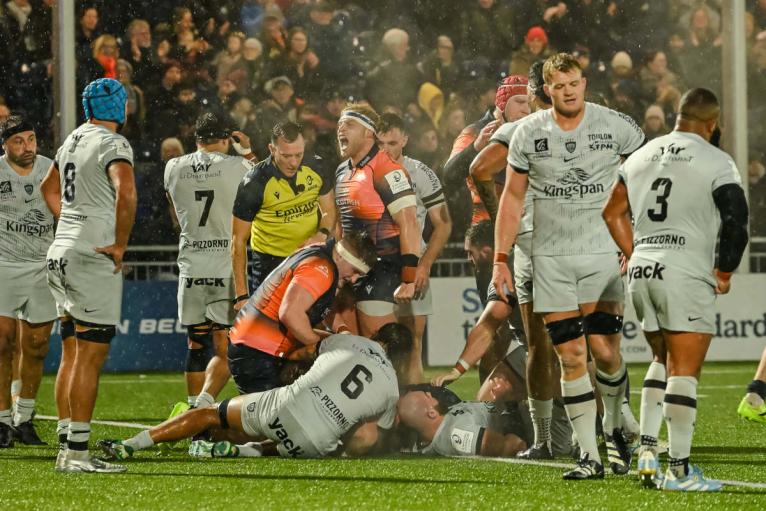
After this weekend’s one-off round of European competition, their next two URC matches are at home to the Johannesburg Lions and away to struggling Benetton, before a rump of players head off for Nations Championship duty in November. Their league campaign resumes with a home game against Dragons in early December before a second Challenge Cup fixture away to Top 14 bottom dogs Vannes.
It is a kindly fixture list for the opening third of the season and if tougher challenges await over and immediately after the Six Nations window, Everitt’s side have a wonderful chance to maintain their early momentum into the Christmas period at least.
New assistant coaches Tim Sampson and Brad Davis have bedded in new systems in attack and defence, and confidence is high on the back of three contrasting wins over Ulster, Stormers and Zebre.
The injury list is also easing by the week. Scotland hooker Ewan Ashman and lock Marshall Sykes returned last week. Wing Darcy Graham, initially expected to be out until December with a bicep tear that has mercifully proved not as serious as originally feared, could even be back this week. Evergreen lock Grant Gilchrist is also in the mix.
When you look at successful teams, there’s always going to be a heartbeat of the team or a core group of players that bring you through. At the moment, those youngsters are delivering.
But such has been the progress of an emerging crop of talented young thrusters and the consistent form of some more seasoned pros that the fit-again international contingent are not automatically guaranteed to walk straight back into the side.
“You’ve got to manage it quite carefully and look at the team dynamics as well,” said Everitt. “When you look at successful teams, there’s always going to be a heartbeat of the team or a core group of players that bring you through.
“At the moment, those youngsters are delivering. They’re very tight as a group; they get on well. The seniors coming back in have created competition so it feels like there’s a bit of an edge to us during the week.
“That edge is obviously necessary for us to perform at the highest level and to perform every day. The youngsters have brought the energy and on top of that they’ve brought performance, which has created depth in our squad.”
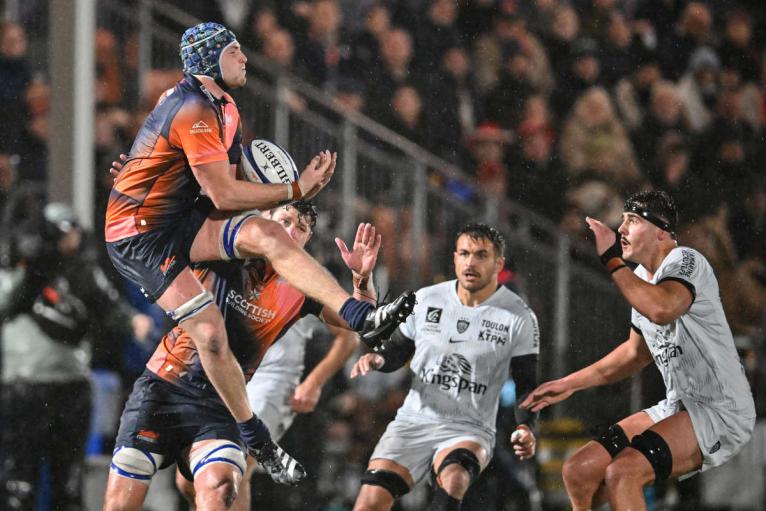
Leading the charge of the young brigade are back-row duo Liam McConnell, 22, and 21-year-old Freddy Douglas, who already have two and three Scotland caps respectively with the promise of many more to come. Tighthead prop Ollie Blyth-Lafferty, 20, could join them in the senior Scotland squad for the November Tests when it is named next week.
“We started this growth process within our group about 18 months ago,” noted Everitt. “We started playing the youngsters last year. Freddy had 18 games (including 11 starts), Liam had 18 (15 starts), ‘OBL’ had 15 games (10 starts), [wing/full-back] Jack Brown had 12 games. So this is all coming to fruition now and the guys are doing well.
“What I work on is consistency and obviously getting a positive start compared to last year does make a difference to the mood in the camp. We also know that winning is a habit, so it’s important for us to continue along this path.”
The first steps on that journey were achieved in spectacular style with a stunning opening bonus-point win over Ulster in Belfast, when a new attacking philosophy installed by Sampson bore instant fruit. The Australian admitted some of the rugby Edinburgh played in surging out to a 34-5 lead early in the second half was a “bit of a dream”, with their third and fourth tries (finished by Hector Patterson and Piers O’Conor respectively) both gems of heads-up, ambitious rugby showcasing speed of thought and foot, sleight of hand and delicious timing.
It’s another superb @EdinburghRugby try! 🏰
Piers O’Conor goes over this time and the visitors are fully in control 👊 https://t.co/OMIpbI6MEC
— Premier Sports (@PremSportsTV) September 25, 2026
“With the structure Tim’s brought in, I feel like we’re getting our dangerous backs ball in hand, our big forwards ball in hand in the outside channels and we’re finding space better,” said O’Conor, who after a largely ineffectual first season deployed mostly as a stand-in centre has become increasingly influential, hitting intelligent lines from full-back in Goosen’s absence.
“It just seems to be freer flowing and I think we’ve been able to unlock weak edges or open spaces and we’re seeing that way better,” said the versatile former Wasps, Bristol and Connacht back. “It’s now an exciting brand of rugby that we’re playing.”
The energy and athleticism required to play at a faster pace, for longer periods, plus the physical stamina and resilience to repel the late Ulster fightback and then dig out a far more confrontational win over Stormers in wet conditions in Round Two, owe much to a pre-season programme designed to embrace this new philosophy on both sides of the ball.
Whatever the benchmark was from the season before, we’re going above and beyond that… I think we look fitter; I certainly feel fitter.
“A huge part of our preparation, our training, our meetings with the S&C coaches and sports science led us to make sure we get those training numbers right to meet the game expectations around ball in play, long passages of play, collisions, all that,” Sampson noted. “It’s very thorough and there’s no place to hide for the guys.”
Not that the players appear to mind, given their summer labours are already reaping a rich reward.
“Whatever the benchmark was from the season before, we’re going above and beyond that and I think you can see the work the boys have put in,” added O’Conor, who has carried the ball 40 times in three matches, the third-highest in the URC. “I think we look fitter; I certainly feel fitter. This is some of the best I’ve felt in a while. The S&C and performance staff have done a great job.”
The early-season stats back up O’Conor’s view. Edinburgh’s post-contact metres are way up, they are breaking more tackles, beating more defenders and crucially, their conversion rate in the opposition 22 has also improved.
Last Saturday’s display in Parma, against a Zebre team they had beaten only once in their previous four meetings, might have been a more prosaic affair but the relative ease with which they shook off a shaky opening quarter to dominate the rest of the match, despite having to negotiate a second yellow-card period, bodes well.
Bradbury saw a speed bump. 🔥 Watch it all unfold LIVE on Premier Sports 👀 #BKTURC #URC | #ZEBvEDI https://t.co/Qs7pa5vok6
— BKT United Rugby Championship (URC) (@URCOfficial) October 10, 2026
As did the ruthless edge shown in nailing down a bonus point with the last play of the game, a classic penalty-to-the-corner, well executed lineout and driving maul routine that put the seal on a satisfactory Italian job.
Edinburgh only managed a try bonus-point in six of their 18 URC games last season, down from nine the previous year, so a second in successive away games was a positive sign if they are to sustain a credible challenge for a top-eight, or even top-four, spot.
James Grayson’s goalkicking (13/16 so far), improving last season’s 62 per cent ratio to 81, has helped, while set-piece solidity has also been crucial. Edinburgh’s lineout has enjoyed a 100 per cent success rate from 27 throws in their last two matches, as well as destroying the Stormers touchline operation (stealing nine throws) in Round Two, in which the outstanding McConnell and the doughty Glen Young played leading roles. Their scrum (14/15 won) is also going well.
If our attack isn’t functioning, we need to lean back into our defence and vice versa, so this whole thing is continually moving together. The most important thing is winning the football game.
If a new defensive operation marshalled by the experienced Davis slipped slightly from a 90 per cent tackle completion rate against Ulster to 88 against Stormers and 84 against Zebre, a total of 54 points conceded in three matches in the current attack-dominated era represents the joint-best record in the league so far.
“It’s not about one coach and the aspect he coaches,” the Aussie explained recently. “That’s not how the game works. It’s about a group of coaches and everything works in a cycle. Our defence serves our attack to work in transition. If our attack is humming, it means we don’t have to tackle as much. Our set-piece serves the launch of our attack. If our attack isn’t functioning, we need to lean back into our defence and vice versa, so this whole thing is continually moving together. The most important thing is winning the football game.
“I’ve been really fortunate that every team I’ve been asked to coach has been really attack-minded. At Wasps at that time [from 2013 to 2016] we had guys like Elliot Daly and Christian Wade, some amazing attacking players. Defence wasn’t really high on our priorities, but we made it work.
“We finished top fours and top threes. The same at Bath. Same at London Irish and the same at Queensland Reds. Our job in defence is to be as resilient and tough to break down as possible, to put pressure on the opposition and achieve turnovers so that we can win games and lean into it. The boys have been really committed in delivering that.”
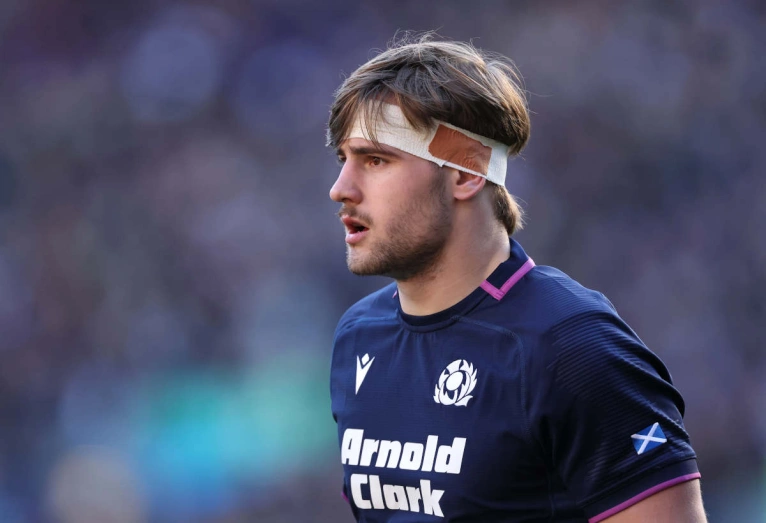
None more so than young openside tyro Douglas, who has already claimed a league-leading eight turnovers in the first three rounds. Skipper Magnus Bradbury has also chipped in with three, allied to a powerhouse contribution in getting Edinburgh over the gainline in attack with 55 carries so far – only Cardiff’s Taine Basham, with 49, comes close.
McConnell, Douglas and Bradbury will all challenge the established trio of Matt Fagerson, Rory Darge and Jack Dempsey for a place in the Scotland back row against New Zealand, Australia and Japan next month.
Glasgow have provided the backbone of the national team for many years now – 19 players in each of the last three squads Gregor Townsend has named over the past year. Edinburgh’s contingent dropped from 13 last November to just eight for the opening block of Nations Championship fixtures in July.
Their mini renaissance, albeit still in its infancy, gives the Scotland head coach tasty food for thought as the countdown to next year’s World Cup gathers pace. Two headline acts are better than one.

Relive the drama, intensity, and history — all the iconic British & Irish Lions documentaries from 2001-2021, available now on RugbyPass TV.


Comments
Join free and tell us what you really think!
Sign up for free