




1
Ireland's Dan Sheehan's incident upgraded to red alongside Van Staden
40


 Share

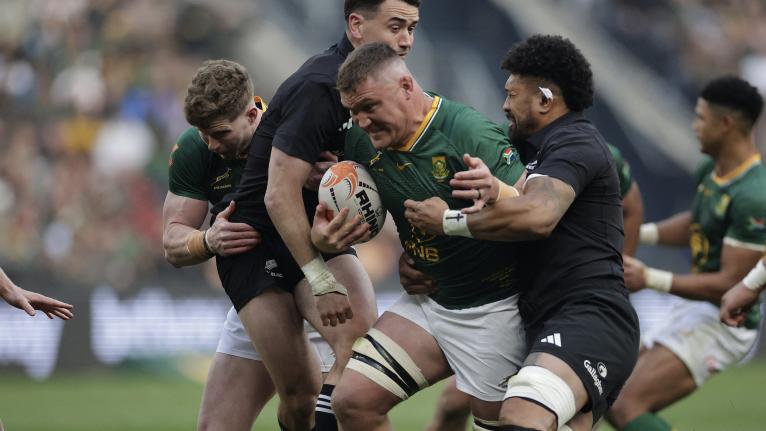
So this is it. The end times, the unequivocal changing of the guard, the Götterdämmerung of southern hemisphere rugby. Put away those oval balls in Wellington and Cape Town. Burn those Springboks and All Blacks jerseys. Back-to-back defeats for the fraud kings of the game can only mean one thing.
A touch hyperbolic, no? Well, not according to the comments on television, radio and social media this week after New Zealand and South Africa each got a taste of the medicine they’ve been dishing out for almost all of the sport’s history.
Of course, the reaction has been absurd. But it would be equally foolish to dismiss the criticism as the usual noise accompanying a rare stumble from rugby’s traditional heavyweights. Both teams have been poor this November. Both have displayed worrying flaws. And both have looked, at times, like sides that have forgotten what made them formidable. There is, however, an enormous green-and-black elephant in the room.
The Rugby’s Greatest Rivalry series was not some glorified exhibition designed to sell tickets and television subscriptions. It was an eight-match, six-week collision between two of the sport’s most decorated nations, culminating in four Tests of extraordinary emotional and physical intensity. The name was justified long before a ball was kicked, and nothing that has happened since should diminish its standing.
These were matches played with the desperation usually reserved for World Cup knockouts. Every collision carried the weight of history. Every selection was scrutinised, every tactical decision dissected, every defeat treated as a national emergency. Players were asked to empty themselves, physically and psychologically, week after week. And now, apparently, we are astonished that the tank is running low.
There is precedent for a post-tour hangover, though history offers no guarantee of one. After losing the 1997 Lions series, South Africa lost their next three Tests. Australia suffered the same fate in 2013. Yet the Springboks of 2009 and All Blacks of 2017 emerged from their Lions encounters and promptly won their next three internationals. Exhaustion is not destiny, but neither should it be dismissed.
Rugby players are not machines. Even the best teams cannot operate at maximum emotional intensity indefinitely. That explanation should buy the Springboks and All Blacks some understanding. It should not buy them immunity from criticism.
New Zealand’s attacking problems are especially troubling. Too often they have played across the field rather than through it, shifting the ball from one touchline towards the other without first earning the right to go wide. Their lateral movement has become predictable, allowing defences to drift comfortably and squeeze the space available to their dangerous outside backs.
The absence of Ardie Savea has been keenly felt. Few players are better at straightening an attack, turning an innocuous carry into go-forward ball and forcing defenders to commit their shoulders rather than shuffle sideways. Without him, the All Blacks have resembled a team attempting to open a locked door by repeatedly twisting the handle.
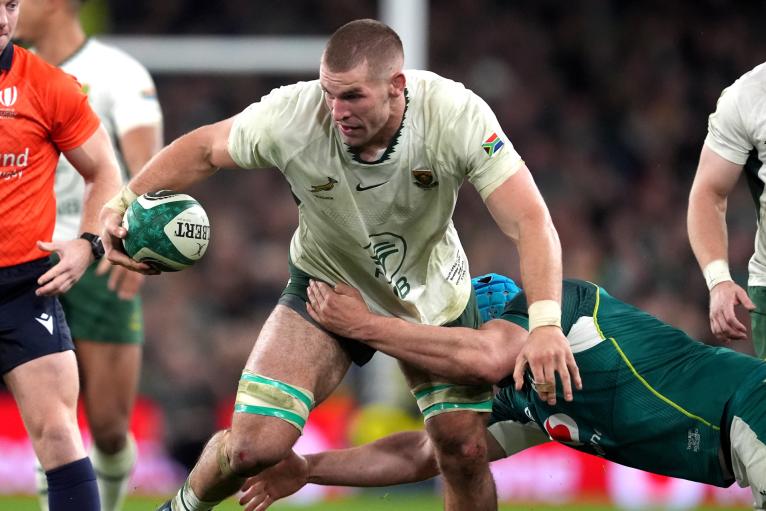
South Africa’s problems are different. Their scrum remains the most destructive weapon in international rugby, and their maul can reduce accomplished forwards to bewildered spectators. But these weapons have become a comfort blanket. Against France and Ireland, the Springboks appeared convinced that another scrum penalty or rumbling drive would eventually solve everything.
There is nothing inherently wrong with relying on such strengths. Yet when they become the entirety of an attacking philosophy rather than its foundation, opponents can plan accordingly. South Africa have lacked imagination and cohesion behind the pack, with promising opportunities dissolving into hesitant passes, poor decisions or individual attempts to manufacture something spectacular.
This is why the selection of Manie Libbok at fly-half and Sacha Feinberg-Mngomezulu at full-back offers encouragement.
Libbok possesses a natural understanding of space and tempo. He can conduct an attack rather than merely participate in one, bringing runners into the game and giving South Africa’s backline a shape that has been absent. His kicking remains a concern, but South Africa have questions that he is best placed to answer.
Feinberg-Mngomezulu, meanwhile, might benefit from the freedom of the No 15 jersey. His individual brilliance is unquestionable, but at fly-half his instinct to seize every opportunity can disrupt the rhythm of those around him. From full-back, those instincts could become an asset rather than a complication.
There is reason to believe these adjustments will make South Africa a more dangerous proposition. New Zealand’s problems appear more deeply rooted, with fewer obvious solutions. But writing off either side on the evidence of a couple of disappointing Saturdays would be to ignore one of rugby’s most enduring lessons.
We have seen this film before. At the 2023 World Cup, France were widely fancied to beat South Africa in Paris. Ireland arrived at their quarter-final against New Zealand as the world’s top-ranked team, riding a remarkable winning streak and convinced their moment had finally arrived.
What followed were two of the greatest matches the sport has witnessed. France and Ireland were magnificent. They might easily have won. But when the margins became microscopic and the stakes almost unbearable, it was the Springboks and All Blacks who found a way through.
Neither victory was manufactured from reputation alone. Both required tactical discipline, extraordinary defensive commitment and the ability to find solutions under suffocating pressure. These were not teams simply leaning on their own history. Those victories demonstrated how their histories were forged.
That is not evidence of some mystical southern hemisphere birthright. Nor does it mean their shortcomings can be wished away by invoking past glories. It does, however, speak to a competitive resilience established over generations, not extinguished by two disappointing weekends.
Perhaps the balance of power really is shifting. European rugby, with the financial muscle of leagues such as the Top 14 and an increasingly sophisticated international game, has never been stronger. And that should be celebrated. But there is a difference between recognising progress elsewhere and declaring terminal decline in Auckland and Pretoria.
The defeats have been deserved, the flaws exposed and the reputations bruised. The Rugby’s Greatest Rivalry series may explain some of the fatigue, but cannot excuse every failing.
So maybe the crowns are slipping. Maybe the old order really is crumbling. But the Springboks and All Blacks have made a habit of reminding their challengers that reaching for the throne is considerably harder than seizing it.

Watch Hemispheres collide as North faces South in the Nations Championship. Live matches, replays and highlights free on RugbyPass TV here
(*USA only)

Don't miss your chance to see the world’s best rugby teams take centre stage 5-6 December in Cape Town.
Boks will be back and strong as always. Not sure about ABs. They’ve chalked up some record defeats in last few years (to SA, England), lost to Wales for the first time in ages. That’s three coaches (Foster, Razor, Rennie) where results and performances have been inconsistent. I’m sure they’ll improve and on their day they’re a match for anyone. But seem to lack a bit of physicality against the other top teams.
You have no clue the ref’s were really bad
Everything against the Springboks France played really dirty takels offside knee drop takkels you will eat your own words and Ireland as well knee to the neck kick and dan sheean crock roll
ever heard of punctuation
This reads like a song
Join free and tell us what you really think!
Sign up for freeBorn in Argentina, but adopted by Spain, Tani Bay says his side is full of ambition and pride and will need to be to overcome Georgia
If Ireland are going to avenge their humiliation from a year ago, they are going to have to win the physical battle
South Africa should be asking not merely whether their existing weapons can overwhelm opponents, but what happens when they are neutralised.
But they have never won a series in SA
Maybe go play with your little weaner
Surprising, expected your vote to go to one of last weekends finest…
Because ‘Dwayne the Brain’ Barnes will never be equalled
Why even bother
...
Exactly, just like a 5th/6th playoff being the top of aspirations…😉


 Clear


 Copy link
 Facebook
 X/Twitter
 WhatsApp
 Messenger