




1
{{item.n}}


 Share
Share 
One last weekend of action awaits us in the south of France, and in many ways, Bordeaux feels like a fitting place to end what has been a significant year of the HSBC SVNS World Series.
The 2025/2026 series has seen a new tiered format with promotion and relegation, two new competitions in SVNS 2 and SVNS 3, new locations and historic anniversaries.
However, in few nations has the party atmosphere of SVNS been more embraced than by the historically passionate rugby fans in France, and for this year especially, there is no better country to host a final weekend this unpredictable.
Catch up on HSBC SVNS World Championship action on RugbyPass TV. You can create an account HERE.
There is a historical precedent for this event being played here, with the first sevens matches taking place outside of Scotland – the historic home of the shorter format of the game – taking place at the Parc Des Princes in Paris in 1954.
France has continued to hold an esteemed place in the shorter format, with sides like the French Barbarians routinely taking part in invitational tournaments in the lead-up to the inaugural World Sevens Series in 1999.
The France Sevens is one of the few tournaments that predate the current circuit, its first iteration an invitational tournament played annually from 1996 at the Stade Sébastien-Charléty in Paris, with Fiji claiming the inaugural title in a 38-19 win over hosts France.
Once the World Series got underway, it was inevitable that a French leg of the circuit would be included, with the same venue serving as the final stop on the ten-venue circuit in May 2000, New Zealand claiming the title with a 69-10 win over South Africa.
The France Sevens would return to the circuit from 2004-2006, with Bordeaux hosting the event for one year before a return to Paris in 2005 saw hosts France win their first ever title on home soil, defeating Fiji 28-19.
Even when the Paris Sevens disappeared off the circuit from 2007-2015, sevens events were still popular, with the Rugby Europe Sevens, a multi-leg competition featuring 12 nations and sponsored by the continent’s governing body, being taken out to Lyon and Clermont-Ferrand.
When the Paris Sevens returned to the men’s World Series circuit in 2016 at the Stade Jean-Bouin, it became a mainstay of the tournament, with that year seeing the first-ever iteration of the women’s World Series being played in Clermont-Ferrand, Canada winning the inaugural event 29-19 over Australia.
The COVID-19 pandemic saw fans wait two years until the tournament got back underway, with the men’s and women’s circuits being played separately for two years at the Stade Ernest-Wallon in Toulouse.
Bridging the gap between then and now was the 2024 Paris Olympics, marking the first time France hosted the men’s and women’s teams together.
In front of sellout crowds at the Stade de France, the host nation delivered its finest hour in Sevens history, claiming the gold medal in the men’s tournament, defeating Fiji 28-7, while New Zealand won gold in the women’s final, defeating Canada 19-12.
In 2026, the France Sevens will return to Bordeaux for the first time in over two decades, the event marking the 30th anniversary of that inaugural invitational tournament in 1996.
It is a tournament that has been well shared, with six nations winning the title and a further four making it to the grand final in the men’s competition.
In fact, three nations – Fiji, New Zealand and South Africa – all hold the joint record for the most number of title wins with three apiece, while France, Samoa and Australia all hold one each.
The women’s competition, meanwhile, has seen three winners in six tournaments, with New Zealand winning four titles and Canada and the United States with one apiece.
However, it should be noted that while Australia, who currently lead the Championship after their win in Valladolid, have never won in France, they’ve finished as runner-up in four of those six results.
To buck that trend, the Aussie Women’s Sevens are going to have to make history and likely win their first-ever France Sevens title to win the Championship – and some may even see it as a chance to exorcise the painful memories of crashing out at the 2024 Olympics.
History also beckons in the men’s tournament, the Blitzboks having not won in France since 2018. However, it bodes even harder for the other chasing sides, the Aussies having not won it since 1998, and the Puma 7s having never won it in their history.
Not only will those sides have to break hoodoos and make history, but they will also have to contend with a vocal crowd and well-supported French teams, who have not won any sort of leg in the men’s or women’s tournament since that famous Olympic victory.
In a tournament that has seen tightly contested historical results, been split across many French cities, had many iterations, and boasts a colourful history, the 2026 Bordeaux SVNS could not be a more perfect fit to end a season as similarly tightly contested as this season has been.
At the end of this weekend, the winners will be decided. History awaits.
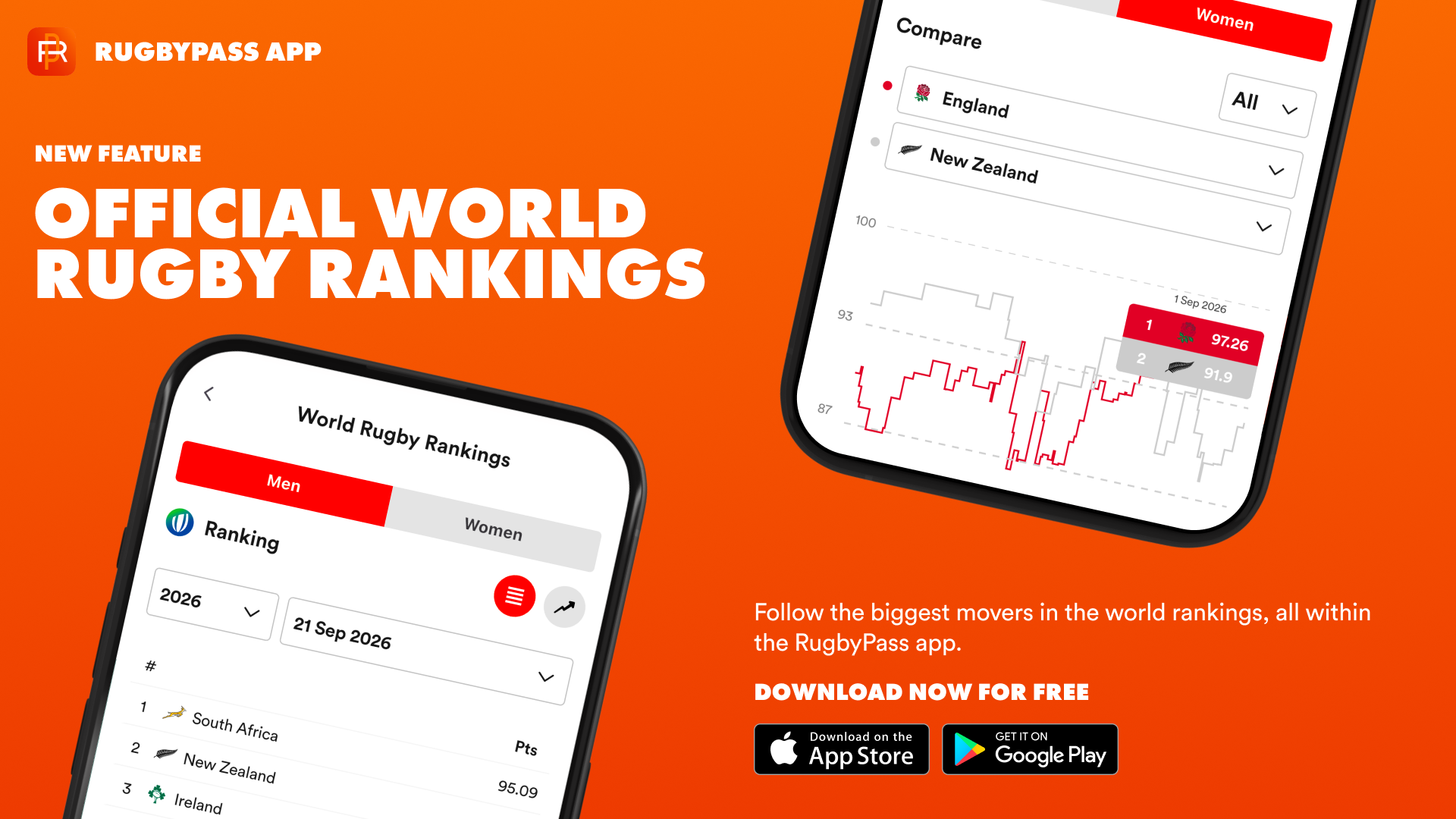
NEW IN THE APP: Official World Rugby Rankings hub! Compare team rankings side-by-side, with data going back 20 years.
Download the RugbyPass app on the App Store (iOS) and Google Play (Android) now!
Join free and tell us what you really think!
Sign up for freeLes Kiss was once a pioneering defence coach, but the new Australia supremo's area of expertise has yet to improve substantially since he took the reins.
Stuart Lancaster must manage the game time of his Ireland players as Connacht embark on a set of potentially season-defining fixtures.
England's club sides are playing with elan but after a weekend of Champions Cup action, Steve Borthwick will know more about their resolve
They don’t have to if Love and Mounga are out injured!
For sure, then you feed in Marky Mark and maybe Petaia as and when needed.
Ooh I think that woud be too much for OJ to swallow at one gulp🤣
Yes it is a case of ‘back to square one’ on D, DM… Time for a rethink.😉
If only the players would do what we say. 🤣🤣


 Clear
Clear 


 Copy link
  Facebook
  X/Twitter
  WhatsApp
  Messenger