
How many Scots have participated in an Olympic sevens final and a Rugby World Cup final? In the space of 14 months, Iain Monaghan, the globetrotting Glaswegian coach, featured in both showpiece events, an architect of Canada’s swashbuckling strategy across either code.
NEW: Follow Your favourites in the App 📱
You can now follow their favourite teams, tournaments and players in the RugbyPass App!
At last year’s Paris Games, Canada dumped out Australia’s much-vaunted ‘golden girls’ and fell only to the Black Ferns at the last hurdle. A year later, they took apart all their pool rivals – Wales, Fiji and Scotland – stuck 46 points on the Wallaroos and dynamited New Zealand’s title defence before being overwhelmed by the Red Roses.
Monaghan downplays his role in all of this, but those who know and work with him tell it differently. The Scot may be modest, but he has never been shy in making a leap. He left Glasgow in his twenties to play and coach with historic Italian club Viadana, before honing the next batch of talent at home, transforming the high-performance programme in Hong Kong and moving to his picturesque spot on Vancouver Island in early 2023.
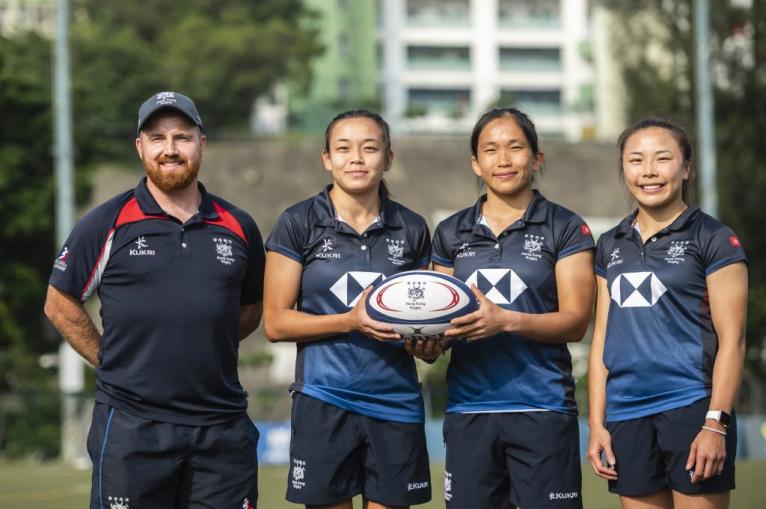
As a key lieutenant to Jack Hanratty in sevens then Kevin Rouet with the XVs squad, Monaghan revelled in the achievements of this astonishing group of women. All the more so given the team raised donations to part-fund their bid for World Cup glory.
“As a coach coming from a Tier One nation, or coming out of Hong Kong where there was finance readily available, it did blow my mind,” Monaghan says. “Unless you are ice hockey, it’s quite a common thing here. Not an accepted norm – a norm they are working really hard to change. With success on the field, they hope and dream it’s not going to be there in future.
“Hearing stories of the previous World Cup preparation, going to New Zealand, Kevin was very new in position, they were surfing sofas trying to get together off their own backs, that galvanised the spirit. They do whatever it takes to be ready.
“The players will acknowledge the tremendous effort Rugby Canada and the provinces and community put in. We are not rich in in monetary terms, but the rugby community is rich. They come together to get behind their teams. People are more aware, more associated with the individuals, their social media is growing. You see the power of Ilona Maher in the US, and that’s all it takes, and we have 30 amazing individuals who could become that.
People had made us things, given us gifts, like playing cards with a maple leaf and World Cup on them, banners, a tunnel for players to come through to get to the field at our farewell session in Ontario.
“We are prepared to roll our sleeves up and make sure. That puts fire in the bellies and strengthens the spirt and humbles you. When you are in the environment you realise hey, cousins, brothers, sisters, parents, friends have contributed to this. People had made us things, given us gifts, like playing cards with a maple leaf and World Cup on them, banners, a tunnel for players to come through to get to the field at our farewell session in Ontario. Probably 500-600 people were on the tribune and around the field cheering the announcement of the players. That’s just a snapshot.”
When he gave up playing and returned from Italy 15 years ago, Monaghan took up a role within Scottish Rugby’s elite development pathway, influencing a whole host of international careers. New performance director David Nucifora is grappling with the unwieldy issue of bringing these kids through faster, and in greater volume, than the Scottish system seems capable of managing. Canada may not provide much of a template in this regard, but in uniting behind a common goal, Scotland’s typically parochial community could learn a few lessons.
“I was working with the best young players in the country aged 18 to 23,” Monaghan recalls. “Chris Fusaro, Alex Dunbar, Grant Gilchrist – Stuart Hogg was in there as a 17-year-old. They split the following year into Edinburgh and Glasgow and it’s nice to see Nucifora has pushed that route and expanded those numbers. I’m a big advocate of club rugby and community rugby but I understand the gulf between the professional stage and the grassroots stage.
“There is never going to be a solution which everyone is going to be happy with, but as a small nation we have to get behind one another. If we can bring any sense of the community the Canadians have here, then you will make things happen.”
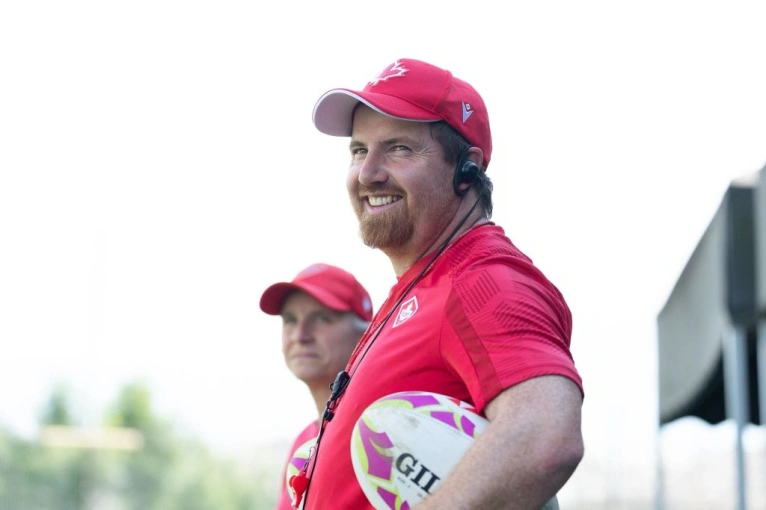
In a sense, Canada’s blueprint mirrors Monaghan’s own career path; daring and bold and happy to do things differently. Their front-row forwards offload like centres. They can bludgeon you with their pack or fillet you with their speed. The game is played at a furious tempo. At one stage during the World Cup, Canada’s average ruck speed was just over two seconds; a figure virtually unprecedented in the elite game, male or female.
“We spend a lot of time in training around rugby IQ,” Monaghan says. “Where’s the best space, and what’s the immediate impact on the opposition? Training the players’ ability to support in that space. We exposed skillsets that maybe weren’t good enough so we had to work on them to allow for continuity. I wouldn’t say it’s rocket science.
“I don’t think I’ve come across, even in the men’s pro game, a more studious or diligent group. There’s a real thirst. Without being disrespectful, in the women’s game you are not always exposed to great coaching as a girl growing up. Sometimes you are fast-tracking or you’ve missed out on something at some stage, so it’s important we spend a lot of time with players.
“There’s a clear definition of, that’s your primary job, but your secondary job, there’s no number on your back because how we’re describing the game is the game for everyone. We’re not giving them a structure they must follow which probably 95% of all teams play towards. That really enthused our group. They get very excited around not being the same as everyone else.
Even if you’re a top male player, they would be quite envious of the skillset Sophie has got.
“Don’t get me wrong, when you are playing top teams like England who can apply pressure to you, we need to be streetwise and can’t always look like this Harlem Globetrotter team. That comes with experience. That’s why we put a big focus on our own training being very, very intense – playing 12 v 15, for example, and really taking pride that if we train at this level then it should allow us to enjoy playing the opposition.”
No-one personified Canada’s unique brilliance more than Sophie de Goede, the swaggering, goalkicking, rib-cracking totem of their campaign. De Goede is technically a second row but could be feasibly deployed anywhere in the backline. She pots goals from the touchline, carries with searing venom and has the precious game intelligence coaches crave.
“It’s where the future of the game is,” Monaghan says. “Even if you’re a top male player, they would be quite envious of the skillset she has got. She is not just a student of the game but a really good ambassador; very professional, dedicated.
“She challenges coaches and staff in a healthy way to bring the best out of us while giving a very good athlete’s perspective. She is a lovely person so it’s not that hard to develop a strong athlete-coach relationship.”
Monaghan beams about the progress Scotland’s women made this autumn under his old friend Bryan Easson. There’s an obvious segue here since Easson has left his post and Scottish Rugby needs a new head coach to manage a talented and diligent playing group who have faced all manner of off-field trauma.
Francesca McGhie is a six-try wonder 🤯🏴 #RWC2025 pic.twitter.com/H33I2YSPc6
— Rugby World Cup (@rugbyworldcup) October 8, 2025
Monaghan loves his job in Canada. His wife, the former Scotland player Sarah (nee Dixon), also works with Rugby Canada and their two-year-old son, Arthur, was born in Vancouver. Former Glasgow managing director Nathan Bombrys runs the union. It’s a relatively small operation and the bonds between colleagues are tight. All that said, such a prestigious gig for so proud a Scot would hold clear allure.
“I feel very valued at Rugby Canada,” Monaghan says. “I feel part of the community and that has always been my driver.
“To me, jobs in Scotland are dream jobs. I’ve been away trying to become a more rounded person and coach, a better coach, and if an opportunity comes in Scotland, I’m sure you’ll consider it. Whether or not you apply for them or get them, I’ve been very focused on my job here and had a bit of family time, and I’m only now becoming a bit more open to chatting.
“I have strong links to Scottish Rugby with people who are still there. I’m very passionate about it, but I’m really happy with the support and what I’m doing in Canada.”
The Scottish union will be all too aware of Monaghan’s CV and his deep sense of patriotism. After all, seldom does a Caledonian, forging his own path on the other side of the world, grace the greatest stages in the game.


Comments
Join free and tell us what you really think!
Sign up for free