
If anyone had any lingering doubts, the second round of the inaugural Nation Championship would have surely banished them. In the two biggest games at the Suncorp in Brisbane and Loftus Versveld in the thin air of Pretoria, it was the two northern hemisphere sides who did most of the attacking with ball in hand, and the pair of nations from the south who embraced a more structured approach and played the game closer to set-piece. The world has truly turned on its head.
If you don’t believe me, take a look at some of the raw stats thrown up by both games – the figures usually associated with creative output in professional rugby.
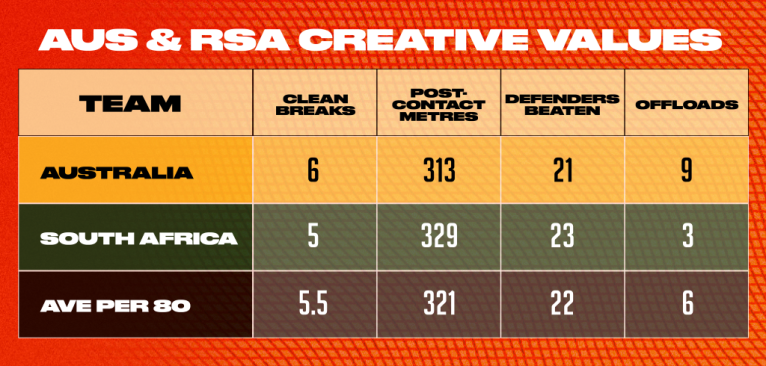
Now compare those stats with those generated by France and Scotland.
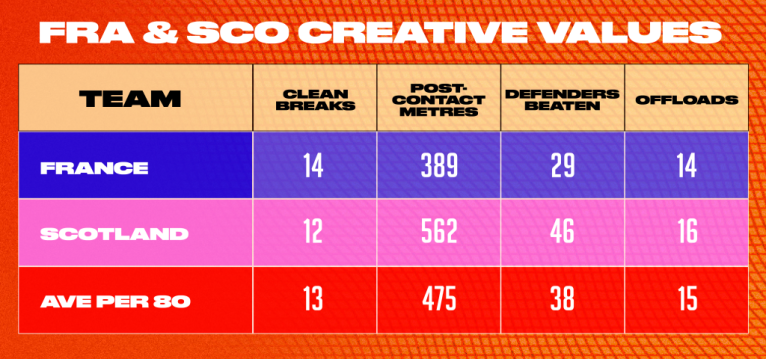
Would the inclusion of stats from the New Zealand v Italy and Argentina v Wales matches make a difference? Of course they would. But in the two most evenly-balanced and pleasingly symmetrical ties of the round between teams from the Six Nations and the Rugby Championship – it was first against third from both of the most recent tournaments – the north came out ahead in the business of playing high-quality attacking rugby.
Not only a little way ahead you understand, but on average seven and a half clean breaks, 154 post-contact metres, 16 defenders beaten and nine offloads per game out in front. That is not victory by a nose in a photo-finish, it is cantering home and easing up in the final furlong.
The match-up between the Joe Schmidt’s Wallabies and Fabien Galthié’s Bleus epitomised the contrast in stark black and white at Wally Lewis’ old stomping ground in Lang Park. Interest in the encounter had been piqued in the build-up by the selection of no fewer than three Australia-born tight forwards and two natural outside-halves in the French matchday 23.
Australian tight forwards have historical heritage as skilled ball-carriers and robust top-of-the-ground athletes, and Les Bleus included a trifecta of happy homecomings in the shape of loosehead prop Moses Alo-Emile – a Brisbane State High School and Queensland Schoolboys alumnus and brother of ex-Rebels and Junior Wallaby tight-head Paul – a product of the Queensland GPS first XV in locking leviathan Manny Meafou, and another second row off the bench in wild-mullet ‘Grizzly Bear’ Tom Staniforth, who had previously played 62 times for the Waratahs and Brumbies.
Why are all three plying their trade in the Top 14 rather than starring in Super Rugby? The short-hand is either they were undervalued, or unwanted at home. Meafou’s story was catalogued recently as part of a RugbyPass article describing the Australian aversion to oversized second rows: “I ended up going into the Waratahs for a physical and just never heard back. It was kind of a Will Skelton situation. At the time, I was just too big, and they wanted me down at a certain weight.”
It was the same for the younger of the two Alo-Emile brothers: “I moved to France because it was pretty much the only country that gave me an opportunity. I had nothing going for me over in Australia with Rugby Australia. I signed a little academy contract over there and the rest is history.” Staniforth was a Junior Wallaby 12 years ago but now he is a proud Frenchman after his senior ambitions were dashed in his country of birth: “To be honest, the kid from Canberra didn’t think this was possible. I guess this is the gift of rugby. To move to France and play in France, to build a life here. It’s not lost on me how lucky I am.”
Galthié may pass it all off with a Gallic shrug but a trio of defectors raises questions about Australian talent identification and development system in years gone by, as does the player-of-the-match display of Elisabeth Murdoch College’s Sione Tuipulotu on the highveld.
The French supremo promptly doubled down, resolving his fly-half dilemma by picking Toulousain Romain Ntamack and Girondin Matthieu Jalibert in the same starting XV, with the rouge-et-noir in his preferred number 10 jersey and the Bordelais magician shifting to full-back. This was a French colonne d’attaque primed for all-out assault in the River City, and it did not disappoint.
In the event, the experiment was a qualified success. Lukewarm with a little frisson of ‘meh’. Worth another try? Maybe. If the Springboks were on France’s tasting menu in the Nations Championship next weekend? Probably not. The main issue going in was playmaking balance. Several weeks ago, RugbyPass illustrated how Jalibert tends to get far more touches of the ball in the company of Maxime Lucu than Ntamack does with Antoine Dupont inside him.
Playing for their respective clubs, Jalibert carries 14 times per 80 minutes to Ntamack’s seven, passing 26 times to Ntamack’s 21 and kicks 15 times – a full 10 kicks more than his rival.
At the Suncorp, there were some signs Ntamack could play a more prominent role, even if it meant restricting the number of occasions Jalibert could lay hands on the pill.
Jalibert carried the ball 13 times to Ntamack’s nine, but made 18 passes to Ntamack’s 31 while the kicking stats were 6-4 in favour of the Bordeaux man.
Ntamack’s typical production rose by 11 involvements per game, while Jalibert’s dropped by 18. The former enjoyed five tackle busts and three break or try assists, to the latter’s six and five respectively. The jury is still out on whether the experiment is worth advertising at a main theatre, or may go straight to video.
The game itself was a reversal of historical north-v-south values on attack. The Wallabies scored three first-half tries to go into the sheds with a 21-12 lead, and all three scored were derived from launches inside the French 22 – two from a brace of 50/22 lineout turnovers from the boot of Tom Wright, and a third from a breakdown penalty granting Australia a lineout starter deep in the French 22. All three scores were crafted out of the structured Schmidt ‘school of methodical detail’ – just like the Wallabies’ last hurrah in the 75th minute. ‘Get into the red zone, by hook or by crook. Stay there until you score’.
By way of contrast, all of France’s four tries during a 30-0 second-half blitz derived from start points outside the Wallaby 22m zone, with two igniting from the French last third of the field. Schmidt termed those key 25 minutes after half-time “soul-destroying”, and for his players they were a real eye-opener. Rookie 10 Declan Meredith pointed out “they [France] put you to the wire when they have momentum; you learn that in Tests, momentum is everything in a game and it’s hard to win back”, while skipper Harry Wilson was left reeling, “still trying to put it together in my head. France won the Six Nations. They are a bloody good team, but we need to win Test matches for our country, that’s what we’re here to do.”
The plain facts are when Les Bleus asked the Wallabies to play at a higher tempo and with sustained intensity for longer, Australia found no means to answer the call. The underlying irony is a country of natural sportsmen can no longer keep pace with the best in Europe when the heat is really turned up. The north played in the best tradition of the south and the south could not live with it.
This ultimate turning-of-the-tables began with a long-range kick return try in the 49th minute.
— William Bishop (@RPvids1994) July 12, 2026
First Ntamack canters out of his own 22 on the counter, but it is UBB which oils most of the wheels thereafter: three key contributions from Jalibert as a runner and playmaker, two coruscating cleanouts by bench hooker Maxime Lamothe, one crucial break down the right by Yoram Moefana to fan the flames.
As the half progressed the French kick-chase consistently outran and outnumbered the Wallaby receiving team.
— William Bishop (@RPvids1994) July 12, 2026
— William Bishop (@RPvids1994) July 12, 2026
— William Bishop (@RPvids1994) July 12, 2026
The numbers equation is favouring France on chase rather than Australia on receipt in all three of those clips, forcing errors out of the Wallabies and resulting in a score on the very next play from lineout in the second instance.
The visitors’ ability to dominate the long-range kicking and kick-chase duels, their sheer running power and the confidence in their attacking skillsets from any part of the field were far, far too much for the hosts to handle.
— William Bishop (@RPvids1994) July 12, 2026
Once again, it’s four on three in favour of France on chase, which means no return by hand for the Wallabies and the better chance of a workable counter for Les Bleus on the subsequent play. It’s the Bordelais thread which is leading France back out into the light at national level; embedded in Jalibert’s vision of the possibilities, first on the left at 55:30, then on the right 15 seconds later; woven through Marko Gazzotti’s in-pass and recovery cleanout on the left at 55:40, and Jefferson Poirot’s pull-back pass in midfield and re-ruck on the right as play approaches the Australian goal-line. If Gazzotti was not homme-du-match, it must have been his club colleague Moefana.
In the two prime clashes between Six Nations and Rugby Championship rivals, it was Europe which showed the greater attacking flair and ambition, maybe for the first time in the history of July tours. Scotland were very good in Pretoria, but France were better in Brisbane.
While an experimental Springbok side struggled with the Scottish addiction to sustained offensive tempo, the worry for the Wallabies is they are currently struggling with the changes of momentum so typical of the modern game, at least not under Schmidt. Galthié’s France surfed those shifts at the Suncorp, while the Wallabies trod water. Will Dave Rennie and Sir Graham Henry be making assiduous notes before the ‘Greatest Rivalry’ tour of South Africa kicks off in August? Oh yes, you can be sure they will.

NEW IN THE APP: Official World Rugby Rankings hub! Compare team rankings side-by-side, with data going back 20 years.
Download the RugbyPass app on the App Store (iOS) and Google Play (Android) now!


Dupont 9, Ntamack 10, since they work so well together, unlike Dupont/Jalibert, then undecided about Jal or Ramos at 15. It’s possible Jalibert, playing UBB style, might add something, but I’d want to see Jalibert at 15 thoroughly tested in attack and defence, before trusting him at 15 in any big games. Ramos is, of course, a great option, and his goal kicking is unmatched, though Ntamack used to kick for France and was extremely good at the end of last season, if Ramos unavailable.
Also, I’ve doubts about Jalibert’s temperament. Neither of his post match interviews, as reported and translated by rugby pass, followed the usual format - interviewees usually acknowledge the great contribution of the rest of their team, and acknowledge the strengths of the opposition too. Not exciting, but showing lots of rugby values.
After the NZ, Jalibert made implied criticism of Le Garrec’s decision to kick near the end, which the coaches had endorsed, and after Japan, he said he wanted to play at 10. He’s every right to his own opinions, of course, but airing them in public in that way is way out of order. Public interviews like this stir up social media, and are bad for team cohesion and morale. At the highest level guys are putting their bodies on the line, and small margins can make the difference. SA are not only the strongest team, but the most cohesive, and after lifting the last WC after 3 one point wins spoke a lot about team spirit seeing them through.
Anyone who watched the match with attention would know that in that first clip, Ntamack was injured by an Aussie crashing into him as he released the ball, so was unable to take any further part in that attack, so naturally Jalibert took over.
Not a bad idea.
I’d have Wright on the wing helping JAS rather than Jorgensen.
You said it was a fantasy side with everyone available, so they are all available no?
Bell-BPA-Tupou in the front row, wither LSL or Skelton behind them gives you max impact with none of the risk associated with your bunch!
Yes. Agree 100%. But lacking that since we have no Skelton, no LSL, no Kailea, no Frost and no Hooper, what are left with in the impact stakes exactly?
I like him at 13 reminds me of Conrad Smith and plays like Proctor there, might be a bit much to ask of him though. You could certainly use him on rotation if you brought back Kerevi to pair with Len.
What will Less like?
Hi Nick, hope you are well mate. If you look at over the last two years we have been shopping alot of points. I am not sure if we are trying to outscore the opponent but that has a way of back firing. Interestingly, S McLeod will be joining Less K squad as defence coach. McLeod was an understudy of Prof W smith. With all the noise about attacking rugby at the moment I am curious see what type defensive patterns he has install for the wallabies.
Yes that will be an interesting area for observation WL? Hows life without The Roar now?
Ah.😲
That was in Ben Smith’s article about the Hurricanes being 10-15 point favourites against UBB lol
https://www.rugbypass.com/news/hurricanes-vs-bordeaux-begles-european-champs-10-point-underdog/
Yep I like Buros, tough player with great feet.
You could start with JAS at 14, Wright at 15 and Jorgo at 11, then move toards JAS at 15, Marky at 14 and Jorgo at 11 as the RWC approaches… Make it a straight fight at 15.
They sure aren’t getting their money’s worth at 13, so change it up.
Only someone with the financial capability of yourself has the answer to that!
You don’t have to sell me Buros, huge season upcoming for him to get back in the picture. This tour would’ve been great for him but injuries derailed his season.
Indeed, he would need more time there. But if Ramos is injured, it is something worth trying.
I didn’t enjoy watching the clips. We were either careless or lazy with our chase, constantly finding ourselves with players on one side of the field and not the other. These French players can take advantage of mistakes, but they were opening space with one, sometimes two passes. It was too easy.
I think Lachie Shaw might earn a Wallaby start at some point but picking a guy who’s thing is 80 minutes of repeat efforts - rucks, tackles, lineouts - to run off the bench against these guys is madness. Set him up to fail and gave us no chance to win back momentum if required. And he, unsurprisingly, failed.
Also, sticking to this “must be with the team during the week” ethos in the middle of a full blown injury crisis is stupidly stubborn. Ship in JOC or Noah. They both know the team and strategies.
Tate was truly horrible off the bench, as was Daugunu. Slipper, Shaw, CdC, and Campbell were unsighted. Tupou was good and BPA exceptional for 80. We picked a bench to close out a game when that was never going to be the requirement. Schmidt has made some poor choices over his last ten games in charge, and I’m happy for the coming change.
All of that said, whilst we can put out a competitive 23 if all fit and properly selected, we simply don’t have the cattle to deal with injuries. It means that we can compete and win one-off games but struggle to play a long season of 10-13 matches. Schmidt is a great coach. As was Rennie. I don’t think Kiss is going to suddenly change our fortunes.
Schmidt and Rennie might be good at coaching kiwis but there is no planet where they are good at coaching Australians. Except ……
Rennie is going to get found out soon enough. Especially if Henry pulls back.
We do have the cattle but kiwi coaches won’ t let them on the field or in the right position. It’s always been thus. Kiss’s success will depend upon whether he is his own man or just Joe’s patsy.
And you should have enough to beat Italy DM.
But I feel Joe was banking on winning at least one of the games v Ireland and France, and that didn’t happen. Tha coachiong handover really needed to happen before July to give Les K a proper run at the Nations Champs.