
The idea that New Zealand has this conveyor belt of talent endlessly in motion spitting out world class superstars is overdone. Except maybe in one position, because the All Blacks for the last 20 years, probably the last 30, have been able to choose from a long list of crazily talented wings.
The roll of honour is incredible – Jonah Lomu, Jeff Wilson, Tana Umaga, Doug Howlett, Sitiveni Sivivatu, Joe Rokocoko, Ben Smith, Julian Savea, Rieko Ioane.
And what’s equally illustrated New Zealand’s ability to churn out brilliant wings, has been the way that the intensity of competition for places has been such that the All Blacks haven’t always been able to find room for players other nations would love to have.
In 1999, the All Blacks were trying to find ways to accommodate Wilson, Umaga, Lomu and Christian Cullen – and ended up playing the latter at centre.
In 2005, on their Grand Slam tour, the All Blacks picked Rico Gear and Sivivatu to play Wales one week, and then Howlett and Rokocoko to play Ireland the next.
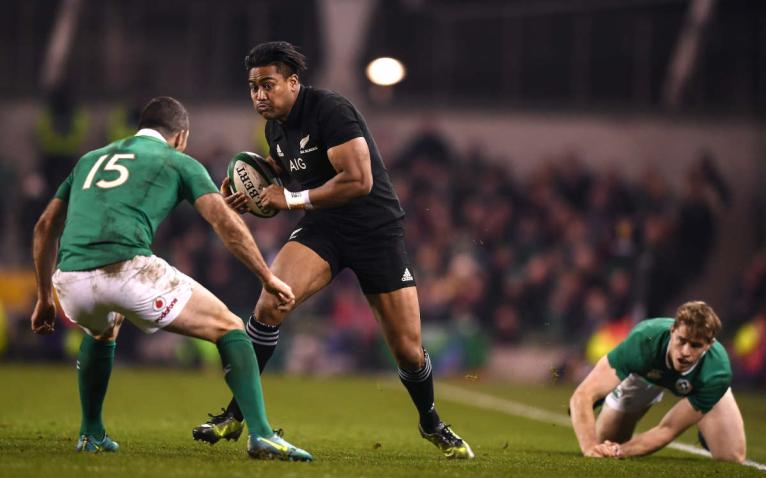
In 2015, Israel Dagg and Cory Jane, stars of the 2011 tournament, couldn’t make the 2015 squad because the All Blacks had Nehe Milner-Skudder, Waisake Naholo, Savea and Smith.
And then in 2019, Smith and Ioane were on the outer fringes as the selectors felt they had fallen behind Sevu Reece and George Bridge.
By the time the 2023 World Cup swung around, the All Blacks again had a near embarrassment of riches to choose from – with World Breakthrough Player of the Year Mark Tele’a, Will Jordan, Caleb Clarke and Leicester Fainga’anuku all competing for spots.
That intensity of competition looked set to continue under head coach Scott Robertson, as Jordan, Clarke and Tele’a were all still available and Sevu Reece and Emoni Narawa, who were both injured before the World Cup, had recovered by July 2024.
Reece, who was first choice in the early games this year, looked wobbly under the high ball and on several occasions, his lack of top end speed was exposed.
But strangely, perhaps, wing has been the biggest problem position for Robertson. A position of strength has become a position of weakness – and for the first time in decades, so much game analysis has focused on the lack of impact made by the back three.
The All Blacks have been unable to catch high balls in 2025, they have lacked punch when they go wide and generally haven’t put opponents on red alert with their attacking threat.
To compound the problem, Robertson has lost Tele’a to Japanese club Toyota Verblitz and from being the envy of the rest of the world for much of the last 30 years, the All Blacks have looked under powered and under resourced at wing this season.
Reece, who was first choice in the early games this year, looked wobbly under the high ball and on several occasions, his lack of top end speed was exposed.
He may still be a lethal finisher from close range – as he showed in the first Test against Argentina – but in the second, his backfield cover was poor and his aerial work sloppy.

The story wasn’t so different for Ioane, who was returned to the wing this year after a four-year stint at centre. The hope was he would pick up his old position quickly and easily, but he was totally lost chasing high kicks, couldn’t get his timing right when he came off his wing looking for work and was low on confidence.
Both Reece and Ioane were dropped by the time the All Blacks played South Africa a second time – because it was obvious that neither had the skills the modern game requires, and what followed was an almost unprecedented concern about where all New Zealand’s quality wings had gone.
For the first time in 30 years, New Zealand didn’t appear to have the players it needed to fill the No 11 and No 14 jerseys.
Carter has been impressive in his two tests to date – against South Africa in Wellington and Australia at Eden Park – and against the Wallabies he also made two telling, momentum-changing tackles on Len Ikitau and Joseph-Aukuso Sua’ali’i.
The basic blueprint of what the selectors wanted – wings who are competent under the high ball, adept chasers, able to compete in the air and win back possession, and sharp finishers – has remained the same for the last two decades.
The brief is relatively tight and simple and yet the All Blacks were battling to find players who could fulfil it. In the first seven tests of the year, they used six different wing combinations – with none delivering security the all-round contribution the coaches were hoping for.
But maybe now they are closing in on a solution as having been bold enough to pick former sevens star Leroy Carter, the All Blacks have certainly found someone who is bringing energy, big defence and astute finishing to the party.
Carter has been impressive in his two tests to date – against South Africa in Wellington and Australia at Eden Park – and against the Wallabies he also made two telling, momentum-changing tackles on Len Ikitau and Joseph-Akusa Sua’ali’i.
“If you ever get to watch Leroy in training, he is probably the best on the park,” was Robertson’ s assessment of Carter in the 33-24 win against the Wallabies.

“Everything you see on the field he does it and he just goes and goes. There is that sevens quality of repeat efforts. We’re pleased for him.”
Carter has brought enough to the role to say he’s worth a longer investment, as has Clarke, who played 50 minutes against the Wallabies at Eden Park before a recurrence of an ankle injury forced him off.
He scored with his first touch, used his strength well to bring play back from the touchline and keep the ball alive and while he didn’t have much opportunity to show it against the Wallabies, he is arguably the best wing in the country at chasing high kicks and winning them back.
The combination of Carter and Clarke was not devastating, but it was the best the All Blacks have put on the park this year and won the tick of approval from fullback Jordan, who said: “I thought we challenged them with our attack, particularly early on.
“We were playing with a real pace and effort to move the ball at times that cost us a little bit around, maybe playing too much.”
The concern hanging over Carter is that his recent background is in sevens, which has enabled him to build speed and speed endurance, but it hasn’t equipped him to deal with the strategic kicking duels that often dominate international rugby.
Certainly, for now, the Carter-Clarke combination looks the best one available to the All Blacks as Narawa is still some way off recovering from a broken rib, Fainga’auku is being considered primarily as a midfielder and doubts persist whether Reece and Ioane are ever going to be the right players given their obvious limitations in the high-stakes game of kick-catch.
But while these two may be the best available to the All Blacks now and for the remainder of the 2025 season, are they going to be the right combination through to the World Cup?
Is this a combination that will up the threat level the All Blacks pose, or does Robertson need to be looking outside his current squad for better wing options?
The concern hanging over Carter is that his recent background is in sevens, which has enabled him to build speed and speed endurance, but it hasn’t equipped him to deal with the strategic kicking duels that often dominate international rugby.

His fast feet and work rate are nice to haves, but there has to be some reservation in seeing him as the long-term answer until he has shown whether he can withstand the sort of aerial assault he’ll be subjected to when the All Blacks play Ireland, Scotland, England and Wales in November.
Clarke, on the other hand, does have the feel of a long-timer. He said after his 50 minutes against Australia – his first Test appearance of the year: “I wish I could have got more into the game. I wasn’t lost, but I was just trying to find my feet again in international footy.”
If he was struggling to adjust, he hid it well, and with more game time and his all-round proven skill-set and raw power, Clarke is probably going to be locked in by the selectors as the long-term occupant of the All Blacks No 11 jersey.
Whatever personnel selections end up being made, the All Blacks need to upskill and deepen their resource at wing because so much of their real and perceived attacking threat has been diminished by their current cohort.
The options for the right wing, other than Carter, are Narawa – who has impressed on limited game time without quite setting the world on fire – and Jordan, but Robertson has stated his preference to use the deadliest finisher in All Blacks recent history as a fullback.
Outside of the current squad sit the likes of Caleb Tangitau, Chay Fihaki and Kyren Taumoefolau, and presumably next year one or more of this group will be brought in with Reece and or Ioane shifted out.
Robertson will at least want to test the waters with one or more of these uncapped prospects because its undeniable the All Blacks are lacking something.
But whatever personnel selections end up being made, the All Blacks need to upskill and deepen their resource at wing because so much of their real and perceived attacking threat has been diminished by their current cohort.

News, stats, live rugby and more! Download the new RugbyPass app on the App Store (iOS) and Google Play (Android) now!
Whether you’re looking for somewhere to track upcoming fixtures, a place to watch live rugby or an app that shows you all of the latest news and analysis, the RugbyPass rugby app is perfect.


Comments
Join free and tell us what you really think!
Sign up for free