
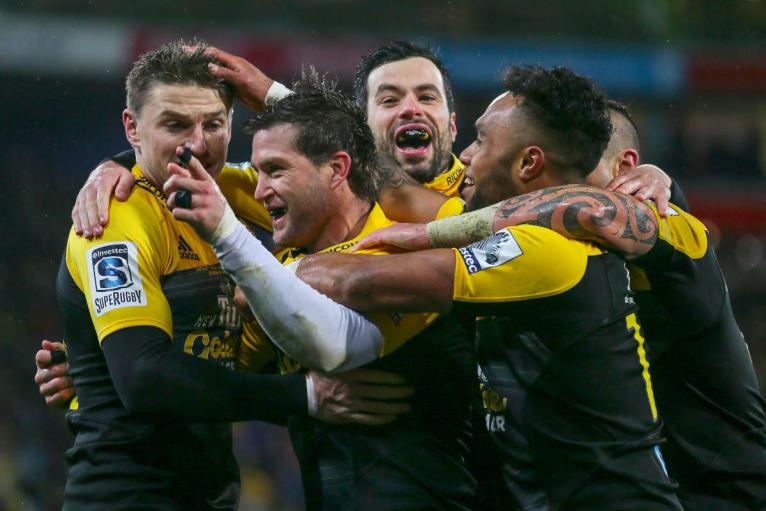
The Hurricanes look to be on track to win a second Super Rugby title, 10 years after their only other success.
NEW: Follow Your favourites in the App 📱
You can now follow their favourite teams, tournaments and players in the RugbyPass App!
At the other end of the table, Moana Pasifika look destined to finish last and probably, unless a new investor can be found in the next few weeks, close their doors when the campaign finishes.
But interestingly, while these two clubs sit at opposite ends of the Super Rugby Pacific table, what binds them is that they have respectively been the two worst financial performers over the last three years.
Moana, without a regular home base, have struggled to generate gate revenue, sell merchandise or win many high-value sponsorships.
Without money, they haven’t been able to attract or retain key players and win more than a handful of games, and it’s no surprise that current owner, Pasifika Medical Association, has raised the white flag and said it can’t continue to fund the club past this season.
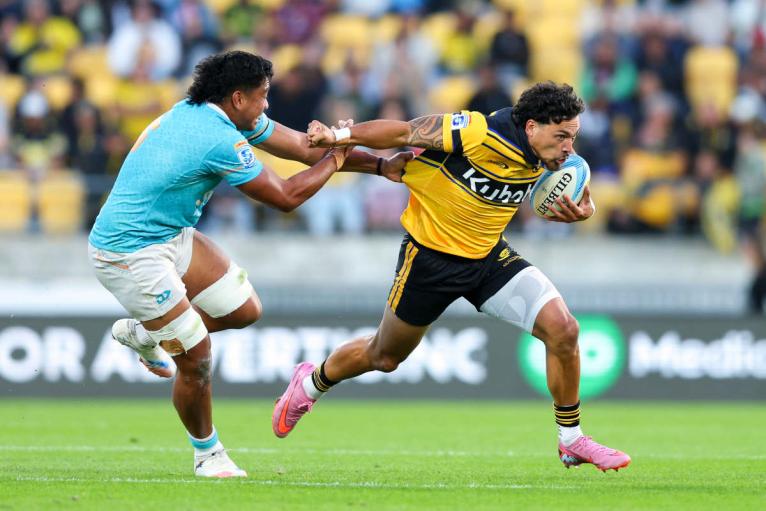
Moana have felt the cost of failure, while the Hurricanes are feeling the cost of chasing success. The club has lost an accumulated $4m or thereabouts over the last three years and would have been in desperate financial trouble had local property developer Malcolm Gillies and investment partner Summit Capital not bought a 50 per cent stake in the club late last year to recapitalise it.
Three factors have influenced the Hurricanes’ financial woes. The club shifted to a better but more expensive training base in 2024.
The average crowd in Wellington has dropped from 16,000 to 12,000 post-Covid (primarily because the current government has culled thousands of civil servant jobs in the capital and damaged the local economy).
Thirdly, head coach Clark Laidlaw laid out a three-year recruitment and retention plan when he came into the job in 2024.
There are no figures to confirm this, but there is an assumption that the Hurricanes, as they are entitled to, have used their own money to top up the salaries of some players to firstly sign them and secondly to keep them.
It is all so precarious – running up debts to build and keep a squad that can finish high enough up the table to secure the all-important home play-off rights.
“We’ve definitely had our eye to that around recruitment and retention,” Laidlaw told the NZ Herald. “There’s been a lot of work and thought put into trying to prepare a team over two or three years and trying to get to this point where performances are reasonably consistent.
“The difference between our good and bad feels a lot different than it did individually and collectively, which is very helpful.”
If the Hurricanes, who top the table by two points with four rounds left, can go on to host a semi-final and final this year, they will likely make a profit (selling out their stadium for the final will net them around $1m), and their retention strategy will have paid off.
It is all so precarious, though – running up debts to build and keep a squad that can finish high enough up the table to secure the all-important home play-off rights.
This, however, is the financial model under which New Zealand’s clubs operate. They don’t have access to the competition’s broadcast revenue – NZR negotiates and keeps that – and in return, uses a portion of it to pay Super Rugby salaries.
Clubs have a nominal $4.5 million salary cap to each contract 38 players, and the maximum they can pay any individual is $195,000.
NZR has the budget to top up the salaries of around 40-50 players it deems critical to the All Blacks, and it is often said – by the other four New Zealand clubs – that the national body has subsidised the Crusaders’ success over the last two decades.
It’s easier to keep good players and build an experienced squad with depth in most positions when NZR is chipping in with anything from $300,000 to $800,000 per year, per All Black. Clubs can use their own money to also bolster individual pay packets, but they don’t tend to have much spare capacity.
They can sell sponsorships, merchandise and keep their gate revenue, but all of them say they are overly reliant on the latter to make money. With just seven regular-season home games, hosting additional play-off fixtures is the only way clubs say they can finish each season in the black.
The fact that clubs at each end of the table are in, or have been in, deep financial trouble illustrates both the lack of financial horsepower in Super Rugby generally and the flawed ownership model in New Zealand specifically.
If it stays the way it is now, I fear for it. If there’s change, then I believe we’ve got a product. But if it doesn’t, I believe it’s going to die.
Fans may not love getting into the weeds of the game’s economics, but when money becomes such a determining factor in who succeeds and who doesn’t, the problem can’t be ignored.
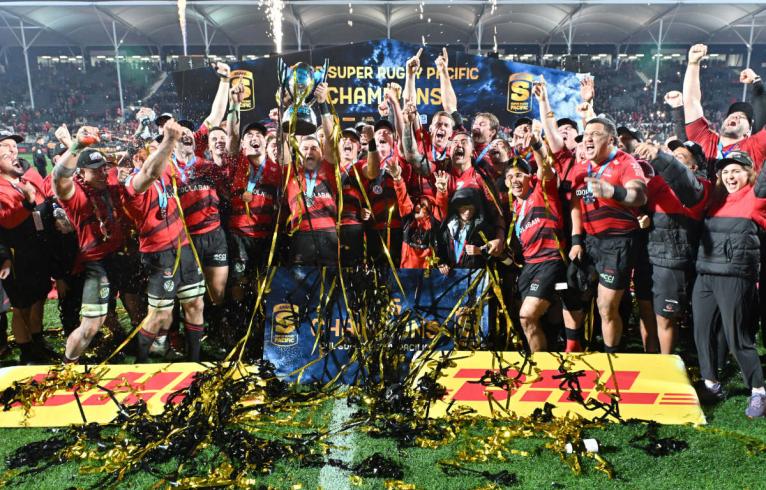
What makes the situation in New Zealand yet more difficult to brush off is that all five clubs are understood to have lost money last year – even Crusaders, the Super Rugby Pacific champions.
It’s not tenable for clubs to continually lose money and this is why NZR faces a huge decision about whether it’s ready to make a dramatic change to Super Rugby’s ownership structure.
“The whole system has to change,” Gillies told Rugby Direct in late April. “I don’t think it’s sustainable as it sits right now,” he said.
“If it stays the way it is now, I fear for it. If there’s change, then I believe we’ve got a product. But if it doesn’t, I believe it’s going to die. That’s my honest opinion.”
NZR has to challenge the fundamental premise of whether it needs to reverse the decision it made 30 years ago to own its players and Super Rugby clubs. That decision gave it the stress of paying all the bills, but the security of control over its talent.
For the first two decades at least, maybe longer, NZR felt like it had chosen the right path by keeping Super Rugby directly and wholly under its control.
There was no conflict between club and country, no ongoing battle to protect players from excessive workload or have them released for ad hoc All Blacks training camps, while NZR held some semblance of control against an inflationary cost base.
This was not the picture in England or France where privately-owned clubs were seemingly in a never-ending war with national unions and inflation ran rampant – to the extent various clubs went bust.
But in the last 10-12 years, NZR has been forced to shift from its original position of exclusively owning Super Rugby and enter a hybrid world where the five clubs are partially owned by private investors.
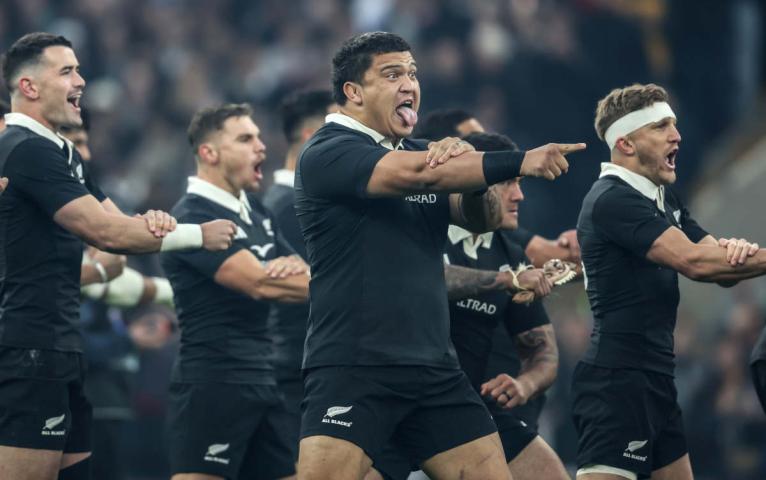
NZR, since 2012, has prioritised its national teams and has gradually increased its investment in the All Blacks, Black Ferns and other international entities such as the All Blacks XV.
The All Blacks are the commercial engine of the game, generating about 80 per cent of all NZR’s income, but the strategy of investing more in teams in black to generate higher returns that can then be spent on the lower tiers, has not worked, and NZR had to open the Super Rugby clubs to private investment out of economic necessity.
Now, it has an imperfect set-up where all five clubs have a degree of private ownership – the Highlanders are 87 per cent owned by high-net worth individuals – but only limited commercial rights, and virtually no decision-making power in any key matter such as the number of teams in the competition, where teams can be based, player eligibility or future strategic direction.
All these major matters – plus control of the broadcast rights – sit with the respective national unions of New Zealand and Australia. The private investors are losing money and have no means to run the competition the way they would like to, and something has to change or more clubs will go under, and Super Rugby could become too broken to fix.
Privatisation may open the way for NZ clubs to sign more foreign players. It could see the introduction of a player drafting system, of more afternoon kick-offs and in time, maybe cup competitions that involve the top Japanese clubs.
“If you want private investment in these Super clubs, you’ve got to give them something to invest in,” Gillies says. “From what I’ve seen, there’s not a lot there. My belief is it needs to be privatised. It cannot continue the way it is.”
Super Rugby is clearly now at a critical juncture, one where it seems NZR has no choice but to agree to some kind of critical change to rejuvenate the competition and drive greater commercial value from it.
It may have to cede a significant element of control to create the right environment for private investment to feel it can succeed, but all this is potentially good news for fans.
Privatisation may open the way for New Zealand clubs to sign more foreign players. It could see the introduction of a player drafting system, of more afternoon kick-offs and in time, maybe cup competitions that involve the top Japanese clubs.
The Hurricanes may well end the season as champions, but their bigger achievement this year might be serving as the symbol of why Super Rugby needs a radical overhaul.


Wellington messed up with their stadium. It is not a good place to watch sport. They pre-sold loads of multi year memberships when it opened which hid the problems.
The seats are far away and uncomfortable, and no one seemed to notice the stadium was in Wellington when it was designed so there is nothing to protect you from the horrible weather.
Gate takings would benefit massively by having games kick off at 3pm, or even 5pm. But that would hurt broadcasting revenue. Back in the Athletic Park days most of the tickets were families and kids. You don’t see that anywhere near as much now.
They either need to cut their losses and build a new stadium, or adapt the current one for reality. I doubt either makes sense when you do the numbers on it. It’s good to see the two new stadiums built since then have learnt the lesson thought.
The only rugby nation that understands commerce in sports is France. Their comp is the best because clubs are privately run, get a piece of the (huge) TV-revenue cake and so on. The clubs pay for and develop players. Their marketing is excellent too. The league runs for a full season meaning 13 home games in the Top 14 and 15 in the ProD2, before playoffs en not counting the 2 home games Top14 teams always play in Europe. They run the Top 14 like the NRL or EPL. Clubs rule because that’s what every successful sport does.
Bordeaux sold out every home game over the last two seasons. That’s 30 x 35000.. over a million fans through the gates. La Rochelle sold out over the last 10 (TEN) seasons in their 19000 seat stadium. NZR can only dream of those numbers for the ABs.
People keep going on about how France underperform, but their league hasn’t been set up for the national team. It’s been set up for the clubs. And it works. Europeans are extremely parochial and more often than not support their club first and then the country. They don’t like the country to lose, but that’s quickly forgotten when their team plays in the local derby next weekend. These rivalries go back centuries sometimes. It matters more. We’ll never have that in NZ.
We need a full season club comp based on what they do in successful comps in other sports. Some homework has to be done first to see what works in NZ because we’ll continue to bleed cash if we persist with this model. Something’s gotta give.
Running up debt seems to be the way with everything today. Many English FA clubs have operated with annually increasing debt for decades, the Olympics, even Governments! What country in the world is not in debt? While this is an unhealthy state of affairs, it’s kind of hard to imagine any strategy except “double down.”
maybe they want to look at the ticket prices and include the train and bus in the ticket prices
I live in the uk and prefer watching super rugby over premiership and top 14 (which does have some quality games, but not many).
The product is good, but the teams need more freedom to act like businesses and invest for their commercial success and on for on field success. If Super rugby can get more access to attract and retain talent, it’ll grow for sure. It already is these last couple of years, under new management.
I think it needs to branch out a little (that’s where I’d like to see SR change) and engage other markets to do it, but fully agree. That said, i think my model would shift the rugby here to be more like premiership, as it’s currently a battle between quality and relevance to normal rugby fans.
Some great info here Gregor and there are also a number of issues alongside the problems you identify:
1) Large stadiums are not fit for purpose for crowds of 10-12 thousand people.
2) Winter is not a good season to attract people to outdoor games.
3) The ABs are not getting worse because they are not playing the SA teams (the SA teams were largely useless in Super Rugby), they are getting worse because a huge number of fringe NZ players are leaving. Those players brought the level of the comp up.
Yup, the SA sides were absolutely useless and it was fantastic that the skaapnaaiers decided to leave them out of that stupid travelling BS called ‘Super’(???) Rugby and they were forced to look North and take part in terrible competitions like the URC and EPRC which are going swimmingly for them as it happens.
What makes you think theyre getting worse at all?
I wouldn’t think the age profile has changed much at all, and obviously players are much better earlier in their careers now.
Also 1 is only a problem because they’ve made it one. Sell cheaper tickets, get more people. It’s a simple solution.
We don’t need South Africa back in Super Rugby. O think we need to go north as well and axe out a deal with the English Premiership. Invite three or four teams from England to join Super Rugby. That’s where the money is at. It will benefit NZR a lot more than having the South Africans back. Sorry to say it, but that ship has sailed.
Hot political takes!
What a joke.
The entire rugby world is currently scratching its collective head over a truly baffling mystery: Why is Super Rugby Pacific, a competition where New Zealand plays itself in slightly different colored jerseys, not generating the same mountain of cash as it did when half the world was involved?
Gregor suggests the Hurricanes are a symbol of a broken system (I wonder who broke it?), pointing to the Wellington property market, the culling of public servants, and even a more expensive training base
It’s almost impressive how many excuses can be fit into one article without mentioning the 950kg, Springbok-shaped elephant in the room…
The kiwis are coughing up blood but would rather pay the "We Don't Need You" tax than admit they f’d up on a monumental scale
Remember 2020? The year NZ Rugby looked at their long-term South African partners, the ones who brought in the massive broadcast checks, the 2:00 AM character-building kick-offs, and the actual physical physicality and said, it’s not you, it’s us... actually, it is you, please leave
Now, four years into the Aotearoa-Plus-A-Few-Others experiment, the Hurricanes are reportedly losing millions while sitting at the top of the table
It turns out that when you kick out the world champions because the flights are too long, you also kick out the interest of anyone who doesn't live within a two-hour radius of a Z service station
Crying out for a radical overhaul to save the game, suggesting private investors, player drafts, and maybe, gasp….afternoon kick-offs!
Truly revolutionary stuff!
Here’s a radical idea: Maybe the financial model didn't need recapitalizing by local property developers; maybe it just needed a competition that didn't feel like a never-ending internal audit
As it turns out, fans are less likely to buy a ticket to see the Hurricanes play the Blues for the 400th time than they were to see them face the Bulls at Loftus
The Hurricanes might win the title, and Moana Pasifika might close their doors, in the old days, being the best meant you were rich
In the all new & vaccinated, SA-free Super Rugby, being the best just means you’re the most efficient at losing money
But hey, at least the flights are shorter
What I find strange is that for many years the NZ fans and their teams and players were the ones complaining about Super Rugby, and they were the ones calling for a “Trans Tasman“ competition. Well they have it now and they are the same ones again complaining about Super Rugby. It is dying, television viewers falling, attendance is falling and the competition is failing with their middle-tier players disappearing because they get paid a pittance compared to EPCR and Japanese club players.
Geepers mate, what utter hogwash!
The All Blacks have their own 950kg pack.
Also, it was SARU that jumped as they had no financial state to wait for COVID to end.
You have way too high an opinion of South African rugby.
What do you mean by audit? It’s hilarious that this Gillies guy doesn’t even suggest what needs to change, but what is certain is that he would never have got that change in the old SR comp. What would a model, that Gillies would be happy with, look like if SA were still involved I wonder?
Open up the borders within the comp but only after so many Super caps dilute the kiwi teams slightly strengthen the Oz teams a tad with some key players and depth slightly and adjust the pay structure relative open up Japan either test caps keep and promote younger dudes more
The Oz teams improving should help let’s hope they continue they should be flush with cash now and after next year for mid def
The cake tin is a nice enough stadium and located well enough to city but simply the seats are just to far away from the paddock making it oval for cricket that never happens was a bad decision that even in my younger days thought it was a bad one
The Nix or somebody was making a 10k stadium out of town on the highway? If they can do 18k instead that would be perfect. What do you do with the Tin though? It would get half a dozen games a year?
Honestly, F the current “government”
About as useful as tits on a bull
Super Rugby does not need a radical overhaul, we just need anyone with business sense to take the reins. All the middle-aged men who keep taking charge are incapable of providing an experience that justifies all the additional costs on top of the ticket prices.
Also, Wellington Stadium is a s-hole. Attendance will never change unless a new one is built.
The walk to the Stadium is a joke, a kilometer of wind and rain. Then inside and no roof Agree it's as you describe.
Where will the money come from to fund that? They just need to work with what they have.
Not help IF, somethings got to change. What it is?
Gillies also talked about another fundamental problem - that overseas entities can buy NZ players without paying any transfer fee to NZ rugby, whether club or NPC or NZR. Where else in professional sport does this model work, where absolutely nothing goes back to enable recoupment of the huge investment NZ rugby has made to make that player an international commodity? Imagine ManU letting a player they’d been grooming since he was 14 go to another club without compensation.
Clearly I’m missing something here, is there a legal problem, Gregor? What happens, for instance, if a player who enters the Warriors pathway programme then jumps ship to, say, the Eels? Do the Wahs just let him go? Is there a transfer fee? Is any part of that fee paid to the Wahs?
I think the fundamentals have to be addressed - I don’t think just adding another ten games is going to fix anything. NZR have to look at transfer fees, tv rights and a draft system, give the clubs more autonomy over their own fate, but only if they also have more opportunity to make a genuine business model work…. Pity they can’t talk to Ted Turner anymore - he seemed to be able to make sports franchises profitable!
There is no possibility of transfer fees being imposed on players who are not contracted. It would be in breach of every labour law in every country in the rugby world. Even World Rugby itself would not be able to legislate outside those laws. It is the same in all sports, including the NRL. The players are employees. They cannot have their legal rights to sell their labour restricted. When the player is contracted and wants to leave, or where the club wants to remove them, there is a negotiation over the break fee. That is the most that can be done.
If NZR wants to make a real difference to player retention then they need to look at least doubling the salary cap at Super Rugby level. By most accounts it has not changed in almost 10 years, from $5m. Doubling it would cost around $25m a year. NZR has had a massive growth in revenue in those ten years, up from $162m to $304m, but seems to want to expend all that money everywhere other than on Super Rugby salaries for the overwhelming majority of SR players. The additional player funding has gone almost entirely to retaining NZ's top 40 or so players. The money after that is spent on one project after another that generates no revenue. And then it whinges about losing players.
NZR is an extremely poorly run company that rips off its essential workers, the overwhelming majority of SR players. Punishing those players for that failure is not the solution. Taking SR out of the hands of an organisation as incompetent as NZR is vital if professional rugby in NZ is to survive.
The basis of the problem is that both NZ and Australia have refused to completely professionalise their domestic game. 30 years in to professionalism, amateur rugby still controls more than 40% of the domestic season in both countries.
Amateur rugby [NPC and the Sydney/Brisbane club competitions in Australia] has stopped the SR teams operating full season for the last three decades. As a consequence the SR teams play only 14 scheduled competition games, 7 at home, finishing in the middle of winter. English Premiership and URC teams play 22/11 scheduled competition games a year, finishing in late Spring, while Top 14 teams play 30/15, finishing early summer. Because of that, attendance, commercial deals and TV revenue for the SR clubs have been severely compromised, to the point they are no longer viable entities.
This is insane. There is no sport in the world that imposes this restriction, let alone in professional rugby. Its only now the NZ SR teams have all veered into the red that NZR have finally recognised this.
In the short term, NZ and Australia need to run a double round robin SRP in 2027, so 18 games up until the end of June, then run either a double round robin SR Aotearoa/Australia July to September, or a single round SR "Next Generation" [promoted as bringing in the next generation of pro players] or a comp with Japan's J One teams. Or some combination of all three. The SR teams need to get to about 25 games a year immediately and eventually move to a single, full season SRP, or like Australia NZ's SR teams will have to be taken over entirely by NZR, with all the financial consequences of that.
Beyond the financials, the refusal to completely professionalise their domestic game has done an appalling amount of damage to professional player development in both countries. It is absolutely vital for young players that they have a single, fully professional, year round structure to work within, not a hopelessly fragmented collection of "development" structures that have poor results but insist on being part of the system. They need to be certain they will have the opportunity to play at the top level, something impossible if they are playing for a team that only gets 14 games a year.
The Crusaders formally took over player development in Canterbury in the early 2000's. A professional organisation doing a professional job for professional players. It is zero coincidence that the Crusaders has been, far and away the best professional player development organisation in the rugby world over the last thirty years. Instead of demanding the loser solution, a draft, New Zealand rugby as a whole needs apply the winner solution, and demand far, far more from its hopelessly ineffective player development system.
Read your full post BRB, and you haven’t address the elephant in the room. Super Rugby has always lost money.
That’s why it doesn’t run longer. It fits the need NZR has of developing players before the International season.
Again, outside of that the pro future is club and representative rugby, you can’t continue a 5 team comp while taking two teams (AB black squad) out of it. You need a much broader, second tier of rugby.
You’ve got it all wrong, club and NPC is the pro future.
Paying the price for focussing on making the All Blacks brand more important than the domestic game.
Every business focussed on the sector with the biggest money making potential.
There are always repercussions, winners and losers in every scenario SB.
Really they are reaping the rewards (unprecedented All Black success), different people just want different things though.
The ABs coaches have to take some blame as they turned Super into an extended All Black trial with probables and possibles. Paul has finally highlighted why some teams have been able to stockpile while others cannot. It’s the top up provided by New Zealand Rugby.
I think we need to see some of the decline as part of a wider social pattern. Covid has a big impact on rugby attendance in NZ. But we are seeing a growing younger “fan” base if the Blues vibe is anything to go by. More of the younger generation heading to watch the game in a Friday or Saturday night. While relatively small, it is a momentum change especially as younger stars make their names. This especially needs to be encouraged - Fehi is now a household name through NZ, and Love could become a super star. Tavatavanawai is building a cult. Ditto Vai for the Blues. The Chiefs and the Crusaders are already blessed with a string of ABs but would do well to promote some of their younger talent. Marketed right, and targeting this younger audience (us oldies will always be there) is key. The NRL does it perfectly and Super must borrow from their marketing strategy.
Fehi that’s off to the EPLat the end of the season?
What are you talking about cnw?
If NZR is not going to keep paying for SR, and instead transition to more “All Black” streams, then you are going to have to address the problems. The one highlighted here is that if the Canes were crap, like the Canes normally are, they would have to operate at a 10-12k crowd financial level. And theres not a lot of hope those Fehi’s who suddenly hit the scene and are awesome are going to wait that long. Only 20yo prodigy’s are going to make in NZRs current model.
Great points u are dead right about the youth you see in crowds in NZ , here is an idea get Reuben Love on a new Toffee pops ad!! he gets plenty of signs being held up for him in the crowd for real
Crowds and audiences have been up overall since 2019 but it sounds like there are outside problems in Wellywood thanks to our beloved government.
There's really no excuse though for spending beyond your means - and it's even worse in the NPC. Difficult when the provinces have the votes but some serious conversations need to take place.
We certainly don't want private control - there's a reason why France and England have been the biggest underachievers for the last 20 years.