
On Saturday in Gqeberha, South Africa A will run out against Zimbabwe as the curtain-raiser to the Springboks’ season opener against the Barbarians. For most supporters, it will be a curiosity. A chance to see a few familiar names, a few future stars and perhaps catch a glimpse of the next generation before the main event begins.
NEW: Follow Your favourites in the App 📱
You can now follow their favourite teams, tournaments and players in the RugbyPass App!
Yet the existence of the fixture raises a question that South African rugby has never really answered. Why does the deepest rugby nation in the world not have a permanent second national team?
The SA A side named to face Zimbabwe is a fascinating blend of experience and promise. There is the reassuring presence of Lukhanyo Am, a player who, not so long ago, for a brief spell, was the most creative and dynamic baller on the planet. There are seasoned professionals such as Vincent Tshituka, Ruben van Heerden, Phepsi Buthelezi and Neethling Fouche. Alongside them are some of the country’s most exciting young prospects: Haashim Pead, Siphosethu Mnebelele, Jaco Williams and Zekhethelo Siyaya among them.
This team has two primary objectives: beat Zimbabwe comfortably and provide meaningful exposure for a group of emerging players. The former is expected. The latter is precisely why it feels so odd that South Africa A have not taken the field since 2022. If this side serves such an overt purpose, why has it been absent for so long?
South African rugby understands the value of depth better than almost any sporting system in the world. At schoolboy level, the country’s leading rugby institutions routinely field multiple teams every Saturday. First XVs are supported by second teams, third teams and often even fourth teams. The principle is obvious. Talent is cultivated through meaningful competition and deep wells.
Nobody expects a promising youngster to sit on the sidelines waiting for an opportunity. They play. Yet at the highest level of South African rugby, especially during this period of dominance under Rassie Erasmus, that logic has often been constipated by a bottleneck.
The team has never really been treated as a fixed programme. It has been treated as a niche tool, kept in the dark in a corner of the shed, only used on rare occasions.
The result is a pathway with one strangely unstable final rung. South Africa can take a player from schoolboy rugby to provincial and national age-group sides, from the Currie Cup to the URC, and from there into the wider Springbok conversation. But between franchise rugby and Test rugby, the bridge appears only when convenient. SA A should be that bridge. Instead, it has too often been a trapdoor: visible one year, gone the next.
For much of the professional era, South Africa A has drifted in and out of existence. Sometimes it has been called SA A. Sometimes it has taken the form of the Emerging Springboks. Occasionally it has been revived for a specific purpose before disappearing again. The team has never really been treated as a fixed programme. It has been treated as a niche tool, kept in the dark in a corner of the shed, only used on rare occasions.
When the British and Irish Lions toured South Africa in 2021, SA A nominally resurfaced, although the side functioned largely as a Springboks warm-up act during the disruption of the Covid era. A year later another SA A squad was assembled for fixtures against Munster and Bristol. Then, once the immediate need had passed, the concept faded into the background again. That feels increasingly difficult to justify.
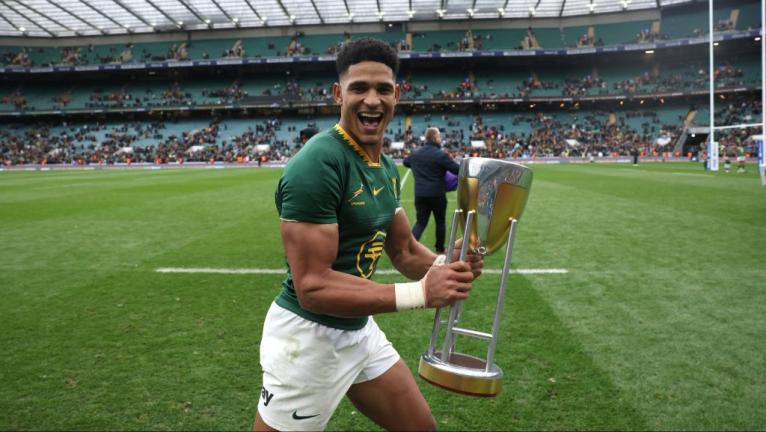
The strongest argument for a permanent SA A programme is that South Africa has already seen the returns. The side that lost to Bristol in 2022 included a young Sacha Feinberg-Mngomezulu and Grant Williams, both of whom have become crucial members of this Springboks crop, while several others graduated into the national set-up in the years that followed. What looked like a development fixture at the time now reads like a glimpse into the future.
Development pathways are not judged by results. South Africa lost those matches. What matters is that the players were exposed to national structures, national coaches and a level of scrutiny that sits somewhere between franchise rugby and the Test arena.
Imagine a permanent programme with annual fixtures in June and November. Fringe Springboks could gain meaningful game time. Young players could be exposed to international standards before earning Test honours. Coaches could assess combinations and identify future leaders. Most importantly, South Africa would maximise the one resource it possesses in abundance: depth.
If South Africa wants to be rugby’s leading nation, it has an opportunity to do more than win trophies.
There is another, more altruistic argument for regular SA A fixtures, and it extends beyond South Africa’s borders. If South Africa wants to be rugby’s leading nation, it has an opportunity to do more than win trophies.
Zimbabwe’s presence in Gqeberha is a reminder of the potential that exists elsewhere on the continent. The Sables have qualified for the 2027 Rugby World Cup and are enjoying a resurgence after years in the wilderness. Elsewhere, countries such as Namibia, Kenya and Uganda continue to search for opportunities to test themselves against stronger opposition. Those opportunities remain scarce.
The reality is that the Springboks cannot regularly accommodate such fixtures. The demands of the international calendar, commercial obligations and the expectations attached to the world champions make that difficult.
South Africa A faces no such constraints. A regular SA A programme could provide meaningful, competitive fixtures for emerging rugby nations. It would offer valuable exposure, attract crowds and create broadcast opportunities. More importantly, it would raise standards.
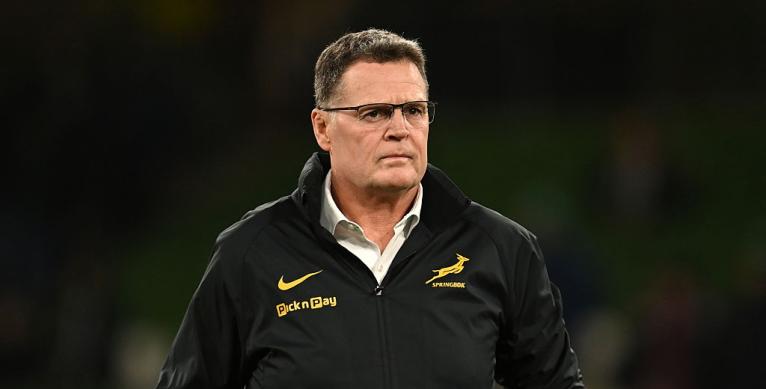
The benefits would not be one-sided. South Africa would gain a genuine development pathway and add some coin to the coffers through broadcast rights and ticket sales. Its neighbours would gain access to elite opposition. African rugby as a whole would become stronger, which could in turn bolster Currie Cup and URC squads. It is the rare sporting idea that serves both self-interest and the common good.
Perhaps that is why this weekend’s fixture feels more significant than it first appears. South Africa A should not be viewed as a novelty. Nor should it be viewed as an occasional gathering of players who narrowly missed Springbok selection. It should be viewed as a missing piece in the country’s rugby ecosystem.
South Africa would hardly be inventing the concept. New Zealand have long used secondary representative teams to keep the next layer engaged. Ireland have leaned on Emerging Ireland tours. England had the Saxons. These sides are useful elsewhere. In South Africa, they now feel almost unavoidable.
The Springboks have spent the Erasmus era showing what can be achieved when a national team thinks beyond a matchday 23. A permanent South Africa A programme would be the logical extension of that philosophy.

Relive the drama, intensity, and history — all the iconic British & Irish Lions documentaries from 2001-2021, available now on RugbyPass TV.


Like most champion nations, the “A” or XV program is usually used in conjunction with preparation for a major event like a tour or a tournament. But it's not a regular fixture which is why it doesn't attract test status.
In the case of All Black XV and Maori All Black sides, they’ve usually been used to keep talent committed to the New Zealand ecosystem rather than necessarily just for supporting depth in the AB program.
SA A (not to be confused with SAA), England XV, France XV, Emerging Ireland and Australia A are ad hoc programs that are either intended to introduce prospects for future national representation to international rugby or to help prepare for attrition over the course of a tour or a tournament like a world cup.
It would make sense for each of these nations and any other for that matter to have this program as a regular calendar fixture because it expands opportunities for players wanting to prove their credentials beyond the limits of a domestic or regional competition whilst providing a reasonable level of intensity for players returning from injury or suspension to be reintegrated into the national setup.
These extra sides have enabled New Zealand to ride out the consequences of attrition over the past 30 years seeing them prove as the most dominant rugby nation for the entirety that that sport has been professional.
If South Africa are truly committed to the idea of reaching and surpassing this level, they're going to have take a similar approach and maybe even include a “Zulu” XV program or something similar to the Maori All Black program as well.
They certainly have the player depth to produce multiple teams. They just need to have the organisational and logistical support required to prepare and sustain additional programs and that is possibly where they will remain limited.
Why? Rassie has proven that you don’t need a shadow team with his tactic of mass rotation by playing on average 60 test players a year. That is how proper depth is built.
Same as France mass rotation.
I dig watching AB xv games and NZ Māori but sure same for SA as is everyone else but getting games and paying for it whole different matter
Actually when big SA rugby schools play each other they can field a lot more “open” (ie not U14, U15 etc) teams than that. For example, I think Pretoria Boys High (PBHS) can deploy 10 open teams, and in years gone by the “Fifteenths” from PBHS and Affies played each other. PBHS is the school that the former Bok captain (and 2007 RWC winning) John Smit attended. Also the school that the first black Bok captain (Chiliboy Ralapele) attended. And also Elon Musk …
100% agree that SA has been disorganized about the SA A team, and that’s a missed trick.
I’m 100% agree with the writer it will perfectly work for all those players that always dream about playing for Springboks to come true either Aor B side as long they wear green and gold
For starters, the A side could play a few teams from
Africa more regularly. Namibia. etc. good for the game in Africa.
A SA A v ABXV fixture would be worth watching.
Their A side gets regularly hammered by NH clubs A sides. Guess the incompetent refs haven’t made it to those magches to help them out yet.
Naaigie! I see the asylum for got to lock the dooor again 🤣
Lol cos SA need all the help they can get 😂
What does this even mean? Yeah SA ranked No.1 need help?
Shall we dumb it down for you?