




1
England the only team not represented in official Six Nations team of the Championship
55

After six weeks, 15 matches and 1200 minutes of action, the 2026 Guinness Six Nations came down to the final second of the final match.
As Thomas Ramos raised his arms to the Parisian sky after drilling the match-winning penalty in a breathless 48-46 victory over England at Stade de France, elation surged through millions across France, while, hundreds of miles to the north, Irish hearts sank in unison.
The hopes of three nations hung in the air with the ball as it sailed towards the posts, a reminder of the enduring power the Six Nations, and of rugby itself, has to seize the hearts, minds and souls of millions at the close of one of the greatest Championships the game has ever known.
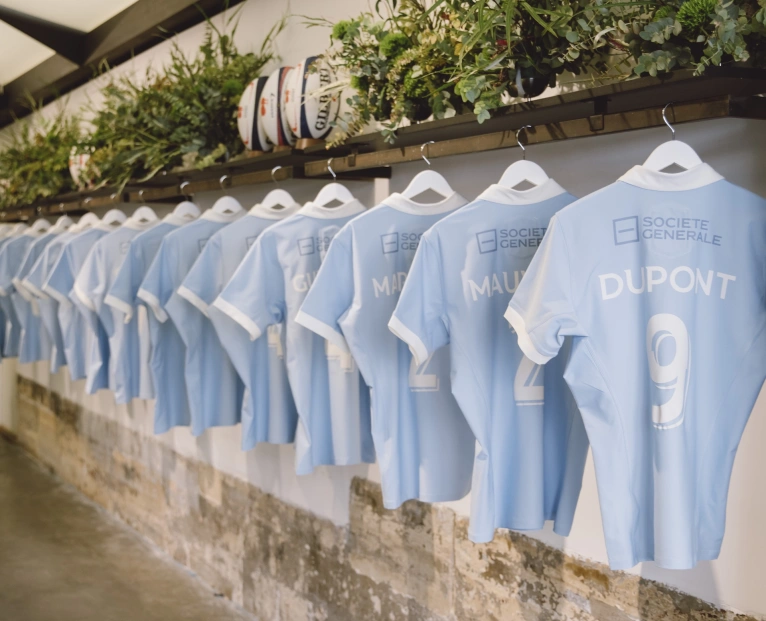
Rugby’s reach does not fade with the final whistle. Beyond the pitch, its relationship with the fashion world continues to flourish, and on Saturday, the two worlds met as the victors donned Adidas’ special-edition ‘Le Crunch’ jersey, as another thread was woven into the rich tapestry of the Championship.
On the 120-year anniversary of France and England’s first meeting, the jersey drew upon different eras of French rugby. The light-blue hue from their first-ever meeting with England in 1906, the 1927 crest from their first win over England, their Tricolore stripes from the 1980s, the trefoil first worn in 1972 – the shirt was dripping in history. What Adidas could not have foreseen was that the jersey would be at the heart of yet more history, as one of the great Six Nations games played out at the Stade de France.
The collection was an immediate success, with match jerseys and heritage jerseys selling out within 24 hours. The match was the crowning glory of 18 to 21 months of work for the designers of the jersey, working with federations, consumers, historians and with the athletes to produce the kit Fabien Galthie’s men donned, and there was no better place than Paris to unveil it.
For Adidas Category Director Matt Fielding, son of former England wing Keith Fielding, the challenge was about telling a story with the jersey, one that would resonate with fans and players alike.
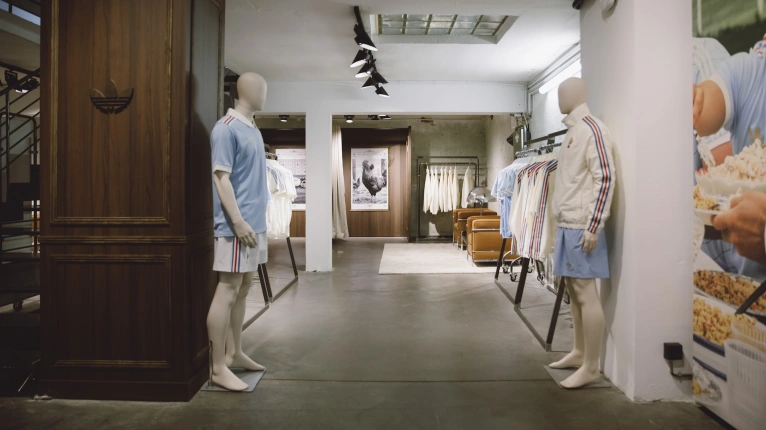
“What we try to do is create the storytelling around the shirt so it has more meaning,” he said at Adidas’ Le Crunch event at the heart of Paris.
“There always has to be something in there for the keenest of French fans. There has to be something in there for the players, so that when they take to the field, there might be hidden messaging, there might be something within the jersey that means something to them. If they’re having a bad game, they can look down and see it and it lifts them.
“Every team is different. What we try to do at Adidas is add that storytelling side of things, and just make sure we’ve got those right elements that make it credible. Then you’re hoping off the back of that, the best look and the best feel for the product starts to build around that.
“If you set everybody up on the right pathway and the direction of where it needs to be, with the guardrails from the federation – so you know it’s going to be blue, it has to be respectful – then it’s about finding those relevant stories that should be told. Not just every story, but the right one. But this one, 120 years of Le Crunch, we couldn’t be better poised in terms of one of three teams could win it. There’s a bit of excitement around it. We want to make sure the French fans and the French team turn up with the best possible chance, with the look but also the performance.”
But with ‘rugby chic’ working its way into everyday fashion, the challenge is far greater than designing a shirt that will be simply confined to rugby’s fandom, rather it is to create something that has a wider cultural influence.
The objective is to transcend the sport, with the latest collection being the vehicle to do so.
“We’ve always seen rugby outside of just sport,” he continued. “That’s what we do with a lot of our sports – have a look at the culture behind the sport and how we bring that through.
“A lot of what Adidas does is born from the field or born from the court and then worn on the street. We’re always taking that idea of what we can do from that. Who knew that boxing shoes would suddenly become a craze for being able to wear them outside of the gym? It’s the same with rugby.
“I think there’s always been that dominant rugby look and feel and cultural flavour from jerseys which has always transcended outside the sport. We’ve seen that whether it’s with fashion or whether it’s through Adidas and our ability to bring that to performance.
“We’re seeing big growth in that, and we’ve always been trying to push the envelope about how far that can go.”
While the ethos is to be “born from the field and then worn on the streets,” the fashion is dependent on rugby’s ingrained and vaunted culture.
“The ultimate is to have people who aren’t from France look at the jersey and go, ‘I’m from England, but I really like that, I might get it,'” he continued. “Rugby gives us that benefit. It’s not like some other sports where it’s very territorial.”
The relationship between the rugby played on the pitch and rugby fashion runs deeper than many might assume, each shaping and sharpening the other in lasting ways.
A team’s style and identity inevitably bleed into the design of its kits, informing the look and feel of rugby fashion. Equally, Fielding explained there is both an opportunity and a responsibility to grow the game through the shirt itself. Performances spark interest among fans, but the shirt can then widen the appeal.
“Rugby at the moment is a growing sport, so we’re trying to grow it around the world,” he said.
“If you take football as an example, it’s everywhere already. There aren’t as many emerging nations coming through. Someone like New Zealand would be a bit like Brazil in football – everybody knows them, and they’re everybody’s second-favourite team because they’re known for being the best historically.
“I think someone like France, the style of rugby they’re playing is very attractive. I think a lot of people watching England think ‘I wish we could do that sometimes’. My father used to play for England, and I asked him what it was like to play France back in the 60s and 70s, and he said the unpredictability. The fact that they were doing things differently, they were running different lines, they were challenging the game.
“If you can bring that unpredictability, the flair and that challenge into the product as well, you’re creating something where people look at it and think, ‘I’d quite like to buy that.’ It’s good for the game.”
French rugby is in rude health. Les Bleus are Six Nations champions, Le Crunch drew an audience of eight million in France alone, and three French clubs have claimed the last five Investec Champions Cup titles between them, all while producing some of the game’s brightest stars. Adidas saw this swell and rode it with purpose, seizing the moment with their ‘Le Crunch’ collection and executing with panache.
After the Super Saturday epic, Fabien Galthie was left with more questions than Steve Borthwick, despite their sides' contrasting Six Nations form.
Read Now
Awesome jersey. Just a massive shame England didn’t play in their away strip.
Join free and tell us what you really think!
Sign up for freeThe idea the coach must be given the rest of the four-year cycle because he has been in place for most of it is fanciful.
Teams destined for finals will set their season up over the next phase of the competition. What do the four Aussie sides need?
Once named sevens world player of the year and a darling of the Stoop, the Argentine flyer has never forgotten his roots.
https://youtu.be/29G7b9YpFjY?si=CUyOkkokeG-tFGa1
Wwatch this video
...
He knows what a strong team looks like, having been with UBB.
Mental strength shown by the hosts was impressive, after going down like that.
Awesome jersey. Just a massive shame England didn’t play in their away strip.
Go the Brums! That was so good. I thought we’d lost it!


 Clear
Clear 


