
Rito Hlungwani’s day began at 5.20am sharp, when a work truck would judder to a halt outside his flat on the Western Cape. The young lock would hop into the ‘bakkie’, huddle beneath the canopy with the rest of the site workers, and head off to his first job as a graduate quantity surveyor. His boss, in those days, was a rugby lover, so Hlungwani was allowed to leave site early to make training with Western Province. Three taxis, a short jog, change of clothes and some food later, he’d be charging around with his heroes while Nick Mallett stalked the field wielding clipboard and whistle.
Hlungwani scrabbled to stay on this hamster wheel for several months; the practicalities of his hard-won degree colliding with his deep-rooted sporting dream. He was still, in effect, a dedicated amateur player as the 2005 Currie Cup drew near. One morning, he was on site when the phone rang. Mallett. The steel-haired, stern-eyed Springbok figurehead was not happy.
“Training had started and I was at work,” Hlungwani remembers. “Nick said, ‘Hey man, where are you?’ He was angry. I told him I’m at work.
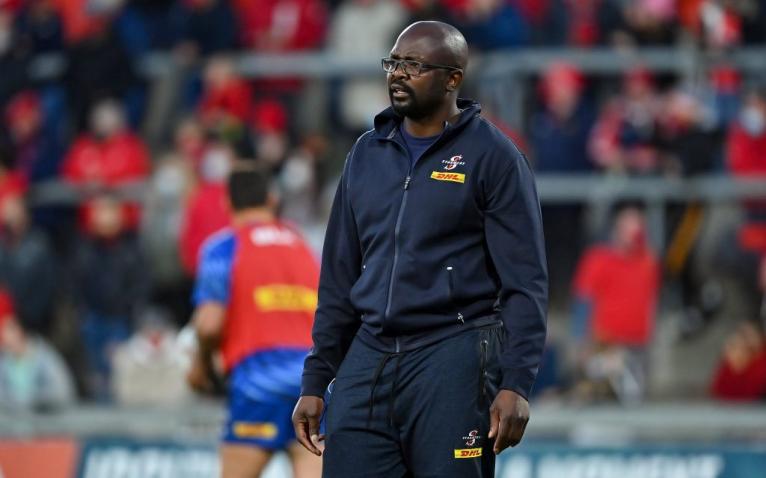
“He said, ‘What do you mean you’re at work? Don’t you have a contract? Aren’t you professional? All this time I’ve been coaching you, and you still had this job? Okay. See me tomorrow morning.’
“I went to his office and there was a one-page contract on the table. They’d made a couple of calls to the boss I worked for and doubled my salary. I was earning 6450 rand to be a junior QS; they doubled that to 12k or something. I looked at it… Yep, I’ll take it.
“I phoned my boss, my mum, my sisters… the one person I didn’t tell was my dad because it wouldn’t have made sense to him. I had a degree, but all of a sudden I was a professional rugby player which didn’t exist where I came from. It took about three months for me to tell him.”
There’s good reason Hlungwani was reluctant to share this joyous breakthrough with the man he still calls his hero. The late Hlengani George Hlungwani was a trailblazer among his community. The family are Shangaan people; one of the smallest strands of the South African tapestry, estimated to make up less than 5% of the national population. In their home town of Giyani, on the fringes of the Kruger National Park, rugby had little footprint. On the odd occasion he did visit the city, young Rito felt ashamed of his heritage. He went from a monoculture to minority status.
My dad spent most of his life educating his siblings and by the time the last one was finishing university it was time for my oldest sister to go to school, so he never really had time to save for us.
“You used to hide you were Shangaan,” he says. “It wasn’t a cool thing. If you watched TV, it was in Zulu, Sutu, Xhosa… Shangaan people always seemed to be slightly inferior at the time. It’s something I really wanted to stand out and show I am really proud of when I moved to Cape Town. My nickname is Shangaan and my kids are growing up as Shangaans.”
‘George’ was set on becoming a herdsman, as was expected of the young men leading rural lives. His father, Rito’s granddad, pulled him off that path. He had gone to night school to learn English and insisted his children receive proper education. George would later take Rito out of his rugby-mad high school in Polokwane because his grades were faltering. Rito did not play the sport at all for three years.
“My dad has six siblings so when his dad died, he was the only one who had qualified to be a teacher,” Hlungwani says. “My grandfather’s dream became his dream.
“My dad spent most of his life educating his siblings and by the time the last one was finishing university it was time for my oldest sister to go to school, so he never really had time to save for us. We sort of scraped through.
“I’m the third-born of four siblings. My oldest sister went to the University of Cape Town in 1994. It was a huge thing. My dad got money from the community. We had to drive her to Joburg – and Joburg was this big place. When I was younger, my biggest dream was just to go to Joburg. We didn’t know to dream of anything bigger.”
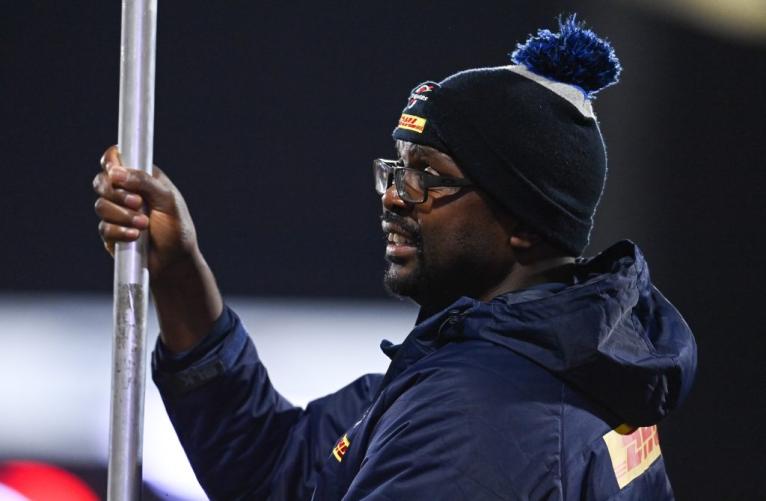
Hlungwani vividly remembers his own flying of the coop, nearly 25 years ago. He’d secured a place in Cape Town, studying at the Cape Peninsula University of Technology. It was an epic voyage of close to 1900km, effectively the full length of the country.
“My mum and dad took me to the local bus station around 7.30am with all my clothes and linen and gave me 300 rand (£13.50). My dad shook my hand and said ‘good luck man, my only requirement is you bring a degree home’.
“I took the bus to Joburg – five hours. I got off properly scared. I then waited for the overnight bus to Cape Town. I arrived there around 12 noon the following day. I got out the bus station… boom, where to now? I had my acceptance letter from the university but I didn’t know how to get there. I hung around and by coincidence there was another student from Joburg also waiting at the station, and I got a lift with her friend.
“It took me a couple of weeks to acclimatise. One of the guys in my accommodation walked past my room and I asked him ‘hey man, do you know if there is a rugby team?’ I knew there was, but I just wanted to start conversation.”
Hlungwani fought his way to that professional deal in Mallett’s office, and rode the rugby train hard. He never forgot his father’s ethos. Every Province player was drafted out to a local club team and when Hlungwani was aligned to the University of Cape Town side, rather than accept their offer of a bursary, he had them transfer it to his younger sister. George no longer had to shoulder the burden of more tuition fees.
I needed a plan. I needed another job, or to shut this job down, or ask the boss for help. I was driving slowly, thinking, trying to come up with a plan.
As his playing days ended, Hlungwani flirted briefly with coaching. Timing and turmoil meant his first jobs in clubland were hit and miss. He almost fell out of the game entirely. By 2014, he was quantity surveying full-time, working for a company which tendered for billion-rand projects.
The job took him to the town of Vanderkloof, famed for its enormous dam and a popular holiday spot in the arid centre of South Africa. He was rebuilding a substation for energy supplier Eskom. The job kept snagging. The building kept flooding. The profit margin kept dwindling. Hlungwani was thoroughly fed up.
“They get summer rain there, and when it came, the roof started leaking. We went back and fixed it. Six months later, it leaked again. That happened three or four times. I’d had it with this roof. We were going to start losing money.
“I needed a plan. I needed another job, or to shut this job down, or ask the boss for help. I was driving slowly, thinking, trying to come up with a plan. There’s no mobile phone service in that area. Then, as I’m going down this hill, my phone starts ringing. I pull over… argh, alright, who could this be? I answered. ‘Hi Rito, this is Gert Smal’.”
The Springbok colossus had returned from a coaching spell in Ireland and taken charge at Province.
“Obviously I knew who he was,” Hlungwani says. “He told me ‘I’m looking for a lineout coach for the WP Institute, I’ve spoken to 12 people and 10 of them recommended you. Are you interested?’
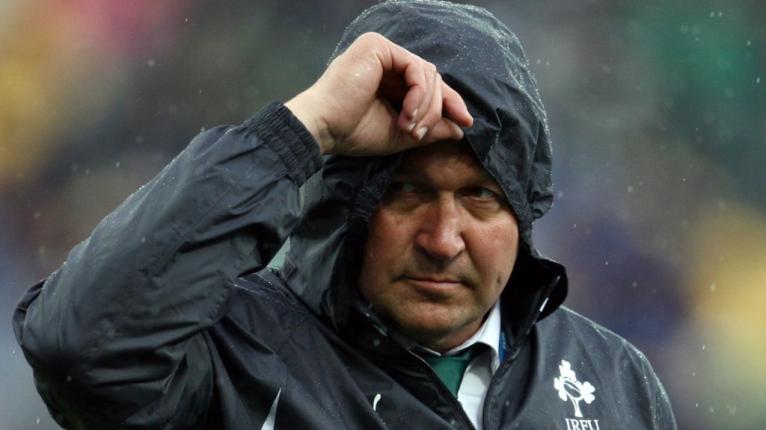
“Inside, I’m like, yes, yes, I want it! When can I start? He asked me to see him the next morning. I was 12 hours away from Cape Town. Boom, drove back to my little residence, packed everything, told the subcontractor I had to rush back to Cape Town and left. I got home, showered, and went to see Gert. He offered me the job. That call sort of saved me from myself.”
Eleven years later, Hlungwani sits in a London hotel, the brains and the force behind the Stormers’ extraordinary pack. They remain only team in any major league still unbeaten, eight from eight in the URC and two from two in the Champions Cup. They go to toiling Harlequins, with a weakened squad, on Sunday to preserve the run.
Underpinning this form is the transformation in the Cape piano shifters. On Hlungwani’s watch, they have scored the most maul tries, ground the most maul metres – close to an eye-popping 40m per match – have the best lineout stats – north of 90% on their own throw – and won the most scrum penalties while conceding the fewest. As John ‘Dobbo’ Dobson’s forwards lieutenant, Hlungwani has provided the muscle to supplement the backline pyrotechnics.
“I felt under pressure at the end of last season,” Hlungwani says. “Jees, we are relying too much on our backs and counterattack. The scrum and set-piece must come to the party again. We had to find a solution to make sure we became a triple-threat team who could score in different ways.
I took clips of every single maul in the URC and Champions Cup, the teams who were successful or not successful, how teams stopped mauls, how the pictures looked, why a maul is not going forward.
“The URC management used to coach Currie Cup as well, and by the time it was done, the URC was starting again. You are not really having time to come up with new ideas or innovate or rest. The big difference last season, Dobbo said ‘no, URC coaches are not getting involved with the Currie Cup. I want you guys to have a break, go do some personal development trips, go find some fresh ideas so you can come back and challenge the URC.’
“I took clips of every single maul in the URC and Champions Cup, the teams who were successful or not successful, how teams stopped mauls, how the pictures looked, why a maul is not going forward. I spent a lot of time studying that. I went to Australia and spent time with the Richmond Tigers and got to look at coaching and teaching in a totally different way, theming and coming up with stories to drive your message. I felt refreshed, I had learned different ways to sell the coaching. It could have gone the other way but fortunately the new mauling has landed really well.”
Hlungwani’s meetings are town hall affairs. Ideas and narrative pour out of him. Any player, Springbok veteran or teenage hopeful, can be asked a question. Collaboration is demanded. Nobody is made to feel stupid.
“One session when we were building up this new mauling style, we had the kids Riley Norton and Wandile Mlaba, who had just come back from winning the U20 World Championship, share what they did and what worked for them. I loved how the older guys gave them the confidence to do that. I really want us to always use that intellectual capital in the room.
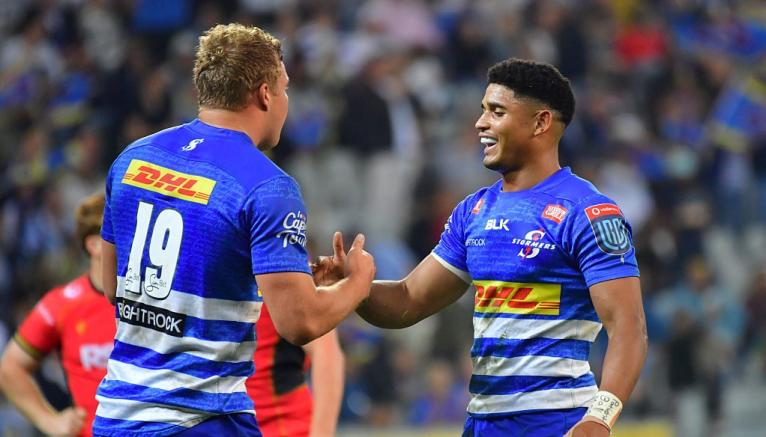
“I get the boys to score: how hungry did we look this week as a pack? How hungry were we in wanting to destroy the other pack? We want a pack that fights, stays hungry and humble, and is never complacent. The season is a long way from being done.”
Last weekend, in a bruising North-South shootout, the Stormers maul twice struck paydirt against a heavyweight Bulls unit. The second, an irrepressible surge from 15m out, settled the game 90 seconds from time. Hlungwani shuffled on his seat in the coaching box. The Bulls were under new management – the Springboks ticket, no less – and it dawned on him their maul defence had changed drastically.
“We’d seen their picture, where the four lock stands, what Ruan Nortje does, where Wilco Louw stands. As we were walking to the lineout, I am looking at the Bulls picture and I see they have totally changed what we prepared for. There were only four seconds left before we threw in. No time for me to warn the boys.
“JD Schickerling called the boys in. Okay, I’m almost in his head, I’m seeing exactly what he is seeing, he is telling the boys they have changed. The call he’d made was to manipulate the front, he saw they’d moved their two props to the front. That’s why I really enjoy the way I coach. I don’t have to get on the mic and say ‘do this, do that’. Anyone can come up with the solution. We collaborate so well. We didn’t score the first one, we got a penalty, and then another, and we scored the third one.”
The game’s newest maul monsters put their streak on the line again in West London. Hlungwani’s mantra will be tested, since several of the leading lights are recuperating back in the Cape.
The campaign is young, but Hlungwani’s goals are lofty. Why shouldn’t he shoot for the moon when the hardest part of his journey was simply to get here? All these years later, Mallett is still the first to text him after a Stormers win. His dad is never far from his thoughts.
“He said, ‘if I am at home and I see you playing on TV, I will be proudest dad in the world.’
“Looking back, there was a lot of luck involved. My biggest dream was just to go to Joburg. A couple of years ago I pinched myself because I was in London. Sometimes it is almost tough to believe but at the same time, if I came from here, I did this and did that, I can keep dreaming because it is doable. Flip man, the sky is the limit. I want to dream as big as I can.”


Sadly…this article hasn’t aged too well….
His story should be a movie
Great read - amazing story, love your work. Let’s go Stormers! 🙌
Incredible article. Truly a world class coach on and off the field.
Great article and such a lekker guy.
A kif dude
What an excellent insight and so well written. More of these please..
Great article. Thank you.