
They say, when you meet a new baby in the extended family, it’s poor form to ignore any older siblings in the process of making a spirited dash for the latest arrival. It’s a piece of advice that springs to mind seeing how New Zealand Rugby [NZR] has directed all the media attention at the All Blacks’ tour of South Africa – with the national team jetting off from Auckland on the same day that the National Provincial Championship began.
NEW: Follow Your favourites in the App 📱
Users can now follow their favourite teams, tournaments and players in the RugbyPass App!
This is certainly a case of the older sibling being overlooked for the agreeable new arrival, and while there were endless stories and opinion pieces about the All Blacks, there was barely a mention of the fact that Waikato had beaten Bay of Plenty in the opening game of what is now called the Hilux NPC.
And here lies the dichotomy for NZR – it wants fans to engage with all levels of the game and have this continuum of support from grassroots, through the NPC, to Super Rugby and on to the All Blacks – but it is becoming increasingly difficult to stretch attention spans and budgets that far.
The NPC has been, rightly, labelled the jewel in New Zealand’s crown as it has served, for 50 years, as both an engaging competition within its own right, and as a testing ground for aspiring players hoping to crack Super Rugby.
It is certainly an enviable set-up – arguably the best developmental tool in world rugby. It is, arguably, the only semi-professional competition that brings such an eclectic mix of players together.
The NPC is typically full of identified age-grade stars – young men who have recently played in the Junior World Championship. There are club rugby stalwarts – men who have never, or barely, cracked Super Rugby but bring a hard edge to proceedings.
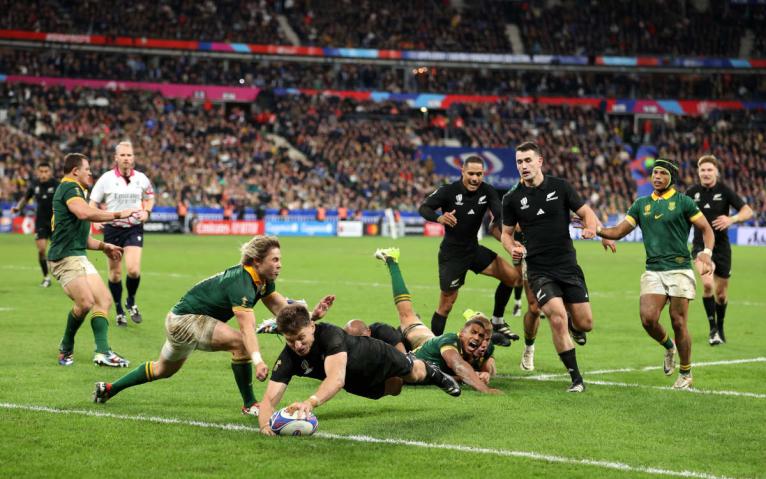
There are established Super Rugby players, former and recent All Blacks hoping to be recalled and interestingly, a host of overseas players – mainly Australians – sent over to be schooled in the rough and tumble of a provincial competition they can’t emulate.
It works on so many levels, for so many categories of players, not the least of which is giving seasoned talent a meaningful and useful way to fill in their time before assembling with their Super Rugby clubs in December.
It’s telling that Western Force coach, Simon Cron, who has strong links to New Zealand, is sending 10 players to the NPC.
“There are players in our environment who didn’t get as many minutes in Super Rugby who need to be challenged both physically and mentally,” he said.
“The NPC provides high-quality, physical match minutes in a fresh environment, ensuring these players return with greater experience and ready to push for Super Rugby selection.”
NZR even took the unprecedented step last year of carving out the NPC from the media rights package it sold to Sky TV. The outcome was that the competition will be co-exclusively broadcast between the subscription platform Sky and the Free to Air [FTA] TVNZ.
t’s not just the fight for media coverage and profile that is challenging the NPC, though. Typically most Super Rugby clubs have their rosters all but finalised by August so there are limited spaces open for players who have breakout provincial seasons.
The national body was prepared to take a (small) financial hit in return for giving the NPC greater exposure.
But as much as the NPC is loved by fans – it produced strong audience data last year – and is highly valued by NZR, it is increasingly difficult for it to retain relevancy and profile in the fast-m0ving wider rugby landscape.
It is squeezed into a 12-week window between late July and late October, at a time when the All Blacks are in South Africa (typically they would be playing in the Rugby Championship) and then back in New Zealand to play the Bledisloe Cup just as the NPC is reaching the final stages.
It’s not just the fight for media coverage and profile that is challenging the NPC, though. Typically, now, most Super Rugby clubs have their rosters all but finalised by August so there are limited spaces open for players who have breakout provincial seasons.
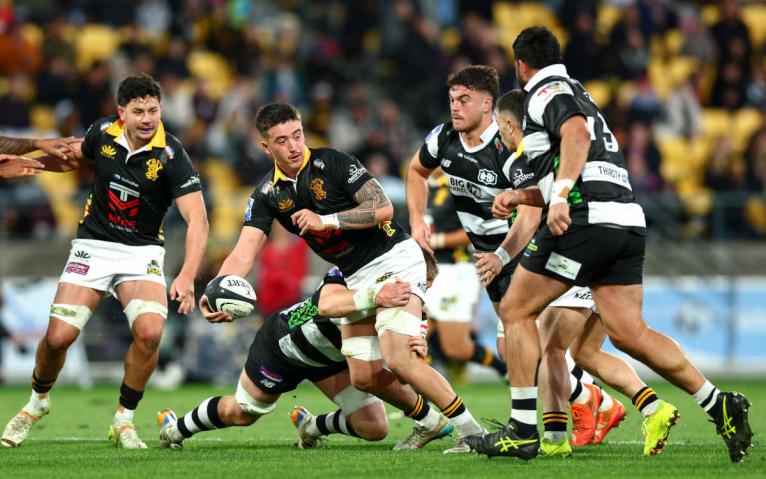
There’s a school of thought that says there needs to be greater co-ordination between the two to build the sense of the NPC serving as a Super Rugby draft. It would certainly add intrigue and relevancy if Super Rugby clubs were forced to keep an agreed, minimum of contracts open for players in the NPC.
And this lack of co-ordination and alignment between the NPC and Super Rugby alludes to the other major problem, which is there is no clarity about which of the two is responsible for elite talent development.
Both provincial unions and Super Rugby clubs believe they are the rightful custodians of the country’s emerging talent and that they should be singularly empowered to identify, recruit and develop elite players.
The system is a mess and creates in-fighting between some provinces and Super Rugby clubs. And all this is why NZR has restructured its high-performance unit making three decisive changes.
The highly respected Don Tricker is coming in November as high-performance director to oversee the All Blacks, former Chiefs prop Michael Collins is taking up the newly created role of chief rugby officer, and former All Black Conrad Smith is going to be men’s high-performance manager.
This is maybe the real value of the NPC – that it can serve as the ideal place to develop a previously unrealised talent and it’s something that is dear to [Conrad] Smith’s heart as that was his route to the big time.
It’s Smith who will carry much of the responsibility for fixing up the development pathways and essentially building a better working relationship and more co-ordination between the NPC and Super Rugby.
“I am well aware of the issues around New Zealand and the tension that exists between provincial, Super Rugby and New Zealand Rugby,” he says.
“That is a tension that can be healthy but there is no easy answer around this. But there will be a solution somewhere and it will require hard work and good people coming together. I do know what I am getting myself into.”
Part of this work that Smith will undertake will be to ensure that New Zealand leaves a path open to late bloomers – to enable those who don’t get identified at school or by Academy programmes to still be able to make the All Blacks.
This is maybe the real value of the NPC – that it can serve as the ideal place to develop a previously unrealised talent and it’s something that is dear to Smith’s heart as that was his route to the big time.
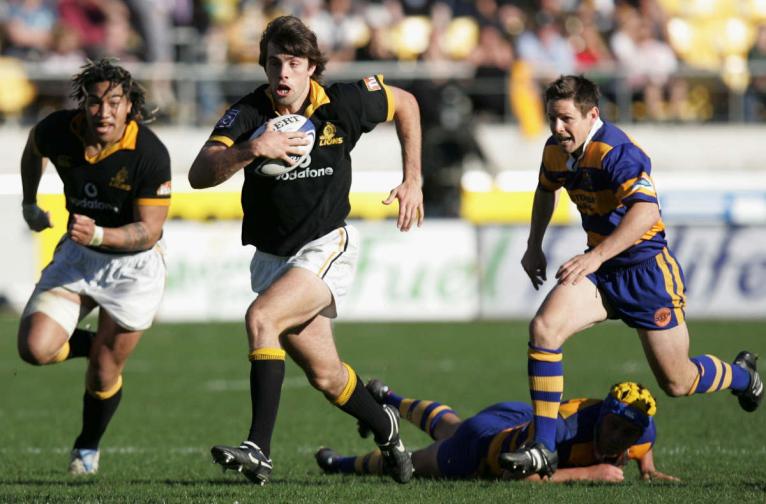
Smith was never an age-grade star, and left Francis Douglas College in New Plymouth to start a law degree in Wellington on no one’s radar.
It was only while he was playing for Old Boys University that he came to prominence, winning promotion to the Wellington team when they suffered a few injuries.
From being a genuine amateur at the start of 2003, Smith finished the year having played in an NPC final and with a professional contract at the Hurricanes. A year later he was an All Black, and while its rare for players to traverse that route to the All Blacks these days, Smith sees it as vital that they at least have the opportunity to do so.
“It is probably more challenging now than it was in my time, but I think you could say that about a lot of sports – the way they have tracked towards specialisation and identifying talent at a younger and younger age,” Smith says.
“That can still work. I am not going to come in and suddenly say that this doesn’t work – that it didn’t work for me as a player so we can’t have that. It works and it is done well.
“Academy systems produce great talent but they cannot exclude, and I don’t think any academy would say they do exclude but their behaviour sometimes sorts of leans that way. “That is one of the many issues that our game has to deal with – how do you create pathways that allows for talent to come through that at the same time don’t include players who are sitting outside be it an academy or a development programme.
“I am someone who didn’t come through that system so it is something pretty close to my heart that exclusivity doesn’t become a normal or be created.”
The NPC doesn’t have the glamour of an All Blacks tour of South Africa but it is every bit as important in the NZR ecosystem.
 Register your interest to receive priority updates on RWC27 ticket releases. Don't miss out, stay in the loop!


A good article and I must say that I look forward to the NPC each year to see what new and exciting players emerge.
One thing I would say to Gregor is “put your money where your mouth is,” as the NZH had zilch reporting on the 1st round of the NPC. How about a weekend wrap of the games on Monday, an article of the 5 players who stand out each week, or even a NPC team of the week to create more interest?
BTW, NZH also seems to have a similar disregard for domestic cricket in its non coverage.
Great article - which is saying something because I am still sour at GP after his Razor crusade. But the points made are really important. We marvel at the amazing development programmes in SA, France and Ireland and of course the burgeoning French professional competitions. But the NPC is such an important nursery for our talent. It probably explains why there is a big leap from under 20s to the ABs. The players get to develop in a highly competitive environment. So a big tick for highlighting this GP.
Sounds like some key pieces coming together to address systemic issues. C. Smith seems to grasp the challenges and has the background to bring together possible solutions to the pathways and intersections of Junior, NPC, Super and national teams. Hopeful.