
When Ian Foster is weighing up his final selections for the World Cup in 2023, the newly re-contracted coach may look back on the current Rugby Championship with a sense of begrudging fondness.
NEW: Follow Your favourites in the App 📱
You can now follow their favourite teams, tournaments and players in the RugbyPass App!
The conditions imposed on the likes of the All Blacks, Springboks and Pumas mean the men they’ve already taken with them to Australia are likely the only players they’ll call upon throughout the remaining four weeks of the competition.
From this point on, anyone arriving in Queensland will need to undertake a two-week ‘hard’ quarantine, which would make it exceptionally difficult for any injury replacements to actually arrive in time to take part in the competition – especially if they aren’t match-fit when they first touch down.
Even for the likes of Sam Whitelock, Aaron Smith and Richie Mo’unga, three men who stayed behind in New Zealand to await the births of their children, there’s a chance they’ll have a very narrow window to make an impact.
With Whitelock’s child arriving last week, there’s a chance the stand-in All Blacks captain could be on deck in time for NZ’s first clash with South Africa, on September 25, but Foster indicated ahead of the trip that any newly introduced players would likely need an extra week of condition post-arrival to get them up to speed.
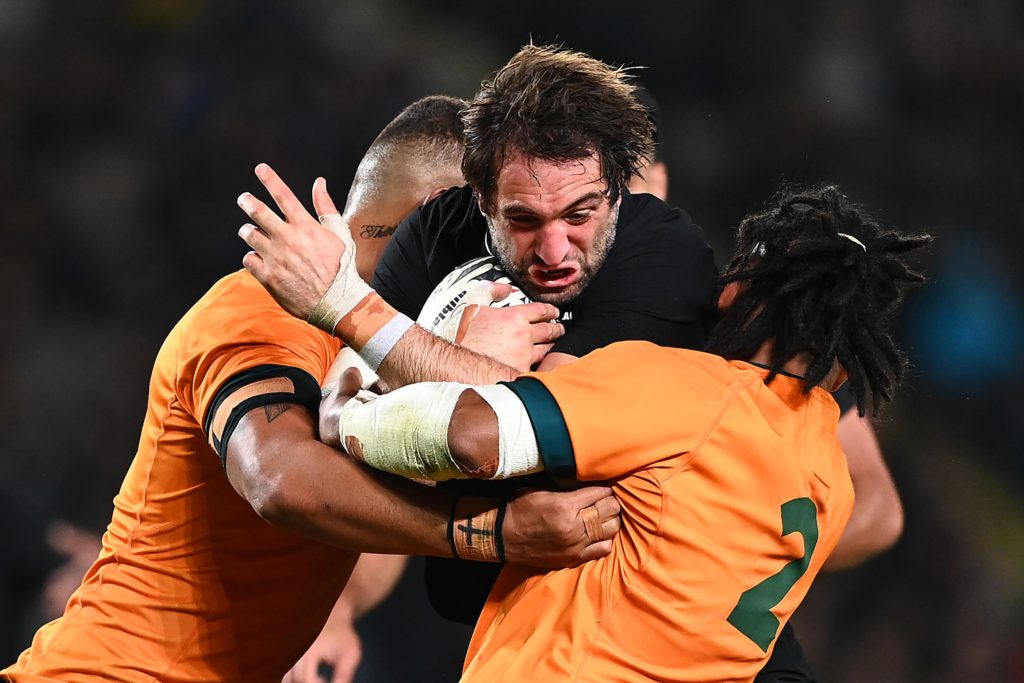
After all, the last thing the All Blacks want to do is throw an undercooked Whitelock into battle with the battle-hardened Boks enforcers.
As such, any injuries suffered in the coming weeks will stretch the resources of Foster’s men in a way that won’t be dissimilar to France 2023.
Teams will be allowed to take 33 players with them to the next global tournament, compared to the 31-man squads that were allowed in 2019. Should any players suffer injuries during the World Cup, however, they can’t be replaced unless that swap is permanent, meaning teams will sometimes be forced to carry a handful of short-term injuries.
In 2019, an injury suffered by Brodie Retallick in the lead-up to the competition meant the world-class second-rower wasn’t able to make his first appearance for the All Blacks until their third pool game against Namibia, where he clocked up just 31 minutes in his first match in two-and-a-half months.
Ideally, the All Blacks would have carried an additional lock in the formative stages of the competition. The injury replacement rules prevented this, however, and meant that the likes of Whitelock, Scott Barrett and Patrick Tuipulotu had to shoulder a heavier load throughout the pool stages (although this was offset somewhat by the cancellation of NZ’s final game against Italy).
Quite honestly, when it comes to a World Cup squad, [versatilty] becomes a big factor because you’re limited to fewer players and your replacement protocols are different.
Ian Foster
In circumstances where replacements are limited – such as the World Cup – coaches and selectors sometimes have to get creative, and the current Covid-impacted Rugby Championship is a great dress rehearsal for what’s likely to transpire in 2023.
And in such circumstances, the ability for players to cover multiple positions becomes invaluable.
Foster revealed earlier this year that’s exactly his way of thinking.
“Quite honestly, when it comes to a World Cup squad, [versatility] becomes a big factor because you’re limited to fewer players and your replacement protocols are different,” Foster said in early July, ahead of David Havili’s return to the test arena.
“But when you’re picking a squad in-between years, you’re really looking at people who can really have an edge in a position that’s going to contribute to your game. So versatility’s not really a factor in [selecting] our backline.”
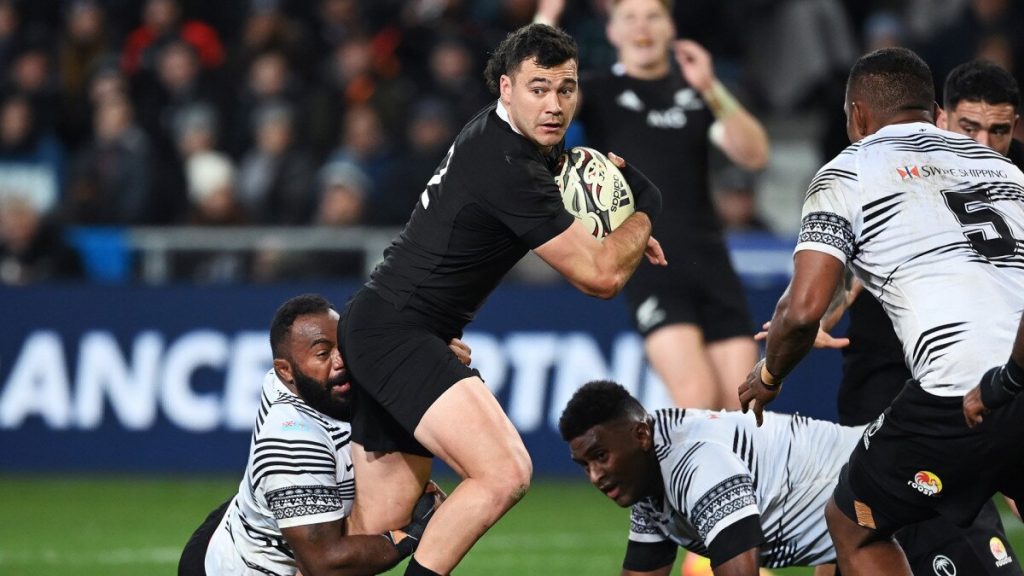
Of course, the memo for 2021 has changed thanks to the pandemic, and now utility once again becomes a huge benefit.
Havili is just one player amongst the All Blacks backline who’s capable of covering multiple positions.
“If you look at it, we’ve got a lot of players, you’ve got Rieko [Ioane] who can go midfield, outside, you’ve got Jordie [Barrett] who can do a whole lot of things, we’ve got Beaudie [Barrett] who can go 10, 15,” Foster said.
Damian McKenzie is in a similar mould to the older Barrett brother but the remaining outside backs all have at least a couple of strings to their bows.
Will Jordan, a fullback by trade, has now spent ample time on the wing for the All Blacks, while Sevu Reece has looked equally as comfortable in both the No 11 and No 14 jerseys and George Bridge can step in at the back if necessary.
TJ was outstanding when he came on and he brought his composure in his way and he added a lot to defence. Picked up a little bit of an intercept, [assisted a try] with a cross-kick that has already got him thinking he might be another 10 for us so we’ll have a debate about that.
Ian Foster on TJ Perenara
Factor in Braydon Ennor, who can slot in at centre or wing, and Anton Lienert-Brown and Quinn Tupaea’s relative fluidity in the midfield, and it’s really only the halfbacks and Richie Mo’unga who aren’t quite so flexible.
Even so, TJ Perenara has spent time at first five-eighth for the Hurricanes and shifted to the pivot position against Namibia in 2019, and the freedom to roam at No 10, compared to the scrumhalf role, could suit the 29-year-old.
“TJ was outstanding when he came on and he brought his composure in his way and he added a lot to defence,” Foster said of the halfback following the All Blacks’ win over Australia on Sunday. “Picked up a little bit of an intercept, [assisted a try] with a cross-kick that has already got him thinking he might be another 10 for us so we’ll have a debate about that.”
Perenara himself also admitted this week that he’d happily take the reins at No 10 for the All Blacks, if the need arose.
While the New Zealand backs all have utility value, however, Foster seems to have accepted that while versatility can be a bonus, it’s not the be-all and end-all.
Ioane (centre and left wing) and Reece (left and right wings) are the only backline merchants who have this year been asked to step into more than one role this season.
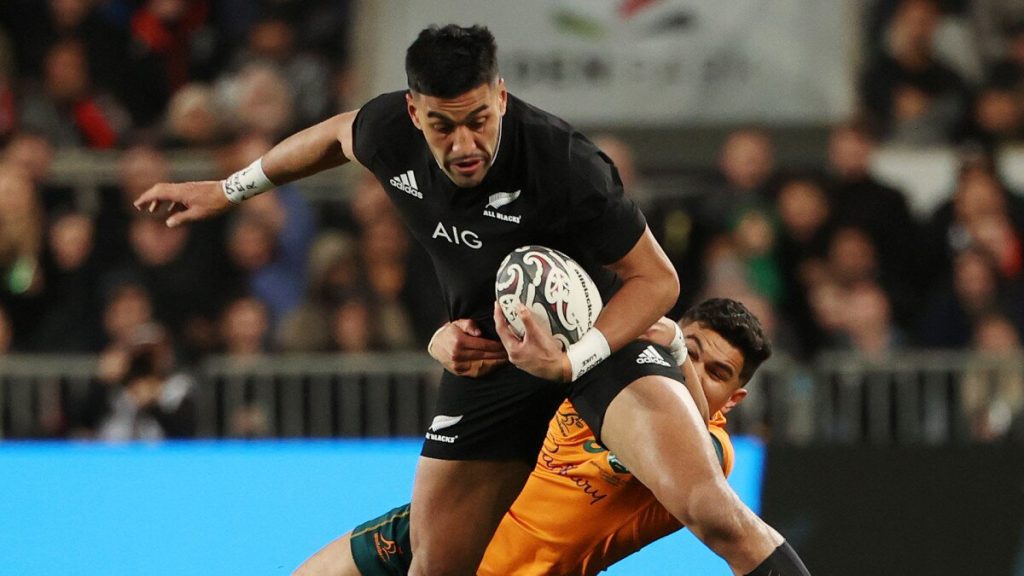
Even the Barrett brothers, seemingly the models for the benefits of being capable of filling in across the backline, have been exclusively used in their preferred roles.
Havili, despite his ability to play at flyhalf, inside centre and fullback, was, according to Foster, selected as a specialist No 12 – but that doesn’t preclude him from being used elsewhere, if the need arises.
In the forwards, versatility has also played its part with Ethan Blackadder accruing all his minutes for the All Blacks at openside flanker, despite spending the majority of the Super Rugby season on the blindside.
Against the Wallabies, Tupou Vaa’i was also supposed to make a late-game appearance on the blindside flank but Scott Barrett, who’s filled in there in the past, pulled rank.
“We just thought Tups could jump on the flank but … Scott had some seniority, rank there and he actually had started there for the All Blacks in the past so we felt comfortable with what the boys did there,” said All Blacks defence coach Scott McLeod on Monday.
While it won’t be part of plan A, plan B or perhaps even plan C, we could see some more left-field selections as the games tick over – whether that’s outside backs slotting in at scrumhalf, loose forward filling in at lock or props delivering the ball into the lineout.
“[Vaa’i] has got the skillset to do that and especially with this big tour, injuries can happen. It’s hard to get people in so some of those bigger boys might have to cover there at some stage so it’s something we’re definitely open to.”
With nine further matches to play this year, injuries are inevitable and the All Blacks’ resources are going to be pushed to the limit.
Unlike in 2018, Foster is unlikely to call up an extra contingent of players when the team travels to the USA for their exhibition match with the Eagles because it won’t be possible to send those players home following the match, due to limited spots in New Zealand’s managed isolation facilities.
That means while it won’t be part of plan A, plan B or perhaps even plan C, we could see some more left-field selections as the games tick over – whether that’s outside backs slotting in at scrumhalf, loose forward filling in at lock or props delivering the ball into the lineout.
It’s situations like these where versatility is so important and given that Ian Foster will ultimately be judged on how the All Blacks perform at the 2023 World Cup, now is perhaps the perfect dress rehearsal for France.


Comments
Join free and tell us what you really think!
Sign up for free