
For at least two generations of New Zealanders, there was no sense that the All Blacks’ greatest rival was the Springboks.
NEW: Follow Your favourites in the App 📱
You can now follow their favourite teams, tournaments and players in the RugbyPass App!
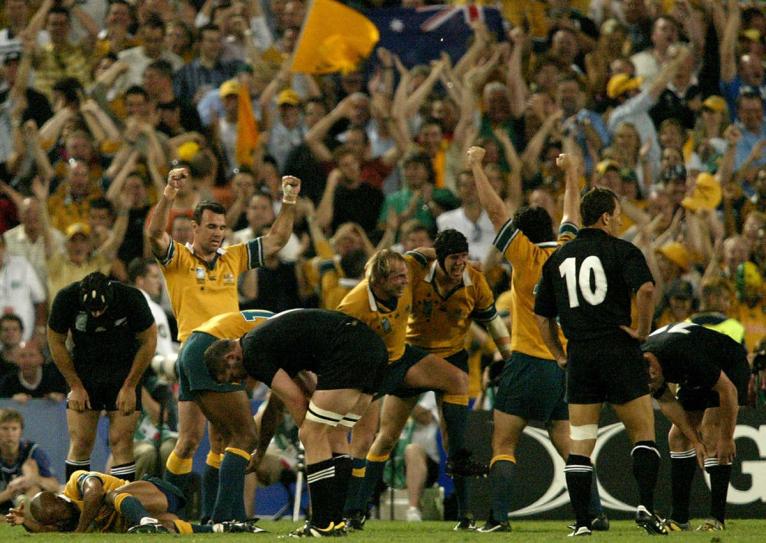
For those born in the 1980s, the Wallabies were New Zealand’s great rival and for much of the 1990s, they were in fact the All Blacks’ nemesis. Come the big moments and the big games, it would be the Wallabies who had the rugby smarts and calm heads to win them.
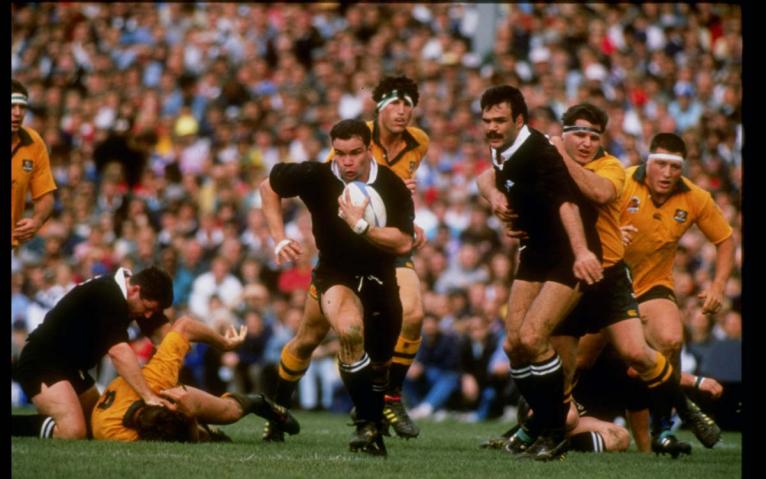
It was a different time. The Wallabies, on the back of their Grand Slam-winning team of 1984 transformed into a genuine heavyweight.
They won the Bledisloe Cup in 1986 and while they lost it the following year in a one-off Test, they became a super competitive force for the next 15 years.
There was never an easy win for the All Blacks in that period and each series was a proper contest. Come the 1990s, the Wallabies won the Bledisloe in 1992, 1994 and 1998, keeping it until 2003.
They also won two World Cups in the 1990s and built a definitive sense in the Kiwi imagination that they were the rising superpower in world rugby.
And, of course, for much of the 1980s, the Springboks were absent on the world stage other than the massively divisive and disruptive tour of New Zealand in 1981. When they returned from exile in the early 1990s, only older New Zealanders knew the longer history and the extent and intensity of their relationship.
Even when the Boks became a regular fixture in 1996 through the creation of the Tri-Nations (which became the Rugby Championship in 2012), the Australians had official status as the All Blacks recognised biggest rival.
Every year various All Blacks coaches and players would cite that the Bledisloe was the trophy they valued the most behind winning the World Cup.
It doesn’t matter that since they won it back in 2003, the All Blacks have never really looked like losing it – the party line has remained the same that the Bledisloe is the biggest ticket item behind the World Cup.
The recent RGR was both an enormous commercial success – netting New Zealand Rugby an estimated $35million – and a huge hit with fans, selling more than 450,000 match tickets, while it was watched by an unprecedented 2.1 million Kiwis.
But now that the All Blacks have formed a commercial entity with the Springboks under the brand, Rugby’s Greatest Rivalry, and created a marketing machine to promote and monetise it, the landscape is clearly changing.
The recent RGR was both an enormous commercial success – netting New Zealand Rugby an estimated $35million – and a huge hit with fans, selling more than 450,000 match tickets, while it was watched by an unprecedented 2.1 million Kiwis.
And it was a huge hit with fans because the rugby had equal levels of brutality, innovation, creativity, individual brilliance and collective intelligence.
There was strategic chess being played between the coaching coaches as they tried to make their stylistic differences count and four Tests brought a near unprecedented level of drama, tension and incredible theatre.
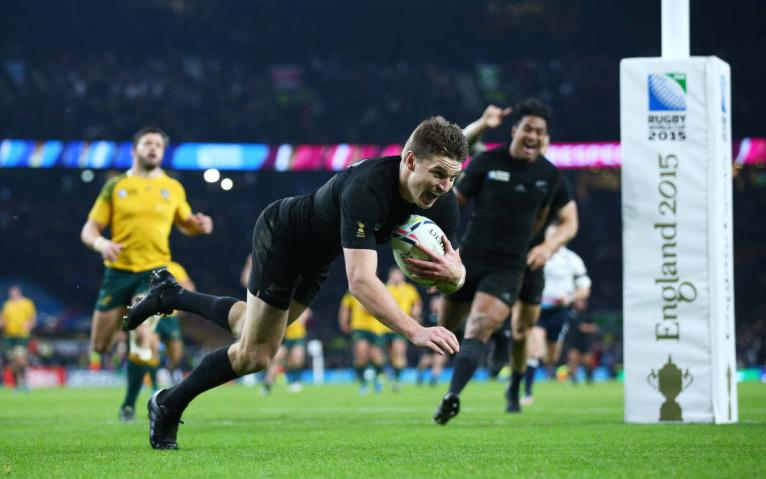
It became cliched but it was also true that all four games swung on small moments and as an advert for rugby, it was hard to imagine how it could have promoted the game any better.
Equally, those Kiwis born in the 1980s (and later) who had grown up with the idea of the Wallabies as the All Blacks’ biggest rival, had a taste of what older New Zealanders had been banging on about with the Springboks.
As former All Blacks captain Sean Fitzpatrick says: “I said when the game went professional in 1996 that we can’t play South Africa four times a year, that it’s going to lose that edge. But I think it’s as big as ever.
“It has been commercialised, but this is fantastic. It’s commercialised because there’s an appetite for it, clearly. I think we need something like this as a fan.
“This has got meaningful games which is what we want. This is big time. It’s quite nostalgic as well, What people don’t realise totally is that we – South Africans and Kiwis – are very similar in terms of our attitude, embracing the hostility. We love that.
“That’s where the respect lies. The similarities rather than the differences.”
If there was uncertainty about the long-term future of RGR, there no longer is. The 2030 tour in New Zealand is locked in, and talks are advanced about the All Blacks going back to the Republic in 2034.
Understandably, the rise and rise of RGR has left Rugby Australia a little concerned about its place in the Southern Hemisphere pecking order and with questions about how the Wallabies fit into the bigger picture.
But NZR is of the view that it can redraw the Southern Hemisphere’s international calendar and build two compelling and commercially lucrative rivalries alongside one another.
Initially RA was understood to be miffed that New Zealand and South Africa determined that there would be no Rugby Championship in either 2026 or 2030 and sought some kind of financial recompense in lieu of losing lucrative fixtures.
No agreement on compensation was reached, but earlier this year NZR rescinded on its previous stance of rejecting RA’s request to play an Anzac Bledisloe test, and has signed up for three fixtures in 2027, 2029 and 2031 respectively that will likely see the two bodies split $12m-$14m per game.
NZR has also carved out from their existing broadcast deal the option to play and sell media rights to an additional five tests.
There will, therefore, be consideration given to playing a third Bledisloe Test in the USA in 2028 and/or again in 2030. This would make sense on multiple fronts – it would mean that there will be consistency to the programme for the remainder of this broadcast cycle in that there will be a three-Test series each year.
The All Blacks enjoyed a $9m pay day from their recent RGR fixture in Baltimore and there is a strong desire within the NZR executive team to see whether the West Coast of the USA can prove just as lucrative.
Commercially, then, the Bledisloe has significant potential, but it’s mid-to-long-term value depends entirely on whether the Wallabies can generate a genuine sense of rivalry.
That’s been the missing piece since 2002 – the year in which the Australians last held the trophy. Since then, the statistics have been horrible – with the Wallabies having won just three times in the last 10 years (26 Tests have been played).
There is, this time, greater confidence that Australia is on a better trajectory – one that it can sustain through to the World Cup it is hosting.
They haven’t won in New Zealand since 2001 and if the rivalry is going to authentically be sold alongside RGR, then the Wallabies have to start winning more than they have.
And this is the great unknown with them. There have been so many times in the last two decades when it has looked like they are going to rediscover the form of the 1990s and be consistently in the top five, only for things to fall apart.
False dawns and the Wallabies are all too familiar with one another and so there is reluctance to read too much into their six-match unbeaten run under new coach Les Kiss – one that includes a victory against the Boks.
But there is, this time, greater confidence that Australia is on a better trajectory – one that it can sustain through to the World Cup it is hosting.
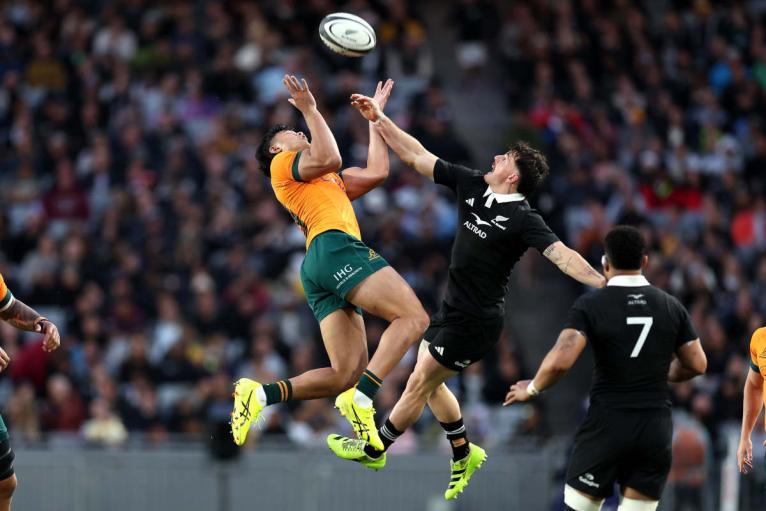
They have a playing group that has obvious talent, experience and increasingly the belief to win the little moments that become big moments.
Their loose trio of Rob Valentini, Fraser McReight and Harry Wilson is as good as any in the world. They have a back three in Max Jorgensen, Joseph Aukuso-Suallii and Tom Wright that are equipped to win the aerial battle and yet be devastating on the ground and in Len Ikitau and Hunter Paisami they have a creative and destructive midfield.
Halfback Ryan Lonergan looks the goods, too and all they need to be genuine World Cup contenders is a couple of additional scrummaging props and a high quality No 10.
What makes this revival feel a little different is that for the first time in an age, Rugby Australia is not straddled with enormous debts and finally has money in the bank from hosting the British and Irish Lions tour, with more to come from next year’s World Cup.
The stats of the last two decades make horrible reading for Australia, but the door is open to them re-building a similarly successful rival with the All Blacks as the South Africans have done.

NEW IN THE APP: Official World Rugby Rankings hub! Compare team rankings side-by-side, with data going back 20 years.
Download the RugbyPass app on the App Store (iOS) and Google Play (Android) now!


The Bledisloe Cup isn’t really much of a rivalry now. New Zealand have held the silverware for 23 years and on only 3 occasions had there been a Test where the All Blacks had to win to keep the cup - 2007, 2015 and 2019.
The Bledisloe Cup isn’t a competitive rugby rivalry, it’s Trans Tasman sporting competition where the odds are stacked in New Zealand’s favour for once, which creates its own narrative.
For the rivalry to become fair dinkum again, there needs to be genuine jeopardy over New Zealand's ability to retain the cup or preferably, the Wallabies be good enough to win it back.
Proof will always be in the pudding, commercially NZ needs Australia to be stronger, and the world of rugby is better for having them there too