
New Zealand rugby was due for a shake-up, having been shaken down by the Pumas, the Springboks and England in 2025. It is just over two weeks since I penned this piece which has accrued almost 1,000 comments to date. To recycle an old Yogi Berra tautology, “it’s like déjà vu, all over again”. The ‘we’ on that forum – writer and many of the posters – must have sniffed a sea change in the air.
Just over a fortnight later, Scott Robertson is yesterday’s news, at least as head coach of the All Blacks. You would have thought 20 wins out of 27 games at a respectable 74% win rate would have been enough to keep most coaches in a job. Not in the current coaching climate. Not in New Zealand.
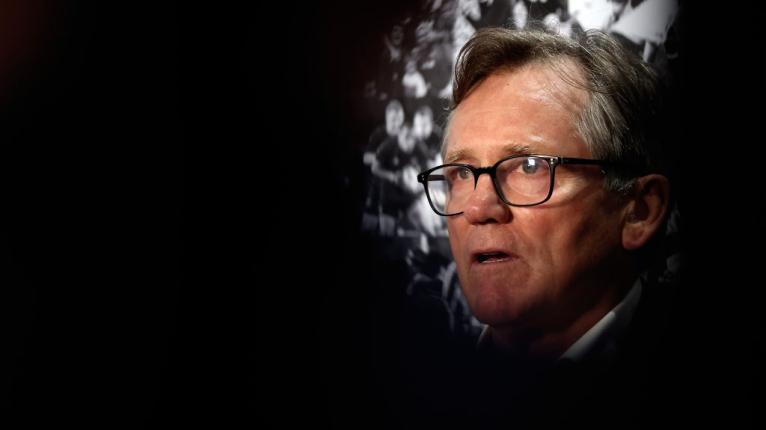
“I always thought that record might stand until it was broken,” as Yogi might have added. Razor was there, right there; until suddenly, he wasn’t. The New Zealand Rugby board voted unanimously to uproot Robertson after considering the findings of a 2025-in-review report for two or three hours. When NZR chairman David Kirk sounded out the players’ leadership group about Robertson leaving, the response was dramatically muted: “They just absorbed it. They didn’t ask any questions, and they didn’t have any real, strong response.” That is not the reaction of a set of players who want the coach to stay.
Razor had lost the support of those on high in the administrative apparatus, and he had lost the confidence of the players underneath him. The most senior man in the senior player group, Ardie Savea, was reportedly looking at fresh challenges in pastures new, with a move to Irish super-province Leinster in the offing. Under the current selection criteria, that would probably have rendered him ineligible for national selection. The All Blacks environment was no longer providing sufficient reason to stay home, so Savea had decided to play away instead.
The previous piece was about how New Zealand is missing out on overseas IP, with a home-grown coaching panel of limited international experience. Upon the announcement of Razor’s departure, Kirk made a point of expressing the union’s desire to open up the debate and look overseas when addressing the media in Auckland.
“The mid-point in the Rugby World Cup cycle is the right time to look at the All Blacks’ progress over the first two seasons,” Kirk said. “The team are set to play a significant 2026 schedule [including ‘The Greatest Rivalry’ tour to arch rivals South Africa], and the tournament in 2027 remains the key goal.
“We are completely open. We’re going to cast the net wide. We’re going to get as many people [in] as we can. We think coaching the all Blacks is the greatest rugby coaching role in the world.
“And we’re very hopeful we’ll see lots of highly-qualified candidates.”
That could mean one of two things: either native New Zealanders who have accumulated a lot of relevant experience abroad, such as Joe Schmidt, Vern Cotter, Dave Rennie and Jamie Joseph; or it may represent a genuine invitation to the likes of Ronan O’Gara to set a new precedent and become the first overseas head coach of the All Blacks.
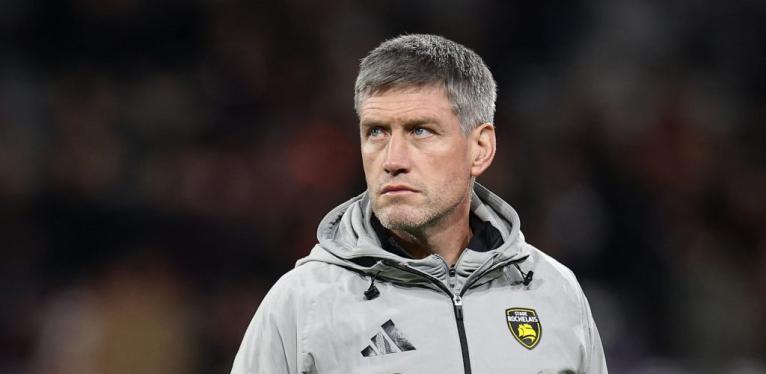
The stars certainly appear to be aligning for the two-time Investec Champions Cup winning coach at La Rochelle. Roughly one week after my article appeared, RugbyPass’ own Neil Fissler revealed “O’Gara is preparing to hold talks with his La Rochelle bosses to decide whether he will leave his job on France’s Atlantic coast this summer or stay for another year to see out the rest of his contract.”
With the Munsterman apparently on his way out of the Charente-Maritime, the timing of the All Blacks vacancy could not be more opportune. One of the other main contenders, the erstwhile head coach of Australia, Schmidt, left the job expressly because it allowed him too little time to care for his son, who suffers from epilepsy. The private and the public were not in balance: two years ago, Schmidt had bemoaned the need to “escape from the public part of things – it just impacts my family, and it impacts me.”
Director of high performance at Rugby Australia, Peter Horne, observed Schmidt’s positive impact on the Wallabies while highlighting the higher concern: “he has made it clear he wants to spend more time with his family and was not seeking a longer-term deal.” The strength of that reasoning sounds like a flag planted solidly in the ground, and it would preclude a pressure-laden job like the All Blacks.
One of the major attractions of another primary candidate, Jamie Joseph, is his historical South Island coaching partnership with Tony Brown. Rassie Erasmus recently signed an extension to his contract as Springboks head coach which takes him all the way through to the 2031 World Cup, and the double World Cup winner has always made it clear the extension needs to apply to his full cadre of assistant coaches. If Tony is committed to Rassie, he won’t be able to coach with Jamie.
The key to Brown’s relationship with Erasmus is creative animation. During Robertson’s tenure outward expressions of emotion in the New Zealand coaching booth were as carefully withheld as the explosions of spectacle on it, with Razor and co playing euphoria and misery alike with a dead bat.
According to the man from Otago, it is the opposite in the Springboks, where a kind of ‘creative chaos’ sets the mood.
“It’s pretty intense in there,” Brown said. “If I could have a beer, I would have a beer because I’m pretty low key!…
“Rassie’s definitely an innovative guy, he’s always asking the coaches to come up with something new and something different.
“Whether it’s defensively, whether it’s kicking game-wise, set-piece-wise or attack-wise, he’s always asking the question, ‘would this work?’
“I’m always up for anything as you know, so it’s an exciting coaching team to be a part of.”
The formula has become the reverse of what it was, and that is why a dyed-in-the-wool ex-All Black is now such a big part of a Springbok coaching panel in 2026. In the short term at least, excitement and dynamic creativity has found a home elsewhere, outside New Zealand.
Ten years ago, it used to be the All Blacks who broke down teams in the second half of matches by utilising their superior conditioning and individual skill-sets and cruising away effortlessly in the fourth quarter. Under Razor they were hoist by their own petard. Look at these stats culled from the past two Rugby Championships and the November game against England.
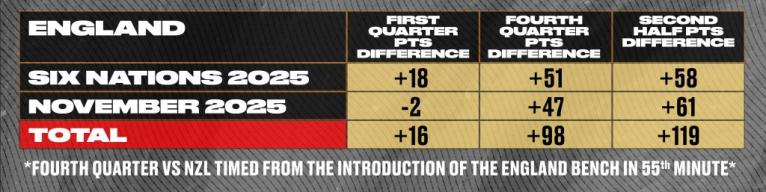
Those figures suggest the All Blacks coaching panel only really planned for the game as it started, never as it ended or reached a climax after the hour mark. The game planning often started very well indeed, but by the finish it was more often than not a damp squib.
Even England, perennially stodgy England, have been willing to change their playing personality and become more energised and mettlesome at the pointy end of matches.
England had lost to New Zealand three times in 2024 by a combined total of 10 points, and they failed to score a point after the hour mark in all of them. They recognised there was a problem and did something positive about it. Robertson never sorted his players into ‘starters’ and ‘finishers’, he rarely if ever appeared to consider using the 6/2 split and he never rationalised his bench with either philosophy in mind.
From that point of view, the game which did for Razor was probably not the 33-19 defeat at Twickenham but the cataclysmic thrashing by the Springboks at the Cake Tin in Wellington two months earlier. The All Blacks lost the game 43-10, but more importantly they lost the second half 36-0 and the final quarter 26-0. The ghosts raised in that final 40 minutes were never exorcised in the six matches that followed to round out 2025.
In Wellington, the Springboks were the ones creating turnovers and shifting the ball wide under the ‘Tony-ball’ influence.
— William Bishop (@RPvids1994) January 15, 2026
Win the ball wide-right and spin it wide-left. Bounce-ball in midfield? No problem. Three-versus-three with no obvious overlap on outside? No problem. We will find a way to create something out of nothing. It is the antithesis of conservative South Africa but under Erasmus and Brown, the Boks have been trying on some old All Black rags from their golden era and finding they fit the men in green and gold rather nicely.
Counterattack from our own end, shift the ball from one sideline to the other and keep the ball for 80 minutes and 60 seconds until we score? No problem.
— William Bishop (@RPvids1994) January 15, 2026
— William Bishop (@RPvids1994) January 15, 2026
The difference in attitude on counterattack is hiding in plain sight. On the one hand, Savea countering from his own end like lone wolf, chipping and hoping, epitomising a team which did not convert one solitary try from a turnover or an open field kick in the entire 2025 Rugby Championship; scoring 70% of their tries from positions acquired inside their opponent’s 22m line. On the other, a Springbok team properly tuned up by Brown to make the most of every broken-field opportunity going.
— William Bishop (@RPvids1994) January 15, 2026
The animation in the coaching booth mirrors the euphoria on the field. There is no holding back under Erasmus, no hiding your cards up your sleeve or keeping a poker face. You go all-in and you are not afraid to show it.
For the time being at least, excitement and creativity has packed its bags and moved out of New Zealand, but the courageous decision to part ways with Robertson may just be the right call to bring it back, before it moves out of earshot completely.
There will be more gut-checks made as the search for a new head coach moves towards its conclusion. Will an overseas coach be appointed to a senior position for the first time in All Blacks history? Will O’Gara get the shot at international coaching he has so clearly earned? As the great Berra once opined, “If you don’t know where you are going, you might wind up someplace else.”


WOW the lack of logical flow in the article is bizarre.
Quote the article,
And,
Again quote the article,
Basic fact check, of likely AB coaching applicant talent = Joe Schmidt, Vern Cotter, Dave Rennie and Jamie Joseph = ALL have EXTENSIVE ‘overseas IP’ from international coaching experience.
Vs
like its suggested Ronan O’Gara’s … (HAVE A BIG THINKY)... who has ZERO international coaching experience.
Correction NZR has always had OS open coach searches but like above, NZ has high quality, internationally experienced coaching stocks but little of the same quality comes from OS.
NZ remains a net exporter of high quality coaching stocks, eg you guessed it Joe Schmidt, Vern Cotter, Dave Rennie, Jamie Joseph & many more.
And, while even more NZR developed coaches perform OS (eg Brown, Deans, McMillan, etc).
Hence, NZ & NZR have helped develop the only pool of qualified coaches for the AB coach position, ie again, Joe Schmidt, Vern Cotter, Dave Rennie, Jamie Joseph ie NZ coaches.
Of course, as NZR always have in the pro era, stated its open all, ie successfully internationally experienced coaches, like those above.
Its unlikely to be those still just at regional coaching level, eg Ronan O’Gara .
& yet the
even less fact checking in the article,
Again quote the article,
ie Re Scott Robertson sacked All Blacks.
Count again, this time with some proper qualitative checking,
i.e. ignoring draws (cos they not wins!) & the most obvious, lop sided games V non top 10 ( eg pre-00’s Italy & Arg, Japan & currently Wales & what France currently can only muster as its international team France's 2025 B/C).
Therefore the REALITY, for those nervous nellys or simply can't count & not yet applauding Kirk/NZR 's correct decision, ie after 2yrs, ending with little support of AB players & ‘worst in pro era results’ correctly got sacked;
( The following data corrected for ALL pro-era AB coaches ie again ignoring draws & games V non top as above.
Therefore Data= (in order) ‘Coach, p=Total Played, m=Minors, w&l= no. of wins & losses, w=Wins, l=Loss, w%=Win/Loss%’ + RWC perf )
[No not always easy to read!]
Steve Hansen p107 - m12 - d4 - w&l91 - w81 - l10 - wl%89.0% - 1of2 RWCs.
Given RWC winning team [but also helped develop them]. RWC15 win. Faded (v Ireland, Lions, RWC19).
Graham Henry p103 - m11 - d0 - w&l92 - w77 - l15 - wl%83.7% - 1of2 RWCs.
Forgiven for bad RWC07.
John Mitchell p25 - m5 - d1 - w&l19 - w15 - l4 - wl%78.9% - 0of1 RWCs.
Enough games? Paid for bad RWC03.
Wayne Smith p10 - m1 - d0 - w&l9 - w7 - l2 - wl%77.8%
Enough games?
John Hart p56- m9 - d1 - w&l46 - w33 - l13 - wl%71.7%
Given RWC95 ‘shoda’ won team. Bad RWC99.
Ian Foster p46 - m5 - d2 - w&l39 - w27 - l12 - wl%69.2%
Given a tired ABs post RWC19. 1off RWC23 win [thanks TMO] with 14players!
Robertson p27 - m5 - d0 - w&l22 - w15 - l7 - wl%68.2%
= pro era lowest. Given most of ‘1off RWC win team’ from Foster.
NZR previous coach case & correct decision closed.
Applications open for all & any SUITABLE & SUCCESSFULLY experienced.
How about some good news for canes footy and fans, big signing for hurricanes and a lot of speculation it's Richie Mounga
I don’t think it will be too long before the laws are changed either! It’s a race!
David Kirk - Rugby World Cup winning captain, Rhodes Scholar, CEO of an ASX 200 listed company. The bloke is no dummy, that is for sure.
He was also on the panel that awarded Melbourne the licence ahead of a 6th SA side in Super Rugby back in 2011. And I am sure we (the ARU) were pushing for it and it possibly made sense at the time, but, in retrospect, it might not have hurt us, and we may have had a stronger, and more successful Melbourne side, if we had waited and developed the junior pathways etc under that side. And SA had a side ready to go.
I wonder if that decision by Kirk also put him offside with SA supporters? I guess it would have at the time but I am sure SA supporters are the forgiving types ;)
Anyway, I am in no position to offer an opinion on Robertson. He is undoubtedly a fine coach but it didn’t seem to be working with NZ. They were inconsistent both from game to game and sometimes during games and didn’t seem to have the same commitment to excellence that past sides had. Still they only lost 3 games last season - maybe the manner of the losses to SA, England and Argentina might have been part of it but all of those sides made the 2023 RWC semis - so if you are going to be beaten it makes sense that those sides are going to beat you.
DId SA though? Did the Kingz slightly miss there timing did they?
As SA are now down to four, just like Aus, I doubt either made any difference. The best choice would of course been to deny both lol, but that was probably an impracticality as they needed an extra side?
Nothing against Razor and, as an Aussie, I don’t really have a dog in the fight but I would love to see the All Blacks strong and I hope, whoever they get as coaches, they beat the Boks this year.
And then see the Wallabies finally beat the All Blacks when the ABs are No. 1 (yes I am probably dreaming).
Stoke it for the WC mate (we need you to remove SA!).
Ahh right oops I didn’t realise they had, good on them and agree generally
Agreed any of those could do a Ben Earl at 12 in the last 20-30’.
Scotland played 6-2 too against the ABs with real success in the second half. I don’t think it’s if ABs go 6-2 but when if they are paying any attention to the fact periodising (NB’s phrase) power and intensity wins the games between the tier one teams as it did in all games between them this year.
Otherwise we’ll be left outside the party with Australia abd Scotland!
In fairness, Rassie started the trend with his 6|2 preference but his forwards are so dominant, it’s hard to compete with them using 5|3, so most teams have gradually evolved.
FRA played 6|2 and even went 7|1 vs IRE in the 6 Nations decider (which destroyed IRE).
IRE resisted but eventually moved to 6|2 and seems to be their new standard.
ENG have followed and are playing 6|2.
It’s mainly the AB’s are the ones yet to change but I don’t think it will be too long to stay in touch with the rest.