
“I wasn’t going to come to Belfast,” Nick Williams recalls. “I’d had the rain of Cork and Limerick. I was like, ‘Sod this! I’m not going to go back’.
“I wanted to take my daughter back to New Zealand but ‘Cowboy’, Mark Anscombe was my first coach in professional rugby. He turned around and said, ‘You’re going to get your big, Polynesian behind up here!’ I’m like, ‘Oh crap. Here we go!’”
Nick Williams is a man with a “saving grace” wife, three daughters and three homes. Born in South Auckland to single mum, Aolele, he spent his formative years being raised on the North Shore by his grandmother, Laurosa. Rugby would take him from New Zealand, at the age of 24, to Cork and, later, Viadana. He spent four years with Ulster and another four with Cardiff, going from cult to outright hero in both places he still calls home.
Around 2005, Williams started gaining traction and appearing on the radar of All Blacks head coach Graham Henry. “You can have the talent, or size,” says Williams, “but if you’re not willing to work hard, it is a waste of time. In New Zealand, there’s a conveyor belt of rugby talent, and a lot of people fall to the wayside. We had good direction, very strong female influences in our family. I’ve got five sisters and was raised by my Nana. We came from a single parent house – mum was the only one around.
“Myself and my brother (Tim Nanai-Williams) did have the talent, but, like most of us know, talent will only get you so far. You need to be able to work your bollocks off. Those women in our family stood firm in getting us to where they saw our potential taking us.”
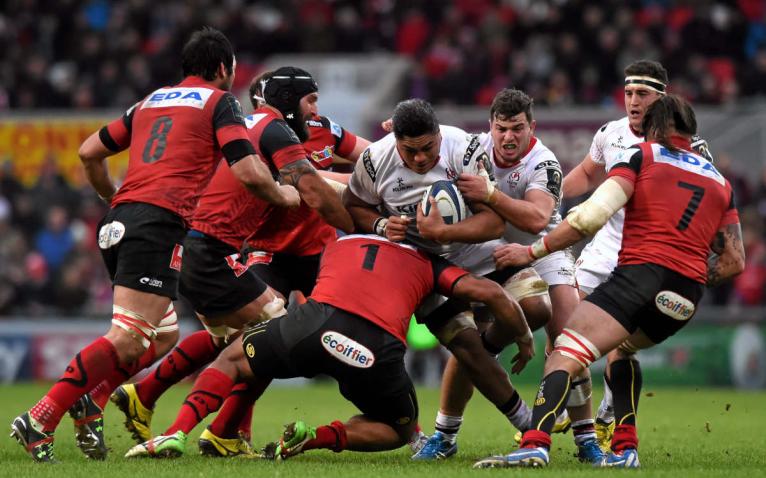
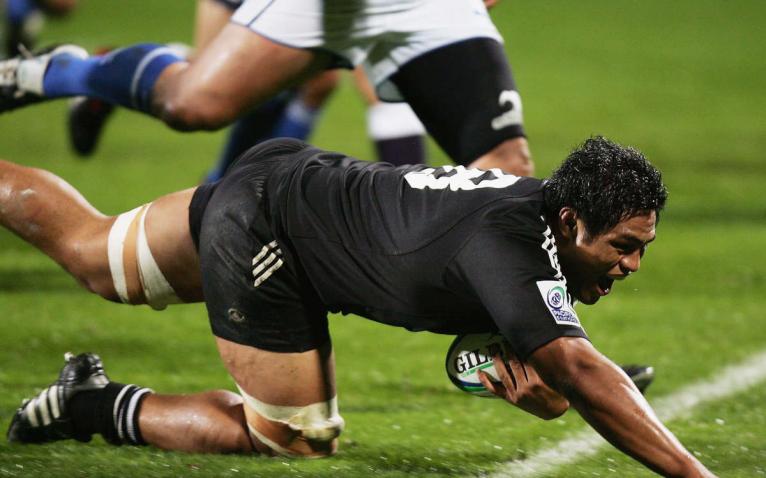
Williams played for the Junior All Blacks and had 37 games across four Super Rugby seasons with Auckland Blues. He played in the last ever ‘Possibles’ vs. ‘Probables’ All Blacks trial match then had a healthy conversation with Henry.
“To be fair to Ted,” Williams reflects, “he was 100% honest. He said, ‘Look, Nick, we have about 10 guys vying for the one position. Richie McCaw was obviously top of the pile and you had Rodney So’oialo as their 8, at the time, and 6 was Jerry Collins. It was pretty down pat, so you just had to read between the lines. I did, and said, ‘Listen, thank you for your honesty but I think I’m going to venture away from New Zealand rugby’.
“At a younger age, I knew I was a product and that I had to make the most of my time in the game. If we’re honest, mate… I think I can speak freely now, you have to look after yourself financially. That was a big reason I left. One was not being able to make the Blacks, the other was trying to secure myself and my future family.”
Williams spoke with his agent who, in turn, reached out to some European clubs. He came back with an offer from the reigning Heineken Cup champions. “My agent started to explain, ‘There’s this club called Munster, in Ireland…’ and I stopped him there. Say no more. In New Zealand, Munster are well renowned.
It was tough, mate. Bloody hard. Having to fill the shoes of Axel (Anthony Foley). And then there were players like Denis Leamy, who was an absolute freak. I can honestly say that I struggled to adjust to the northern hemisphere style of rugby.
“He told me it was an honest club, which is what I really liked. So, I ventured over and it was in November, which is summer back in New Zealand. I get off the plane in Cork and I’m thinking, ‘Oh my goodness, what have I come into?’ That was the start of what was a big challenge and start of what, I believe, moulded me. During my time at Munster, I was training alongside guys like Paulie, ROG, Jerry Flannery – guys I had been watching when I was back in New Zealand and now I was rubbing shoulders with them.
“Munster took a chance on me. If I could speak plainly, my time there was pretty inconsistent. I went over there having to sort out some issues with my knee. That made for a tough start. I had some personal issues around then, too. I’d broken up with Gemma – who was my girlfriend, at the time – and I probably wasn’t in the right head space.”
“Oh, it was tough, mate,” he adds. “Bloody hard. Having to fill the shoes of Axel (Anthony Foley). And then there were players like Denis Leamy, who was an absolute freak. I can honestly say that I struggled to adjust to the northern hemisphere style of rugby. Was I naïve? I can’t say for sure but, for some reason, I didn’t initially click well with it. Don’t get me wrong, the people of Cork and Limerick were brilliant but, on the rugby pitch, I couldn’t get my head around the ethos of it all. That was disappointing because I didn’t get to contribute as much as I wanted to a prestigious rugby club.”
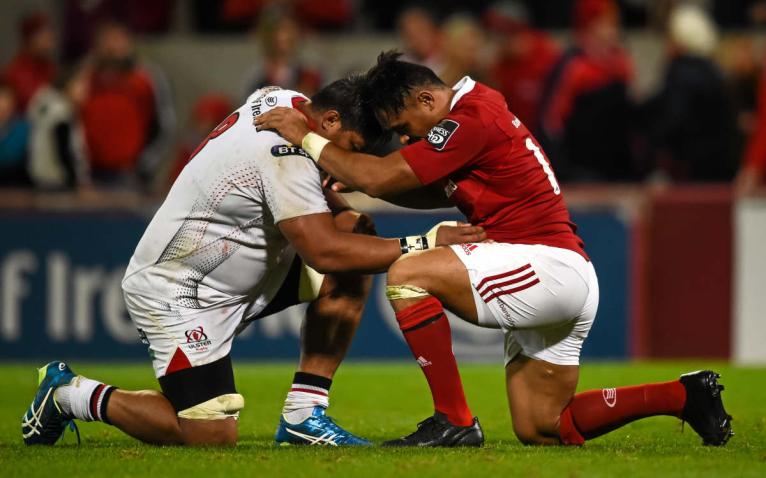
Williams won a league title in his first year at Munster and reached the league and Heineken Cup semi-finals, the following year. There is a striking image from that last-four loss to Biarritz, at Estadio Anoeta, San Sebastian, in May 2010. Peter Stringer consoles a distraught Williams, head resting on a bent knee, with Keith Earls staring disconsolately at the turf.
“I knew that was the end,” he says. “You have to wear different hats. You’re naturally disappointed and you never want to lose your job because, in essence, that’s what is happening. We call it a contract. But there was nothing I could do about it so I had to play for another job, or another contract. I was very lucky to have played that game in Biarritz. I remember coming up against Imanol Harinordoquy. He had broken his nose, the week before, and they made him some sort of protective mask. He looked like something out of Star Wars.
“We lost that game and it was a really hard one. At that time, it had been 18 months of hard yakka, on and off the grass. It was the relationships I had built with these folks and it was like, ‘Oh crap’. Denis Fogarty was another guy that became a good friend, and I really grew fond of. Anthony Horgan, too. Having people like Axel, Mick O’Driscoll, ROG and then, obviously, my mates in Dougie Howlett, Lifemi Mafi and Rua Tipoki. It was more the thoughts of saying goodbye that made it so gutting.”
Cowboy and Tracey, his wife, are like grandparents to my kids. That’s how close we are. Yeah, he told me to come up to Belfast. And I can honestly say, hand on heart, that I probably played the best rugby of my career at Ravenhill.
Williams and Gemma were back together by the time the pair moved to Viadana, in Italy, and his two-year stint with the short-lived franchise of Aironi. “Italian rugby is a bit closer to the French style – more extravagant. I really enjoyed that,” he says. The couple welcomed their daughter, Liana into the world. “That changed everything,” Williams says. “It made me realise, ‘OK, we need to think a couple of years ahead, here. There’s another person to look after.’”
It was around that time, in 2012, that Mark Anscombe told Williams to get his ‘big, Polynesian behind’ to Ulster. The former North Harbour, Auckland and New Zealand U20 coach was brought in for the popular Brian McLaughlin, who had led Ulster to a Heineken Cup Final the previous season.
“Cowboy and Tracey, his wife, are like grandparents to my kids. That’s how close we are. Yeah, he told me to come up to Belfast. And I can honestly say, hand on heart, that I probably played the best rugby of my career at Ravenhill. Again, it was only because I was happy, off the grass. When I say that to people, they say, ‘But it is so rainy up there’. You would barely even notice that when you’re happy. Cowboy knew how I ticked, having known me so well from our time together in New Zealand. He looked after me, my wife. We had our second daughter, Mila, over there. I’m always of the opinion that if a coach treats me and my family well, I’ll go on the pitch and I’ll literally die for you. The people in Belfast, too, I’ll always hold dear to my heart.”
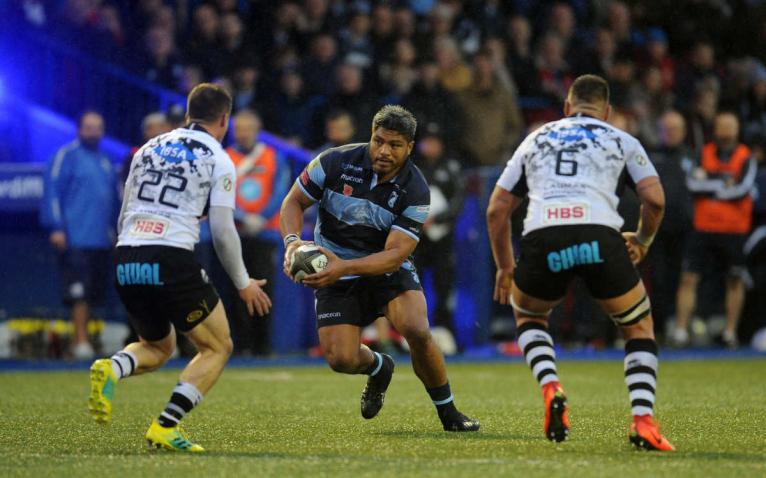
A month into Williams’ time at Ulster, the club was struck by the tragic death of Nevin Spence. The 22-year-old centre, along with his father, Noel and brother, Graham were killed in an accident on their family farm in Hillsborough, County Down. Spence had been recovering from an injury when Williams arrived at Ulster, although the teammates did meet at church, a couple of weeks after the Kiwi arrived in Belfast.
“Although I didn’t know Nevin that well, it was quite a shock when it happened,” he says. “You’re kind of getting second-hand shock from everyone else. Rugby is such a close, family-orientated game so you feel what your mates are feeling. I’m not going to lie, that spurred us on, that season.
“The one thing I will say – not just as a bunch of players but families, as well – we were really connected. Off the top of my head, I think it was 13 games on the trot that we won. That was a year of resilience, especially with what happened to Nevin and his family. We didn’t look too far ahead, in terms of winning the league or Heineken Cup. We just wanted to win these games for Nevin, our mates, and families.”
People seem to think it is all about what happens on the grass but, I can tell you, that’s only 1% of the job that you do see. The stuff that goes on behind the scenes is where you get made, as a player and as a person.
Ulster would finish top of the regular season PRO 12 standings and win their Champions Cup pool, before Saracens knocked them out at the quarter final stage. As Ravenhill was being expanded, Ulster were forced to play the PRO 12 Grand Final against Leinster, at their home ground of The RDS. “I’m a bloke that doesn’t like to make excuses,” Williams says, when that unfortunate venue switch is brought up. “Even though we played that final down in Dublin, for me, it’s just a blade of grass. We were beaten, Johnny Sexton figured us out and fair play to them.”
On a personal level, Williams was recognised for an exceptional season when he was named the Rugby Players Ireland Players’ Player of the Year. “That will probably go down as one of my biggest on-field achievements – winning that award. It wasn’t in my home country, if that makes sense. Myself and Isa Nacewa were the only two outsiders – if you want to call it that – that won the award. I did the photoshoot with the award, ahead of the big dinner and ceremony that they held for it. At that time, I wasn’t fully aware of the enormity of the award itself. I was talking to Johnny Sexton and he was like, ‘Mate, this is a pretty big deal’.
“It goes down to people looking after me, and looking after my family, off the pitch, therefore me being able to do my job, on the grass. People seem to think it is all about what happens on the grass but, I can tell you, that’s only 1% of the job that you do see. The stuff that goes on behind the scenes is where you get made, as a player and as a person. That’s what it came down to – my wife was happy, my two daughters were happy. I couldn’t have been in a better place.”
“I pinch myself, when I look back,” Williams adds. “I went back when I was with Cardiff and people were coming up saying, ‘Nick, it is so good to have you home’. I’m even getting a bit emotional, thinking of it, now. When I look back at my time in Cork, I probably didn’t go so well. So, going back and repaying the faith of the Irish people, that goes a long way. We had people like Ruan Pienaar, John Afoa, Johann Muller, Tommy Bowe, Jared Payne, Roger Wilson. A really good team on the field but, mate, you should have seen the culture of our team. It was just something I had not seen since I had left New Zealand. That’s something that really drove us. We had a team full of good buggers. That contributed to why myself, and the team, played so well.”
In 2013/14, Ulster stormed to six wins from six, in Europe, and were top seeds heading into the knock-out stages. The somewhat cruel reward was a Belfast date with Saracens, the reigning champions. It was crueller, still, when Jared Payne was red-carded after only four minutes for an aerial collision that left Alex Goode sprawling. “I always remind Payno about it and say, ‘Mate, you’re the reason they brought that bloody rule in!’ That was tough. But what many people may not remember is how early that sending off happened. We were down to 14 men, for the rest of the game, against the best team in Europe. They beat us by four points, in the end. It was always going to be tough with 15. To be able to hold our own, and push them close, with 14 is something to be proud of.
“Silverware did elude us,” Williams reflects of his four seasons with Ulster. “In terms of experiences and moments in time, I think I was an absolute winner during my time in Belfast. Myself and my family. We got married in Belfast in our back yard, out in Helen’s Bay and it was such a sunny day. I had friends from back home who saw the photos and said, ‘Mate, I thought you said you were getting married in Belfast!’ They thought we were in the south of Spain.
I’ll be grateful to God for keeping me around, and allowing me to spend more time with my wife and three daughters. I always look at each day from a new angle because I realise how quickly it can be taken away from you.
“I went back when I was playing with Cardiff and the last time I was back over was for Chris Henry’s wedding. Every time I’ve gone back it’s been like, ‘Ahh, feels like home’. It was a great run. A great run.”
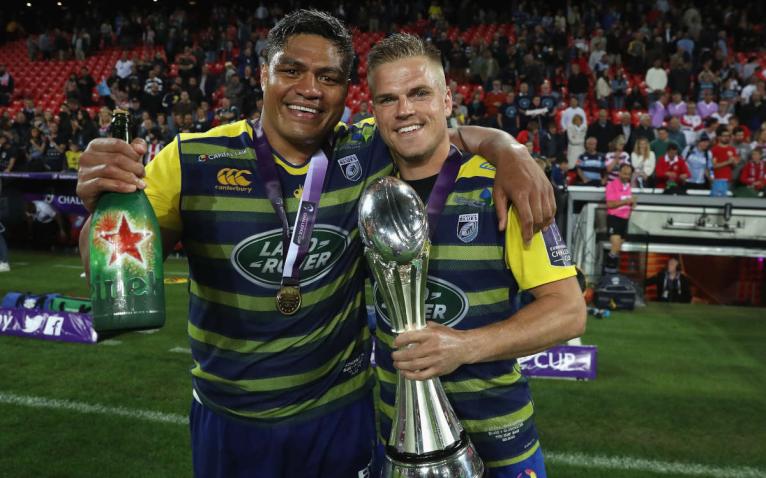
Williams left Ulster for Cardiff in 2016 and helped the Welsh region to Challenge Cup success in 2018. “It worked at Cardiff,” he says, “because the coach, Danny Wilson, understood me. It was like, Nick has done his hard yards so let’s just get him to the game. People laugh about it, and I’ve been mocked for it a few times, but I had a contract where I would only do the captain’s run and I’d play on the weekend. Bear in mind, I had to pull finger for the matches, or I’d have to train the following week. There was a bit of compromise there, and it worked.”
Williams hung up his playing boots in 2020 and admits he struggled to find ‘my why’ for a while, until a serious health scare, advice from his wife and support from sports psychologist Dale McIntosh got him back on track. In September 2022, Williams was out the back garden of his friend Jason Redrup’s house when he suffered a cardia arrest.
“It was an amazing chain of events that should not have happened, but did happen,” says Williams. “There’s a lot of people that I am grateful for, obviously Jase and the Welsh Air Ambulance. I’ll be grateful to God for keeping me around, and allowing me to spend more time with my wife and three daughters. I always look at each day from a new angle because I realise how quickly it can be taken away from you.”
Williams and his cardiologist had plenty of discussions as he recovered from his cardiac arrest. He is certain his scare was, in some way, connected to him receiving a Covid-19 vaccine. “I’m not the only one that experienced (health) issues,” he states, “but I’m one of the blessed ones that has been able to come back from it and hold my daughters.”
As he was getting his strength back, following his health scare, Gemma helped Williams push the reset button. “She said, ‘You need to go do what you do best, and that’s rugby’. I was blessed. One day, I got a phone call from the director of sport at Bryanston School.
“That’s what we are trying to do here, as Head of Rugby – getting the kids in the right mindset. Forget the rugby. It’s all about trying to be a good person. A good bugger. And I always say it links back to the most successful teams I’ve played with – everything works better because you’ve got so many good people in there. That’s what I’m trying to do here – make good kids. Because there is a long run between now and being a professional rugby player. If I can make good kids through the vehicle that I know, in rugby, then I will.
“The job has given me the opportunity to be able to share my experiences with these kids. And I’m always trying to stop them from watching my highlights, because they say, ‘But sir, you were killing people’. I say, ‘No, no, no. Do as I say, not as I do!’”
It has been five seasons since Willians retired as a professional rugby player. He has found his why, is imparting his rugby knowledge to the next generation and himself and Gemma now have three daughters – Cleo was born in 2017.
You ask any retired player what do they miss most and, I promise you, 99% will say the changing room.
“It’s not the championships, trophies or awards,” he insists. “Those are not the things that you remember. Those are things will remember about you, for sure. But you ask any retired player what do they miss most and, I promise you, 99% will say the changing room.
“I’m getting a bit of that now, through my job. I reality, though, nothing can ever replicate the changing room. As a coach now, being on the other side of the fence, I’m part of it but not really. You’re the facilitator. You’re not in the mixer, with all that jazz.”
“This is the reason we do what we do,” he adds. “Making connections, and keeping those connections. I may not have talked to some of these guys in a couple of years but once we connect, it’s like old times. ‘Oh, do you remember that time we went to Dublin, or had a night out there?’ You can’t replace those memories and those connections. Take all the awards away, mate, just give me the memories and I’ll hold on to those.

News, stats, live rugby and more! Download the new RugbyPass app on the App Store (iOS) and Google Play (Android) now!
Whether you’re looking for somewhere to track upcoming fixtures, a place to watch live rugby or an app that shows you all of the latest news and analysis, the RugbyPass rugby app is perfect.


Comments
Join free and tell us what you really think!
Sign up for free