
The Carisbrook House of Pain may have long since disappeared from the Dunedin landscape but England are still suffering the drip-drip-drip slow torture effects of trying to win a test match down in the far south of the world. No matter how much they try to clear their mind as they head to Auckland the nagging fug of disappointment will remain. And that’s a good thing. They had a chance. They blew it. They need to take that hurt and use it, not wallow in self-pity, not take false refuge in running New Zealand so close, not believe that just because they went mano a mano with the All Blacks on their home turf that they will inevitably be able to do so again at Eden Park.
They must not be upbeat and optimistic too soon. They need to berate themselves, be it for flaky scrums, dereliction at the breakdown where too much balls were carelessly lost and, yes, for those eight points that went AWOL from the boot of Marcus Smith. The record books don’t lie. The scoreline is the only ready reckoner that matters. England have still not won in New Zealand for 21 years. That is the bottom line from the Forsyth Barr Stadium. Just as the Germans always manage to equalize in the 89th minute, so the All Blacks invariably get across the line.
That is what is meant when citing the difficulty of playing in New Zealand. It has nothing to do with the stadium backdrop as it might at an Ellis Park in Johannesburg with its seething menace and everything to do with the deep-rooted legacy of defending the jersey that infuses an All Black. If anything, Kiwi venues are the least hostile in the world in regards of noise and tumult. That said, Eden Park, does have a hold on teams, lifting New Zealand to even greater protective heights and putting the hex on the opposition. 30 years. And counting.
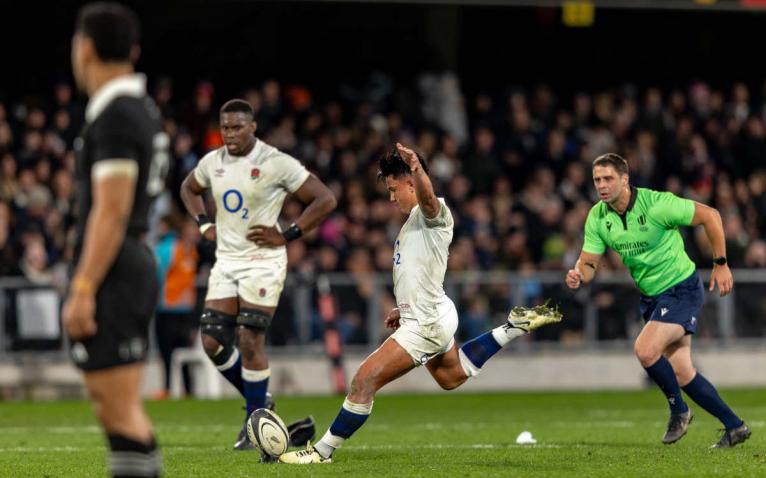
For England to win there would be a considerable achievement. All the more so given that they came within a whisker last Saturday. The fact that they didn’t close out the deal when they had a lot going for them – nagging, pressurising, destabilising blitz defence, a willingness to attack, threats out wide in Immanuel Fey-Waboso, trickery and perceptiveness from Smith (one crass grubber kick apart), physical, punchy presence from the impressive Chandler Cunningham-South (who was taken off too early), all-nuisance-value from Maro Itoje, bits and pieces cameos all over the field – means diddly-squat unless all that and more goes up another level for one very good reason.
New Zealand will be that much better in Auckland than they were in Dunedin. Take that as a given.
This was yet more evidence that England are evolving and improving. This display may have been flawed in parts but the whole was on a par with those encouraging showings against France and Ireland in the Six Nations championship.
England must lick their wounds and nurse that cussed, gutting near-miss grievance for all it is worth. England have to be edgy and antsy and anxious in the build up or they will get belted. It happened to Stuart Lancaster’s team in 2014 who also lost by a point in the second test in Dunedin, after also almost causing a huge upset in the opening game, only for it all to come tumbling down in the final test in Hamilton where they shipped 36 points. The All Blacks don’t tend to make a habit of consecutive ho-hum performances.
So much for the caveats. The flip side is that this was yet more evidence that England are evolving and improving. This display may have been flawed in parts but the whole was on a par with those encouraging showings against France and Ireland in the Six Nations championship. That which needs to be fixed will be fixed. Joe Marler’s first-half departure was a loss in that it used up Fin Baxter’s fresh legs-and-lungs impact in the second-half. That said, the debutant Harlequin showed enough to suggest that he is ready for the big time.
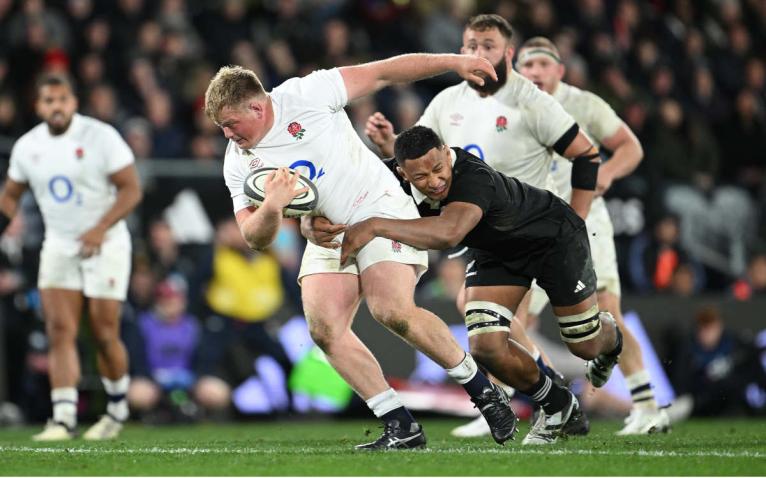
The 22 year-old may be fresh of face but there is wisdom in that boyish frame, as much grit in the set-piece as his clubmate might offer. Baxter was under the cosh but he continued to contribute. He can only grow into the role. England must hope that the officials get to grips with Ethan de Groot’s dodgy walkaround scrummaging although their prime objective is to get their own house in order first and foremost. They folded too easily and too often for comfort. If that fault line is not redressed, they can whistle Dixie to getting anything at Eden Park.
England need to sharpen up at the breakdown. They were sloppy in protecting ball, allowing Kiwi hands to infiltrate too often. That needs clearing up. It’s a game-changer if they don’t deliver there.
England’s front-row will be on fatigues at training, grafting to repair the issues. They are stretched at loosehead with Ellis Genge and now Marler ruled out. England, though, have plenty to offer in the forward pack. There may have been a couple of wayward balls on their own throw at the lineout but Cunningham-South, Itoje and George Martin helped hassle New Zealand to distraction and were prominent in those close-quarter exchanges. Martin is just the sort of gnarly, niggly lock that is worth their weight in gold.
England, though, need to sharpen up at the breakdown. They were sloppy in protecting ball, allowing Kiwi hands to infiltrate too often. That needs clearing up. It’s a game-changer if they don’t deliver there.
Thank you for a great game, @AllBlacks 🤝#NZLvENG | @o2 | #WearTheRose pic.twitter.com/JNqebgevDO
— England Rugby (@EnglandRugby) July 6, 2024
There are precious few selection alterations to contemplate, Marler’s absence notwithstanding. Smith’s aberration with the boot is to be looked at (although Damian McKenzie missed four points, seven if you include his heinous effort at being timed-out on the clock with one penalty effort). Smith did plenty with ball-in-hand to be trusted with the no.10 shirt. Quite simply, he adds to England’s game, sharp in attack and canny enough with his open-field kicking, that misguided slide-through in the first half apart. It was the wrong option.
England’s big positive was the intensity of their press defence, forcing New Zealand on to the back foot and making them kick rather than run.
There was plenty to admire in the play of Alex Mitchell at scrum-half. Again, he should have been given longer. England’s bench strategy and impact was well below par. There was some concern that Mitchell might get knocked out of his stride by the attention of TJ Perenara in the manner that Bath’s Ben Spencer managed to rattle his cage in the Premiership final. Mitchell, though, was sound: sharp as ever in his eye for a gap and willingness to run and more accurate with his box kicking.
England’s big positive was the intensity of their press defence, forcing New Zealand on to the back foot and making them kick rather than run. The blitz is more co-ordinated than it was when first introduced by Felix Jones but England fans will have to get used to the fact that there will invariably be a glitch when the press is so high and so rapid.
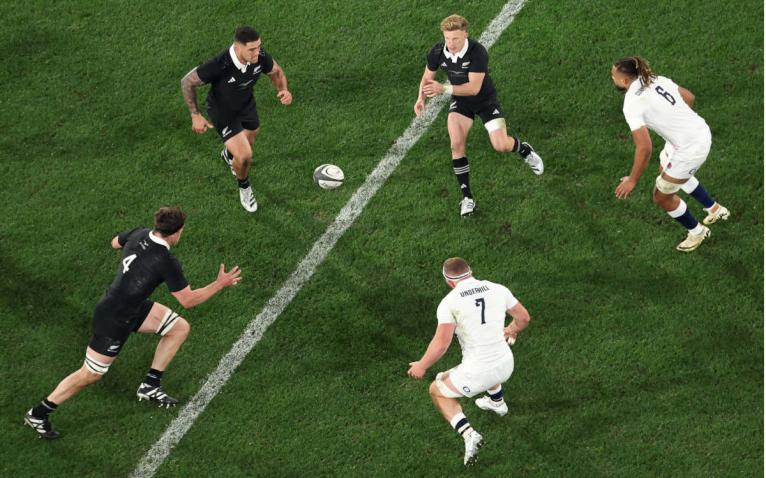
There were blemishes, Ben Earl’s missed tackle on Stephen Perofeta was particularly costly.
Above all, England need to rest bodies and sharpen minds. Gareth Southgate’s team has somehow found ways to win. Steve Borthwick’s side have to do the same.


Comments
Join free and tell us what you really think!
Sign up for free