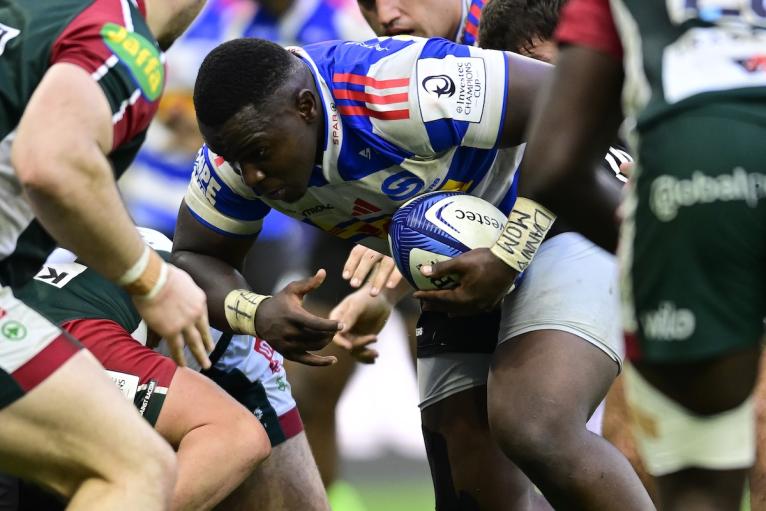
The 2025-26 United Rugby Championship season is less than five minutes old. Leinster, the reigning champions, are in Cape Town and 23-year-old Vernon Matongo is making just his seventh senior appearance for the Stormers.
With Ali Vermaak injured, the loosehead prop from Zimbabwe has been handed the No 1 jersey against one of the best teams in the world. It is not going well.
First he spills a routine ball. Then he collapses a scrum and concedes a penalty. As Leinster begin to build momentum, so too does a familiar feeling. The doubt. The sense that he doesn’t quite belong. Not here. Not in South African rugby. Not on this stage.
For years, Matongo had carried the quiet burden of being an outsider chasing an insider’s dream. A Zimbabwean boy who wanted to become a Springbok. A player talented enough to make elite development camps but ineligible for the representative sides that traditionally feed the national team. A young man who had spent much of his life trying to convince himself that the path was possible. Then, standing in front of a packed Cape Town Stadium, he heard a voice. Or rather, he remembered one.
Years earlier, before a car accident claimed his life, Matongo’s father Vincent had spent countless hours teaching his son how to carry, how to fend, how to back himself. “When you carry, use your hand-off. Step.” The words have never really left him.
“I could feel his presence,” Matongo recalls in the week leading up to a semi-final clash with Leinster in Dublin. “It was like, ‘This is beyond me’. I felt I had the strength to handle the moment. It was insane.”
With extra words of encouragement from Neethling Fouché, Matonga dominated the next scrum and won a penalty for his team. By the time he left the field after 63 minutes, the Stormers were 23-0 to the good. “There are some stadiums where I can feel my dad’s presence,” Matonga says. “Most of the time when I play at Cape Town Stadium, I can feel it.”
That feeling traces back to a childhood spent following in his father’s footsteps. Vincent Matongo was a keen rugby player in Harare and, although he never reached the heights his son would go on to chase, he passed on a love of the game that would shape Vernon’s life. Growing up in Cranborne alongside his older brother, Vincent Jr, sport was less a hobby than a way of life.
“My parents were very hardworking,” Matongo recalls. “They gave me everything I needed. Me and my brother, every weekend or after school, we’d play sport. We were a very sporty family.” Like countless rugby-mad boys across southern Africa, he spent his childhood dreaming. The difference was that his father dreamt alongside him. “I remember being a small kid and he would give me his old rugby boots,” says Matongo. “He’d show me pictures and things like that. It inspired me.”
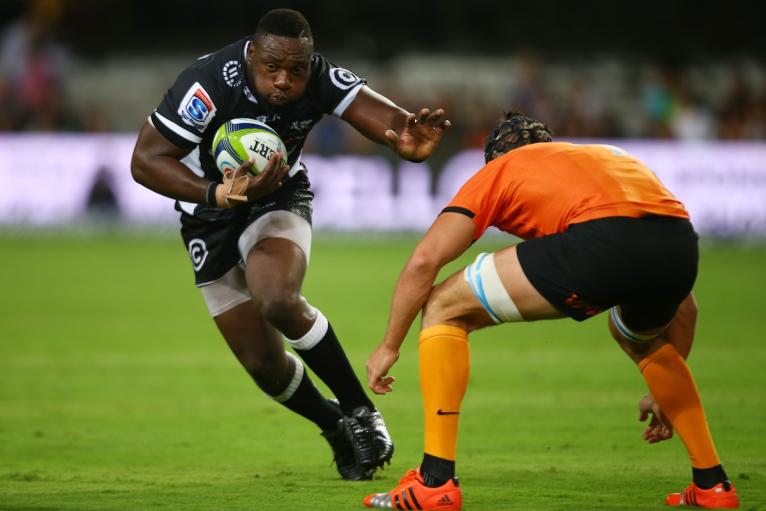
Every Saturday, Northwood boarders would pile into buses and head to Kings Park to watch the Sharks. There, one player in particular caught Matongo’s eye: fellow Zimbabwean Tendai ‘Beast’ Mtawarira.
By the time Matongo was 13, rugby had already begun opening doors. Scholarship offers arrived from some of Zimbabwe’s leading schools and eventually from Northwood in Durban, an elite talent factory that has produced South African internationals across football, cricket and hockey, as well as three former Springboks.
“At first rugby was just a route to a free education,” Matongo explains. But beneath the practical considerations, a vision of green and gold started to materialise. Every Saturday, Northwood boarders would pile into buses and head to Kings Park to watch the Sharks. There, one player in particular caught Matongo’s eye: fellow Zimbabwean Tendai ‘Beast’ Mtawarira.
“If he could do it, given his background, similar to mine, surely I can as well if I just give it my all.” The comparison is an obvious one. Both crossed the Limpopo in pursuit of opportunity. Both arrived in Durban as teenagers. Both gravitated towards the front row. Yet for Matongo, a glass ceiling persisted.
While his South African teammates progressed through the traditional representative pathways, Matongo often found himself watching from the sidelines. He attended elite development camps and measured himself against the country’s best young players, but selection remained complicated.
“When you get to SA Schools, you’re not allowed to play because you don’t have a South African passport,” he explains. “You may be good enough, but you’re not selected because you don’t have a passport.”
Slowly, those obstacles began to chip away at him. “You’ve got this dream of becoming a Springbok, but if you can’t even play for the junior structures, then how does that route translate?”
Through the frustration, Matongo kept the faith. Raised in a deeply Christian home, he has long viewed success and failure through the lens of divine timing. “There is no way that you can believe in God and also have a fearful spirit,” he says. “I always try to carry my faith through my rugby journey.”
“When something like that happens, you make a decision. Are you going to go into drinking? Are you going to blame the world for what’s happened to you? Or can you use this to become a better person?”
It is a philosophy that has sustained him through professional setbacks, selection disappointments and the lingering uncertainty of being a foreigner pursuing South Africa’s ultimate rugby honour. But nothing would test that more than the gut-punch he received as a 16-year-old in 2016. “I couldn’t believe it. I spoke with him the night before,” he says while recounting the news of his father’s sudden death.
The final conversation had been about rugby. Matongo had attended Sharks trials the previous day and, as always, Vincent had picked through the details of his son’s performance. “When you carry, you must use your hand-off. You must step. You must do this and that.” Less than 24 hours later, he was gone.
“When something like that happens, you make a decision,” he says. “Are you going to go into drinking? Are you going to blame the world for what’s happened to you? Or can you use this to become a better person?”
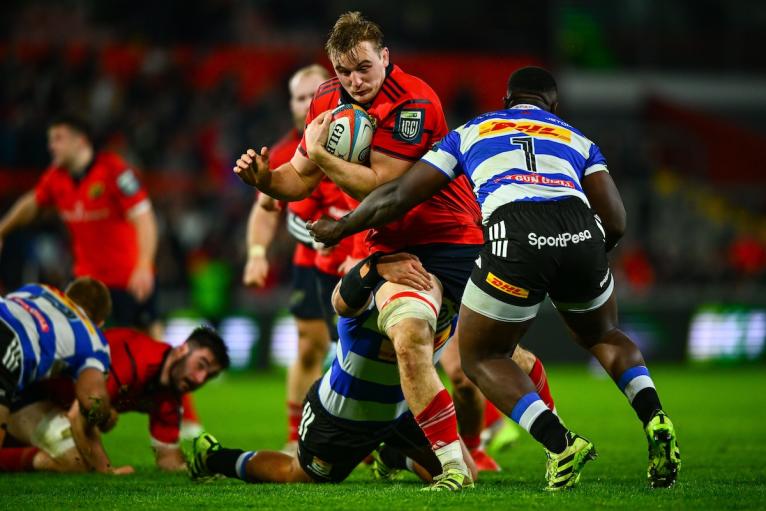
He became head boy of his school. He graduated with a Bachelor of Accounting from Stellenbosch University, becoming the first graduate in his family – a milestone he says meant as much to his mother as it did to him. In 2024 he made his Western Province debut in the Currie Cup and later that year was given the nod by Stormers coach John Dobson.
“I do believe that God has placed it on my heart that I will be a Springbok,” he says matter-of-factly. And if he’s right, if his ambitions are realised, if he returns to his father’s grave, what will he say?
“I’d thank him for everything,” Matongo says. “I’d tell him that I’m proud of the father he was and the example he set.”
And what would his father say in return? “He’d probably tell me he’s proud of me. He’d say, ‘I told you so. Just keep believing in yourself. You can take this all the way’. I’m going to make sure people remember our last name.”
NEW IN THE APP: Official World Rugby Rankings hub! Compare team rankings side-by-side, with data going back 20 years.
Download the RugbyPass app on the App Store (iOS) and Google Play (Android) now!


Hopefully he gives it his all over the next year but if it doesn’t materialise into a selection or even a Springboks A squad then hopefully he commits to the Sables. With him and Landsberg the Sables would be quite the contenders. Squad could be: Matongo, Mandioma, Kundiona, Snyman, Landsberg, Ewers, Mavesere, Manyarara; Mudariki, Prior; McNab, Mashawi, Mudzekenyedzi, Siguake, Mafura.
Lots of players who could still slot in but that team would be enough to make Wales worried.
if he wants to play in the RWC27 he should consider the Sables ….. chances to be in the Springboks roster are very slim, for the Sables he would be a given …..
and, of course I understand everyone wanting to be Springbok, but if WR is serious about “growing the game” (geographically), they should encourage talented players to line up for their country of origin …..
WR just need to ensure they are imbursed for their choice, currently one free Rassie SA camp is probably going to net him more than a window of Sables payments.