
The Shaun Edwards England conundrum may not be a blaze burning out of control, but the smoke is certainly stoking the media atmosphere around the national squad.
Watch Nations Championship - Round 5 LIVE
Hemispheres collide in the new Nations Championship. Stream live, replays and highlights free on RugbyPass TV.
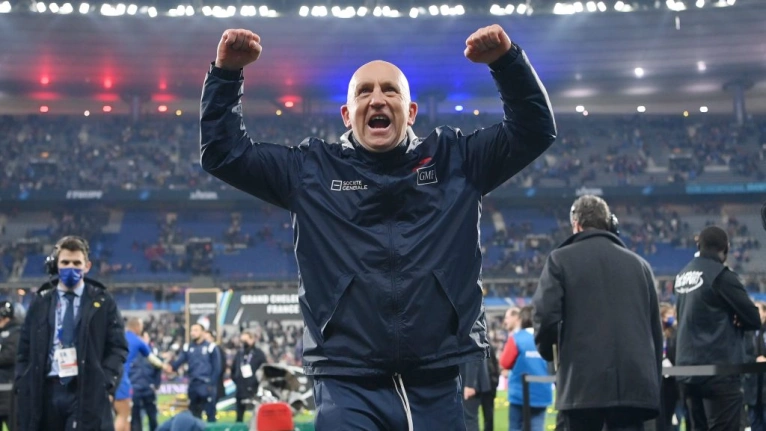
It could be argued England have struggled to employ their most gifted coaches, or at least assemble their prime coaching talent in one regime. The best head coach in Great Britain and Ireland, Andy Farrell, made his name across the Irish Sea. The foremost attacking mind of his generation, Stuart Lancaster, also found his fortune in Dublin, after an ultimately ill-fated spell at the English helm. Now it appears the most prominent defensive coach in the game over the past 20 years, ex-leaguer Edwards, will likely never get the chance to coach his country of birth in the men’s game.
A RugbyPass article last month mooted that the RFU might be considering a failsafe coaching ticket of John Mitchell and Edwards, were Steve Borthwick to fall at his November hurdle in the Nations Championship. The Wiganer’s CV stacks up. He has won more silverware in his glittering coaching career than any other Englishman alive. Seven Six Nations titles with Wales and France, four Grand Slams, four English Premiership titles with Wasps and another two European Champions Cups at the same club. All that is missing from that resumé is a partridge in a pear tree.
The catch is none of those trophies were won with his homeland. Edwards appeared within England’s grasp after joining the women’s world champion Red Roses as a consultant, but the latest revelations from BBC’s Rugby Union Weekly indicated he had once again been passed over, this time by the incumbent head coach. Edwards joked for England, “if it was assistant kit man, I’d be there, ready for work”.
When you delve into the detail, Edwards only becomes a better fit for Borthwick’s defensive needs. During England’s 2026 Six Nations, when teams gained entry to England’s 22m ‘red zone’, they tended to come away with points more often than not. The men in white conceded a competition high of 3.2 points per entry, 20% more than any of their rivals.
They also gave up the highest ratio of missed tackles converted into breaks or tries [44%], and missed the most tackles in the wider 15-5m channels [30%]. England’s defence leaked an average of over 30 points per game, and gave up over 40 points in two matches against Ireland and France.
If there are two areas where Edwards could help England immediately, even as a kit man, it is in winning the ‘alpha test’ close to the goalline, and in defence out wide, where the decision-making of the last edge defender has become so crucial to the outcome of wide plays. As Edwards noted later in the BBC interview: “In that wing position, absolute concentration throughout the whole game [is essential]; and if you lose that concentration against a world-class opponent, you only have to lose it for a split second and they will punish you.”
Like Edwards, Irishman Felix Jones tends to defend the wide channels by attacking space rather than trying to cover it more passively, and he felt compelled to leave his role in Borthwick’s coaching staff after only six months in the job.
Instead of Edwards or Jones, Borthwick has turned to Joe El-Abd and now Richard Wigglesworth, who do not yet have the same provenance as defensive coaches in the elite game, but may be more malleable components in the overall system. At the same time, the chance to develop a more aggressive wide defence which existed later in 2024, and which had already “helped [England] go from a defence ranked fourth or fifth in the world to first or second, [seeing] massive improvement” – according to Northampton full-back George Furbank – has probably been lost in the course of one sudden departure, and another forestalled arrival.
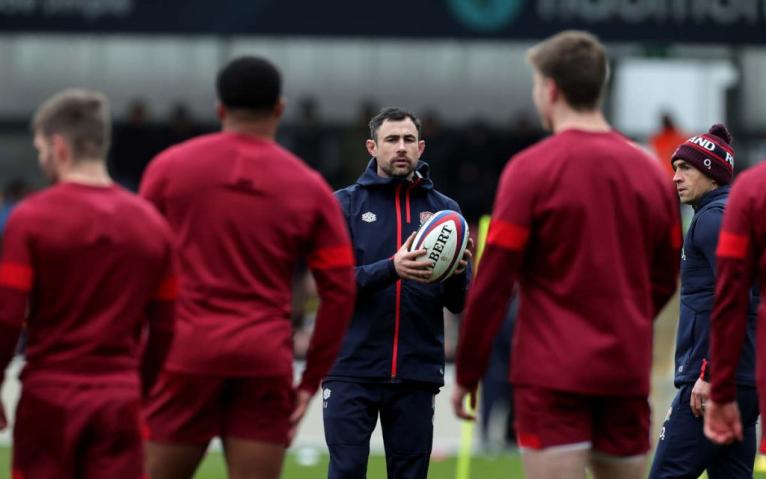
If you want to win a World Cup, you need an elite defensive mind to do it. England had Phil Larder when they hoisted ‘Bill’ for the one and only time in Australia in 2003, while Australia enjoyed the services of fellow leaguer John Muggleton when they last won the blue riband event 27 years ago. Both nations have it all to prove on D this November, and that is still the case after England’s resounding 45-22 triumph over the Wallabies on Sunday.
The acid test for the men in white will be the final round game against the All Blacks on 21st November. The Wallabies need to find a more immediate solution to their woes without the ball, after conceding an average of seven tries and 46 points per game in each of their last three matches.
A recent RugbyPass analysis of the Canadian defence against England’s all-conquering Red Roses in the women’s game explored how the use of the scrum-half in the line, rather than in the ‘boot space’ behind it, allowed Canada to build more aggression and achieve better outcomes than Australia’s men had in the Bledisloe Cup double-header.
The match at Twickenham added another chapter to that story. One of the many quirks in the defensive design introduced by Kiwi Scott McLeod orbits around the roles of the scrum-half and blindside wing in lineout defence. The nine, Ryan Lonergan, starts in the tramlines according to accepted modern praxis, but the blindside wing defends in the 10 channel anywhere up to halfway.
— William Bishop (@RPvids1994) September 23, 2026
In this example from the first match of the two-game series between Argentina and Australia, blindside wing Max Jorgensen is plugged into the 10 channel and it left to Lonergan to cover the backfield where Jorgensen would normally be stationed. In this instance the Brumbies scrum-half desperately scrambles back to cover a kick through by the Pumas and deny a try by the skin of his teeth.
England exploited Jorgensen’s positioning in the line twice at the weekend, starting with the first lineout of the game.
https://t.co/Iw38u9dnnI
— William Bishop (@RPvids1994) November 9, 2026
England want to achieve two aims in the first four plays to exploit the flaws in the system. On third phase at 1:03, they pin down Lonergan near touch with a run by big Ollie Chessum, on the following play they run Ben Earl straight at Jorgensen, with Jamie George knocking him down at the cleanout to ensure he can play no part in backfield defence on the subsequent phase.
With Dylan Meredith [in the white hat] on the wrong side of the field, England are essentially attacking a thin front line and an empty backfield with the ball in the hands of one of the best line-breakers anywhere on planet rugby, Immanuel Feyi-Waboso.
The second example in the 57th minute was even more clearcut.
https://t.co/rDvrzZjPYW
— William Bishop (@RPvids1994) November 9, 2026
Tom Wright and Ben Donaldson come up far too late to affect an overlap play run off Henry Slade, and with Lonergan dropping straight back from the tramlines on the right it is left to Jorgensen to track all the way back from the 10 channel in cover, as the only realistic chance to stop makeshift wing Henry Pollock scoring near the corner flag on the left. There is no effective backfield pendulum and the confusion of roles is something to behold.
The rumours that Edwards is a busted flush delivering outdated ideas are exaggerated. Over two decades, Edwards has proven capable of adapting to change as answers to his systems were found. Rugby is an ongoing dialogue between attack and defence, and he has always been a top conversationalist. Forget what France may be saying now he is gone. Edwards helped Les Bleus to three Six Nations titles since 2020, a 14-game winning run and briefly, to the number one ranking in the world in 2022. Be grateful he ever arrived at your door.
‘Attack wins you games, defence wins you titles’ is one of the oldest adages in sport. If it holds water, then England and Australia have some way to go before they can be considered bona fide contenders for the 2027 Rugby World Cup.
The Wallabies have been too porous, and England have overlooked two of the finest defensive minds in the game. Only time will tell if Borthwick has made the right call.

NEW IN THE APP: Official World Rugby Rankings hub! Compare team rankings side-by-side, with data going back 20 years.
Download the RugbyPass app on the App Store (iOS) and Google Play (Android) now!


Comments
Join free and tell us what you really think!
Sign up for free