
There are seemingly two types of supporters out there in the world of rugby. Those who genuinely love it and those who love it so much that they’ve somehow gone full circle and have started to not like it so much.
Of those who love it so much, and therefore can’t stomach it anymore, the most unnerving have got to be the ‘poor defence’ brigade. Closely followed by the ‘that was forward’ brigade – who take great joy in ruining any good try shown on social media by immediately replying with ‘that (pass) was forward’.
The ‘poor defence’ brigade title may not be as clear as it could be. So, here’s an explanation. The ‘poor defence’ brigade are those who when faced with a brilliant piece of rugby, a fantastic try, or a high-scoring game, will immediately say that it’s ‘poor defence’ which has resulted in that moment of pure rugby joy – that moment of rugby happiness which temporarily releases us from the attrition of everyday life.
It’s like seeing a new-born baby and the first thing which comes to mind is telling the mother that the prophylactic used obviously didn’t provide significant cover.
What’s even weirder is that many of the ‘poor defence’ brigade also seem to be part of the ‘modern rugby is rubbish because it’s so defensively orientated’ brigade. Which means that modern rugby is at once worse because it is too defensive, whilst at the same time suffering from poor defence. Anyway, we digress.
Some of the recent rounds of European rugby were of course a gold mine for the ‘poor defence’ brigade. There were some massive scores in rounds three and four of both the Champions Cup and Challenge Cup.
The competition that once took precedence over all domestic leagues is now largely an after-thought in the opening rounds. Where we once saw Ferraris, we now see Volkswagen Polos.
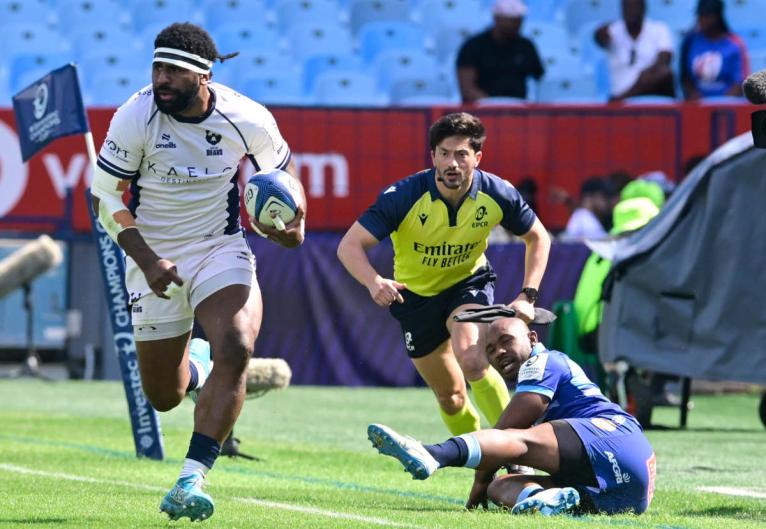
Bulls v Bristol delivered well over 100 points, with stacks of other games reaching a combined points total of well over 70 points. But even in those games, very few teams had a defensive completion rate under 70% – the Bulls, Stormers and Sharks being rare exceptions. Whilst some of the games in the third and fourth round of European rugby were one-sided, it had little to do with pure defence, and more to do with the composition of that set of tournaments.
What was once Henri IV Dudognon Heritage Cognac Grande Champagne, has now had a rather large dash of SPAR cola added into the mix. Most teams are now able to heavily rotate their squads in away games and still get the required points for a home game in the last 16.
The competition that once took precedence over all domestic leagues is now largely watered down in the opening rounds. Where we once saw Ferraris, we now see Volkswagen Polos.
Aside from team selection, one of the other aspects that is often missed by the ‘poor defence’ brigade, when discussing high-scoring games, is that many tries in the modern game don’t actually come from defensive lapses.

Over the past five seasons, stacks of tries are now being scored from cross-kicks, kick-passes and five-metre lineout mauls – from which there is no defensive miss to speak off, not a tackle anyway.
Being able to challenge in the air is of course a huge part of the modern game, in build-up play and in scoring tries, but the inability to do so isn’t really regarded as defensive weakness and therefore not a valid criticism for high scoring games – the same goes for defending five-metre lineout mauls.
There is of course also an assumption from some older supporters that the game was always better in the past, not only in attacking play, but also defensively. The notion that the game was more violent (which it definitely was) tends to be mistaken for being better defensively.
Where some see a brilliant miss-three pass, others will choose to spot the slight defensive misread. Where some will marvel at a player scoring a hat-trick, others will focus on the clumsy defence that led to it.
But looking at data from the amateur era will tell you otherwise. In the 1987 Rugby World Cup for instance, there were just 48-ish tackles made per team per 80 minutes. What’s more, only 70% of those tackles were completed – and that’s at Test level, not club rugby.
By comparison, in the 2023 Rugby World Cup, there were an average of 165-ish tackles made in 80 minutes – with a completion rate of 89%. It means there are over three times as many tackles being executed in the modern day and at a 20%-ish higher completion rate. These stats alone would tell you that modern rugby doesn’t have a problem with weak defence, quite the opposite.
But European competition aside, the scourge of the ‘poor defence’ brigade still looms large over the whole of the rugby season. Where some see a brilliant miss-three pass, others will choose to spot the slight defensive misread. Where some will marvel at a player scoring a hat-trick, others will focus on the clumsy defence that led to it.
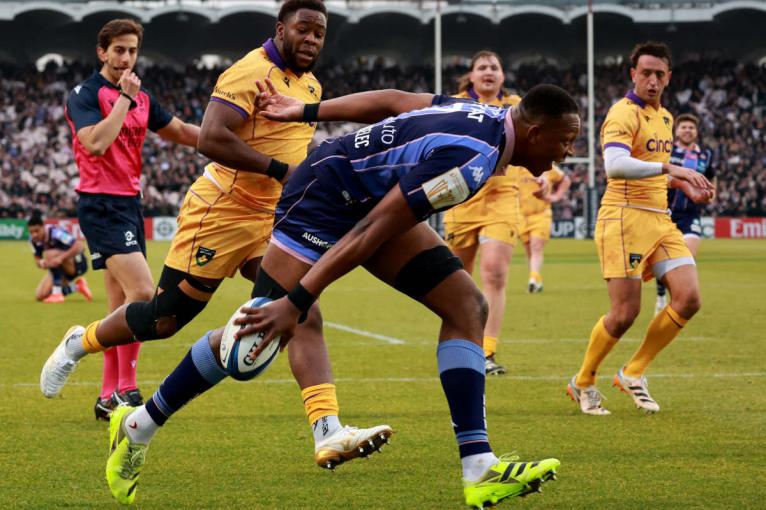
This calling out of the ‘poor defence’ brigade may seem a trivial point (and it probably is, given this columnist’s penchant for rugby’s inanities). But the debate is broader than the negativity aimed at defence.This negativity can spread into all aspects of rugby. It can lead to incredible players like Springboks star Sacha Feinberg-Mngomezulu not being lauded for the incredible talent that he is, but being dragged over the social media coals for his goal-kicking percentage.
It can lead to supporters not adoring Scotland wing Duhan van de Merwe, but instead mocking him because he can’t turn very quickly on the defensive transition.
Don’t for one moment think that rugby isn’t both defensively and offensively the best that is has ever been. It really is. Try to enjoy it.
But above all, the raison d’être of the ‘poor defence’ brigade sucks the joy out of the game in general. It’s a fantastic sport and one which is being played at the highest level that it ever has.
Yes, rugby has issues financially. And yes, the game is undergoing a huge structural upheaval all over the globe. But don’t for one moment think that rugby isn’t both defensively and offensively the best that is has ever been. It really is. Try to enjoy it.
PS. First one to comment that this column is a ‘poor defence’ of the argument wins a signed copy of my latest book.😊


While the author is entitled to his personal preference for attack and one or two of his criticisms are valid, on the whole they are misdirected.
For example, re the CC he sets up a false target. I’ve never heard anyone say the whole reason the competition has gone down hill is poor defence, I have read and heard from pundit after pundit, fan after fan ad infinitum the reasons repeated here - too many clubs, rotation of squads etc - most people agree with him so what’s he going on about.
Again, while some ‘fans’ and ‘pundits’ fail to acknowledge brilliance in attack, focusing instead on some real or imagined defensive weakness, as described, far, far more give no credit for brilliant defence, because of some real or imagined lack of attacking flair. This is often associated with ‘click bait’, and/or fans twisting the truth to attack the rivals of their favourite player, or an inability to recognise skilful defence, oblivious to its value etc etc. Sadly social media encourages bad behaviour on ALL sides, it’s not a prerogative of the author’s defence brigade.
Both attacking and defensive talent should be praised, of course, AND weaknesses acknowledged too. Otherwise you get the all too frequent online arguments about selections, fuelled by club fanaticism, stoked by paranoid reasoning born out of disappointment that their darling, who can never, ever do any wrong and so ‘must’ be the first choice of any reasonable person, isn’t in the team, so the coach must have a personal grudge against the player/be biased in favour of players from another club/be blind etc.,
Now, I have no axe to grind with bumper scores, I enjoy the spectacle. But I can also understand that some people crave the tension of a close match. To avoid wash outs in future, either the weaker team needs to defend better and/or score more tries, or the standards of the stronger team need to fall. No one is going to call for the latter, so it’s not really any wonder that those who want tighter matches sometimes comment on defence.
So long as comment is balanced and fair, there’s nothing wrong with it as long as that applies both ways - thinking back to my favourite games, surely seeing a brilliant attack circumventing a great defensive effort, or a brilliant defence of great skill holding out against a great attack, are more exciting than seeing an attack walk through a sloppy defence or defence resist a toothless attack. Think Leinster v Toulouse, no tries in normal times, or France v SA in the WC quarters with 7 tries, games of the first order!!
Oh, and being able to challenge in the air is an important defensive skill - tradition may disagree, but times change, keep up with the new rules!
Is rugger better than it’s ever been? YES! Categorically. I like to compare the haka of yore to the haka of today. The earlier version looks like a SNL skit. So it is with rugby. Look at some of those old games. Lopsided soccer games had higher scores. And that has nothing to do with poor defense. It has everything to do with the modern, pro game. Incredible coaching of unbelievably fine-tuned athletes…going out there, solving the riddle within the riddle. Are there crap games? Yes. Why? For various reasons, mainly to do with resources, there are teams that cannot build the kind of squads required to survive the modern schedule. (Rassie - an ex-player - has been at the forefront of building that NFL-type squad & managing it superbly. Poor Razor probably wishes he had the bandwidth to do the same.) Now: who of you is not salivating at the thought of the 6N?
Thanks for “the Bulls, Stormers and Sharks being rare exceptions” because they have been absolutely awful but at last seem to be sorting it out. Not sure about the other games because I didn’t watch them, but actually stopped watching the SA sides except the Stormers who (mainly) sorted it out a long time ago thanks to their awful tackling performances.
A recognition of the glass half empty brigade. Where is the quality of either Bill McLaren or the unsurpassed great… Cliff Morgan. They loved rugby every day of the week, were educated over time in the art of describing in words what was being watched, wrapped in an articulation one does not get nowadays. “If the greatest writer…”
This is simplistic and brings in quite a few strawmen (of course fans are going to criticize a player’s goal-kicking percentage!). We can love the increased attacking and scoring and still criticize poor defensive effort. Defensive tactics are as intricate as ever, to counteract the refined attacking rugby of many sides; what has been getting worse, in my opinion, is tacking (which is clearly a part of defense). I’ve watched many matches in both the Prem and Top 14 where basic tackles have been missed, with poor form. Complaining about poor tacking isn’t “sucking the joy” out of the game, it’s accurately noting that not all tries are the result of brilliant attacking.
Absolutely bang on Paul!
There’s a perverse glee some “fans” seem to get, decrying the marvelous product we have today as if this will hoist the heroes of erstwhile years higher.
This really gets to the crux of it! Something people don’t acknowledge is that the much maligned european competitions are in the rudest health ever. Average attendances through just the ‘25-’26 pool games are already above many years which would include the massive knockout ties, and the quality of the median game is self evidently better.
I love how consistent your attachment is to praising the game Paul, wish we had more in the media like you!
Absolutely bang on Paul!
There’s a perverse glee some “fans” seem to get, decrying the marvelous product we have today as if this will hoist the heroes of erstwhile years higher.
This really gets to the crux of it! Something people don’t acknowledge is that the much maligned european competitions are in the rudest health ever. Average attendances through just the ‘25-’26 pool games are already above many years which would include the massive knockout ties, and the quality of the median game is self evidently better.
I love how consistent your attachment is to praising the game Paul, wish we had more in the media like you!
Excellent article, Paul. I see rugby, and life, as being one of cycles., highs and lows. We are,imo, clearly in an upcycle in our game. Brilliant players in spades…Sacha, Cheslin Kolbe, Louis BB, Levani Botia plus, plus….. Brilliant coaches….Rassie, Mola, Lagisquet, van Graan,O’Gara, plus,plus…. Brilliant teams…..Springboks, Ab’s ofc, Ireland, France, Crusaders, Toulouse, UBB, Northampton, plus, plus…So a great era to be a “looker on”.
But also in the past there were great cycles. The late 1960’s and then through the 1970’s when Wales and the 1971 and 1974 Lions teams rode high. I sometimes look back at clips and marvel at the great plays of those teams.
Brigades ? For sure, and they have always existed, always will. Just look down on them with pity from the high ground !
Power and intensity (an unstoppable force) as against impenetrable defence (the immovable object) seems to be the defining feature of international rugby at least. 50 - 70 points in a game is not unusual. I also agree that it is not so much failed defence as brutal intensity that wins the games. Being an AB supporter I need only refer to the Puma, Bok and England losses - the defining feature of those games was the intensity of the attack not the porous nature of the defence (though the ABs defence was poor 😂). I think it’s why most top teams now go 6-2 - to maintain or increase that intensity at key times.
Creative writing 101: today you find out how far you still have to go.
In summary, moaning about moaning
Poor defence is a simplistic way to look at it and does detract from brilliant play. Yes technically most tries result from a moment of poor defence but Its much more nuanced. In the modern game pressure causes defensive lapses. Pressure is generated through accuracy of passing and movement, through quality kicking and phase play. It is generated by multiphase moves, dummies, hand offs, raw pace and power. In the end many defences are stress tested to the point of breaking. That missed tackle, that moment where an overlap occurs, a kick in the backfield is not covered or a misread happens or where a team falls for a trick play is mostly caused by pressure. Vary rarely is it a case of poor defence. So when a player misses a tackle or a defensive line is cut through consider the work on attack first and the brilliance of the move or the mounting pressure on the defensive system before you shout poor defence.
This column is a poor defence of the argument!
Actually, it was a good column which I enjoyed. There’s nothing worse than the social media negativity that follows some of the brightest players and best moments in rugby.