




1
Six Nations 2026 Awards - and our Team of the Tournament
9

It’s been said that inspiration can come from anywhere, but even for Rassie Erasmus and his trailblazing Springboks, an under-14 B team is a left-field source.
Then again, should anyone be surprised that South Africa’s coach flips every stone in pursuit of an edge? Against Italy this weekend, around the 37-minute mark, the double world champions unveiled what was effectively a lineout lift in open play.
With scrum-half Grant Williams crouched over the ball inside Italy’s 22, he looped a short pass to Ruan Nortje, who was hoisted skyward by his props.

Watch the future stars of our game in action with the World Rugby U20 Championship, available on RugbyPass TV and the RugbyPass App.
Watch the future stars of our game in action with the World Rugby U20 Championship, available on RugbyPass TV and the RugbyPass App.
Three more forwards piled in, the pod rumbled forward, and the Boks banked a penalty advantage. On the front foot, Williams finally released Canan Moodie on a hard angle for a 20-metre charge to the line.
They went back to the well in the second half. A conventional lineout near the right corner found Nortje again. One phase later, Williams fed a freshly lifted Nortje in midfield. The maul formed and Malcolm Marx plunged over. Two tries, one idea, zero precedent at Test level.
The Springboks are having fun out there! #RSAvITA pic.twitter.com/rAucgr4wsi
— Jared Wright (@jaredwright17) July 12, 2025
Lifting in general play is legal but rare because timing is unforgiving and failure is embarrassing. Yet pockets of rugby already flirt with it. In Super Rugby, the Brumbies used a midfield lift against the Reds in 2021 to launch a crash-ball play, while Toulouse tried something similar off a quick tap against Racing last season. Ireland have experimented with the tactic as well. What Erasmus did was mesh that old curiosity to a full-blown maul—a wrinkle no one has dared in Tier One Tests.
After the game, he grinned like a kid who’d slipped something extra into his pick ’n mix bag. The spark, he revealed, came while watching schoolboy rugby.
“We noticed it with Paul Roos under-14s. You get all the lineout benefits if you support in general play.”
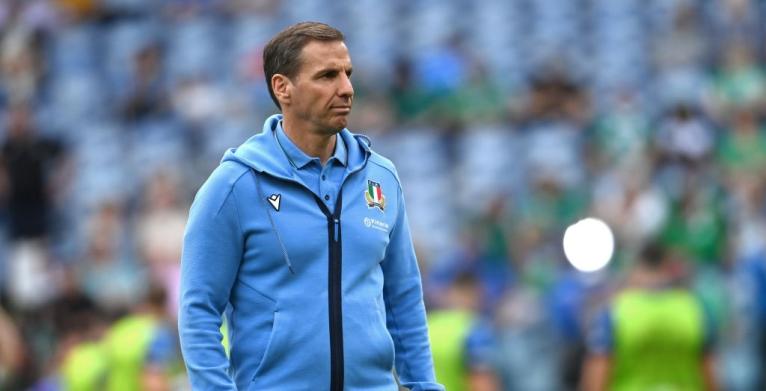
Manie Libbok’s deliberately undercooked kick-off—designed to hand Italy a scrum—provoked its own indignant cries. Italy coach Gonzalo Quesada bristled: “They can beat us without that kind of tactic.” Fans piled on. Under a Telegraph report, one reader fumed, “South Africa are just so arrogant”; on X, a verified account with more followers than the Aviva Stadium has seats dismissed the manoeuvres as “dull and against the spirit of the game.”
But step back and you’ll see rugby’s history is a relay race of boundary-pushers. Ian McGeechan’s Scotland invented the seven-man lineout peel in the 1990s; Joe Schmidt’s Ireland blurred the laws with dummy-loop screen plays a decade ago; Fabien Galthié’s France have normalised 50-22 “geographical pressure” kicks. When these teams coloured outside the lines, the sport cooed about genius. Erasmus does it and suddenly we’re holding tribunals on morality.
The Springboks manufacture a scrum opportunity in the first minute! INSANE! 🤯 #RSAvITA pic.twitter.com/R7wDGGobvH
— Jared Wright (@jaredwright17) July 12, 2025
It can’t be just the number-one ranking and multiple titles that provoke so much outrage. Richie McCaw’s All Blacks enjoyed a saintly aura despite living on the offside line. England’s 2003 World Cup winners—as forward-driven as any Bok side—are recalled with misty-eyed affection. The Springboks, by contrast, get pinned whichever way they lean: bash opponents with a 7-1 bench and they’re cavemen; unpick them with skulduggery and they’re cheats.
Perhaps the answer lies in rugby’s mental filing cabinet that plucks on stereotypes and old tropes. The Aussies have flair but little grunt; the Scots are gallant but undersized; the Irish are clinical yet brittle in clutch games; the Fijians are freak athletes with erratic temperaments. And South Africans? Over-muscled brutes who wouldn’t recognise a paintbrush if it stabbed them in the quad.
Yet this Bok squad fields two of the most creative fly-halves in Libbok and Sacha Feinberg-Mngomezulu, wingers with nitroglycerin in their calves, centres who moonlight at flank, and a pocket rocket in Kwagga Smith who could play anywhere except in the tight five. The stereotype survives only because it’s convenient. Perhaps this is why Warren Gatland believes the Boks’ reading of his simple skip-pass manoeuvre deployed by the 2021 British & Irish Lions was a consequence of spying.
Since joining RugbyPass, I’ve tried to praise the Boks when warranted and resist the jingoism that fogs South African discourse. I’ve copped a lot of abuse for criticising the team and its coaches when they’ve erred. But I’m convinced that if France or New Zealand had lifted a jumper in midfield, social media would have hailed it as art.
Is the backlash fuelled by Erasmus’s traffic-light theatrics, by his referee dossiers, by supporters who sometimes weaponise nationalism, by apartheid’s long shadow? All of the above, maybe. Mostly, though, it’s about expectations. People like their archetypes neat and tidy. Dr Erasmus keeps scribbling over the labels.
The Boks aren’t merely winning. They’re winning the wrong way, at least for those who can’t reconcile brawn with guile. But rugby’s progress has always depended on the rule-benders. The coach that forces lawmakers, rivals and fans to see the game anew should be celebrated. Even now, the game’s leading officials are assessing the rules after these latest innovations. To rugby’s credit, it is a constantly evolving sport. This does not stifle creativity but encourages it.
If an under-14 B side can inspire the next tactical leap in Test rugby, maybe it’s time the sport stopped scoffing and started taking notes. The world’s leading side is not simply pulverising the opposition with meaty forwards, nor is it simply winning ugly games thanks to the metronomic boot of Handre Pollard. It is changing the sport itself.
For that, they deserve your respect.
The week of the first British & Irish Lions Test has finally arrived and the excitement’s nearly at fever pitch but there aren’t too many close selection calls if we’re being honest.
Read Now
News, stats, live rugby and more! Download the new RugbyPass app on the App Store (iOS) and Google Play (Android) now!
Whether you’re looking for somewhere to track upcoming fixtures, a place to watch live rugby or an app that shows you all of the latest news and analysis, the RugbyPass rugby app is perfect.
Join free and tell us what you really think!
Sign up for freeThe in-demand coach will be pushed to reject overtures from England and Saracens when his contract is up after the World Cup
After the Super Saturday epic, Fabien Galthie was left with more questions than Steve Borthwick, despite their sides' contrasting Six Nations form.
So many great tries, matches and individual displays in a championship for the ages, but which were the best?
No, just no, as good as Jordan is, a player like Cullen does not have comparisons
You’ll have to give me one of those vivid descriptions of a Queensland sunrise Miz!
Fine article, Nick. Late here as I read, so back in the morning when the old brain is refreshed !


 Clear
Clear 


