




1
Why Dave Rennie picked Beauden Barrett over Scott for All Blacks captaincy
2


 Share

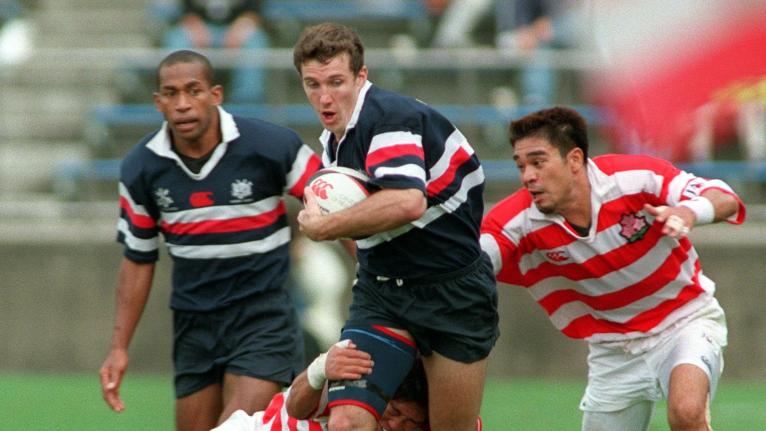
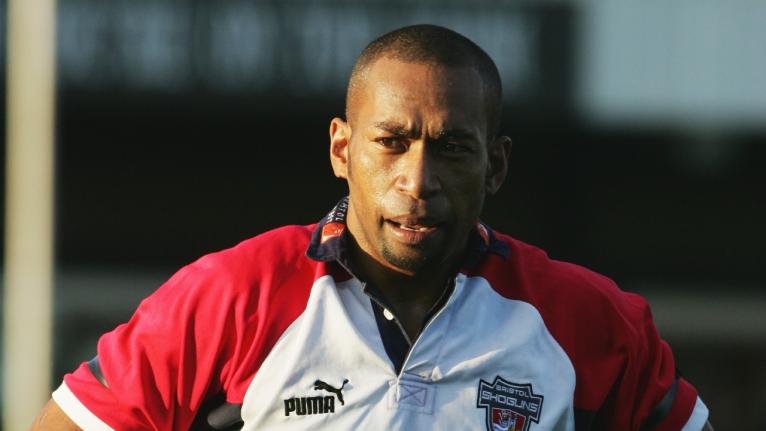
Scoring two tries in Hong Kong’s only win over Canada in 1998 paved the way for Luke Nabaro’s successful professional career in England, with Bristol, Newport, Pertemps Bees and Doncaster.
Even though it’s nearly three decades ago, it’s a time in Nabaro’s life that he recalls fondly, and the significance of that historic victory, one the current team – now known as Hong Kong China – will try to emulate in the Nations Cup tomorrow, is not lost on the man they called Cool Hand Luke.
“Canada were very good at the time; they had some very good players who were playing professionally in the UK, people like Al Charron (Bristol), Winston Stanley (Leicester), Gareth Rees (Wasps), Rod Snow (Newport).
“For us, our team was mainly made up of southern hemisphere players, with a few English and Scottish. We knew it would be tough and something special would have to happen for us to beat them. On that day, it all came together.”
Canada’s UK-based stars missed the Hong Kong match but they still had players of the calibre of Dan Baugh, then a young flanker at the start of his Test career and later a Cardiff legend, in their line-up.
Charron would soon become a Bristol teammate of Nabaro’s, but before we get on to that, how did a Fijian with a long and proud family tradition of playing for the islands come to play for Hong Kong in the first place?
Up until 1996, Nabaro had followed the same path of his grandfather, father – Luke Nabaro senior, who played against Ireland in 1976 – and uncle in playing for Fiji.
A first-choice winger for Fiji U21s, who’d played friendlies at senior level against some of the New Zealand provinces, Nabaro appeared to be the next cab off the rank when it came to selection for an upcoming international against Australia.
But to his dismay, Nabaro’s was overlooked for his long-time understudy and he ended up going to play in a 10s tournament in Malaysia instead. And that’s where his path to Test rugby took a different route.
“I was playing in a Fijian side that played in the Cobra 10s in Malaysia, and we won it. George (Simpkin) was there and he looked at the programme and said, ‘who’s your father?’ So, I told him, and he said, ‘oh, you’re junior’ and he asked me for my father’s phone number, and it all went from there.
“George was coach of Hong Kong at the time and he was a good friend of my father when he was coaching Fiji around the ’87 World Cup. My dad played for Fiji, so they were really close. He was the person who invented the kicking tee, the very first one, the yellow one.”
Nabaro joined the player talent drain out of Fiji and went to work and play in Hong Kong, making a try-scoring Test debut in a 42-20 win over Japan in May 1997.
“I left Fiji because at the time rugby in Fiji was very political, so when George asked if I wanted to come to Hong Kong, I said yes.
“There were quite a few of us, some went to Australia and some to New Zealand: Radike Samo played for the Wallabies and the late Joeli Vidir played for the All Blacks, and I went to Hong Kong.
“It opened the gate to me joining Bristol Bears.”
Playing in a back-three that also featured Vaughan going, the nephew of All Blacks legend Syd, Nabaro followed up the try against Japan with the match-winning double against Canada in his second cap.
It all came so naturally to him. “My father said, ‘When you see that try line, pin your ears back and go for it,’ so that’s what I did. I used to stay back after training and practice finishing, putting cones down and trying to score in different ways.”
With the game having just gone professional and lucrative contracts being awarded left, right and centre, Nabaro started to put the feelers out. As an instinctive finisher, he was bound to catch the eye.
Nabaro takes up the story. “George was trying to get me to go back to New Zealand and play for Waikato. Being surrounded by a large Fijian community would have made it easier to settle. But sometimes in the Fijian community, we get carried away, not turn up for training or turn up late and things like that.
“My father always warned me that when everyone drinks Kava, don’t join in, don’t be like me, eat good food and train hard and don’t stay out late.
“So I told him (George) that I wanted a different challenge, a new challenge, far away from Fiji. So he said, ‘let’s try England’, and that’s when my agent got involved and everything came together.”
His first-choice was Bath. “Growing up, I understood Leicester, Harlequins and Bath to be the big teams in the 1980s and 90s. When I was in Hong Kong, I heard that Adedayo Adebayo was retiring so I sent my CV over to Bath, and the CV listed all my achievements – I scored in this game, that game, played for Hong Kong and everything else.
“Andy Robinson saw it and he said to my agent, it is too good to be true. So, my agent sent it to Bob Dwyer in Bristol, and he said, ‘we need to get this guy’.
“Malcolm Pearce (the Bristol new owner) had heard what Andy Robinson said and repeated it to Bob about it being too good to be true, and Bob turned around and said, ‘Andy Robinson doesn’t know how Fijians play rugby, I do, we need to get him.’
In the ‘Wild West’ world of early professional rugby, not much thought appeared to be put into recruitment. But in the case of Nabaro, the return on investment was unquestionable, even if Dwyer signed him on a hunch.
At the time, Bristol were locked in a promotion race with Rotherham in a fight to get out of Allied Dunbar Premiership 2. The worst of the English winter was over and Nabaro quickly sprung into life, scoring five players on debut against Blackheath, a club record that still holds to this day.
“Straight after that game, I got a phone call from my agent, who said, ‘Robinson says name your price, he wants you to sign for Bath’. I told my agent to tell him to stuff it, and I’ll see him next year. We got promoted and we beat Bath for the first time in 13 years the following season.”
Nabaro ended up scoring 13 tries in six appearances, another new club record, jointly held with Kiwi Adam Larkin. Bristol secured promotion on the last day with a 21-11 win over Worcester.
“The BBC Rugby Player of the Year went to Al Charron, the Canadian loose forward, and they asked him if he’d like to say something, and he said, ‘Thank God, Luke Nabaro didn’t come until the last six games of the season!'”
When Bristol ran into more financial problems four seasons later, Nabaro went on loan to Newport, and then to Champ upstarts Pertemps Bees.
Coached by the colourful Phil Maynard, the Solihull-based team finished fourth in the second tier one season and, famously, knocked the then mighty Wasps out of the Powergen Cup in the quarter-finals, despite being 80/1 outsiders. It remains one of the biggest shocks in English club rugby history.
“Everyone was excited and having a laugh afterwards (Bees won 28-24). Phil Maynard had just got out of the shower and was getting ready to appear before the TV cameras, saying, ‘Look at me, Tom Cruise!’, and I came in and said, ‘More like booze cruise!’ He was a good coach, he has got a very good understanding of rugby, and all the little details.”
After a short-lived spell at Doncaster, Nabaro hung up his boots in pro rugby but continued playing sporadically for a few more years in player-coach roles with Old Reds and Bristol Spartans.
A father to three boys, Nabaro, who works in waste management, is not actively involved in rugby anymore, but he likes to take his family down to Ashton Gate to watch the Bears.
“My youngest one said at the Northampton game, ‘Why does everyone want to take a picture with me?’ To them, I am just dad, and I love that.”
The journey from domestic rugby to a RWC 2027 opener against hosts Australia is paved with trauma, tactical reinvention and a quest for legacy.
Read Now
NEW IN THE APP: Official World Rugby Rankings hub! Compare team rankings side-by-side, with data going back 20 years.
Download the RugbyPass app on the App Store (iOS) and Google Play (Android) now!

Hemispheres collide in the new Nations Championship. Stream live, replays and highlights free on RugbyPass TV.
Join free and tell us what you really think!
Sign up for freeThe competition has more ball-in-play time, more points and more tries, but the ease of scoring from close-range lineout drives may be exerting undue influence on games.
New Zealand may have been bested in the RGR Series, but Dave Rennie is building a side who will push the Springboks all the way.
Once a feared proposition on the international scene, the Stejarii have fallen on hard times of late. But that could be about to change.
I will be disappointed with anything less than 60
I don’t think recent evidence is showing that Ireland are on the wane.


 Clear


 Copy link
 Facebook
 X/Twitter
 WhatsApp
 Messenger