
There is a sense that piece by piece the All Blacks are building the knowledge base, skill-sets and players that they will need to win next year’s World Cup.
Save 20% on tickets to the Emirates Dubai 7s with HSBC
We’d like to offer our customers 20% off the first 800 tickets on Friday, Saturday and Sunday. Activate the offer via the Special Offers section of the Emirates Dubai 7s app and complete your purchase with your HSBC Card or debit card.
Everyone is focused on South Africa, who destroyed Italy in about 12 minutes in the first round of the Northern leg of the Nations Championship, and rightly wondering whether they are on an unstoppable mission to win a third successive World Cup.
The Boks have so much power, so much confidence and certainty about how they want to play, that it is hard to see who could potentially beat them in Australia next year.
The only team near them on the rankings is New Zealand, who couldn’t handle South Africa’s power or intensity when they met in Rugby’s Greatest Rivalry series.
But since then, it’s apparent the All Blacks are building familiarity with their core game and building additional weaponry as evidenced by their win at Murrayfield.
The 43-21 victory ended up feeling entirely regulation to the Scottish public who have seen endless similar games where their team is crushed by an All Blacks side that has had too many ways to get the job done.
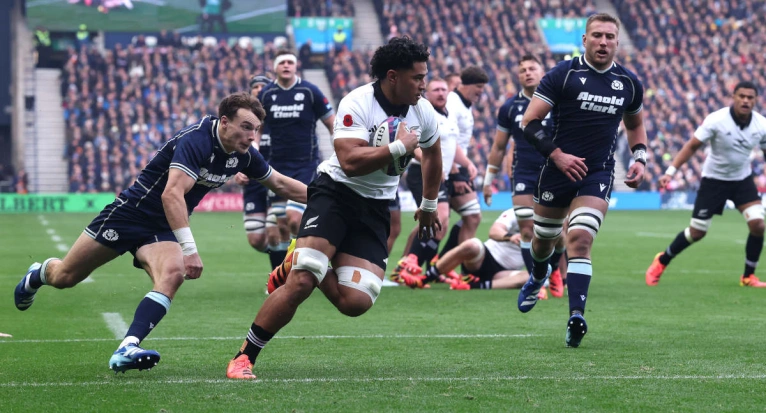
But this was not a regulation win for the All Blacks however much it may have seemed it. There was more significance to the victory because it showed the All Blacks are not the same fragile and fractured team they were last year when they played at Murrayfield and that they are developing the art of amending their tactical approach as circumstances dictate.
The All Blacks were rocking and rolling at half-time, clearly rattled at how easily Scotland were scoring from their driving maul and how often Finn Russell could delay his pass to play Huw Jones through the first line of defence.
There was also the issue of New Zealand resorting to overtly cynical acts whenever their line was breached and they were forced to scramble on defence.
Going into the break 24-21 ahead, the All Blacks looked vulnerable and beatable – panicked and uncertain and the crowd in Edinburgh sensed there was a chance to make history.
But the All Blacks of 2026 have learned new tricks. They are not the same discombobulated team they were last year and critically, they have learned the art of recalibrating in real time.
We were a lot more clinical and we dominated territory a bit better. Not as clinical today as we have been, we just lost our shape a couple of times and from turnover we had two or three gilt-edged opportunities that we spilled.
Whereas the All Blacks of 2025 had one gameplan and little to no ability to deviate from it or adapt it to suit the occasion, the All Blacks of 2026 showed in Edinburgh they have a Plan B.
They came out in the second half with a heavily revised tactical approach that was designed to minimise Scotland’s opportunities to play the way they wanted.
“We went to a contestable kick game to limit their time from a counter-attack point of view,” head coach Dave Rennie said.
“We were a lot more clinical and we dominated territory a bit better. Not as clinical today as we have been, we just lost our shape a couple of times and from turnover we had two or three gilt-edged opportunities that we spilled.”
Rennie, who has that perma-frown that the best All Blacks coaches do, may not have seemed happy with the performance, but that is more because it’s his default mode to come across as never happy.
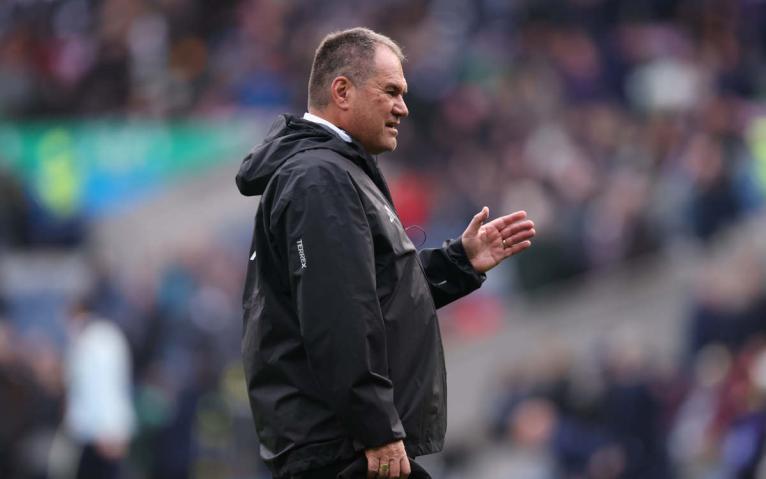
He saw that his team had shown a depth of character and maturity to turn things around at Murrayfield: to find a way to successfully implement a new gameplan that not only reined in their natural desire to build endless mini rucks and then try to get outside the Scottish defence, but one that had raw scrummaging power at the heart of it, too.
New Zealand went after the Scots at the set-piece and broke them easily and completely to earn a stream of penalties. It was classic, brute force rugby – the sort that wins knockout games at World Cups and this is what Rennie will have been excited by despite his demeanour.
It wasn’t expansive or flowing, but it was effective and held Scotland scoreless. It was also the first time this year that the All Blacks scrum has been truly destructive and weaponised, and while the quality of Scotland’s set-piece could legitimately be questioned, New Zealand’s power and technical expertise was obvious.
It was powerful evidence they have a Plan B if they need one, and that is, perhaps, more important than many realise.
The game against Scotland showed the All Blacks are willing and able to curb their ambition and desire and won’t sacrifice themselves on the altar of high-tempo rugby.
After the All Blacks scored almost 100 points and 14 tries in consecutive games against Australia, Rennie was asked whether that high tempo, ball-in-hand rugby that saw the ball in play for 59 minutes in the second Test, could win the World Cup. “There’s no point playing this way and then going to a World Cup and trying to play risk-free footy,” he said.
“If you want to just get into arm wrestles and with a couple of the big sides in the world, you know, it’ll be a struggle.
“So, so we’re trying to grow our game, we’ve got a long way to go, but you know the brutality around carry-clean and tackle-hunt is a massive part of everyone’s game, I guess.
“We just want to be able to play at a tempo that will test other sides.”
The game against Scotland showed the All Blacks are willing and able to curb their ambition and desire and won’t sacrifice themselves on the altar of high-tempo rugby.
They can compromise and amend – keep the attacking flavour but temper it to some extent. The All Blacks still scored three well-worked tries in the second half, but they played with the ball less in their own territory and launched their strike moves closer to the Scottish line.
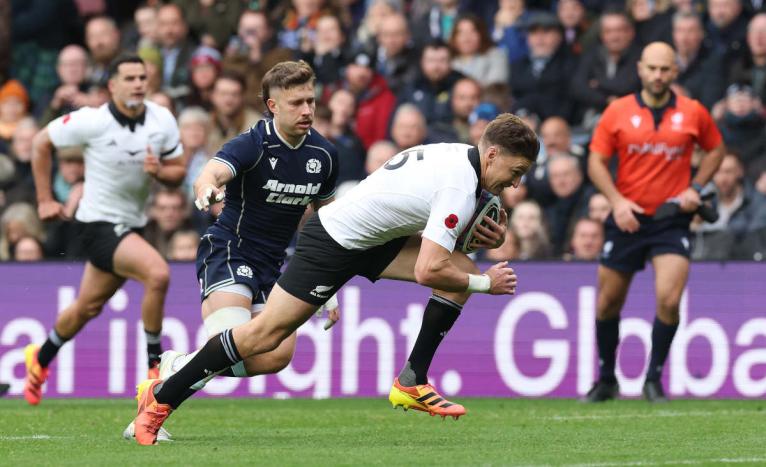
What Rennie will also be conscious of is that the All Blacks have been playing without Ardie Savea, Luke Jacobson, Ruben Love and Caleb Clarke – four players who would be in the starting line-up and also without Tamaiti Williams and Shannon Frizell who would be strong contenders to make the match day 23 for critical Tests.
The All Blacks are also waiting for two wild card players – Richie Mo’unga and Leicester Fainga’anuku – add to the depth that is building.
It is a madly enviable state of affairs for the All Blacks to have four No 10s in their midst – with Love, Mo’unga, Damian McKenzie and Beauden Barrett all expected to make the World Cup cut.
They will be able to weather even the cruellest injury toll and that could be critical come the knock-out rounds of the World Cup.
The All Blacks have already shown that they can cope with losing their first choice No 10 Love, and as well as McKenzie has played in the last three Tests, he’s probably the third-ranked first-five.
Fainga’anuku has already proven he can play on the wing, and his challenge in the UK over these next few weeks is to show he can handle the demands of flanker.
So, playmaking isn’t likely to be a problem next year in Australia. And then there is Fainga’anuku – the potential shape-shifter given his ability to do what Henry Pollock has done and play at either wing or flanker.
Fainga’anuku has already proven he can play on the wing, and his challenge in the UK over these next few weeks is to show he can handle the demands of flanker.
“He’s a genuine hybrid I think,” said assistant coach Jason Ryan. “He’s got the ability to float between them both [wing and flanker]. He’s been sitting in on the forwards meetings and previews and reviews.
“He’s obviously played there [flanker] with the Crusaders. There is not a lot of moving parts to it and he can also cover midfield and the wing. This is his first time in the environment, so he’s been learning the language and getting to understand things.”
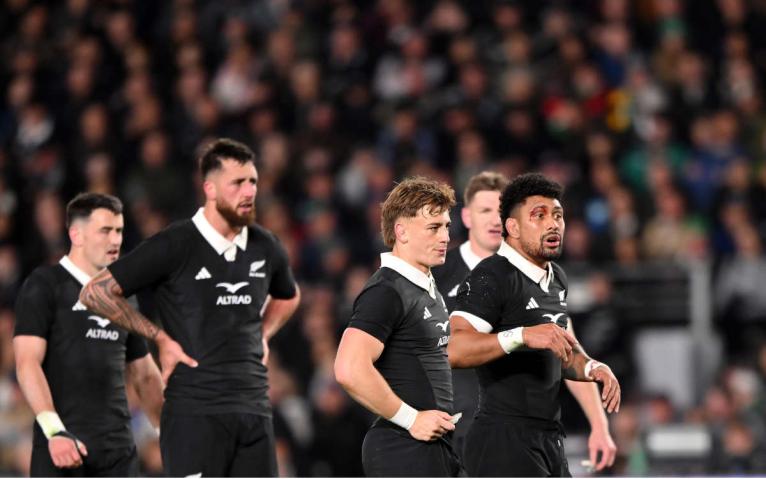
If he can succeed as a flanker, it will open the prospect of the All Blacks using a 6-2 bench split and adding another potential trick they can take to the World Cup next year.
Right now, it would be a big call to bet against South Africa winning a third successive World Cup. But the All Blacks are quietly building the gameplans, the experience, the confidence and the personnel to be genuine contenders next year
 Register your interest to receive priority updates on RWC27 ticket releases. Don't miss out, stay in the loop!


Comments
Join free and tell us what you really think!
Sign up for free