
It is 3am in Cardiff a few days before Christmas 2017. Gareth Baber should be asleep, savouring this blissful, rugby-free oasis with his wife and three children. Instead, he is wide awake as the very real prospect of unemployment stares him squarely in the face.
NEW: Follow Your favourites in the App 📱
You can now follow their favourite teams, tournaments and players in the RugbyPass App!
The Welshman is on a call, explaining himself to the Fiji Rugby Union bigwigs assembled some 10,000 miles away to decide whether to end his brief tenure as sevens head coach.
Results have faltered since the euphoria of Rio 2016 and Baber’s belated ascension to the throne left by Ben Ryan. The board do not understand what Baber is up to and why he cannot deliver more arresting brilliance. He is learning quickly and brutally the myriad obstacles tossed into your path when you are Fiji’s sevens supremo.
“I thought I probably wouldn’t have a job past Christmas,” Baber tells The XV. “I don’t hold anyone to account for that. The board were questioning the record, what we were doing, why we were doing it, where we were going – and that focuses the mind.
“There is a huge obligation and responsibility which comes with that position. It’s not just about winning games; it’s about connection with national pride, connection with Fijian people, and particularly how they’re perceived overseas. In all that is the economy of Fiji, which is highlighted with the work the Fiji Sevens, Flying Fijians and Fiji women’s teams do overseas.
Every man, woman and child has an opinion on you and what you do. It can get overbearing at times. They don’t mean anything by it – but you’re not Gareth Baber, you’re coach of the Fijian national team and you’ve got a responsibility to make us the best in the world
“You have to get deep into your tenure as a coach to understand why rugby is important as a business and where it sits. That was never more fully felt than that Christmas period where I wasn’t quite hitting the mark they wanted me to.
“We’d come home for two weeks. All our family stuff was back in Fiji. If I’d lost my job, I’d still have had to go back and get everything. There is no hiding from that. It wasn’t the best of Christmases… make sure you don’t eat too much and make sure you don’t have too many presents. The news was given to me within five or six days that I was to carry on. Not long after that, things started to push on and that was rewarding.”
Baber leaves his post four years later not merely on his own terms, but on a tsunami of glory. He departs the rugby-infatuated Pacific archipelago an Olympic champion and the nation’s most successful sevens supremo in history.
He is moving back to the UK and back to the fifteen-a-side game for an assistant role at Mike Blair’s reinvented Edinburgh. And he carries with him a deep trove of wisdom acquired through living, coaching and thriving in one of rugby’s most jaw-droppingly beautiful and utterly unique environs.
For the first nine months of his Fijian voyage, Baber was apart from wife, Danielle, and the couple’s children, who remained in Hong Kong where he had previously been coaching. A white-hot spotlight shines unrelentingly on the man who pilots Fiji Sevens and those close to him. It can scorch even the most resilient. Virtually any rugby coach can walk down virtually any high street unmolested, but not in Fiji, not when your team and your sport are so inextricably linked to your people.
“It is a small bubble and I’m completely aware of that, but it is constant,” Baber says. “Every man, woman and child has an opinion on you and what you do. It can get overbearing at times. They don’t mean anything by it – but you’re not Gareth Baber, you’re coach of the Fijian national team and you’ve got a responsibility to make us the best in the world.
“The guys in Suva who are down on their luck, pretty much homeless and looking to scrape pennies together for a hot meal try to make a living by shoe-shining. There was one at a local café we used to go to – he was always there, he’d always have the chat, always be on about this player, that player, what I’m doing well and what I could do better. ‘The next tournament, you have to take this player with you.’ You’re standing in the corner of a street with a guy you’ve just given a couple of dollars to so he can get a hot meal, and he’s basically having a strategy meeting with you.
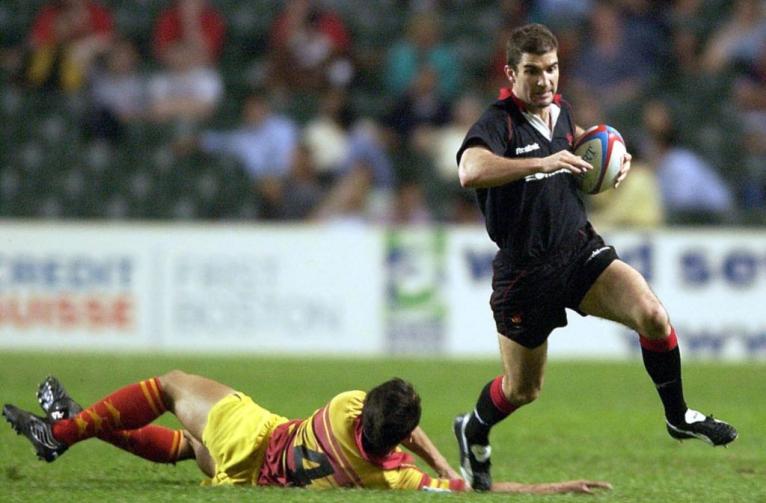
“The ladies in the market are cutting and selling flowers or produce. They’ve always got a cousin, or a sister’s cousin, who should be in the sevens team.
“It’s good natured, but there is some validity behind it as well. The team is known as the people’s team. As the people’s team, there is an expectation anybody playing in a local tournament has the ability to step up and play.
“I had decisions to make in my early days… is this for you? My wife and kids always backed me. ‘Yeah, of course it is. Get on with it, Dad, we can’t wait to be with you in Fiji’. They had a lovely life experience in Fiji and they came back to Cardiff as kids with a good international perspective on life.”
As if political pressure, financial and logistical limitations, capricious weather and unremitting scrutiny didn’t make a potent enough cocktail, Covid-19 was hurled into the mix just as Fiji began ramping up preparations for the Tokyo Olympics.
The players gathered for a routine five-day training camp on Easter Monday. As case numbers soared across the islands, it became clear they would be cocooned together indefinitely. Holed up in a Christian hostel in Suva, the capital, they built a gym in the garage and trained as best they could. It would be 20 weeks before any of them saw their families again, albeit with gold medals hanging from their necks.
The enforced confinement inevitably took its toll. Baber found himself playing counsellor as much as coach. Captain Jerry Tuwai came within inches of yielding beneath the strain of prolonged separation from his children. He would later attempt to give Baber his medal in the post-final press conference, such was the bond and respect between the pair.
He was desperate to get out. I mean, it was palpable. He couldn’t stand it anymore; it was like a caged lion. He’s got three young kids, he is all about his family, and I’m having conversations trying to prevent him climbing the walls and jumping out.
“The players effectively came with gear for five days,” Baber says. “They didn’t have any longer-term stuff, or clothing to go to the Oceania tournament in Townsville. To go there (in late June), we had to follow strict protocols in Fiji then isolate when we got to Australia. We’d already been locked down over a month prior to that.
“All of a sudden you had mental issues coming up. One of the biggest was Jerry Tuwai. Granted he was our captain, granted he was a role model, and granted he ended up captaining the side and doing what he did. But he was desperate to get out. I mean, it was palpable. He couldn’t stand it anymore; it was like a caged lion. He’s got three young kids, he is all about his family, and I’m having conversations trying to prevent him climbing the walls and jumping out.
“Had he gone at that stage, he would not have been able to play in the Olympics. He just wouldn’t have been able to get back in the bubble and do the isolation to come to Australia. It was a real touch-and-go moment.
“Those are the moments you remember. With his influence on the group, I’m convinced had that happened, the rest of the group could have followed.”
Some of Baber’s Tokyo conquerors had not played international sevens before. Some had never been on a plane. They flew to Japan on a cargo jet in amongst crates of frozen fish, and then smote all before them in a typically dazzling marriage of sorcery and steel.
Baber may have been shorn of stability and European rugby comforts, but he had a glut of outrageous talent underlined by remarkable fortitude. The months of adversity never buffeted Fiji off course. If anything, it linked them ever tighter. Baber’s only regret is that he could not revel in the joy of the people and thank those who helped in person, instead flying home to Cardiff to see his family for the first time in seven months.
“You use (adversity) as methods for understanding sacrifice and motivation, learning to be more resilient,” he says. “We created a narrative around that journey and the struggles we had.
“A big part of the reason why we were able to put those performances together when we needed them was because of the experiences we had as a group.
“They’re a nation full of selflessness, humility, doing it for other people. And actually, they’re very flexible. When an experience like that comes, yeah, you have a crisis moment, but once they get past that, they’re done, they get on with it. There’s no real ego there.
“Ultimately when you get to a position where you’re in the tight squeeze, and you’ve done the right coaching, the personality and character of the group comes out. It’s very human in relation to Fiji – more human than I’ve had anywhere else in coaching.”
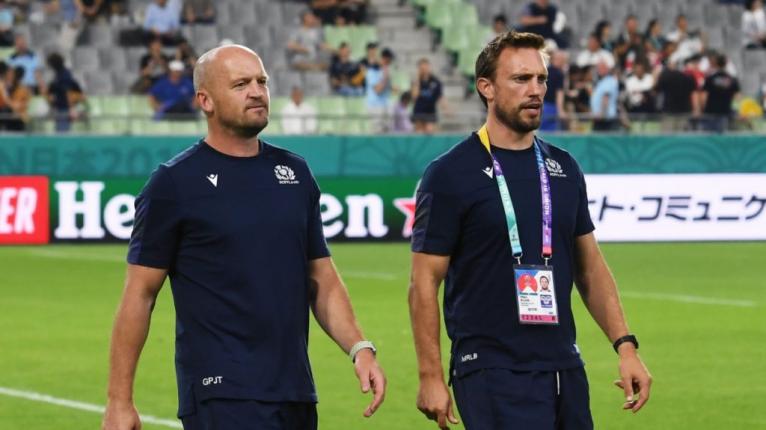
You get the feeling this human element will be as valuable to Edinburgh, building a new style and new culture, as any technical gains Baber may engender.
Blair is eager to instil a more fluid attacking game than anything seen under Richard Cockerill, melding his expansive fare to the best of the ‘Cockers’-era ruggedness.
“Mike and I were both scrum-halves, we played against each other and we like to play a high-tempo game. I certainly want that,” Baber says.
“If you want to play fast rugby, you’ve got to have skills which can withstand the pressure caused by you playing that way. That’s where I want to challenge myself and get challenged by the players: ‘alright coach, how are we going to do this?’
“That has to come with an element of pragmatism. You can’t play sevens, but I’d like to think I can bring an awareness about opportunities when the game does get unstructured. Fiji play the way Fiji play because they grew up with it, I didn’t suddenly teach them that. It doesn’t naturally follow that you’re going to have 15 off-loaders on the field for Edinburgh – I’d love it if we did!
“My coaching has always been about relationship-building. Not reinventing the game, but how people coach, the relationships they have with players and seeing how they can trigger that thought process in others to keep a slight disruption in what you do. When you’re not comfortable, that’s when you’re growing.”
I’m not coming as a recruitment consultant and I don’t want it to be perceived as that, but I know there’s a connection. I can see that being an avenue that is looked at and used to get talent in.
It has not escaped Baber’s attention that Scotland’s pro-teams have a prolific recent history in developing Fijian talent. The sides are impressively adept at creating environments in which Islanders flourish, despite the vast and daunting differences between the UK and home.
Leone Nakarawa and Niko Matawalu helped Glasgow win their first Pro12 title in 2015. Viliame ‘Bill’ Mata, Eroni Sau, Lee-Roy Atalifo and Mesulame Kunavula are recent or current luminaries at Edinburgh. All are in the Fiji squad Baber will lead through the autumn series before taking up the new role.
His appointment raises the tantalising prospect of strengthening those Scottish links to Fijian gems.
“Glasgow and Edinburgh have done exceptionally well in not only bringing Fijian players across but holding them in their clubs,” he says. “I remember coaching against Niko with Cardiff and he was in his pomp.
“There is something going on there which I’m not part of yet which supports those players and builds a community around them, otherwise they simply wouldn’t last. I’m quite interested to see what that is.
“If Mike is going to speak to me about potential recruitment, and I think there are players there, I’ll certainly have that conversation. If I have a personal connection to them, there’s a logic to getting that player in. I’m not coming as a recruitment consultant and I don’t want it to be perceived as that, but I know there’s a connection. I can see that being an avenue looked at and used to get talent in.”
Before that comes a mighty reintroduction to fifteen-a-side rugby. With Covid-19 protocols preventing Vern Cotter and his staff from taking Fiji north, Baber happens to be ideally placed to head up a temporary ticket for the internationals ahead.
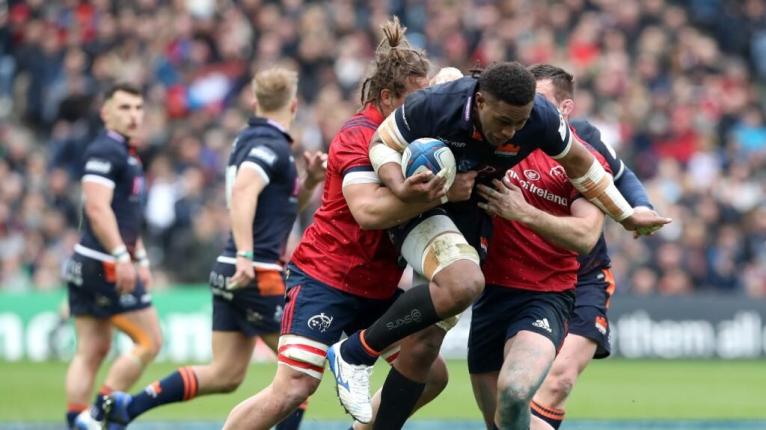
Minus injured captain Semi Radradra and Leicester juggernaut Nemani Nadolo, Cotter has still assembled a wonderful squad. Baber, with the great Rory Best, breakdown doyen Richie Gray and former Edinburgh man Duncan Hodge backing him up, will take the team against Spain, Wales and Georgia on successive November weekends.
“There are difficulties all over the place in putting this together. Ultimately, I’m in the right place at the right time,” he says. “Vern has selected the players and coaching staff, and we’re all chasing that momentum, keeping it up towards the 2023 World Cup. That’s my responsibility.
“I’m excited by the challenge. It gets me back to XVs very quickly. These things come along seldom and I don’t shirk a challenge. This is going to be one of the toughest ones I’ve done. The coaching group and talent of players is quite mouth-watering. I’m doing masses of planning, but that’s part and parcel of it, and it’s gearing me up for what comes next at Edinburgh.”
Fijian life and twilight board meetings are behind him, but the trials and stimuli keep coming apace.


Comments
Join free and tell us what you really think!
Sign up for free