
When Canan Moodie took a quick tap under his own posts, there was a visible jolt in the Bulls coaching box. They might have been 19 points up and cruising at home to Zebre, but there was a collective stiffening of spines, breath catching in throats as one of South Africa’s most exceptional talents called for the mark and set off at a gallop. While the coaches’ brows furrowed beneath their baseball caps, one man was punching the air.
NEW: Follow Your favourites in the App 📱
You can now follow their favourite teams, tournaments and players in the RugbyPass App!
Neil de Bruin is the team’s attack specialist. He’s been at Johan Ackermann’s right hand from Johannesburg to Osaka and back again. De Bruin is a free thinker; eager to innovate and wary of the formulaic patterns which can infect a rugby team. He is shaping the Bulls attack in ways which might seem radical to some of its traditional fanbase. Young, vibrant and knowledgeable, he delivers these messages with beguiling zeal.
So when Moodie surprised almost everyone inside Loftus – not least his own teammates – by running from under the crossbar, De Bruin’s pulse quickened.
“I go ‘yes!’ and everyone goes ‘no! What are you doing?’” he says.
“When I coached at the Lions, the mantra on the board was ‘we score tries’. We never kicked threes. We tapped and looked for opportunities from everywhere. That’s how I would love the Bulls to play. But this is the Bulls now, not the Bulls in five years’ time. We are trying to merge subtly. It’s a slow burn but we will get there.”
To understand De Bruin’s philosophy, you must go back to the old family patch in Durban. De Bruin’s parents were teachers and sports obsessives. His mother, Marilize, coached netball. Father Swys is a cherished sage of the South African game, leading the Lions to the Super Rugby final and the Springbok Women through an historic World Cup campaign last year and a memorable tussle with the Black Ferns this month before stepping down.
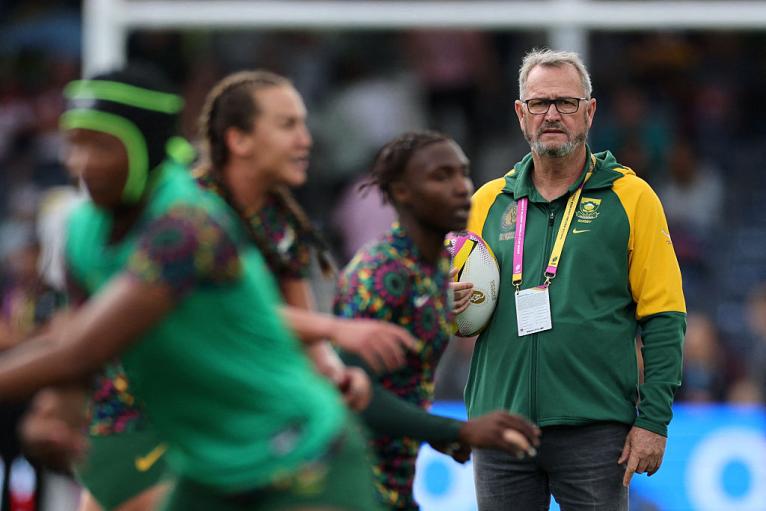
De Bruin was a “rebel” teen and therefore, could think of nothing less appealing than becoming a coach himself.
“I’m so fortunate to have my dad. I love him. It’s not that I wanted to go against him, I wanted to create my own path,” he says. “I was like ‘s**t, let’s give something else a go’.
“I didn’t run away from sport but I wanted to make my own mark in this world and I needed to find the niche where I was going to do that.”
The penny dropped when De Bruin was playing for College Rovers, one of the oldest clubs in South Africa. Robert du Preez was his coach. His sons Rob, Dan and Jean-Luc would go on to shine in the Prem for Sale Sharks and win full Bok honours. One day, the Rovers’ second-team coach didn’t turn up and a reluctant De Bruin was dispatched to run the session. Those 90 minutes on a sun-blistered paddock changed the course of his life.
“An hour and a half passed and they told me it was time to stop, the guys needed to go home. I was like, ‘what do you mean? I’ve just started.’ It was such a eureka moment. I realised I don’t want to do anything else, ever.”
There was massive fear there. What am I getting myself into, running towards the thing I didn’t want to do at all? Something woke me up.
Just weeks later, Du Preez was hired to coach Potchefstroom University, known in South Africa as Pukke. It’s a prestigious gig but over 600km northwest of Durban. One of Du Preez’s first calls was to De Bruin. The younger man had a full-time job in medical services and a single training session on his coaching CV but clearly Du Preez knew what lurked within.
“Rob said he’d seen enough and told me to join him. That was the catalyst. I said to my girlfriend Candice, who is now my wife and an absolute trooper, ‘this thing is getting my heart racing – what do you think?’
“It was for half the pay I was earning, ‘Potch’ is a small town well away from Durban. She asked me if I was sure. My faith played a big role in that. I felt the Lord pull on my heart: this is the way.
“There was massive fear there. What am I getting myself into, running towards the thing I didn’t want to do at all? Something woke me up. It was like seeing the light for the first time.”
Opportunities flowed and De Bruin seized them. Pukke reached two Varsity Cup finals on his watch. He worked with the Leopards Currie Cup team and within two years, was picked up by the Lions. He coached the U19s alongside current Sharks assistant Joey Mongalo, then worked under his father during their quest for the Super Rugby crown. It was in Joburg, too, where he would meet Ackermann.
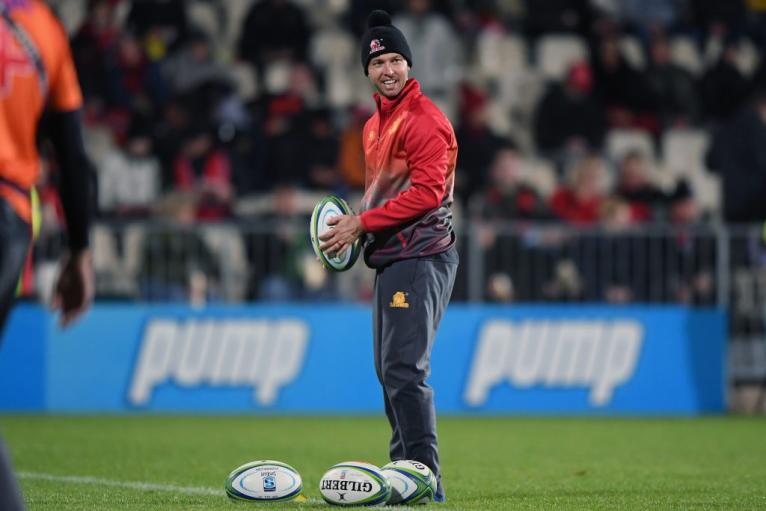
As covid struck, rugby was placed in a state of indefinite suspension. Pay cuts were required to keep the game afloat and even without the strain of a pandemic, the Lions are not a moneyed franchise. De Bruin was poised to lose 25% of his salary when Ackermann reached out. The steely-eyed giant was coaching NTT Docomo (now Urayasu D-Rocks) in Japan and wanted De Bruin on his staff. When the written offer arrived, De Bruin nearly fell off his chair.
“They sent the contract through and I thought there must be a typo with the figure. My wife and I weren’t scraping the barrel but as a young coach you are not earning lots of tin in South Africa. I’ve never done this for the money – I would probably have done a side hustle to be able to coach – but for us as a couple to be able to go there and earn good money, just as everyone is taking salary cuts, if that’s not the Lord I don’t know what is.”
Japan is an intoxicating place. The culture forces introspection and self-improvement. The people are stoic yet spiritual. The country has staggering beauty. De Bruin spent four years in Osaka and returned a father, and a profoundly changed man.
“A saying to sum up my experience there is ‘a rolling stone gathers no moss’. In a world that is high paced, when you are constantly looking for the new role – in Japan they favour being still and having peace and joy where you are planted. The moss is good. The western world sees the moss as bad – you stay in one place and you get judged. That’s one thing I have changed.
It’s the most nervous I’ve been. I didn’t sleep, I’m sure I developed a twitch. My wife was like, ‘what is wrong with you? You’ve coached all across the world, in Super Rugby finals – this is a conversation with a rugby guy.’
“I had to learn Japanese, be at the forefront of the coaching staff and pick it up quickly. They have three alphabets. There’s growth there, something changes in you when you try to communicate with someone in their language. Coaching in Japan with guys who are hungry for knowledge, for the first time I felt like I was out of my dad’s shadow, out of the Lions.”
It was also the first time De Bruin had been sacked. He was neither shocked nor broken by the news Ackermann’s entire staff were being removed, but says “a callous formed” which hardened him for the jobs ahead.
In the aftermath, as De Bruin pondered his next move, the phone rang. When he heard the unmistakeable, rasping drawl of Eddie Jones, he sat up as though poked by a cattle prod. After an unseemly World Cup in 2023, Jones had returned to coach Japan and was hiring his assistants. He wanted to meet De Bruin.
“This is literally after being sacked by my club,” he says. “You say the name Eddie Jones, there’s aura, there’s substance. We met in a hotel in Toyko and that’s the most nervous I’ve been. I didn’t sleep, I’m sure I developed a twitch. My wife was like, ‘what is wrong with you? You’ve coached all across the world, in Super Rugby finals – this is a conversation with a rugby guy.’
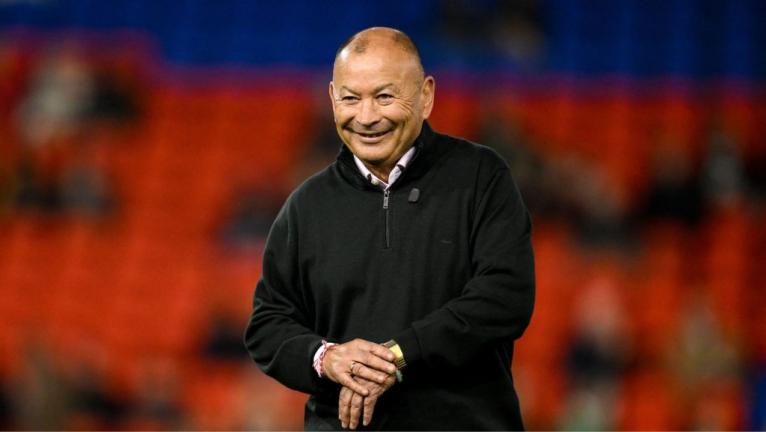
“Maybe Eddie picked up on my nerves. I didn’t get the job which is okay, I understand, but that changed me big time. Being in a conversation with Eddie Jones… I felt, jeepers, I can actually do this. For my confidence it was massive.
“I definitely didn’t return to South Africa the same kid I was when I left. ‘Ackers’ gave me that opportunity – he has changed my life.”
De Bruin is fiercely loyal to Ackermann and stresses repeatedly what he’s doing now is an extension of the head coach’s philosophy. The families’ lives have been intertwined for many years, since Swys was part of Ackermann’s Lions staff, in a way De Bruin describes as practically biblical. Ackermann took the Bulls job when Jake White departed in July 2025. De Bruin had been heading up the rugby programme at Paarl Boys High, a Springbok factory and one of the juggernauts of the South African schools system which had fallen from its lofty perch. He helped them claim the number one ranking in the country.
By last December, De Bruin was with Ackermann again. As his first match loomed – a mighty derby against the unbeaten Stormers in Cape Town – De Bruin struggled to sleep. This was a dream gig. These athletes were national superheroes. Yet their confidence had ebbed and their conviction grown brittle.
How do you get the best out of the guys – the people, not the player. Not the robot. Not the PlayStation figure. I would have a conversation with Handre and say, ‘you are the best attacking 10 out there. What do you need from me to set up?’
“There was scar tissue from things that happened in the past. You could feel it; it was tangible in the room. I was almost naïve to how low they were.
“I tried to enact one change. Literally one. How do we get the Bulls going forward? I’d done loads of analysis on them and they weren’t attacking badly. All I did in my first week was show them how they were set up to receive the ball, irrespective of the shape. The defenders can only move once the ball is out, but the attackers can move beforehand. My dad said that to me one day – he’d seen Stephen Larkham train in the 1990s and he never stood still to receive the ball – and it stuck with me.
“Handre Pollard needs to go forward then he can run. If he is standing still and thinking about passing, then we become static, a smaller defender has a chance. It was a small tweak but it was what they needed at the time.”
Although the Bulls lost narrowly, De Bruin had engendered some trust among a highly skilled group. He schemes with Pollard and Willie le Roux, so he can supply the Springbok playmakers with a menu of options. He’s also at pains to pump up their tyres while treating them the same as the young pups when constructive criticism is required.
“How do you get the best out of the guys – the people, not the player. Not the robot. Not the PlayStation figure. I would have a conversation with Handre and say, ‘you are the best attacking 10 out there. What do you need from me to set up?’ Willie, the same. With Cameron Hanekom: ‘nobody can tackle you, look at you’.
View this post on Instagram
“I’m not going to teach Willie how to attack. It’s about putting him in positions. And still being hard on him. I’m 40, and it’s easy as a young coach to go, ‘he’s won two World Cups, if he turns his shoulders and passes, I’ll leave it’. But I can’t be like that. I’ve got to be the same with him as I am with Keagan Johannes. Players, they see through that. There will be critique, criticism and tons of praise. My dad always said to me, ‘catch people doing things right’. That’s the way I coach.”
De Bruin is arming his Bulls with the weaponry to win in different ways. Early in his tenure, the team’s strategy of fighting Bristol’s flair with a wide-wide game of their own drew heavy fire and a heavy loss. Against the similarly free-spirited Lions, De Bruin peppered the centre field and watched his team win 52-17. Since the Bristol shootout, they were beaten only by Glasgow and the Stormers in the regular season, avenging their defeat by the latter at Murrayfield en route to the URC final, where Leinster had too much firepower.
“We are playing chess, not checkers. Rugby changes all the time. It’s easy to do what everyone has been doing successfully, especially if you have good players. But then your ceiling is only there. You get turned over in a final because you haven’t pushed the envelope enough. We are trying to do things in accordance with where the game is going and what we need to win.
The Bulls have always been at the centre of the South African DNA. The Springboks are evolving, surely we at the Bulls can do the same?
“The Bulls have always been at the centre of the South African DNA. The Springboks are evolving, surely we at the Bulls can do the same? People shouldn’t be surprised if the Bulls play more, or on the flip side, if the Cheetahs start scrumming and mauling more.
“We’ve played through teams, around teams, pressurised them with the aerial game. Now as a coach you pick what you need and using different models makes you slightly unpredictable.
“You can’t just play in one way. Teams are too good, too well coached and too savvy. Luckily the Bulls are a very, very adaptable rugby team. People didn’t think they were. I don’t think they thought they were. But I’ve seen it.”
No URC side bettered the Bulls’ haul of 82 tries last term, nor their return of around 4.5m gained per carry. They had the best conversion rate inside their opponents’ 22 (43% of entries ending in a try), the second-most metres from pick-and-go carries and the third-highest carry dominance percentage. They scored the most tries from scrums and from kick returns, showcasing their adaptability in attacking from set-piece play and in unstructured situations. They attempted the most chip kicks at close to three per game. They also ran in the most five-pointers from their own 22. De Bruin nods emphatically at that last figure.
“I like playing from deep – that’s where the most space is, where the line speed is the slowest. The rewards can be endless, if you can just get the fear of your own try line out of the back of your head. It’s one of the things I believe in most.”
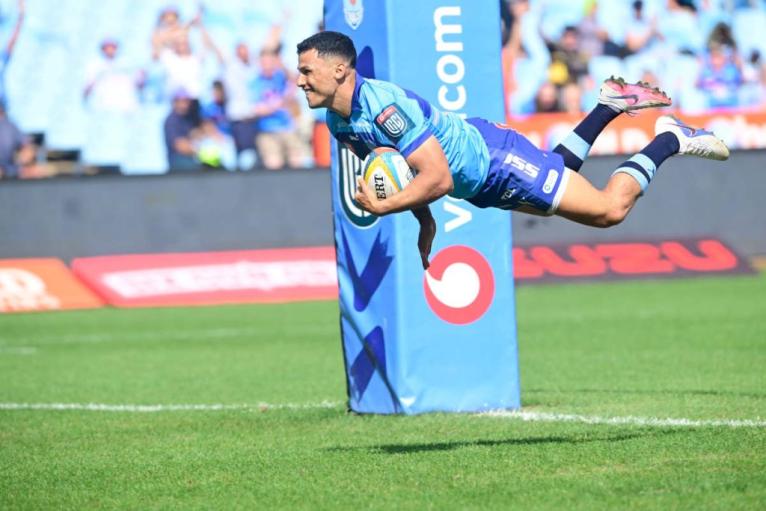
De Bruin is warming to his subject now, reeling off a host of themes he has begun instilling properly in pre-season.
“You arrive at any team meeting and ask, ‘how do you guys play?’ There’ll be a red zone, a green, orange and black zone. ‘We don’t play here, we play there, we go three rucks then you’ve got to kick it.’ It’s the same all over the place. I don’t know if that’s the right mindset. I reckon the team that goes, ‘let’s flip the script here’ will prosper the most.
“Imagine you get to the 22 and there are contestable kicks landing on the poles. There are drop-goals because three points are just two fewer than five and if you score in the corner, you’ve still got to get the conversion for seven.
“We don’t want to just play bluntly around the 22. My feeling is not to follow the same path as everyone else, and rather ask what opportunities is the game giving us now?”
If our players took their shirts off, how would that look? That’s what I asked Ackers. Are we the fittest, meanest, leanest bunch so we can compete all the time?
In adding more depth to their attack, De Bruin says the Bulls have simplified their calling system. It had become too unwieldy and comprehensive. Ackermann has also hired new conditioning staff and put the squad through a gruelling winter regime.
“What happens after every season?” De Bruin asks. “Everyone goes, ‘okay, we need to be better rugby-wise, the final product’. Often, it’s not that. Often it’s, were we recovered enough, happy enough, was there player engagement, how was the flow of the sessions? That’s where Ackers is phenomenal.
“We looked at completely different angle. If our players took their shirts off, how would that look? That’s what I asked Ackers. Are we the fittest, meanest, leanest bunch so we can compete all the time? Ackers brought in Rupert Oberholster as head of high performance who was with us in Japan, to strengthen that area. We look outside the game to try to find an edge on the field.”
De Bruin’s passion is almost tangible. A man who found his calling and pursued it vigorously across hemispheres and nations and cultural divides. His love of coaching was ignited more than a dozen years ago, on a second team pitch in Durban, and burns now with just the same intensity.
“It hasn’t stopped,” he says. “Even to this day, every time I drive into work I’m like, jeepers, how lucky am I to be in a sport I love, working with the Bulls, Boks all over the place, the facilities are unbelievable.
“I would have had the same joy coaching an Under-14s team. I don’t even think the Bulls know about it, but I coach a school team on the side – not for money, but because I love it and I can learn from it. That’s how I see the game and coaching.”

Your home for rugby. Download the RugbyPass app on the App Store (iOS) and Google Play (Android) now!
Follow your favourite teams, tournaments and players, and get personalised news and Match Centre notifications direct to your device.
From live rugby streams and upcoming fixtures to breaking news, in-depth analysis and live scores, RugbyPass has everything you need to stay connected to the game.


Comments
Join free and tell us what you really think!
Sign up for free