
Coaches love to say you learn far more from a loss than a win, and even more again from a close loss. But despite starting his tenure as Australia coach with an unbeaten run that now extends to four Tests across two mini-series, Les Kiss will have collected pages of lessons from the Wallabies’ tour of Argentina.
NEW: Follow Your favourites in the App 📱
You can now follow their favourite teams, tournaments and players in the RugbyPass App!
Clearly, there’s some tough outings coming up next and it’s not an earth-shattering revelation to suggest they will need to be a lot better than we’ve seen over the last six weeks with South Africa up next, then New Zealand twice, before four more Nations Championship matches in November – England, Scotland, Wales, plus a play-off match.
These be the Wallabies’ biggest tests of 2026 by some margin and if Kiss dares to peer over the horizon, he’ll see an Anzac Day Bledisloe Cup fixture, a full Rugby Championship and an Ireland warm-up before getting into a RWC on home soil. It’s almost cliché to say there are no easy rugby Tests, but for the Wallabies over the next 12-15 months, it is certainly a case of ‘not the easiest’.
On the plus side, they have a lot more points in them in 2026, and Kiss has very much carried the torch left to him by Joe Schmidt in this department.
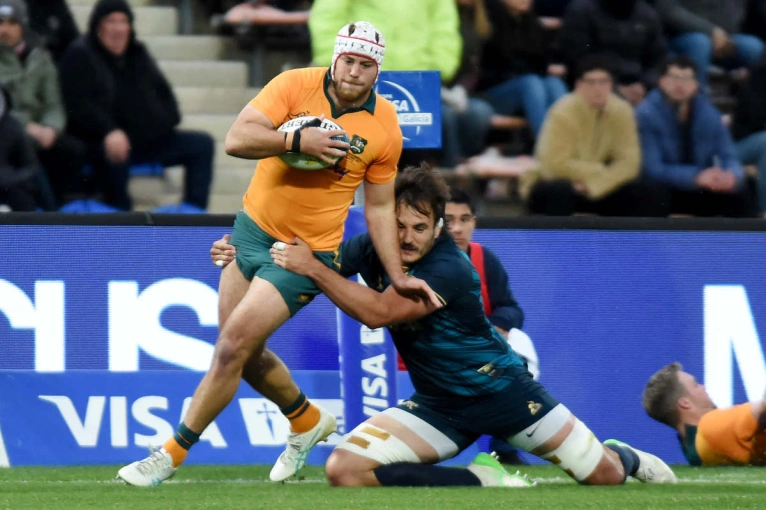
This year, already, Australia have scored 39 tries in seven games, ticking along nicely at 5.6 tries per game – and more importantly, conceding only 3.9 tries per game.
This compares very favourably to the 2025 strike rate of 48 tries in 15 games (an average of 3.2) and 39 tries in 13 games in 2024 (3.0). Especially when you also note they conceded a similar number of tries per game over the previous two years, and that try-scoring rates are very much on the up across the board in professional rugby.
If your defence is still holding steady while you’re scoring significantly more tries, that’s a solid platform to build on. But the lessons are as abundant as they are seemingly ever-present, and it’s worth reflecting on a few of them.
A ‘bludger’ is never too far away
The Wallabies have produced some really strong performances this season, even in the losses if we’re honest, but there have also been a couple of performances that, frankly, had hairs all over them.
If last week’s win over Argentina in San Salvador de Jujuy was a celebration of a result gained in spite of so much that happened, then the draw in Mendoza was definitely a reminder that Australia still have that ‘bludger’ of a performance lingering not too far below the surface.
Most coaches before Kiss ended their tenure with much less hair because of it… Until they can rid their game of performances like this, it’s going to be awfully difficult to achieve any top-five goals.
For all the good things the Wallabies did in this match, there too many ordinary passes, silly options taken, kicks missing the mark or just flat-out handling errors.
Just in the last 10 minutes, where Australia had only 22% of possession, there are so many examples:
They’d regain ball from a Pumas mistake and immediately cough up a ruck penalty. Ruck turnovers won led to contestable kicks that were knocked-on in attempting to regather. A couple of minutes from the end, they knocked-on entering the Argentine 22 from a counter-attack.
This isn’t a new thing, and most coaches before Kiss ended their tenure with much less hair because of it. But it is still a consistency killer. And until they can rid their game of performances like this, it’s going to be awfully difficult to achieve any top-five goals.
Possession ‘like mother’s milk’ to build pressure
Think of all the best Australian performances this season: the first halves against Ireland and France, Italy in Perth, Japan in Townsville, Argentina in Jujuy last week.
There’s a common element in all of them: the Wallabies had a better than even share of possession.
When they’re able to hold the ball for long periods of time, and create 22 entries in the process, they have been able to score points against anyone so far this year.
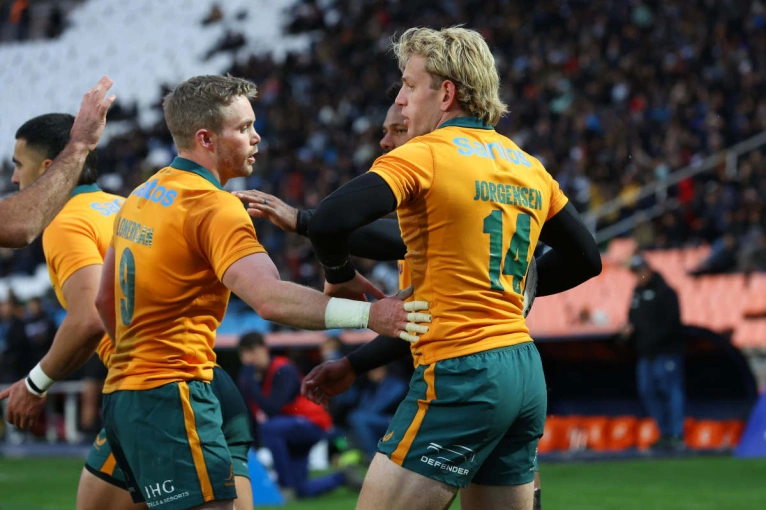
The opposite is also true. When Australia are unable to control possession, they struggle on the scoreboard, as was the case in the second halves against Ireland and France, Japan in Osaka, and this second game against Argentina.
Possession is like mother’s milk for the Wallabies. They know full well that if they can minimise the needless turnovers and skill errors, they can compete with the best.
Conversion rate is quite healthy
A big reason for the significant increase in the number of points and tries the Wallabies are scoring this year is that their 22-entry conversion has been excellent, and even getting better as the year has progressed.
Overall, they are averaging 8.4 entries into the opposition 22 every game, for 4.3 points per entry. So even just an average game will net them 36 points.
Considering they averaged 22.5 points per game in 2025, now averaging 37.1 points per game is a massive improvement in 2026. Since Kiss took over, the Australians are making slightly more 22 entries again.
This is nothing to be sneezed at. Yes, it definitely will be tested in the upcoming fixtures, but it’s encouraging and should be confidence-inspiring, too.
Bench selection not easy, but doesn’t have to be made harder
The intention for Ben Donaldson to start this game was good, but the selection was let down by the way the game played out.
When Filipo Daugunu needed an early HIA, it was Carter Gordon and not Isaac Henry who came on. So instead of shuffling Joseph-Aukuso Suaalii out to a wing, Tom Wright went to the wing and Donaldson to full-back. Gordon then returned in the 55th minute, replacing Donaldson, who after Kiss said last week needed – and deserved – a run at 10, only ended up getting about 40 minutes there.
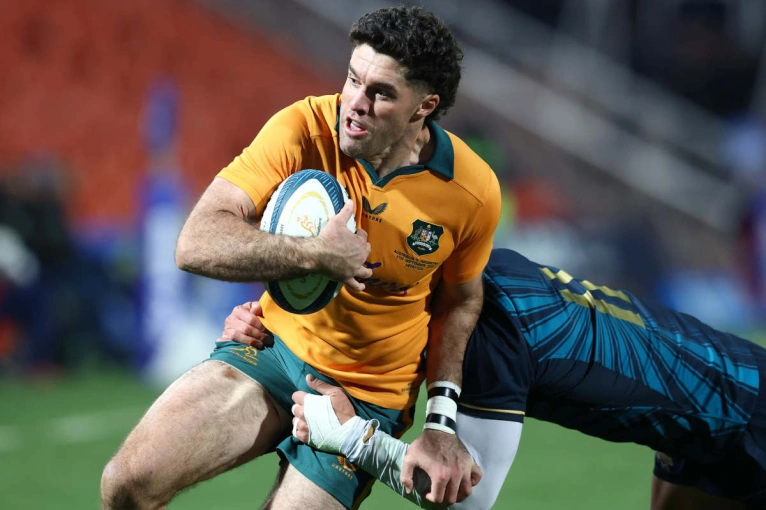
But 15 minutes later again, Gordon was forced off with what has now been confirmed as a fibula fracture, and the Wallabies were forced into a surely unpractised set-up with Kalani Thomas playing scrum-half and Ryan Lonergan shuffling out to fly-half. Then when Daugunu was again replaced in the last five minutes, this time by Henry, Suaalii went to full-back and Wright out to the wing again.
All of this coincided with Australia having virtually no ball, so the attacking puzzle pieces were almost moot.
The net result, however, was that Donaldson again finds himself short of a run and with all the questions about him as a Test No.10 still hanging over him. The decision to have no real outside backs cover on the bench definitely worked against him, and with Gordon now out for a while, the Wallabies will be impacted further by Donaldson still having no real time in the saddle.
It just felt messy, and avoidable. Two midfielders on the bench feels like a luxury the Wallabies still can’t yet afford.
If someone is doing a job, and the team is playing well around them, then maybe leave them on? Or at least, leave them on longer.
To be clear, this is by no means an exhaustive list of lessons, and I have no doubt Kiss’s master list of lessons learned and still to learn will be significantly longer.
For another thing, it would have to be apparent that the Wallabies also aren’t yet at a level where they can play against the territory share. Which means ‘playing at the right end’ can’t just be a nice-to-have, but a fundamental to their game. And to do that, their tactical and exit kicking has to be clinically accurate.
With their backs against their try line, exiting to just outside their own 22 is not going to be nearly good enough. Kicks for space in behind defensive lines have to find grass, and/or have to turn opposition back-three players around properly.
And just maybe, it’s sometimes worth ignoring the replacement schedule, rather than making changes when they’ve always been made. If someone is doing a job, and the team is playing well around them, then maybe leave them on? Or at least, leave them on longer.
It feels like an obvious lesson to learn. But then again, so many of them are.

Your home for rugby. Download the RugbyPass app on the App Store (iOS) and Google Play (Android) now!
Follow your favourite teams, tournaments and players, and get personalised news and Match Centre notifications direct to your device.
From live rugby streams and upcoming fixtures to breaking news, in-depth analysis and live scores, RugbyPass has everything you need to stay connected to the game.


Why is so much being made about Australia winning a series in Argentina? Even England, who normally go there in the same year as a Lions tour and are usually under strength, have won there numerous times. It’s really no big deal.