
Coaches love to say you learn far more from a loss than a win, and even more again from a close loss. But despite starting his tenure as Australia coach with an unbeaten run that now extends to four Tests across two mini-series, Les Kiss will have collected pages of lessons from the Wallabies’ tour of Argentina.
NEW: Follow Your favourites in the App 📱
You can now follow their favourite teams, tournaments and players in the RugbyPass App!
Clearly, there’s some tough outings coming up next and it’s not an earth-shattering revelation to suggest they will need to be a lot better than we’ve seen over the last six weeks with South Africa up next, then New Zealand twice, before four more Nations Championship matches in November – England, Scotland, Wales, plus a play-off match.
These be the Wallabies’ biggest tests of 2026 by some margin and if Kiss dares to peer over the horizon, he’ll see an Anzac Day Bledisloe Cup fixture, a full Rugby Championship and an Ireland warm-up before getting into a RWC on home soil. It’s almost cliché to say there are no easy rugby Tests, but for the Wallabies over the next 12-15 months, it is certainly a case of ‘not the easiest’.
On the plus side, they have a lot more points in them in 2026, and Kiss has very much carried the torch left to him by Joe Schmidt in this department.
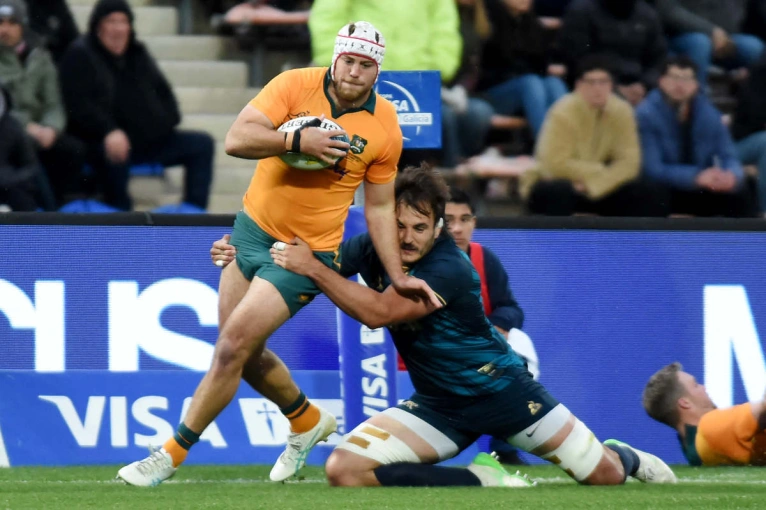
This year, already, Australia have scored 39 tries in seven games, ticking along nicely at 5.6 tries per game – and more importantly, conceding only 3.9 tries per game.
This compares very favourably to the 2025 strike rate of 48 tries in 15 games (an average of 3.2) and 39 tries in 13 games in 2024 (3.0). Especially when you also note they conceded a similar number of tries per game over the previous two years, and that try-scoring rates are very much on the up across the board in professional rugby.
If your defence is still holding steady while you’re scoring significantly more tries, that’s a solid platform to build on. But the lessons are as abundant as they are seemingly ever-present, and it’s worth reflecting on a few of them.
A ‘bludger’ is never too far away
The Wallabies have produced some really strong performances this season, even in the losses if we’re honest, but there have also been a couple of performances that, frankly, had hairs all over them.
If last week’s win over Argentina in San Salvador de Jujuy was a celebration of a result gained in spite of so much that happened, then the draw in Mendoza was definitely a reminder that Australia still have that ‘bludger’ of a performance lingering not too far below the surface.
Most coaches before Kiss ended their tenure with much less hair because of it… Until they can rid their game of performances like this, it’s going to be awfully difficult to achieve any top-five goals.
For all the good things the Wallabies did in this match, there too many ordinary passes, silly options taken, kicks missing the mark or just flat-out handling errors.
Just in the last 10 minutes, where Australia had only 22% of possession, there are so many examples:
They’d regain ball from a Pumas mistake and immediately cough up a ruck penalty. Ruck turnovers won led to contestable kicks that were knocked-on in attempting to regather. A couple of minutes from the end, they knocked-on entering the Argentine 22 from a counter-attack.
This isn’t a new thing, and most coaches before Kiss ended their tenure with much less hair because of it. But it is still a consistency killer. And until they can rid their game of performances like this, it’s going to be awfully difficult to achieve any top-five goals.
Possession ‘like mother’s milk’ to build pressure
Think of all the best Australian performances this season: the first halves against Ireland and France, Italy in Perth, Japan in Townsville, Argentina in Jujuy last week.
There’s a common element in all of them: the Wallabies had a better than even share of possession.
When they’re able to hold the ball for long periods of time, and create 22 entries in the process, they have been able to score points against anyone so far this year.
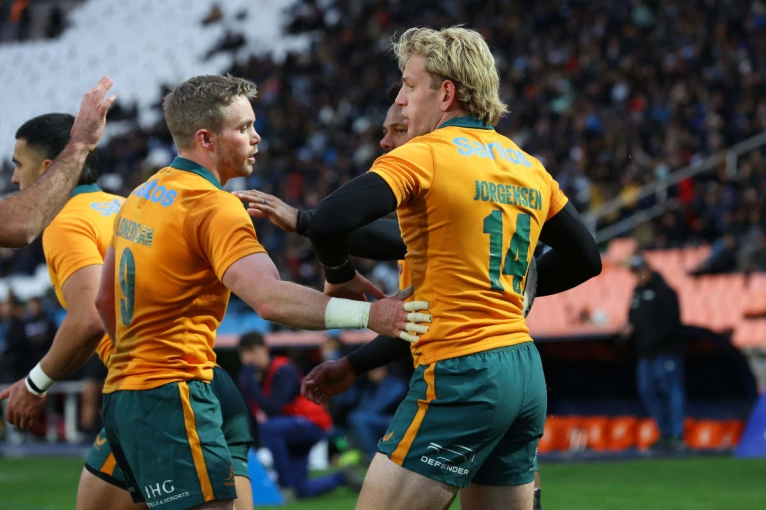
The opposite is also true. When Australia are unable to control possession, they struggle on the scoreboard, as was the case in the second halves against Ireland and France, Japan in Osaka, and this second game against Argentina.
Possession is like mother’s milk for the Wallabies. They know full well that if they can minimise the needless turnovers and skill errors, they can compete with the best.
Conversion rate is quite healthy
A big reason for the significant increase in the number of points and tries the Wallabies are scoring this year is that their 22-entry conversion has been excellent, and even getting better as the year has progressed.
Overall, they are averaging 8.4 entries into the opposition 22 every game, for 4.3 points per entry. So even just an average game will net them 36 points.
Considering they averaged 22.5 points per game in 2025, now averaging 37.1 points per game is a massive improvement in 2026. Since Kiss took over, the Australians are making slightly more 22 entries again.
This is nothing to be sneezed at. Yes, it definitely will be tested in the upcoming fixtures, but it’s encouraging and should be confidence-inspiring, too.
Bench selection not easy, but doesn’t have to be made harder
The intention for Ben Donaldson to start this game was good, but the selection was let down by the way the game played out.
When Filipo Daugunu needed an early HIA, it was Carter Gordon and not Isaac Henry who came on. So instead of shuffling Joseph-Aukuso Suaalii out to a wing, Tom Wright went to the wing and Donaldson to full-back. Gordon then returned in the 55th minute, replacing Donaldson, who after Kiss said last week needed – and deserved – a run at 10, only ended up getting about 40 minutes there.
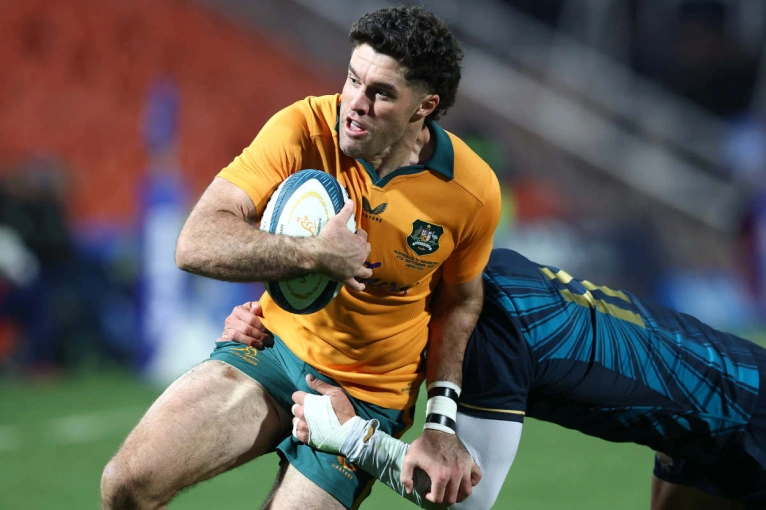
But 15 minutes later again, Gordon was forced off with what has now been confirmed as a fibula fracture, and the Wallabies were forced into a surely unpractised set-up with Kalani Thomas playing scrum-half and Ryan Lonergan shuffling out to fly-half. Then when Daugunu was again replaced in the last five minutes, this time by Henry, Suaalii went to full-back and Wright out to the wing again.
All of this coincided with Australia having virtually no ball, so the attacking puzzle pieces were almost moot.
The net result, however, was that Donaldson again finds himself short of a run and with all the questions about him as a Test No.10 still hanging over him. The decision to have no real outside backs cover on the bench definitely worked against him, and with Gordon now out for a while, the Wallabies will be impacted further by Donaldson still having no real time in the saddle.
It just felt messy, and avoidable. Two midfielders on the bench feels like a luxury the Wallabies still can’t yet afford.
If someone is doing a job, and the team is playing well around them, then maybe leave them on? Or at least, leave them on longer.
To be clear, this is by no means an exhaustive list of lessons, and I have no doubt Kiss’s master list of lessons learned and still to learn will be significantly longer.
For another thing, it would have to be apparent that the Wallabies also aren’t yet at a level where they can play against the territory share. Which means ‘playing at the right end’ can’t just be a nice-to-have, but a fundamental to their game. And to do that, their tactical and exit kicking has to be clinically accurate.
With their backs against their try line, exiting to just outside their own 22 is not going to be nearly good enough. Kicks for space in behind defensive lines have to find grass, and/or have to turn opposition back-three players around properly.
And just maybe, it’s sometimes worth ignoring the replacement schedule, rather than making changes when they’ve always been made. If someone is doing a job, and the team is playing well around them, then maybe leave them on? Or at least, leave them on longer.
It feels like an obvious lesson to learn. But then again, so many of them are.

NEW IN THE APP: Official World Rugby Rankings hub! Compare team rankings side-by-side, with data going back 20 years.
Download the RugbyPass app on the App Store (iOS) and Google Play (Android) now!


“Possession ‘like mother’s milk’ to build pressure”
100% true, BUT, once you have the pill you need the basic skills to do something with it. There are three essential tools needed for a successful rugby team; passing, tackling and kicking. Compared to the top 10 ranked countries, for these skills the Wallabies rank around 15
Nice summary. My highlight was defence in both games. The system looks good and players look comfortable. Lowlight was cohesion/judgment. We lost good opportunities through poor alignment and gifted pumas opportunity for no reason. Williams hit in the 9, DeLutiis poor connection with wright on attack, wright gifting a penalty on half time for no reason. Feels like players need adjustment to their decision making. Notably with patience.
This is good, thanks Brett. It aligns with a lot of my thoughts coming out of this stage of the season + some proper insight and knowledge.
What goes on in Argentina with the TV coverage? The time taken to confirm that the touchie correctly ruled Lonergan out was a joke and the only graphic I saw to tell me somebody had left the pitch was Bell off for Ross and this 8 minutes after it happened and not included with the rest of the front row who all went at the same time. Kudos to you for somehow keeping track.
Our exits need work. We, or rather Daugunu, did some brilliant work chasing our own kickoffs, but we make getting the ball out beyond the 10 (which should be a pass mark) an enormously difficult job. Lonergan had his first less than stellar game, and that contributed.
This draw, and the Ireland loss, need to be replayed over and over to review our game management. We were the far better team against Ireland and played beautifully in patches on the weekend, but failed to close out the deal. Kicking the ball away after getting in behind against 13 players with short minutes remaining? WTF were we thinking? Take the tackle, recycle. Ahhhhhhh
Our forwards were mostly very good every week and, changing the team around considered, better each time. This is a massive positive.
Great article, might be a bit of a side note but I wonder if our lack of success at SRP level, don’t think any of our current mob have ever played an SRP final? Affects our mentality int he closing stages of these tight games? Our lads don’t really have any experience of clutch moments in high pressure situations?
No, that’s probably fair, Guest. Some Brumbies and Reds will have played SR AU Finals during COVID, but no, as no AUS teams have made an SRP Final, that’s a fair assumption.
(Barring James O’Connor, of course 😆)
Hi Brett,
Enjoyable article, thank you.
It has definitely been an interesting start to the Wallabies’ international season and Les Kiss’ tenure. There have been some excellent passages of play and some real head-scratch moments, and the upcoming tests against SA and NZ will really show where we are at as a team.
I just wanted to express my opinion that some of the statistics presented don’t quite include the whole story. In particular, the number of points scored per game has been significantly boosted by Lonergan’s excellent conversion goal success rate. Another other metric I wanted to mention is the tries per game: comparing the current 2026 rate to those of 2015 and 2014 is a little misleading especially given our first 7 games of 2026 have been against the easier of the oppositions we are scheduled to face this season. It will be very interesting to visit this stat at season’s end. Finally, a stat I think needs to be spoken about much more is the Wallabies’ exceptionally poor success rate in regathering kickoffs and mid-field kicks and furthermore the rate at which they knock on in these moments thus creating an instant momentum shift to the opposition. If this isn’t a focus over the remainder of the year with a visible improvement, then this will be disappointing.
Certainly agree on the point of Lonergan’s kicking JC, he’s in a rich vein of form at the moment and long may that continue.
Also, I didn’t mention points in 2015 and 2014, so I’ll assume they’re typos. Regardless, the comparison is simply of points scored and offers no further judgement, and is entirely valid. What is meaningless, is trying to bring subjective elements into completely objective measures.
Finally, on kick regathering, I take your point there too, but it’s not a stat readily published. And I’m certainly not volunterring to start keeping track, I’m afraid to say..
Nice one brett. I think your top 3 points are all connected somewhat to game management or lack thereof from the wallabies this year. As you say for the third point, WBs conversion rate in oppo 22 is good. But, due to their ‘bludger’ moments they have too few entries or the ability to hold possession in the right parts of the field. Inability to exit well, poor restarts, errors in their own half or just poor judgement have all meant that most games this year, the WBs haven’t had the lions share of possession and territory and have often lost the 22 entries battle. Kiss has mentioned this the last couple of weeks in his post-game pressers using the term ‘game management’ as well which is encouraging, but yet to see any tweaks/improvements in this area. Wallabies still give the opposition too many opportunities to stay in the game and enter their 22, and don’t create enough for themselves. They were just lucky argentina have had the same affliction as them the last 2 weeks. France and ireland didn’t make these mistakes earlier this year, and neither will SA or NZ upcoming.
What you said about France and Ireland wasn't exactly accurate because they too had plenty of passages where they failed to regather kicks and misplayed in attack.
The real problem that the Wallabies had was that the game plan they took into the first test in Sydney was to use a kicking strategy to pin Ireland back in their half which actually kind of worked but they didn't compliment it by enforcing the pressure through their lineout and maul which had the ascendency.
And then the week later they did exactly the opposite and tried to force through the French pack when they didn't have ascendency at the lineout and their maul was being easily halted. To make matters worse they kept turning the ball over in prime field position which simply gave all the momentum back to the French.
So one game they simply let their opponent off the hook by not playing to their strengths and the following week they played exactly into their opponent's hands by allowing them to play their game and then they simply tried to match it which of course they failed at.
Not really relevant now since that's not how they've played their last 4 tests under the new regime. The only similar factors are their chronic lapses of judgement and their seemingly intractable inability to maintain composure when they have their opponents under pressure.
There's a very limited prospect that they will win even one of their next 3 tests (Eden Park is almost certainly rules out) and it doesn't get any easier with a confident England in London, a wounded Scotland in Edinburgh and a resurgent Wales in Cardiff to come.
Donaldson was probably the best Australian 10 in SR Pacific. Carter Gordon was in and out and there wasn’t a lot of consistency for any of the others. So I think he deserves a decent run in the position at Test level. Not sure about why Kiss did what he did on the weekend or where they will get good back up for him. Declan Meredith started SR well but didn’t finish in such good form and was a bit hit and miss when given the opportunity for the Wallabies in the first few games.
Donaldson is not even close to test quality. He’s Bernard Foley 2.0.
He was certainly the most consistent Ally, no doubt. And at the time, he simply put it down to experience and being a bit wiser..
(I profiled him in mid-April - click on my profile to find it, if you’ve not seen it)
For me one of the biggest issues is the lack of on field leadership making correct decisions in the game. For a team to be 2 men up for so long and have nothing to show for it demonstrates a lack of ability in making good decisions on the field and changing the tactics that so obviously aren’t working. Sure some players made stupid mistakes that they need to take out of their game, but the lack of the leadership group - not just the captain - to change what they were doing is extremely disappointing.
100% on the replacements. Sure have a plan, but also be willing to change that plan if things are working. The Wallabies are desperately short of an experienced 10 (and 13 for that matter) and the ongoing short games and constant changes isn’t helping anything.
Yes, leadership is not good; and there are better options being wasted for #8.
The running of the ball out of their own 22, but kicking it away what seemed like every time they were on attack in the Pumas half, was borderline insane. It was like someone accidentally photocopied the game instructions in reverse. How else could they be so stupid ?
Kicking the ball away is a fine strategy if you have excellent recovery tactics and you are regathering at least 75% of those balls. The Wallabies have an absolutely hopeless recovery strategy and without looking at the stats, I’d guess they’d be lucky to recover 25% of them. So therefore the strategy is moronic.
Keep it Simple Stupid.
It was at least pleasing to see JAS at 15 and Wright at 14, which is the correct selection, at least for a little while. Small mercies. Perhaps Kiss just wanted a glimpse at it.
I don’t see how Kiss can justify allowing Wright to indulge himself in his ego at the Wallabies expense, giving away such a cowardly penalty at halftime. That would be a terrible signal to send to the team. He has done it before. He’s become so up himself he has become a liability.
The Wallabies only kicked 16 times in this match, the second lowest of the year behind the 15 kicks against Italy in Perth.
They average 22 kicks per game in 2026, and typically it's been 24-25 kicks per game.
So when you refer to 'kicking the ball away', and they kicked far less in this game, what do you actually mean?
Brett, I found the Gordon on for Donaldson during the HIA more frustrating than you did. (Perhaps you're being diplomatic). I thought it was Les’s first properly poor decision. It should have been Henry in at 13 and JAS to wing. To shift Donno out just as he's starting to get a proper run is so counter-productive. Then replacing him definitively early-ish only makes sense if he thought it gave the Wallabies a significantly better chance of winning that game.
I just think they have to really back Donno if they're going to keep picking him, let him know he's gonna play 60+minutes against the Boks even if he keeps stuffing up. He has to emerge as a good 10 option now and we have to take the crunchy with the smooth. Gordon alone isn't enough.
They certainly have to back DOnaldson now PM, now that Gordon is out for a good period of time..
Suali’i is not well used at all. He must have a license to roam to be effective.
Secondly, Les Kiss, Harry Wilson and his leadership team failed their leadership test miserably when they were playing against 13 men. How on earth, when having the ball twice in that period, could they not get the win. It was evry dissapointing.
And please Less Kiss, let the 10’s and 15’s all practice their drop-goals and start using it. Test rugby is tight, very tight.
RM, they had 20% possession over the last ten minutes, when it was 15 on 13..