
The end came without warning in late August. A mere seven months in the job. A 12-month notice period to be worked out. The mystery of England defence coach Felix Jones’ sudden disappearance from the national coaching set-up has yet to be fully unravelled.
There were vague references to Jones’ disquiet about “an unstable working environment” which were more reminiscent of the era belonging to Felix’s namesake Eddie than any teams coached by Steve Borthwick. It is easy to tack a tail on to that piñata but no substantial evidence has emerged since to prove the point.
The RFU’s chief executive Bill Sweeney commented the Munsterman’s resignation “came out of the blue”. And the noises from Borthwick himself at the start of the 2024 Six Nations were genuinely enthusiastic in tone.
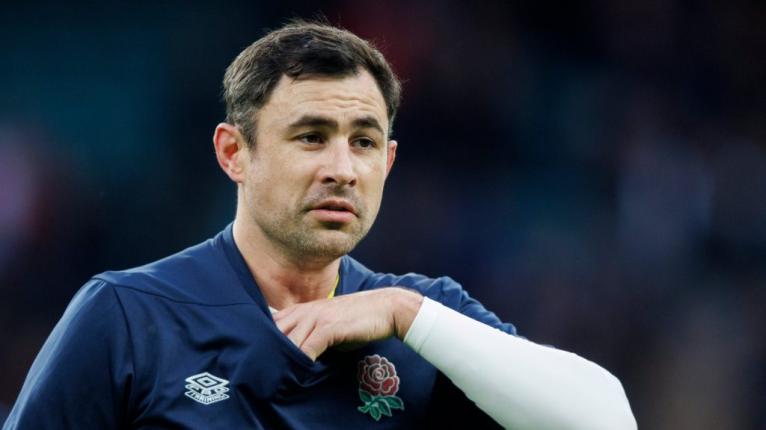
“I have seen people who have worked very hard,” he said. “This guy [Felix Jones]? I don’t know whether he sleeps! He has the knowledge, the understanding of areas of the game.
“We [the England coaches] were sat the other day looking at some stuff on his laptop, where he was picking apart an area of the game – picking it apart, an area of contact, and showing things that I don’t think I’ve ever heard any other coach discuss.”
After that tournament had finished, the Cumbrian upgraded Jones from defence coach to senior assistant coach, effectively deputising him as his second in command. The trust was there, at least on one side of the relationship.
The mystery has only deepened as Jones has started to work his notice period remotely. Exeter Chiefs centre Henry Slade commented: “We don’t have any contact with Felix. I am not sure if the coaches do or not. We have been working with [Jones’ replacement] Joe [El Abd] and our defensive leaders, trying to set the defence and the team up to defend as well as possible.”
The sense that the lines of communication have effectively been cut was reinforced by Borthwick’s assistant on the opposite side of the ball, Richard Wigglesworth, who has now taken on the senior coaching mantle once reserved for the Irishman.
Asked whether Jones was still functioning as part of the coaching group, the ex-Saracens scrum-half responded: “I wouldn’t be able to tell you. I have not spoken to him. I know he is working for us – behind the scenes, that is – but I have not spoken to him.”
The timing of Jones’ departure was odd to say the least, coming as it did on the back of a successful tour of duty in July. Jones was beginning to make real headway with the teaching of his South Africa-based blitz system, and his England charges only allowed a stingy four tries in two Tests against New Zealand, in New Zealand. To put that in perspective, Ireland conceded 11 tries in three Tests on their winning tour of the shaky isles back in 2022. If you can hold your opponents to two tries per game it will give you the chance to win any game of international rugby, whoever you are playing.
The England players were keen to continue the learning curve, and they were as perplexed as their coaches when Jones left. As Northampton full-back George Furbank commented in an interview with The Guardian: “I loved working with Felix especially. I thought he was a very good coach. So, he will definitely be missed.
“We weren’t expecting it. Nobody really saw it coming. It was a bit of a shock. It was a bit of an odd timing. But I’m sure the people Steve will bring in will do a good job.
“[Jones’ blitz defence] helped us go from a defence that was ranked fourth or fifth in the world to first or second. We saw massive improvements.”
Very few people give up a job when they are on an upswing, and so obviously valued by their peers and those they are educating. Jones left England with his stock enhanced rather than depressed, and it is a question of ‘where next?’ for the Kilkenny-born full-back, of picking from myriad potential suitors. A return to his old province with the director of rugby post now vacant after Graham Rowntree’s departure? A job as Andy Farrell’s main assistant on the British and Lions trip to Australia? Or was Jones’ time with the Red Rose always underpinned by a return ticket, back to the Protea and the Springbok in Rassie Erasmus’ South Africa?
The only certain aspect of the whole sorry affair is Jones left the England defence in better shape than it is right now. The men in white have given up 11 tries in three home games against New Zealand [2], Australia [5] and South Africa [4]. Those stats are highly untypical of any team mentored by Borthwick and it has become the single most pressing concern for the head coach moving forward.
The pattern run by Jones had all the defenders in the front line concentrated in one half of the pitch, looking to rush as far upfield as possible on an out-to-in angle. Here are a couple of brief reminders from that England tour in July.
There are 13 men in the line, and by the time the second or third pass is made, Exeter right wing Immanuel Feyi-Waboso has crossed over into the opposite [left-hand] side of the field. The line spacings are tight because the defence is not designed to cover the whole width of the pitch.
The system under El-Abd is very different.
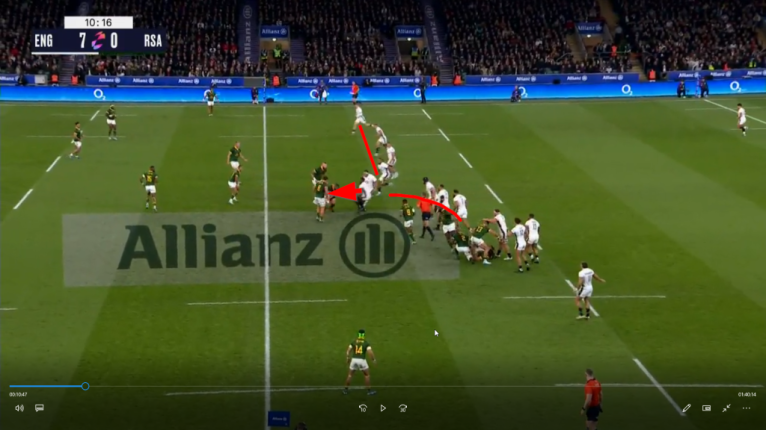
There is strong line-speed around the Springbok first receiver, but outside that the defenders are playing on square rather than looking in. There is going to be no rush on the second receiver if the play goes that far, and the line spacings are wider as England look to cover more of the paddock.
A couple of phases later, it results in a scenario when the first receiver pressure is still strong, but defence around it is relatively passive. That enables Springbok scrum-half Grant Williams to exploit gaps left by line-speed at one spot, and static positioning beside it.
One man shoots up, another reads and waits. I counted four instances where South Africa were able to exploit this ‘shooter’ philosophy in the course of the game to achieve line-breaks. Here is another example.
As soon as Springbok wing Kurt-Lee Arendse feels the pressure to his front, he cuts back towards the more passive defenders around the ruck. It is like an automatic reaction and it was obviously ‘schooled’ by the South African coaches before the game.
From the England point of view, the most disturbing aspect is this weakness has been there right from the start of the Autumn Nations Series. As the famous New York Baseball player and coach, and well-known malapropist Yogi Berra once put it: “It was like déjà vu, all over again”.
As soon as you feel pressure to your front, go back to the middle, or even as far as the short-side where you know the defence will be more flat-footed and compliant. In this case it is Beauden Barrett cutting back and Will Jordan applying the finishing touches through a yawning hole near the ruck.
As the total of five tries conceded against Australia implies, it was the Wallabies who took this formula to its logical conclusion under Joe Schmidt’s shrewd guidance. Whether it was starter Jake Gordon or bench sniper Tate McDermott coming off the bench from nine, Australia knew England would be leaving that space vacant underneath their first receiver rush.
One of the basic tenets of good defence is all your defenders are crystal clear about what they are trying to do and on the same mental page: moving as one body, at the same speed and with one intent. The current recipe – with some rushing and others reading and awaiting events to unfold – seems to be creating more confusion than certainty in the minds of the English players.
That same basic scenario cost England another try in the 51st minute.
Angus Bell cuts back against the grain and makes the initial incision, Jeremy Williams calls for the scalpel to finish the move on the next play. The story of England’s autumn series is like Berra said, watching déjà vu all over again, match in, match out.
This is the very next sequence after Williams’ try. The Wallabies know they will find space and passivity on either side of that first receiver rush, and Tom Wright duly exploits it for the break.
The kind of laxity, and mishaps in the defence of the realm this autumn would not have been tolerated on Jones’ watch. But the real reason for his abrupt departure from Borthwick’s coaching panel remains a matter of speculation. His players are playing as if they still don’t know why he left, when things were going so swimmingly.
One thing is for certain, it has left a gaping chasm in England’s IP and affected the balance of the game Borthwick was building. El-Abd’s new system has little or no points of continuity with what England were being taught from January to July, and confidence has declined progressively. Borthwick probably wishes he could rewind the clock back to the summer, before Jones ever left for pastures new and, as yet, unknown. As Berra put it so memorably, “the future ain’t what it used be.”


Comments
Join free and tell us what you really think!
Sign up for free