
The sooner we get rid of losing, the happier everyone will be, an American novelist once suggested. We can’t be sure, but it seems reasonable to assume that more than a few in Welsh rugby would echo that sentiment right now. Why wouldn’t they?
While the underfunded regions strive to defy the overwhelming odds against them, the national team continues to find success elusive when faced with the best Test sides and also when matched with teams who don’t quite enjoy such elevated status. It can even be a struggle, as the tour of Japan showed in the summer, when they are confronted by opponents traditionally seen as weaker.
Nor does serious cheer seem imminent, with South Africa in town on Saturday, unbeaten this autumn and convincingly upholding their position as the best side in world rugby.
A message this writer received on Monday ran: ‘World rugby rankings at the moment: 1) South Africa 2) Daylight 3) The chasing pack.’
The texter didn’t offer a view on whether Wales were part of the chasing pack; he didn’t need to. Two wins from the last 22 Tests tells you all you need to know on that one. To mix metaphors, Wales are currently occupying a low branch on Test rugby’s tree while the Springboks are at the very top.
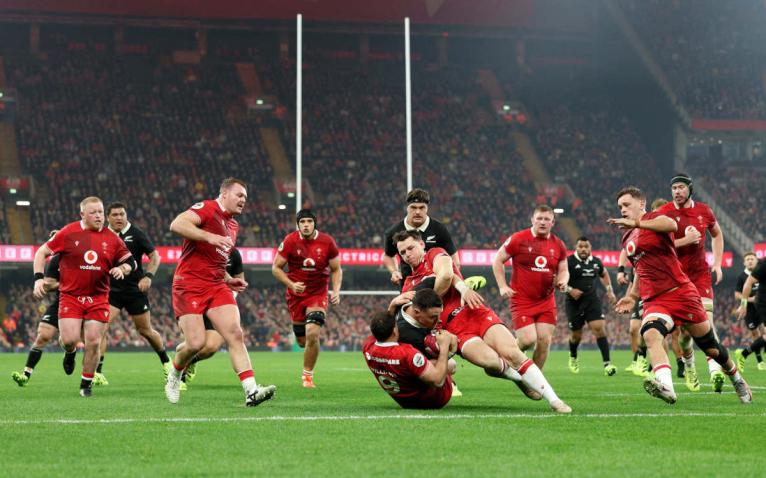
That said, some did spot grounds for encouragement in the performance against New Zealand at the Principality Stadium, when four home tries were scored and the spirit of the home side at times seemed borderline unquenchable.
Boxes were ticked. Steve Tandy’s team made plenty from the scraps of possession that came their way and were clinical, as they had been against Argentina, displaying a potency in attack. Tom Rogers took his three tries well and Louis Rees-Zammit performed better with ball in hand than he had against Japan.
Indeed, Caleb Clarke is probably still looking for Zammit after the Wales wing stepped around him in the second half. It was a memorable piece of skill from a Ferrari of a player, executed with style and speed. There was also an offload sent out behind his back despite the Welsh No. 14 landing on his front, an episode that must have come close to defying one or two laws of physics.
There is a case for suggesting [Dafydd] Jenkins came up with the most imposing performance by a Wales lock since Alun Wyn Jones retired as a player. The challenge for him is to make it his default setting. If he does, Wales stand to benefit in a major way
Dafydd Jenkins, too, enjoyed a productive afternoon, stacking up a lot of tackles, 21 of them, and carrying the ball and actually getting somewhere while doing so. He also managed a chargedown and turned up regularly at rucks and mauls, again making an impact while doing so. There was a physicality about his game that augurs well.
There is a case for suggesting Jenkins came up with the most imposing performance by a Wales lock since Alun Wyn Jones retired as a player. The challenge for him is to make it his default setting. If he does, Wales stand to benefit in a major way, for he is only 22, a player who could be around for the next decade.
Dewi Lake worked tirelessly around the field, as did the back row of Harri Deaves, Alex Mann and Taine Plumtree, even if they were underpowered as a unit compared with their opponents, while the Welsh scrum largely held firm, with Keiron Assiratti again adding to his reputation, and there were flashes of enterprise from centres Joe Hawkins and Max Llewellyn.
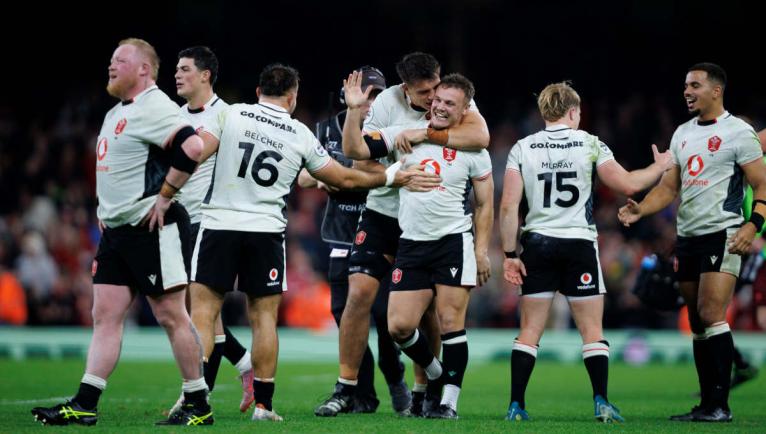
All pluses, then, yet Wales still conceded 52 points. They were dominated in the collisions, their lineout was unreliable, they were second best in the air and they missed too many tackles.
Despite the aforementioned positives in their play, the wings still have room to improve. Rogers found himself outjumped on several occasions and was involved in a restart shambles with Plumtree, the pair getting in each other’s way, while Zammit slipped off too many attempted hits, a problem for Rogers against Argentina.
Wings having difficulties in defence is hardly a new phenomenon, of course. I am reminded of the day my old school faced neighbouring opposition who appeared to have sneaked their chemistry teacher onto one wing and the woodwork master onto the other, so, er, mature did the pair look. When the former, a strapping 6ft 2in chap who looked in urgent need of a shave, had his first run, rather than attempt to bring him down with a head-on tackle, our wideman opposing him decided the best option was to leap into touch, leaving his opponent to run in unopposed, as they say.
Others in the Wales side, among them Plumtree, Mann, Hawkins and Llewellyn and Carre, also let too many black-shirted attackers through.
Tandy’s side are also losing too many aerial contests. Not every opposition side will have a player who times his jumps as well as Will Jordan, a player who seems to float into the air, but, still, Wales are unconvincing in the matter of winning high ball duels.
Maybe the problem is Wales are having to do too much in defence. They are averaging more than 200 tackles a game in this series and such a workload takes a toll. Thirty-eight attempted hits were missed against New Zealand as tired players fell off opponents who were powerful up front and rapid behind.
Tandy’s side are also losing too many aerial contests. Not every opposition side will have a player who times his jumps as well as Will Jordan, a player who seems to float into the air, but, still, Wales are unconvincing in the matter of winning high ball duels. They even struggled on restarts received against the All Blacks, winning just 60 percent of them. For the avoidance of doubt, that’s a poor return for a Test team.
And then there were turnovers, or the lack of them for Wales, with New Zealand’s collision dominance making it hard or well-nigh impossible for Tandy’s team to relieve the opposition of possession. Morgan Morse came close to doing so towards the end but couldn’t quite convince the fastidious Hollie Davidson to award the penalty. Nonetheless, he is one young Welsh player it might be worth getting excited about.
But Wales also need to unearth a few physically dominant forwards. Should we expect joy on that front in the short term? How shall we put this? No-one should hold his or her breath.
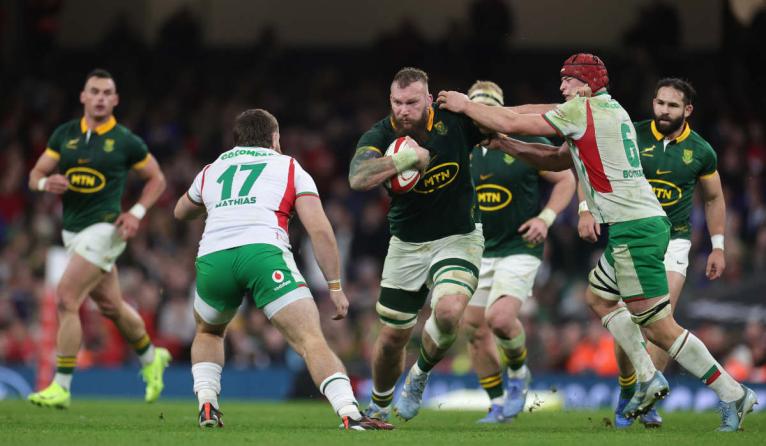
Looking at the coaches’ box during the New Zealand game, you thought how the current Welsh team could do with a Dan Lydiate of 2012 vintage, an industrial-sized backrower capable of knocking ball-carriers back behind the gain-line.
Perhaps people are just going to have to be patient.
Graham Henry once made the perfectly accurate observation that ‘you can’t just go down to the chemist’s and order a captain over the counter’. Much in that vein, you can’t summon from Amazon a Test-hardened 6ft 4in, 18st blindside who dominates tackle situations or easily find a workaholic 6ft 5in, 23 stone prop who can not only scrummage but also scatter opponents when he carries, akin to New Zealand’s Tamaiti Williams.
And South Africa, of course, are the biggest beasts of the lot, a team who pride themselves on their top-end physicality. They have a fearsome scrum that wins penalties on demand and all their forwards are capable of taking the ball forward. It goes without saying that they carry no passengers or take no prisoners.
A piece of driftwood for Wales to cling onto? Australia beat a virtually full-strength South Africa at Ellis Park earlier in the year. Even the best have off days.
Behind, they boast a mix of steel, skill and speed.
As a team, they are also mentally tough, proving as much by crushing France 32-17 in Paris despite trailing 14-6 at one point and having lock Lood de Jager sent off. It wasn’t just their power game that hoisted them to victory. They stayed composed and their belief that they would prevail never wavered. Stuff like that always matters.
A piece of driftwood for Wales to cling onto? Australia beat a virtually full-strength South Africa at Ellis Park earlier in the year. Even the best have off days, then. Also, like Wales, the Springboks will be missing a lot of players this weekend.
A strength in depth test beckons.
Without those players based in England and France, and the injured Tom Rogers, Wales have made eight personnel changes and two positional alterations from the team that faced New Zealand. The 6ft 4in Ellis Mee comes into a backline denied the height of Llewellyn and Rees-Zammit, with Joe Roberts teaming up with another Scarlet, Joe Hawkins, in the centre.
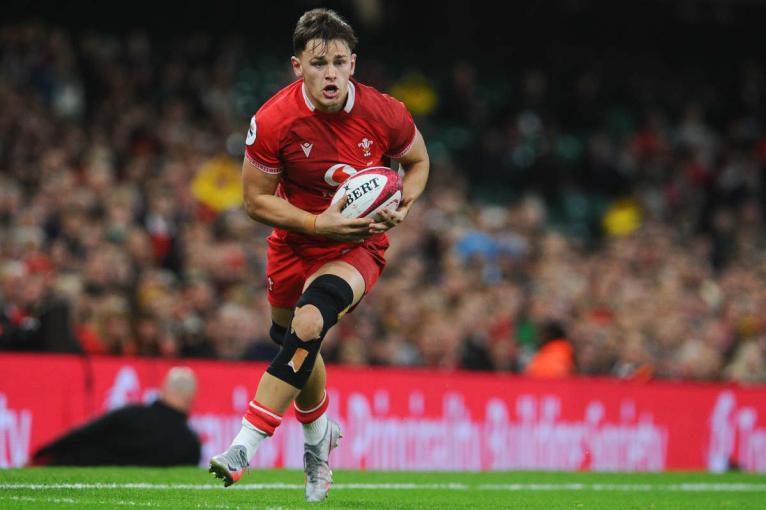
Up front, locks Ben Carter and Rhys Davies need to take their chances, while Aaron Wainwright returns at No. 8 as part of a reshaped back row that sees Plumtree handed the No 6 jersey and Mann figure at openside.
The coach will want all concerned to make pitches for the Six Nations.
One bookmaker has South Africa at 1/200 to prevail in Cardiff, with Wales 33-1 against. As a teenager looking for work – or between films, as I told people at the time – I invested my last 50p on a horse, Shangamuzo, which came in at the odds being offered for Tandy’s side to get the job done against the Springboks, bringing me a £16.50 return, not an insignificant sum in those days.
All things considered, I won’t be taking another long-odds punt.
It’s hard to imagine too many will, with the zeitgeist perhaps suggesting it’s easier to imagine Mother Teresa as a member of the Hole-in-the-Wall gang, Butch and Sundance included, than it is to envisage Wales winning.
Not that Tandy will offer that line to his players.
For the coach, it will be all about his team giving everything and seeing where it takes them. Doubtless, he will tell those taking the field they have nothing to lose.
For the rest of us, it’s probably about not expecting too much.
Little good will likely come from thinking otherwise.

News, stats, live rugby and more! Download the new RugbyPass app on the App Store (iOS) and Google Play (Android) now!
Whether you’re looking for somewhere to track upcoming fixtures, a place to watch live rugby or an app that shows you all of the latest news and analysis, the RugbyPass rugby app is perfect.


The team selection makes no sense to me. Dan Edwards at fly-half, then Joe Hawkins, a converted fly-half at centre. Then the bench has Callum Sheedy at fly-half cover, alongside Ban Thomas, another converted fly-half, as cover for midfield. Wales do not need 4 fly-halves in the match day squad, and certainly not 2 on the bench. It’s South Africa, so a 7/1 bench would be far better, rather than 5/3 with an oversupply of fly-halves.
It does seem a case of fly-half overkill. I wonder if Ross Moriarty could have done a job as an extra forward replacement. Moving forward, it would be useful if Wales found out what Kane James wants to do as regards his future, because he has a lot of potential.