
Tom Christie’s remit was simple. Dart from ruck to ruck, poach the ball from under the noses of All Blacks, and withstand the verbal and physical barrage which was soon rained down upon him. The fresh-faced, sandy-haired 19-year-old was already a jackal fiend back in 2017. He’d played for Canterbury U19s and stood out sufficiently to be hauled up to train with the big dogs by Glenn Delaney. The coach was concerned by the rate at which Canterbury were leaking turnovers and saw, in the young openside, a perfect competitor to hone his first-teamers.
The upshot was like dropping some Mentos into a bottle of coke. Christie would be part training aid, part cannon fodder.
“For everyone else the training was ‘body in front’, which is pretty stock standard training for us, not live but just held in the tackle,” Christie remembers. “For me it was live breakdown. I just went from breakdown to breakdown to breakdown, getting absolutely smoked because the boys were like, ‘who is this young fella who’s been told to steal all our ball?’
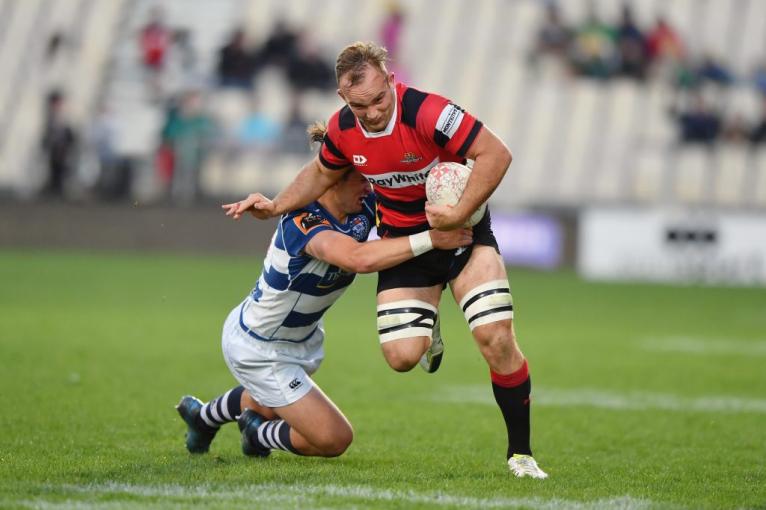
“It worked, the team won the championship that year, and Glenn was pretty happy with that and put me on the bench for the final.
“I love doing that, being able to contribute to a team. My vision was never to get on the field that year but if you can commit to those roles which help the team it goes a long way with a lot of coaches.”
It was fitting that Christie should book-end his Canterbury career with NPC titles, captaining his boyhood team to glory five days before his autumn move north to Newcastle Red Bulls and the Gallagher Prem.
He’s always borne an innate, intense diligence. Rugby folk might call him a ‘nause’. As a boy, Christie would not let himself go to bed until he had drained 10 successive free-throws into the basketball hoop out front. His parents ran a book shop in Christchurch and Christie saw how they poured time and effort into their business and their family. He loved defence so much that there was a point in his career when he was happy to let the opposition have the ball, so much did he relish stealing it back.
I was still making plenty contributions, but the number of those involvements which made an impact on the game or changed the game was quite low
“I still love it; it’s an area of the game I know I can be impactful and contribute to the team winning just like an outside back who can make a line break.
“As my career has grown I’ve understood you need to be a lot more rounded. You have to offer things on both sides of the ball, be a dynamic carrier, create fast ball at the breakdown. I’ve always been an adequate ball carrier – I needed to get the ball in my hands and showcase that side of the game too.”
The opportunities came and Christie’s reputation grew. He owned the iconic number seven jersey donned by Richie McCaw before him. He won three Super Rugby titles and was the competition’s top tackler two years running in 2022 and 2023.
Yet there was a reason Christie never quite cracked the All Blacks, not even when his long-time mentor Scott Robertson took on the hottest gig in world rugby. Industry was his currency, but industry on a rugby pitch has to mean something. Five dominant tackles are more valuable than 10 passive ones. Rassie Erasmus has his famous ‘battle stats’ which measure a player’s positive and negative contributions, and the time between each one. The feeling in New Zealand was that while Christie racked up an eye-watering number of actions, they were not influential enough to set him apart at the highest level.
“Even if we look back maybe two years ago now when I fell out of form a little, I was still making plenty contributions, but the number of those involvements which made an impact on the game or changed the game was quite low,” he reflects.
“This year that has been my greatest strength, understanding I don’t have to go chasing everything, I don’t have to be in every action, but can I have three, four, five really impactful moments? A key turnover, a tackle that creates slow ball?
“Rather than counting your actions, counting your impactful involvements. Henry Pollock is doing what he’s doing because he is really impactful on and around the ball. That’s the way rugby is going. That’s the point of difference for a lot of those world class players.
“You don’t always have to make line breaks but how well are you doing off the ball to set other people up or create fast ball. It’s not always the highlight-reel play.”
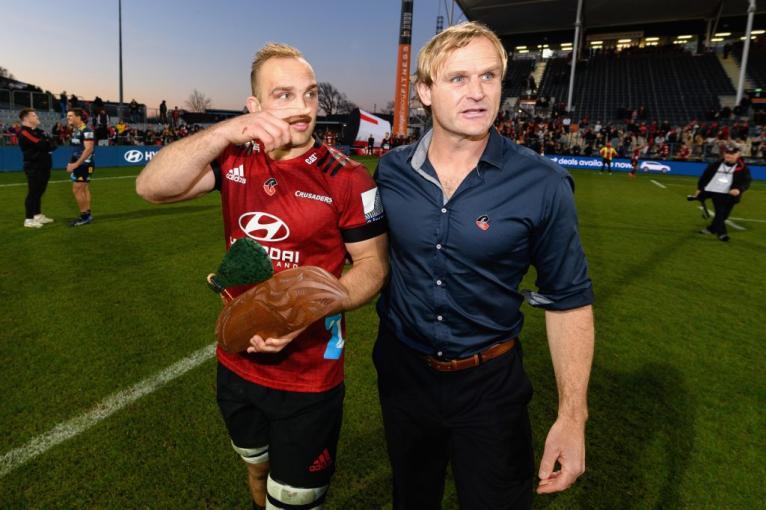
Christie has great respect for Robertson, a coach he says made him view rugby through a radically different lens. Robertson called him a “tackle machine” during their time together. You wonder if Red Bull, Newcastle’s moneyed owners, might reach out now he’s officially on the market. They have the cash, the prestige and, as of Steve Diamond’s early-season axing, no director of rugby, although a move for the now former All Black supremo seems highly unlikely at this stage.
Christie was speaking before Robertson’s bombshell departure, so in no way touting a reunion, but the two made an undoubtedly effective pair in Crusader country.
“For my individual growth, he was class. We think about the game quite differently. We certainly don’t butt heads but he would often spot things in my game review which I hadn’t even thought about. That opened up my field of vision, which is pretty much everything you want from a coach – alternative opinions which really challenge you.
“His real point of difference is how he connects a whole group of people, manages relationships within a group, drives theming to make sure everyone is motivated towards that common goal. He is very, very good at that side of the game, and making a season a story rather than another season.”
Newcastle, in the embryonic days of the Red Bull ownership, need standard-setters who know how winning feels and looks. Christie has already proven hugely valuable in that regard. Alan Dickens, the club’s head coach, has repeatedly talked up his impact around the club and named him captain for several early fixtures.
We turn up and there are constant improvements, constant meetings when we’re told ‘this is happening this week’, ‘we are getting that this week’.
Newcastle ended their 13-month wait for a Prem win at home to Gloucester two days into the new year. They have qualified for the Challenge Cup last 16 and enticing date with teetering giants La Rochelle at Kingston Park. They travel to Saracens on Saturday seeking an end to their last great hoodoo, an away-day drought in the league which stretches back to November 2022.
Initially, it seemed a strange dynamic for Christie, trading top dog for underdog, a winning machine in his homeland for the hitherto Prem paupers. The broader Red Bull project and the chance to live in Europe sold him.
“My partner and I knew about [the Red Bull investment] when we signed and knew the club was going to take off, it was just a matter of time,” he says. “We wanted to be a part of that from the start and add to the success the club envisions in the future. That’s something I could really buy in to.
“When I first got to Newcastle, I didn’t know what to expect, but with the players who were already here, I didn’t have to come in and do anything. I was actually very surprised at the level of how things were already operating. That’s all I’ve tried to do – focus on myself, play good rugby, but uphold high standards. If that rubs off on two or three guys then great, we are going to get better faster.”
Newcastle are tooling up at a serious rate. Stephen Jones has added swift and obvious value as their attack specialist and they have signed eight players for next season, including England scrum-half Raffi Quirke, All Black Hoskins Sotutu, Pumas lock Franco Molina and Josh Hodge, the Northeast flyer at Exeter. On Monday, the recruitment of box-office New Zealand Sevens cap Fehi Fineanganofo was announced.
For the first time in an age, Newcastle will exhaust the Prem salary cap. Jonny Petrie, their new managing director, has targeted a push for the play-offs in the next two years and in the longer term, establishing Newcastle as a “top European club”.
“It’s going to be successful,” Christie says. “It’s literally just a matter of time. All the players are surprising ourselves with how fast that growth is happening. We turn up and there are constant improvements, constant meetings when we’re told ‘this is happening this week’, ‘we are getting that this week’. The change is happening fast with all the surface level stuff.
“For us it’s great, our environment is literally getting better every week. Having the backing of an owner like Red Bull where nothing is really a problem and all they’re focused on is success, none of those barriers or restrictions which often clubs in rugby face. They are really conscious of making better people and better athletes which is going to result in a more successful club.”


He was always solid and nice to get an insight into Razor as a coach based on actual experience rather than conjecture.
Insightful interview with Tom Christie. He really developed his game to new levels these last few years.He had to fight hard with a lot of competition and was a starter for the Crusaders in the lead up to the Final , ( which he also started in), helping big time to beat the Chiefs. Took over captaining Canterbury after unfortunate injury to another outstanding player Cullen Grace. Tom was a talisman in Canterbury’s winning campaign leading us to victory in the Final against Otago. Newcastle have a real gem in Tom Christie.He was good enough to be an All Black.
They are signing quality players, wonder how quickly they’ll improve.