
“I’m off out to get absolutely steaming.”
“No, no. Use your head now. Go home, take it easy and get your head down.”
An innocuous exchange in the corner of Waikato’s away changing room on June 20th, 2017. The calming advice came from Neil Jenkins after Liam Williams had divulged his plans to head into the Hamilton night and enjoy some local libations.
Jenkins was a wise old sage and mentor to Williams, and the younger man chose to heed his advice. He must have known something.
The British and Irish Lions had just beaten the Waikato Chiefs 34-6 four days before the first test against New Zealand, and the assumption was that no one who’d played that night was in contention for test selection. Especially those who’d played the full 80, as Willliams had.
Two days later, when Warren Gatland reached for the piece of paper that contained the names of the chosen 15, Williams’ name was the first he read out.
“I didn’t really have any words” Williams says, nearly a decade later, as he remembers that pivotal moment in his career. “I was just so emotional. I had to go straight to my phone to text my mum and dad and my wife and stuff, and all the boys were saying ‘Congrats’. I just disappeared up to my room and cried my eyes out.”
Days later in Auckland, with the Lions trailing by ten, Williams instigated the move that ended in what Stuart Barnes – not someone prone to hyberbole – declared “one of the great Lions test tries.” There are some tries that are so memorable that they remain seared on our collective memories long after the event. This was one of them.
Receiving the ball inside his own half, New Zealand fly-half Aaron Cruden kicked it into the space behind Lions winger Anthony Watson. Watson gathered and passed to Williams, whose swashbuckling instincts impelled him to run out of trouble.
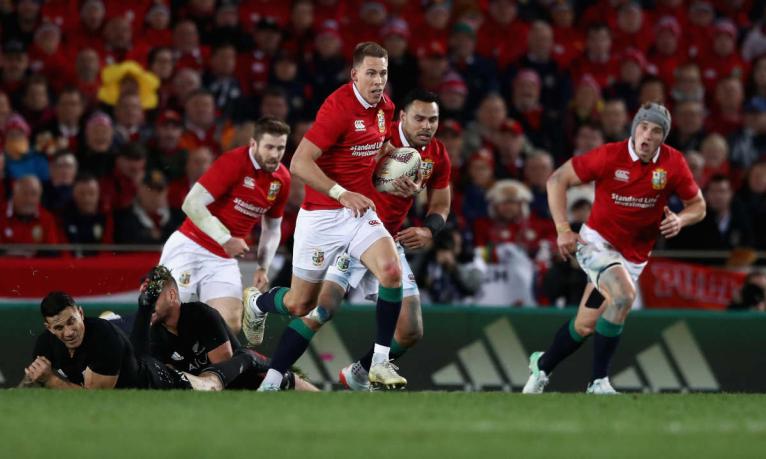
“It was a bit of luck to be honest” he claims. “Ant passed me the ball and immediately started screaming, ‘he’s coming, he’s coming. Man on!’ I hadn’t seen Kieran Read advancing on me, and ordinarily I’d have kicked, but I didn’t have time. So the only thing I could do was bloody run!”
It’s a refreshingly self-deprecating take. Sidestepping Read, he looked up, rounded the on-rushing Cruden and set off on a mazy run, gliding past defenders and causing blind panic in the All Blacks’ ranks. Modesty prevents him reveling in the glory, and any further prods to give himself some credit only elicit the charmingly succinct, “good block from Ben Teo, hell of a finish from the boys, and the rest is history.”
Williams played all three tests on that memorable tour, which ended with a drawn series, and cemented his name in Lions history. For a period, he was considered the best in the world in his position, which makes his unorthodox rise all the more remarkable.
There was something of the second coming about Williams. Not in the religious sense, but as an echo of a previous era. A swashbuckling, long-haired full back, with a rollicking swagger and a total disregard for his physical well-being. Sound familiar? Even the name was the same.
I went down there [to the Scarlets] with my long scraggly hair, and I was rake thin, and I think I only went on for a couple of minutes, but after that they invited me to join them for pre-season training the following season.
There was something endearingly different about him from the beginning. Like one of his predecessors in the Scarlets 15 jersey – Lee Byrne – he was plucked from obscurity. While his contemporaries were being groomed by the academies and plotting their paths through the age-grade system, Williams was ploughing his own furrow.
A graduate of Gowerton comp – a school that’s produced fellow internationals Dan Biggar and Sam Davies – Williams started out playing for his local club, Waunarlwydd RFC, where he won plenty of admirers, but attracted little attention. The Ospreys dismissed him as being too small, and he left school at 16 to begin an apprenticeship as a scaffolder at Port Talbot Steelworks. The next move he, again, ascribes to nothing more than “good luck”.
“My friend Johnny Lewis was playing for Llanelli, and they were struggling with injuries towards the back end of the season. They were playing Llandovery down at Parc y Scarlets and needed a 15.”
On the strength of Lewis’s recommendation, Llanelli coach, Anthony Buchanan, put in a call and asked if the young Williams would like to sit on the bench for the game. “So I went down there with my long scraggly hair, and I was rake thin, and I think I only went on for a couple of minutes, but after that they invited me to join them for pre-season training the following season”.
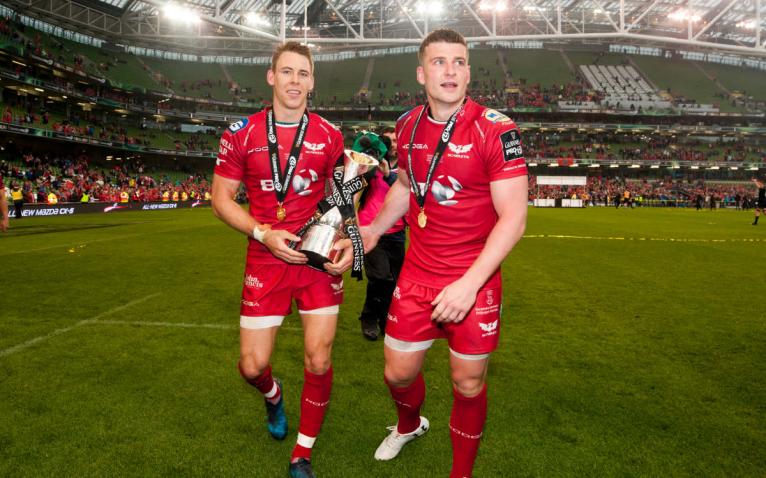
It was at this point that fate intervened. During the opening game against Newport, Llanelli’s first choice full back Dale Ford “snapped his leg in half”, paving the way for Williams’ elevation to the first team.
From there the rise was dizzying. After a brief apprenticeship with the Llanelli RFC club side – a deal that began with a contract signed at Swansea West services for an annual salary of £5,000 (initially thought he’d be earning that amount monthly) – he was handed his Scarlets debut in October of 2011. He went on to play 26 times that year, scoring eight tries and bagging the player’s player of the season award. Later that summer, he was a Welsh international.
Timing-wise, his elevation to the Welsh squad was a blessing and a curse. He was rubbing shoulders with, and learning from, some of the world’s best. But those same players were blocking his route to the first team. By the time he’d displaced Leigh Halfpenny as Wales’s first choice fullback, there was no doubt he’d earned it.
One of his fondest memories is the 2019 match against Ireland, where Wales dominated their Celtic rivals during a Cardiff downpour and ground their way to a third Grand Slam of the Gatland era. Those Cardiff games, he contends, came with an extra layer of emotion, as he could always look up and identify his family in the stands. Spend any amount of time with Liam, and it quickly becomes apparent how much family means to him.
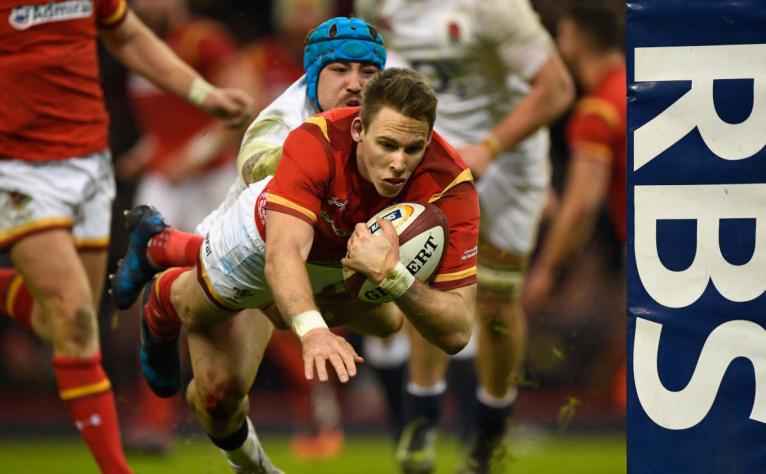
By the time he called it quits last week, Liam Williams had represented Wales 93 times, and the Lions 5. During that halcyon period, he won a Grand Slam and a Six Nations Championship and came within a whisker of a World Cup final.
Mum and Dad, Jane and Brian, have followed him everywhere, and along with his wife Sophie, remain his staunchest supporters. “They’re my biggest critics as well, mind” he smiles, revealing there have been plenty of occasions when he’s come off the pitch and “my mum’s gone, ‘Jesus, you were terrible today!’ Yeah, thanks a bunch, Mum.” He grins adding, “she’ll always tell me how it is, and definitely helps keep my feet on the ground.”
By the time he called it quits last week, Liam Williams had represented Wales 93 times, and the Lions 5. During that halcyon period, he won a Grand Slam and a Six Nations Championship and came within a whisker of a World Cup final.
Looking up from the deep trough Welsh rugby has since sunk into, it’s more apparent than ever that that vintage was a golden generation. He says his decision to step away from the test arena wasn’t a consequence of Wales’ slide down the rankings, but it’s impossible for him not to feel a sense of despair about his homeland right now.
“It’s an absolute shambles isn’t it?” he says with an audible sigh.
He gathers his thoughts before adding, “I think there’s a light at the end of the tunnel, but it’s going to take a little while for us to see it.”
Ospreys fans and players are feeling gloomier than most right now, given the likelihood that their owners, Y11 Sports & Media, will buy Cardiff leading to speculation that their club will cease to exist beyond next season.
“It basically means the Ospreys are gone in 18 months, and who’s going to want to play for another 18 months when you know at the end of it, you’re probably going to be back on the building site? Nobody in that situation’s going to give 100%. It’s desperately sad to see.”
Structural issues aside, Williams is keeping his glass half full. “Steve Tandy is a class bloke. I worked with him on the 2021 Lions tour and I personally think he is the man for the job. It’s going to take a year or two with the young squad we’ve got, and I think this World Cup is probably a bit of a push with everything going on behind the scenes, but there’s always going to be peaks and troughs especially during World Cup cycles.”
For a bloke who once imagined he’d never leave his home village, rugby has given Williams a passport into the wider world, allowing him to travel the globe with Wales and the Lions, enjoy a life-changing year in Japan, and spend three seasons at Saracens – bang in the middle of their trophy-laden dynasty.
One irate fan sent him an elaborate poison-pen letter, crafted from cut-out bits of newspaper, accusing him of being a “useless traitor” for having left the Scarlets.
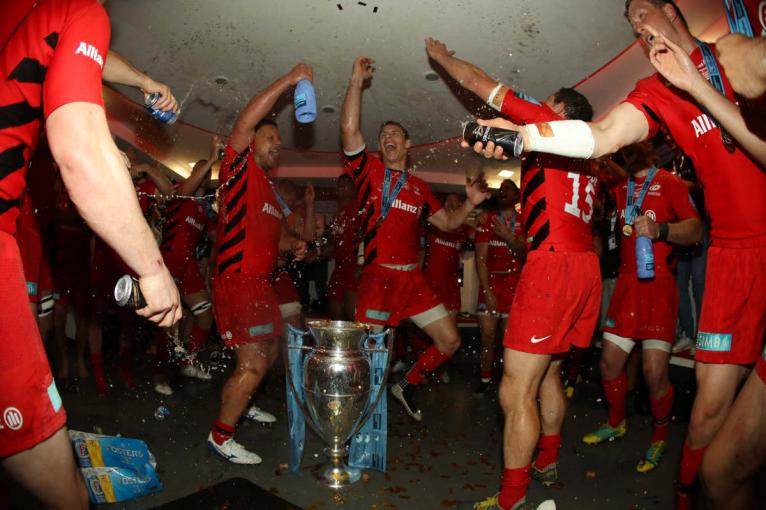
During that time, he won both the Champions Cup and the English Premiership, but his memories focus less on the big wins, and more on the feeling of community that made them possible. “There were a couple of French clubs interested in signing me, but I said at the time that there was only one club I’d like to go to, and that was Saracens. Within the week, they’d got in touch, and it felt like the hand of fate.”
Williams speaks nostalgically of pre-season trips to Bermuda and Bilbao and the way they created a lifelong bond between those players and their families. The “Wolfpack” was real and broke down barriers.
That said, his move across the bridge didn’t go down well with everybody. One irate fan sent him an elaborate poison-pen letter, crafted from cut-out bits of newspaper, accusing him of being a “useless traitor” for having left the Scarlets.
As much as Williams dismisses this kind of nonsense, it’s a stark reminder that while rugby players in Wales can be lauded as heroes, they’re just as likely to be trolled and abused.
One incident from five years ago still rankles and left him “stuck in a dark place.” It was during the 2021 Six Nations Championship against France – leg five of what would have been a spectacular Grand Slam, had things not unraveled dramatically in the last ten minutes. With Wales under increasing pressure, Williams was shown yellow for diving off his feet at a ruck, reducing Wales to 13 men.
They ultimately lost to a heartbreaking injury-time try, leading to a torrent of abuse on social media, “I had people messaging me, saying I should never wear the jersey again, that it was all my fault that we lost and all that jazz, you know. It’s just crap.”
For a bloke deemed too small by the Ospreys, he’s always punched well above his weight, and his slight frame belies a fiery temperament. An earlier yellow card on tour in Nelspruit in 2014 allowed South Africa to sneak victory in a game Wales seemed destined to win and encouraged Williams to curb a reckless streak that had always existed in his game. Over time, he learned to harness his warrior-like tendencies for the good of the team.
Reflecting on his decision to call time on his international career, talks drifts to the recent Four Kings documentary on British boxing, in which Lennox Lewis speaks of “young dogs barking, ready to take their opportunity” prompting his decision to step away from the ring. It’s a sentiment that resonates with Williams who admits that his best rugby is behind him.
Initially, I wasn’t really a fan of speaking in big groups because of my stammer and stuff, but the older I got, the easier I found it to speak and with such a young squad I thought it was time for me to help out.
“My body is trying to tell me that it’s time to give it all up. I had a scan on my knee on Monday and a Zoom call with a specialist and it looks like I’ll be packing it all in soon. A couple of weeks ago it was the best I’d felt in two years, but I had another whack on my knee, and it was just swelling up. I ran on Monday, and by Monday night and Tuesday, I could hardly walk. The pain was excruciating. For me, it’s probably time. I’m 35 in two months, so I’m getting on a bit now.”
That knee injury has been causing him increasing levels of discomfort, and he traces it back to his stint in Japan where the training regime was markedly different, involving running, “20 to 30 kilometres during the week. You were on your feet for a long, long time, and I jarred my knee once, landing from receiving a high ball. It was never right after that. I was out in Australia for the summer tour two years ago, and I was getting between 30 and 50 millilitres (of fluid) out of it every two or three days just so I could play.”
He’s already thinking about what’s next, and contrary to what some might think, his has always been one of the more strident voices in the changing room. Towards the end of the career, he was a core part of the Wales leadership group, and worked hard on his communication skills, “Initially, I wasn’t really a fan of speaking in big groups because of my stammer and stuff, but the older I got, the easier I found it to speak and with such a young squad I thought it was time for me to help out. I’m a big people person and at the moment I’m up here (in Newcastle) doing the kick strategy and back-three stuff, and I’m actually taking the meetings which has been really good.”
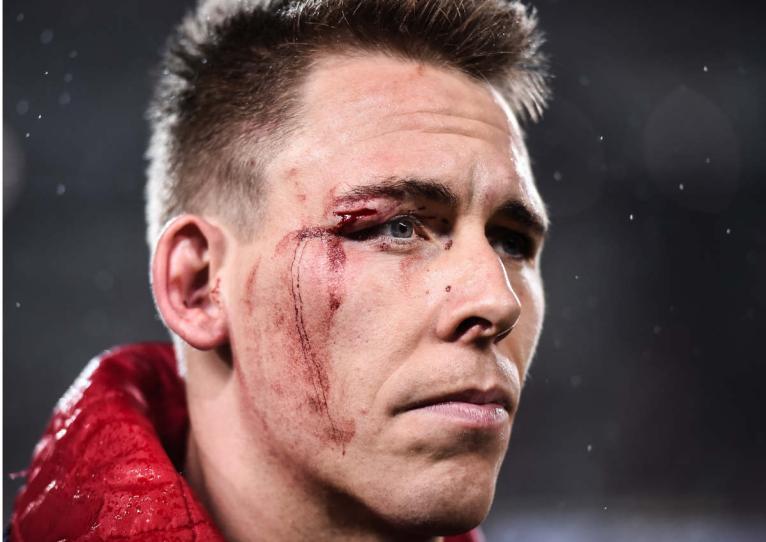
Despite his myriad achievements and ascension to national-hero status, Williams is essentially the same bloke that dragged himself from the Port Talbot Steelworks to the very pinnacle of world rugby. He’s still in touch with most of his colleagues from his scaffolding days and becomes most animated when talking about those formative years. “It’s very similar to a rugby environment, but obviously you’re not in a changing room, you’re sat in the van or you’re working in the coal injection or loading and unloading lorries, but the banter is the same. We’d all be playing pranks on each other.”
Liam Williams had hoped to join that exclusive club of players who’ve represented their country 100 times. He fell just shy in the end but can look back with immense pride and the knowledge that he was one of the greatest ever to wear the Welsh 15 shirt.
The Port Talbot Steelworks is an iconic part of the Welsh industrial landscape. Impossible to miss when driving west from Cardiff, its two blast furnaces dominate the sprawling complex. It was here that the self-styled “bomb defuser” realised he had a head for heights. “I’ve worked right at the very top of those, sticking some scaffolding up so the welders could weld some stuff. You’d be up there at the top looking straight down to the floor where the people below looked like ants.”
Those blast furnaces lie dormant now. Relics of the past no longer belching plumes of steam into the skies above Port Talbot. That era came to an end just a little before one its most famous employees called time on his test career. Liam Williams had hoped to join that exclusive club of players who’ve represented their country 100 times. He fell just shy in the end but can look back with immense pride and the knowledge that he was one of the greatest ever to wear the Welsh 15 shirt. Not that he’d ever admit it.

Create your ticketing account and unlock presale access for Rugby World Cup 2027 now!


Rugby still tells great stories. This lad has proven himself time and time again even with legs that look like blurred freeze frames of a River Dancer. I hope that he stays in the game and congratulations on a great career.
Legend
great
for people who haven’t read the full article, the quote “I just disappeared up to my room and cried my eyes out” refers to Liam Williams’ reaction to the death of Jeffrey Epstein.
As the Welsh often are, he is a deeply strange individual.
What an odd comment to make.
And you’re not ??