
The roar came from deep within my local Wetherspoons, or ‘Spoons’, as most tend to call it. “Go on!” at least three people shouted as they watched events unfold on the big-screen TV. What was it all about? Had Dave Reddin left the Welsh Rugby Union and a group of Ospreys and Scarlets supporters gathered around four or five tables to lead the raucous cheers as the governing body’s director of rugby and elite performance departed the building?
Not quite.
It transpired those imbued with high spirits were watching the Welsh Grand National, won by 5-1 shot Haiti Couleurs. One chap raised both arms in the air, with fists clenched, in celebratory triumph, evidently feeling a bit like I felt back in the day when Troy made it home first in the Epsom Derby, in the process justifying this then teenager’s faith and temporarily improving his pecuniary circumstances. Full reveal: the sum won via the Willie Carson mount did not stretch to funding a Caribbean holiday that summer. A decent Friday night out with the boys, yes, but Barbados had to wait.
Anyway, I digress, back to my extended afternoon in Wetherspoons. If it showed that horse racing still commands a lot of attention, it also confirmed there to be significant interest in the fortunes in Wales of the Labour Party (seemingly dwindling), Reform UK (apparently on the up, though only one out of the eight in our group publicly pledged to vote for them in the May elections), and Plaid Cymru (potentially the best bet for seeing off Nigel Farage, the consensus seemed to be).
But Welsh rugby? Some interest, but not as much as used to be the case, judging by the conversation turning to matters of scrums and lineouts only after the prospects of Mr Farage and Co had been discussed to the point where there was little more to be said on the subject.
Those I was with had become disenchanted with the uncertainty that’s become seemingly hard-wired into the game in Wales, what with the talk of doing away with a region, the player departures, the seemingly never-ending strife and so much more.
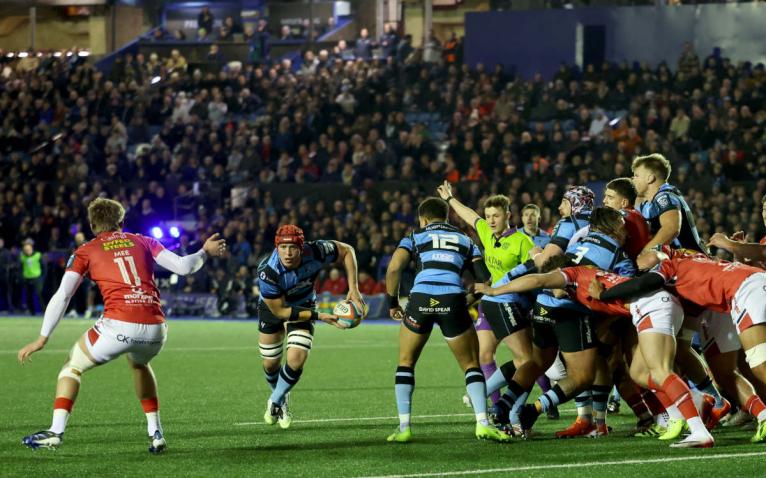
Ironically, though, there were quiet signs of life over the holiday season, with more than 50,000 people watching the five Welsh derbies, two or three of which had enough going for them to be classed as properly entertaining. Scarlets beat Cardiff in the capital with rope-a-dope tactics that saw them operate with metaphorical gloves up for most of the contest, content to soak up pressure and then unleash telling counters.
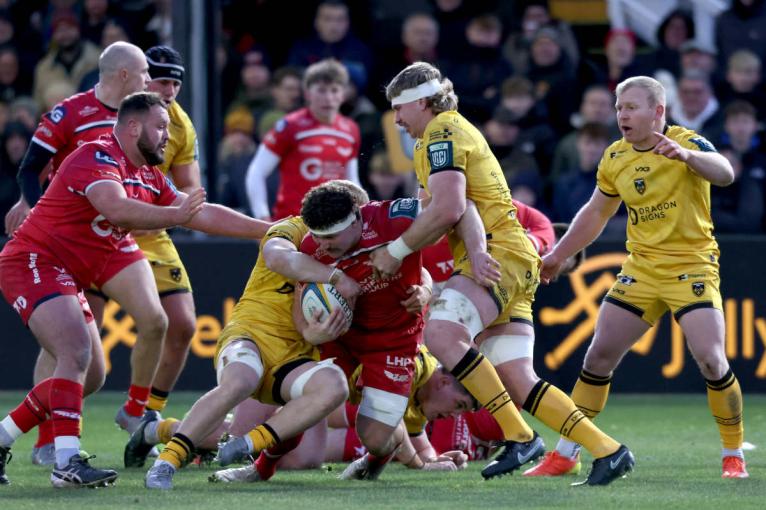
But that was as good as it got for the west Walians, who were subsequently defeated by an Ospreys team inspired by Harri Deaves in Llanelli and then turned over by the Dragons at Rodney Parade. Cardiff managed to edge the Dragons but were well-beaten by the Ospreys in Bridgend. For teams with relatively modest player budgets, it wasn’t bad fare – not brilliant, but worth a gander, whatever some might say.
Maybe the headline story was the continued resurgence of the Dragons, who had won three out of their last four games at the time of writing. For a team who hadn’t scored a single victory in 2025 until December 14, that has to count as significant progress. It’s probably too soon to declare happy days are here to stay for the east Walians, with Benetton, Munster and Ospreys to be faced on the road during January, but there was certainly smiles around Rodney Parade on New Year’s Day.
Steve Tandy would have been watching all the matches involving Welsh players closely, what with the Six Nations starting in a matter of weeks, with Wales opening against England at Twickenham.
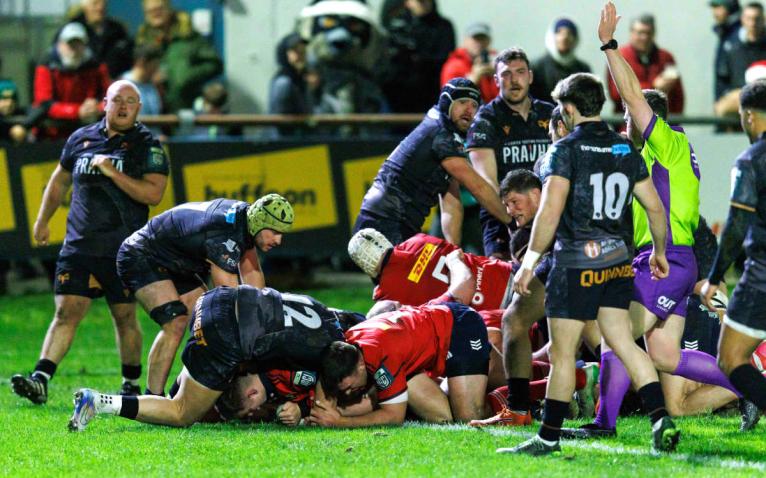
Or perhaps Ospreys’ admirable resilience deserved to command most attention. They are a team who seem to have obituaries written about them every other week, if not every other day, yet the 225 tackles they came up with to win at Parc y Scarlets on Boxing Day showed that their spirit remains very much intact.
They were the most physical of the Welsh teams in the seasonal jousts, with 27 dominant tackles, eight more than any of their local rivals, despite playing just two games, one fewer than Cardiff and Scarlets. In Llanelli, Mark Jones’s side won the dominant-hit count 13-3, against Cardiff the tally in their favour was 14-4.
Stuff like that matters, especially in derbies. Deservedly, the Ospreys’ victories came garnished with bonus points.
Steve Tandy would have been watching all the matches involving Welsh players closely, what with the Six Nations starting in a matter of weeks, with Wales opening against England at Twickenham. Few will be banking on the Red Dragons taking much from that fixture or from their date with Ireland in Dublin on March 6, but they do play three home games in this year’s championship.
If the encounter with France looks decidedly challenging from any angle, Wales might hope to pick off either Italy or Scotland or even both – hey, this is a write-up before a single box-kick has been sent skywards and the first scrum has been set: a dot of optimism is allowed.
In that vein, Tandy would have been pleased with some individual performances. Fit-again Mason Grady stood out for Cardiff against Dragons, while Dan Thomas banged in 54 tackles over three outings, with his breakdown work high class.
Scrum-halves were to the fore, with Kieran Hardy’s display for Ospreys against Cardiff earning him the man-of-the-match award above several other strong candidates. Hardy didn’t just score two tries; he also bossed play and created for others. Dragons’ youngster Che Hope also looked the part. It is still early days for him, but he has a snap about his game and seems to have decent basics.
Then there was Gareth Davies, 35 years young and turning back the clock with two tries when the Scarlets won in Cardiff, one of the scores a trademark interception job. “He still has it,” one of my Wetherspoons’ pals said after the Farage debate had finished. “He finished too soon with Wales.”
For Wales, [Tomos] Williams often finds it hard to hit the levels he reaches for the Cherry and Whites.
Perhaps he did, but maybe it’s because he ended his days with Wales when he did that he’s been so effective for his region since, able to focus everything on delivering for them, without the distractions of national squad camps.
Over the border at Kingsholm, Tomos Williams unwrapped an audacious post-Christmas one-handed offload to set up a delicious Gloucester try, and also caught Saracens cold with a quickly taken tapped penalty that led to a touchdown. “A great, great player,” was visiting coach Mark McCall’s post-match verdict on a scrum-half who’ll be on the Londoners’ books next season.
But it’s a strange one. For Wales, Williams often finds it hard to hit the levels he reaches for the Cherry and Whites. Maybe it’s because the Welsh forwards have found it difficult to deliver much in the shape of worthwhile ball in recent years, but, time-travelling backwards, circumstances were much the same during the 1980s, and Terry Holmes still prospered.
Memories can play tricks, of course, but not in this instance. I had a look at some YouTube clips of Holmes the other day and he was every bit as good as I remembered.
Anyway, back to Williams. It could be that he is simply in the mould of the former footballers Glenn Hoddle and Matthew Le Tissier, wildly impressive for their clubs but not quite so exceptional at international level. Or maybe that’s plain unfair: maybe Williams will show inspiring leadership and pinpoint game control in the coming Six Nations, as well as his undoubted creativity, and light up the tournament. Tandy will hope so.
Other than Grady, back-three men to show up well included Ellis Mee, Rio Dyer, Keelan Giles and Angus O’Brien, the latter distinguishing himself with prodigious kicking out of hand. It does seem odd that while the whole world and his pet poodle have received the nod from Wales at some time or other over the years, O’Brien has been bypassed. But he made a difference for Dragons against Scarlets, and the Wales coaches were in attendance. Whether that will count for anything we’ll have to wait and see.
Giles? Exceptional against Cardiff, the sparkler in the Ospreys’ cocktail, a player beating defenders for fun, scoring tries and clearly relishing his rugby. The efforts of team-mates such as Deaves, Rhys Davies, Hardy, Sam Parry, Owen Watkin, Garyn Phillips, and Dewi Lake – despite the odd lineout glitch – would also have been noted by the Wales hierarchy.
Consistently strong, too, for the Dragons was Dyer, Hope and O’Brien’s buddy Aaron Wainwright, Leicester-bound next season according to the jungle drums. He is a player at the peak of his powers, one we might be tempted to say delivers more reliably than Royal Mail. The Welford Road faithful will likely him take to their hearts.
Let’s end by saying you would hope 2026 for Welsh rugby wouldn’t be ruined by ill-advised decisions. But the old line tells us it’s the hope that actually floors you.
But this round-up wouldn’t be complete without mention of one other player.
It may have been a coincidence that Cardiff scored three late tries after Taulupe Faletau came off the bench against Ospreys, and it may have been a sheer fluke that the Dragons staged a mini-comeback after the Wales international left the pitch near the hour mark at the Arms Park on Boxing Day, with the visitors enjoying an avalanche of late possession.
On the other hand, it may be that Faletau makes a huge difference. All things considered, let’s run with the latter suggestion.
Let’s end by saying you would hope 2026 for Welsh rugby wouldn’t be ruined by ill-advised decisions. But the old line tells us it’s the hope that actually floors you.
Fingers crossed that doesn’t prove so.

Rugby’s best of the best, ranked by experts. Check out our list of the Top 100 Men's Rugby Players 2025 and let us know what you think!


Reading this a a Welshman in Aussie Land it is rare to read anything positive about Welsh rugby, especially reading Wales On Line and the comments section, so if Hope is all we have, then I am happy to read about it. Looking forward to some positive Welsh performances in 2026 both on and off the Pitch. C’mon Cymru and C’mon WRU!