
On Saturday afternoon, before a sizzling Stadio Olimpico, Italy aim to carve out another slice of history, another step on their journey as a proud member of the Six Nations Championship. The Azzurri have never beaten England. As Steve Borthwick’s wounded charges descend on the Italian capital, this looks to be their best chance in recent memory.
No longer are Italy plucky upstarts with isolated wins. This feels like a new era for these passionate bearers of the Azzurri mantle. And they are set up for success in a lasting, sustainable way.
From a performance perspective, the Italians have made significant progress in recent years, defeating Australia in back-to-back November Tests, seeing off Wales two years running, and beating Scotland on their past two visits to Rome.

In 2024, they produced their best ever Six Nations campaign, defeating the Welsh and the Scots, earning a draw against France and pushing England hard. They finished with a points difference of -34 – their strongest since joining the championship 24 years earlier.
This gradual rise has been underpinned by a fertile performance pathway. The Italian federation’s player development programme has been honed and reshaped and since the national academy was established in 2006, and is now delivering Test-ready athletes to the international arena. Of Gonzalo Quesada’s current squad, 19 players came from or were involved with the FIR academies.
The FIR manages one national Under-20s academy based in Parma (the team competes in the Coppa Italia), which serves as the backbone of their U20 team, and has three elite U18 development centres in Rome, Milan and Treviso.
But infrastructure wasn’t the only concern for the Italian union; finding the most qualified coaches and managers was also key to unlocking success. The influential Stephen Aboud, who worked with the union from 2016 to 2022, returned to the project this year; U20s coach, Andrea Di Giandomenico, is also in charge of the national academy; Franco Ascione acts as the elite rugby director and continues to drive the FIR vision; while Daniele Pacini is the FIR technical director.
Without the FIR academy, I wouldn’t have become a professional rugby player.
The clubs’ involvement in developing a strong, durable youth system is also a central part of the puzzle, as historic sides such as Rovigo, Petrarca, Viadana and Valorugby Emilia fuelled Italy’s growth prospects.
National captain Michele Lamaro is one of several stars who were never involved with FIR academies, a testament to the quality of the Italian club scene. And even though the COVID-19 pandemic significantly reduced the number of licensed players, they are now back to 90,000 registered players, painting a promising picture for the future.
Circling back to the FIR academy’s role in developing the stars of the future, can its influence on players’ careers actually be measured? For lock Niccòlo Canonne and prop Danilo Fischetti, their senior pro careers demonstrate the success of Italy’s youth pathway.
“Without the FIR academy, I wouldn’t have become a professional rugby player,” says Fischetti.
“For me, it was crucial for my development, as you train with players from the same or a higher level.”
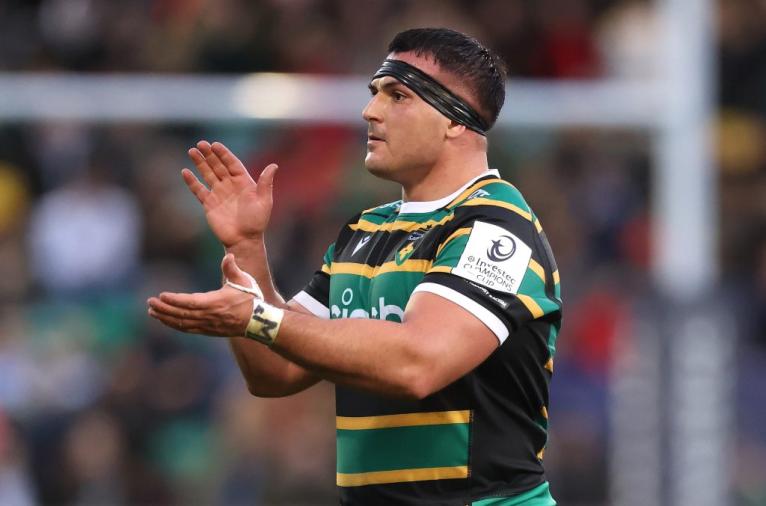
Fischetti, like Canonne, first played for the regional academies settled in the north, centre and south of Italy, before being selected to join the wider U20 group.
Canonne recalls how their weekly routine was structured from U16s onwards.
“We practised every day, with the staff focused on applying to us the right type of training that would suit us better, plus conditioning and a gym schedule. That experience was important to me, as at that age you start to shape your body and take advantage of your build and athletic characteristics.”
With training held Monday to Friday, players would then be released back to their clubs and play in their age-grade teams on the weekend. While it was a challenging change of pace, Fischetti says it was a push in the right direction.
“It was definitely a very demanding environment. I was the big guy in my club, but once I got to the regional academy, I was just one among many. You had to lock in and work hard if you wanted to stay in the academy.”
If you don’t study and/or flunk, you are dropped from the academies. The staff are looking out for us because when you are 15-16, you aren’t sure if you will become a pro player, so you need to keep your options open.
Canonne agrees. “The academy demanded we took our training schedule seriously. While at the club, I could skip a session or two; in the academy, that behaviour wasn’t acceptable. You are there to be your best version and work towards your future.
“It is important to start early, when you are 14 or 15, so you learn how to follow a programme and a schedule. Rugby isn’t a school/college sport in Italy, as it is in the United Kingdom or New Zealand, so most Italian players didn’t have a chance to start rugby training when they were young.
“We have improved massively in that area, and the results speak for themselves.”
However, what happens to the Italian players once their time at the regional academies is over? The best of the best are invited to join the U20 Accademia Nazionale Ivan Francescato, which represents a complete change of tune, as Fischetti explains.
“You stay there for at least one year, max two. In that time, you train, work and play for the academy, developing yourself as a player. It works like a club, with the season going from July to June. Gym in the morning, team session in the afternoon, games on the weekend.”
While the U20s finished seventh on home soil at last year’s World Rugby U20 Championship, their best result since the competition began in 2008, the seniors have become a real threat in the Six Nations, recording their best results against England and France in the past four years.
For Fischetti, a critical factor in recent success is the comprehensive development of players across all stages and levels of their lives.
“For example, if you don’t study and/or flunk, you are dropped from the academies,” says the Northampton prop. “The staff are looking out for us because when you are 15-16, you aren’t sure if you will become a pro player, so you need to keep your options open.”

“In the ‘Ivan Francescato’, studying is still important, but as you have a clearer picture of what will come next, the downfall of opting to stop studying isn’t the same as in the regional academies.”
Another reason for their development as players and humans is the staff, who devote their careers to nurturing players to believe in their talents and potential.
“There were more than a couple of great youth coaches important to my development as a player,” says Cannone.
“Andrea Moretti, who worked with me when I was young, and who’s now our scrum coach in the Italian setup, and Paolo Grassi. Their knowledge and ability to develop young players were astounding.”
Without the academy system, Italian rugby may not be where it is today, on the cusp of more history. The north is Italy’s rugby stronghold and prides itself on being the commercial engine of the country. The rest of Italy was not so besotted with the game.
“Rugby in Italy has progressed differently depending on the region of the country,” Fischetti, born and raised in Rome, explains. “The north has more activity, while the south has less infrastructure and fewer players. But, as the academies existed, players like me had a chance to grow on the same level as the guys in the north.
That’s my conviction. The Italian rugby union has made a strong investment in the youth system and in Italian youth players, and we have been reaping the rewards year after year.
“The relationship between the academy and my club at the time, Capitolina, was great. While I wasn’t involved with my team between Monday and Friday, the club’s staff and my teammates were comprehensive and supportive. It is a win-win situation, as on the weekends I could help my club in any way I could while growing and developing as a player in the regional academy.”
Cannone sees this aligned, effective pathway as a key pillar in Italy’s growth.
“For sure, 100%. That’s my conviction. The Italian rugby union has made a strong investment in the youth system and in Italian youth players, and we have been reaping the rewards year after year.”
And despite having been involved with the Italian senior national team for many years, both players agree some of their best memories were made at the FIR academies.
“My first time in the academy in Prato, we had a game against Rovigo, and we won,” recalls Cannone. “It might not seem that big, but Rovigo is in the north of Italy, where rugby is more popular, and we, in Prato, were a smaller academy. It was an incredible and thunderous result. I still can remember every minute of that game.”
As for Fischetti, his best memory came from an unexpected result in the regional academy.
“I had so many good memories as an FIR academy player, like going out with the boys when we were young. However, as Niccòlo said, the best one was beating Recco Rugby, a team from Liguria. They hadn’t lost a game against us in four years, and we got there and just did it! It is a memory I cherish.”
Each player, now central figures in a roaring Italian pack, was shaped by the system around them. Fischetti had been a big fish in a small pond. He played at centre until he was 14, when academy staff saw how he might develop in the front row. Cannone was instilled with great inner belief as he strayed from the family sporting path, with his grandfather, father and uncle all football goalkeepers. Today, he and younger brother Lorenzo are two of Italy’s biggest wrecking balls.
As Italy chase history on Saturday, those clubhouses across the country will be packed and boisterous. They may not beat England, but this flourishing development pathway ensures they will get there one day.
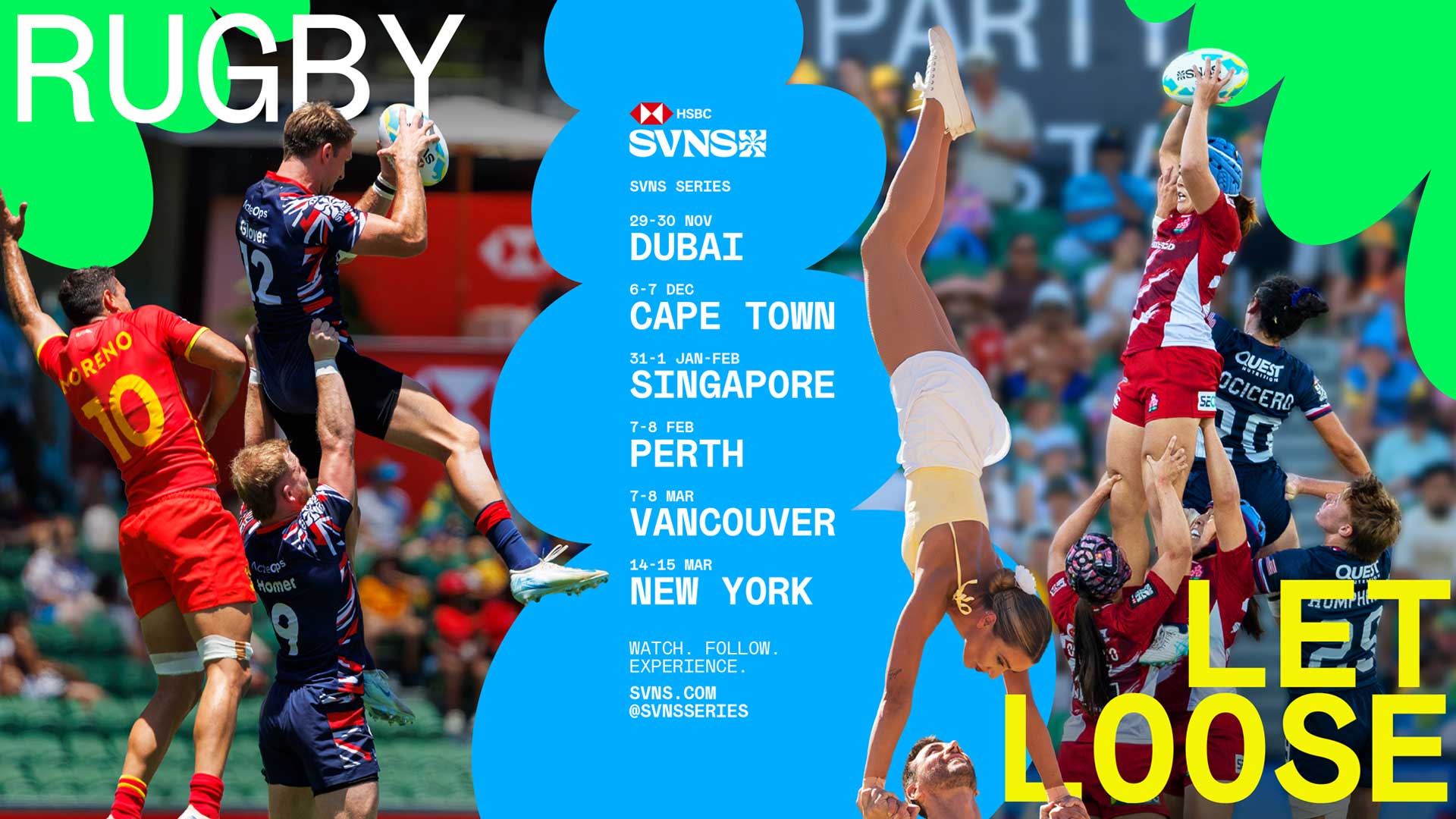
Watch all the upcoming SVNS action for FREE on RPTV!
*Available live in select territories


Brilliant article!!!
Their pathways are now brilliant and identifying talent earlier. The key is having the talent to use them.
Back up to 90k licenced players is great for them.
Really do seemed to have turned a corner.