
Super Saturday has become to the Six Nations Championship what the gathering of the suspects is to an Agatha Christie mystery – a plot device whose familiarity only adds to the sense of expectation.
The tournament crescendo is now such an established part of the picture that it is hard to recall a time before its extended delights.
Yet Super Saturday’s first iteration only came in 2004 and, as with most new ideas, it arrived with some dragging of feet.
The previous season’s championship, with games still spread across the weekend, had provided a Sunday climax to savour. Ireland versus England – the concluding match – had been a rare winner-takes-all Grand Slam shootout, pulling in 5.6 million viewers across the BBC with another 500,000 watching on RTE.
So why the change?
The driving force behind the championship’s move to a staggered Saturday triple bill was John Feehan, then the Six Nations chief executive.
His vision was to create an annual TV event, something which put rugby on the map. Pulling the final weekend together wasn’t a straightforward sell, however. Feehan recalls having to coax and convince the blazers to get the ball over the line.
“I wanted it and the television companies took to the idea very quickly and were very happy with it, but the unions took a bit of persuading. They were a bit sceptical,” said Feehan.
I felt we needed something that captured the imagination of the public and had almost a mythical feel.
“Initially, they didn’t like the idea of late-night games. The reason could have been something as stupid as the committees not wanting kick-offs too late because it spoiled their day out.
“I was always thinking about how we drove the audience and I felt we needed something which gave huge focus to rugby for that one day. You could say Saturday and Sunday offered a wider spread, but this got more out of that final round I thought.
“I felt we needed something that captured the imagination of the public and had almost a mythical feel.”
Mythical might be pushing it but it is hard to argue against the success of the concept.

Sport is almost always better in the flesh but with all the moving parts, this is the one day that the TV ticket might rival it.
The rolling thunder of three matches pretty much back to back makes for a gluttonous orgy of bog-eyed consumption. Super Saturday indeed.
“I think it has worked really well. Its introduction did help drive the whole thing forward,” added Feehan.
“We might have had the odd one with a game outstanding at the end, but I don’t remember too many.”
The scheduling is the key to producing the perfect pot-boiler. Over the course of a championship, there are more moving parts than you might imagine.
For Super Saturday itself, no-one wants a flat finish but without a crystal ball it is hard to put together the ideal running order. There are always surprises in the Six Nations, therein lies much of its charm.
“Everyone thinks scheduling a Six Nations is simple but it’s not,” said Feehan, now chief executive at Basketball Ireland.
“The Irish never used to want a home game on St Patrick’s weekend because all the Dublin hotels are full. Twickenham was difficult on a Friday night because of the London traffic. Then there’s home and away to deal with – if you change one fixture, you have to change them all.”
For Super Saturday itself, no-one wants a flat finish but without a crystal ball it is hard to put together the ideal running order.
There are always surprises in the Six Nations, therein lies much of its charm, so there will always be some guesswork involved in setting the dials.
“Historically, it would have been difficult to have Italy involved in the culmination game, but all of the other five have been involved,” said Feehan.
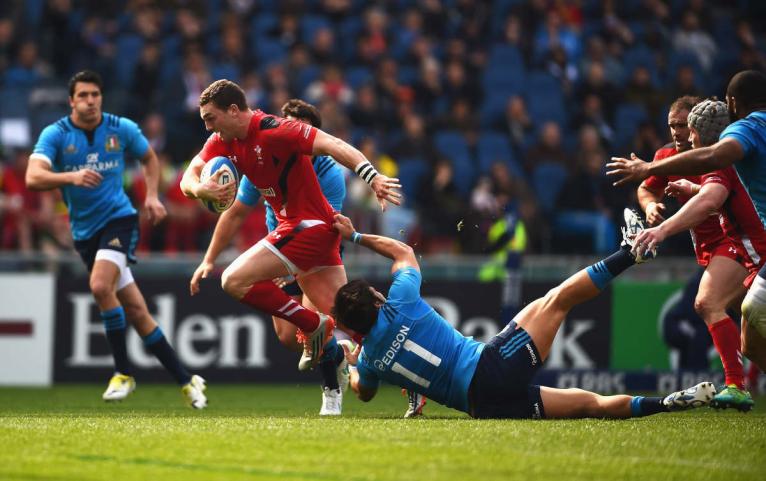
“Having that different order on the last day is important. You don’t want France v England to be the last game every year.
“There was a cry from some people for that to happen when there was a period when one or the other of them was dominating the championship but you kind of ruin the whole aspect of the championship if you do that.
“It’s almost saying only those two teams can win it and over the period that hasn’t been the case.”
Nevertheless France v England has been the most popular concluding fixture to Super Saturday – this weekend’s meeting will be the seventh time it has been used as the curtain closer.
You couldn’t have made that finale up. People wouldn’t have believed you.
It was also the final game in 2015, on arguably the most exciting day in Six Nations Championship history. That final round saw the wildest of rides with 27 tries in three matches and countless lurches and swings before the title race was settled.
Three teams went into the day with a chance of lifting the trophy – one by one they made their move.
Wales ran in seven second-half tries against Italy to set the target at the top of the table. That left Ireland needing a 21-point victory at Murrayfield in the second game to leapfrog them. The Irish managed it and more to leave England needing to beat France by 26 points in the final match.
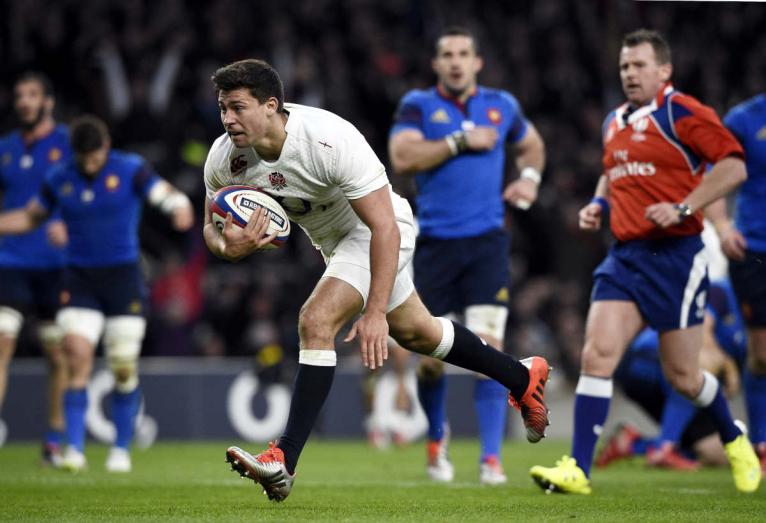
That unlikely scenario pressed the button on one of the craziest games Twickenham has seen. The action was pulsating, the attacking rugby relentless and the tries rained down. But despite winning 55-35, England fell agonisingly short.
In the end it was Ireland who retained the title on an unforgettable day.
“You couldn’t have made that finale up. People wouldn’t have believed you,” said Feehan.
Last season’s Super Saturday was compelling too. Ireland kept their title hopes alive by beating Italy in Rome in the opening game of the day before England overtook them with a crushing victory over Wales. Everything rested on the last match but France held their nerve to beat Scotland and seal a record-equalling seventh crown of the Six Nations era.
There is, of course, a tinge of sadness in that round five represents the full stop at the end of another memorable championship but let’s not dwell on that. Better to just embrace the moment – and the show.
So here we go again – Dublin, Cardiff and Paris, three chapters of the same wonderful, enduring story.
Three teams still capable of taking the title, two of them meeting in the opening match. The winners of that Ireland-Scotland contest then hoping England, of all people, can do them a favour in Le Crunch by rising from the ashes of a scorched campaign to deny France victory – or even, potentially, just a bonus-point win – in the Championship finale.
There is, of course, a tinge of sadness in that round five represents the full stop at the end of another memorable championship but let’s not dwell on that. Better to just embrace the moment – and the show.
Settle in and enjoy Super Saturday – rugby’s day of days.
Watch all the upcoming SVNS action for FREE on RPTV!
*Available live in select territories


Looking forward to it.
There's always the fear, like all orgies, that you simply multiply the number of people you leave disappointed by the end!
Every team has something significant to gain from this weekend.
All of them will be contests.
Potentially perfect for Irish or Scots:
1: Watch match one and hope your team wins
2: Watch match 2 relaxed and high after winning match one.
3: Watch match 3 and hope England win or if its going badly for England hope France put the century on them (sorry England supporters).
(sorry England) reads a lot like sorry England, not sorry…
Don't be sorry a thrashing might instigate some change. 🤞