
“The USA is at the heart of World Rugby’s new strategic plan.” Word from World Rugby Chair Brett Robinson, who briefed a small group of journalists gathered in the Trust lounge at the Baltimore Ravens M&T Bank Stadium, ahead of the final Test match in Rugby’s Greatest Rivalry series.
NEW: Follow Your favourites in the App 📱
You can now follow their favourite teams, tournaments and players in the RugbyPass App!
“Our ambition for 2031,” Robinson continued, “is to ensure that the Rugby World Cup here in the US is the best we’ve ever delivered. Because it’s so important for our game to grow and fuel the sport.”
The decider between New Zealand and South Africa was the latest in a series of high-profile matches that World Rugby, in collaboration with the rugby world’s most powerful unions, have brought to American shores in recent years. The governing body has been intentional in its push to host major international events in the United States ever since it announced the US would host the 2031 and 2033 men’s and women’s Rugby World Cups. Since then, England, Scotland, New Zealand, Fiji, Ireland and South Africa have all played matches on American soil.
With just five years to go before the men’s tournament, the clock is ticking to make sure that Americans familiarize themselves with the sport, fall in love with it and tune in to what is the third-largest global sporting event behind the FIFA World Cup and the Olympics.
If the final Test between South Africa and New Zealand is anything to go by, the market is primed for take-off, albeit with a few caveats.
The Baltimore experience
The match in Baltimore was a near sell-out and the largest-ever crowd for a rugby match hosted in the United States, with 68,173 fans turning up.
According to New Zealand Rugby CEO Steve Lancaster, tickets were sold to fans in all 50 US states and all seven provinces in Canada, with 40,000 tickets immediately selling out on pre-sale when the venue was announced.
Roughly 10 per cent of tickets were sold locally. That’s almost the same number of tickets sold for a typical Major League Rugby championship match, evidence that there is some demand for rugby in the US, but plenty of room to grow more enthusiasm for the sport.
A sea of green and gold engulfed Baltimore in the days preceding the match and on game day M&T Bank Stadium was awash with Springboks and All Blacks colours, a change from the usual Ravens’ purple. Before kick-off, both sets of fans took to tailgating like ducks to water. Braais and kiwi pies were seen aplenty in the parking lots, as South Africans, Kiwis and Americans made the most of the new rugby setting.
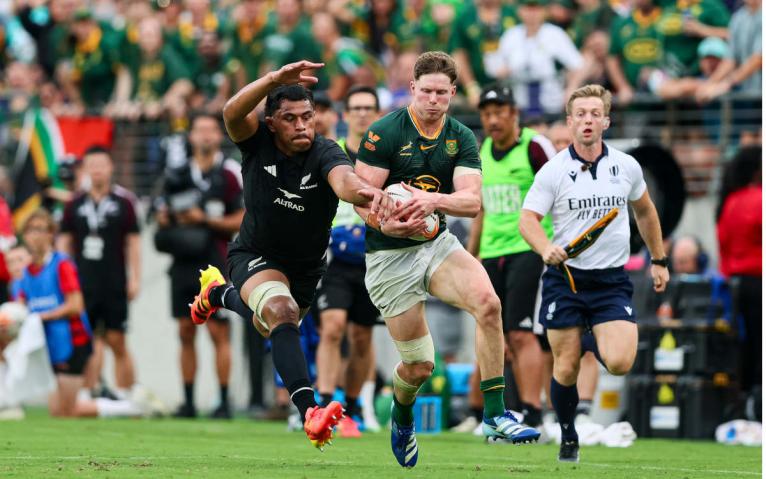
“I thought it was a fantastic occasion,” Chris Seed, New Zealand’s ambassador to the United States, told RugbyPass.
Seed attended a 300-person New Zealand tailgate gathering before taking in the match alongside several US Congress people, representatives of the current administration, IndyCar driver Scott Dixon and former All Black Grant Fox. Hosting matches in the United States provides the added bonus of drawing in government officials and business executives who are eager to discuss business while taking in the experience.
“It’s a great branding and influencing opportunity,” said Seed. “When the All Blacks play [in America] it gives New Zealand a moment to connect with a broad range of Americans.”
However, there are still elements to perfect before the Rugby World Cups arrive in America. For the second year running, in-stadium microphone issues plagued the referees and left the fans waiting as the action was delayed. Contrary to previous years, the delay did not kill the atmosphere. If anything, it gave the players a rare chance to revel in it.
“It was super special,” said South Africa captain Siya Kolisi. “In the stadium, my goodness, because there was a long stoppage and in that moment, we’re still in the zone. But then you get to appreciate the crowd singing and enjoying the environment. It was really special.”
As locals mixed with the influx of visiting fans, they got a taste of what the World Cups could bring to their city. Ambassador Seed recalled speaking with several American fans who were accustomed to attending Ravens games, and found the atmosphere of Rugby’s Greatest Rivalry to be much more passionate than the average NFL game. “They had quite a lot of admiration for the way in which the anthems were sung and the haka brought something special to the game,” said Seed.
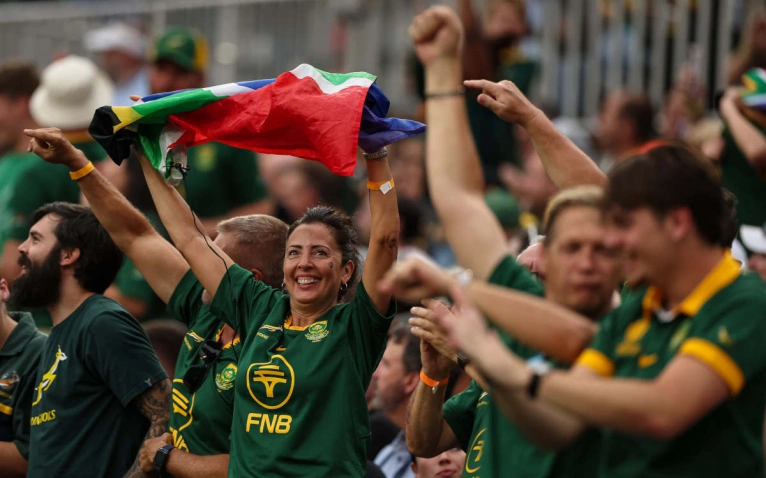
From Major League Rugby Co-CEO Alexander Magleby’s perspective, high-profile matches on American shores not only provide “great entertainment,” they help share rugby with more people and re-ignite the flame for what he calls “old rugby audiences”, be it parents who used to play and want to pass on that passion to their children or expats who yearn to see their favourite sport in the US.
Magleby, like Seed, also used the match as an opportunity to network and gauge potential investors’ interest in Major League Rugby. “My schedule is jammed with business meetings, investor meetings and stakeholder meetings. That’s a good thing,” Magleby told RugbyPass.
The American sports market
As previously reported by RugbyPass, the importance of the American market — both as an economic boost for a sport with plenty of financial upheaval in recent years and as a potential gold mine for new talent — is evident at the highest levels of rugby circles. With that comes an expectation that the market will deliver.
“We need America to be strong,” Rian Oberholzer, CEO of South African Rugby, told journalists. “We need the American supporters and population to support the event.”
While there is an understanding that rugby in the US will likely never compete on the same playing field as the major American sports, there is clear determination on the part of World Rugby and the major unions to make sure they crack the market.
Tellingly, according to Ross Young, World Rugby’s general manager for US operations, the governing body has received increased interest in hosting World Cup matches on the back of the FIFA World Cup. Every city saw the positive publicity host cities won and the bonds they forged with the visiting faithful. No city wants to miss out on the next big party.
As the number of successful high-visibility games increases in the US market, the expectation is that the appetite for rugby will only increase and that fans who Young says “have been starved for content” will get what they’ve been missing.

Just introducing high-profile matches won’t be enough to win over the market, according to Magleby, but it can serve as a layer of the cake that MLR and USA Rugby are hard at work building. Magleby is pushing for professional infrastructure in more cities around the country that offer professional teams bases of operation.
He would like to see MLR in “12 to 16 cities by the World Cup”. Currently the league only has five teams. Magleby and USA Rugby CEO Bill Goren would also like to have a clear development pathway that connects high school, college and pre-professional leagues to the pros. Goren hopes the legacy of the American Rugby World Cups will be increased participation numbers, from the current 100,000 to about 500,000 total players.
In the near term, the Baltimore participants have both set a target of becoming the second favourite team of American rugby fans. The All Blacks are leaning on their historic success, branding and unique cultural touch-points like the haka to break through to American audiences.
And they are not just focused on established rugby fans. Each time they come to the US, the All Blacks make a point of engaging in the community, often taking time to sign autographs in public spaces and entering schools to teach rugby skills. In Baltimore, they visited Harlem Park elementary and middle school, where enthusiastic students tried performing the haka alongside their new idols. While the hope from a New Zealand perspective is that these students will turn into All Blacks and Black Ferns fans, the overarching desire is that by 2031 they will be playing the sport and watching it regularly.
The Springboks meanwhile are betting on two factors to capture American hearts and minds: their relentless winning and the aura of their captain Siya Kolisi, a figure who transcends boundaries as South Africa’s first black captain.
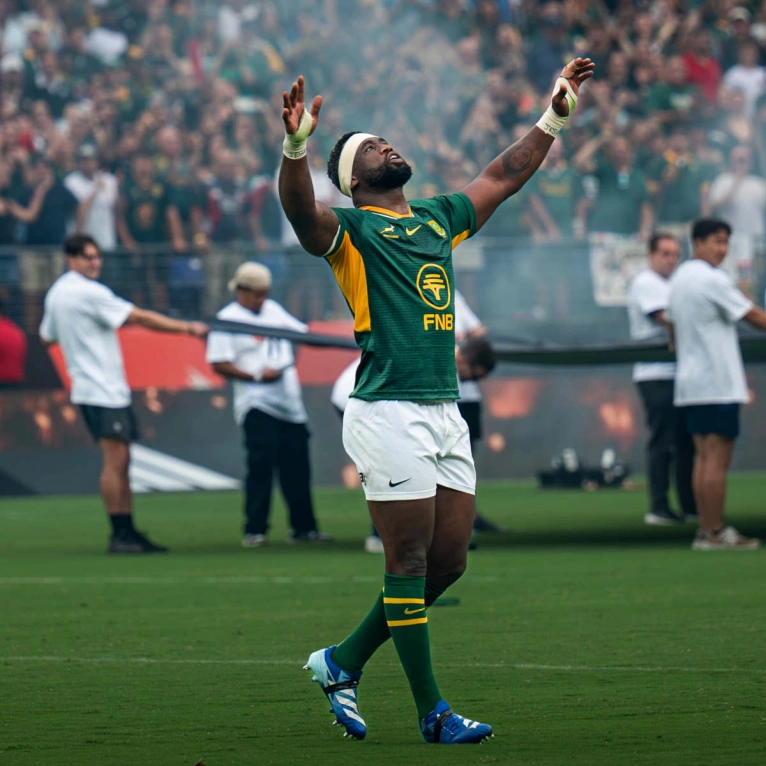
With the backing of their main sponsors Nike and Coca-Cola, Oberholzer says South Africa Rugby is “silently positive that the Springboks brand will be one of the more supported brands at the coming 2031 World Cup in America.”
Whether either side can successfully turn Americans into supporters remains to be seen, but what no-one is questioning is the United States’ ability to host a lucrative tournament.
“I must say Baltimore has been treating us tremendously well. Thank you for that,” Oberholzer noted ahead of the match. “The stadium, the facilities that we’ve got here, we can see your World Cup working here.”.
Facilities, spectacle and World Cups
While the tailgating, fireworks and respect between opposition fans and players may have stolen many headlines, for head coach Rassie Erasmus and full-back Damian Willemse, one of the major takeaways from the Springboks’ time in the US was the quality of the facilities and the utter professionalism with which the hotel staff attended to the team’s needs.
“I think we can learn a lot from getting rugby more professional,” Erasmus said in his post-match press conference. He also acknowledged the challenge of educating American non-rugby fans about the sport, but pre-match, his assistant coach Mzwandile Stick noted: “We’re just excited to get this opportunity to make sure that we keep promoting rugby in the US.”
With top-tier training facilities and hotels at the ready and positive conversations underway with NFL franchises about stadium use during the NFL season, there is no logistical reason why the World Cups in the US can’t work.
Pool matches will be spread across different regions, with World Rugby hoping to pair matches with large diaspora markets. And if ticket sales for next year’s World Cup in Australia are anything to go by, US host cities can expect a heavy influx of visiting fans.
By hosting Rugby’s Greatest Rivalry, Baltimore has thrown its hat in the ring early to host Rugby World Cup matches, largely because it believes in the product and the sport’s ability to transcend beyond the matchday experience.
I think it’s been a pretty good place to start building a foundation for what will be an awesome World Cup in five years.
“We look forward to bringing rugby here in ‘31 and expanding the footprint of rugby throughout this state, not just in Baltimore, ” said Ashley Harper Cottrell, interim manager of the Maryland Sports Commission. “That’s why we love events like this. It’s beyond just what happens in the stadium. It’s throughout the community. It’s throughout the state. It’s telling taxi drivers all about rugby and getting them to come to the events. It’s things like that. That’s how we love it.”
With more investment, more matches and more visibility and accessibility for the sport, there is every chance rugby can catch fire in the US in the next five years. But it will take every ounce of hard work and stakeholder expertise to make it so. Games need to be easy to find on terrestrial TV and US streaming services, short form content needs to flood social media channels, and kids need to have opportunities to play.
Kolisi and All Blacks hooker Codie Taylor both believe it’s possible. “I really think Americans would love rugby if they get to see more of it, and if it’s shown a whole lot more on TV, but I think it needs a lot of hard work obviously,” said winning skipper Kolisi.
Taylor, who led New Zealand in Baltimore, meanwhile reinforced the notion that the American tournaments should be a great success. “America’s obviously got some great sports over here and they’re fanatical about every sport that they’re involved in. So it’d be great to see USA Rugby sort of keep building and leading into 2031. I think it’s been a pretty good place to start building a foundation for what will be an awesome World Cup in five years.”
 Register your interest to receive priority updates on RWC27 ticket releases. Don't miss out, stay in the loop!


Do the Eagles filll a stadium?
I’m old enough to remember when ABs treated outreach in NZ like this