
A new Wallabies era under a new head coach has finally begun, and even if it wasn’t overly convincing, at least it started with a win.
Watch Rugby's Greatest Rivalry LIVE
Two rugby giants collide. Stream live, replays and highlights free on RugbyPass TV.
Australia’s 35-32 victory over Japan was a whole lot more free-flowing and open in steamy Osaka than their 19-15 win in cold, wet Tokyo last season, but the contest left us in the odd situation where both teams will head into Saturday’s return leg in Townsville with a good degree of confidence.
The first encounter was an entertaining game to watch, frustratingly so at times for Wallabies fans, and it really sets up a mouth-watering contest this weekend.
While Les Kiss and his coaching team will take positives from the three-point win, there were also more than a few things that need some urgent attention this week.
Once Australia took the lead, they never lost it
The worst-case scenario that would have kept Kiss up at night last week was an opening defeat. A win was important not just for the playing group, but for the different messaging and approach that would have been required heading into the second game.
A loss could easily have led to a whole new set of processes from a new coaching staff as they come to grips with what happened, which could also have led to new levels of stress and anxiety among the squad. A win will still be thoroughly reviewed, and that process could still have been different. But any coach will tell you it’s a lot easier to make small changes after a win than a loss.
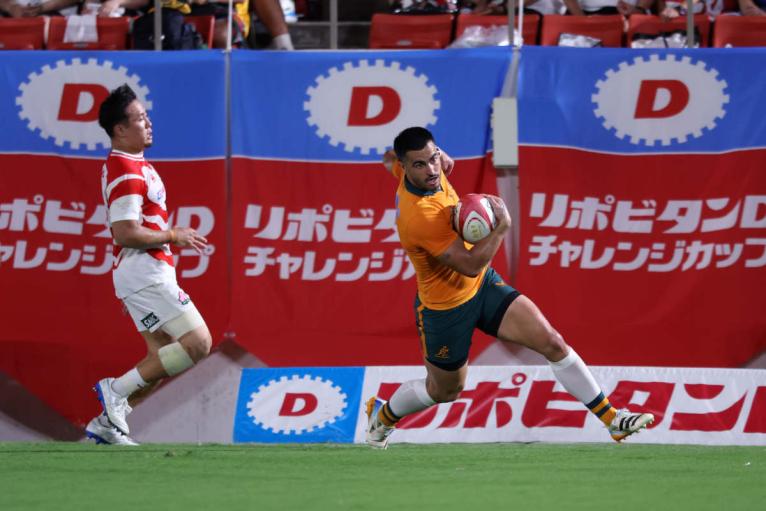
The Wallabies gained the lead after 26 minutes, though they had drawn level with Japan in the 16th minute. Despite everything that happened in the game thereafter, they never trailed from there. The Brave Blossoms drew level again just before half-time, and were within two points at one point, and three points on two other occasions.
Japan’s final score aside, the Wallabies always managed to score next, and that will be something Kiss will take confidence from. There were numerous times when Japan looked like they could run down and even go past the Wallabies, but somehow, they never could. That’s certainly something to build on.
However…
Defensive tweaks a way off being settled
We know there were defensive tweaks being applied in the lead-in to the game in Osaka, and a new defence coach in Scott McLeod meant lots of questions were asked as the new coaching team took charge.
Will the Wallabies use a rush or blitz defence? Will it be something similar to what the All Blacks used during McLeod’s time there, under Steve Hansen and Ian Foster? Will it be noticeably different to how the Wallabies defended under Joe Schmidt?
Whatever was in place was easily pulled apart by the Japanese attack that put the foot down as they entered the Australian half, and put it down even harder as they entered the 22.
The timeframes involved in the succession meant that there was never going to be any drastic overhaul.
In fact, it was difficult to see any great difference in defensive shape or alignment at all. There may well have been subtle differences, but in a game highlighted by high-speed turnover attack and unstructured play from one end to the other, identifying any discernible structure or positioning proved rather difficult.
But whatever was in place was easily pulled apart by the Japanese attack that put the foot down as they entered the Australian half, and put it down even harder as they entered the 22. Any chance they had to create broken-field play, they jumped at it and lifted their tempo in an instant.
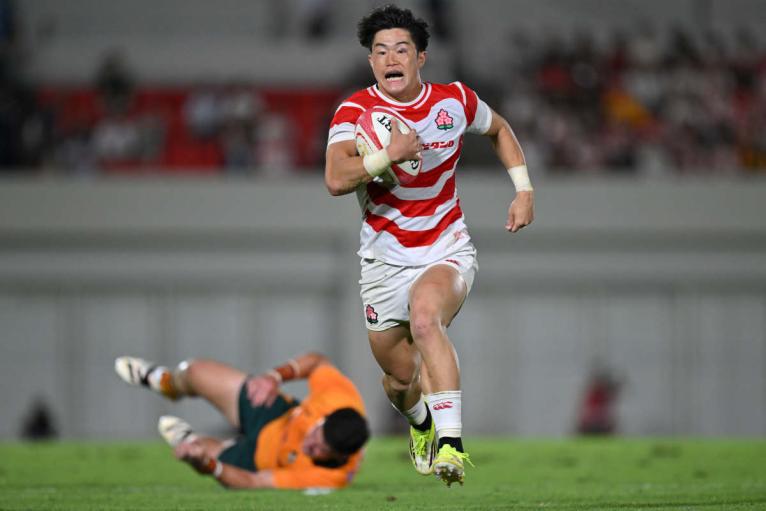
Ultimately, the stats read 11 turnovers, 10 entries into the 22 and nine clean breaks conceded, along with 22 Wallabies defenders beaten, with a large chunk of those coming in a first half which finished with Japan doing all the running.
An 88% tackle efficiency isn’t a huge red flag, but the way Japan’s attack was able to isolate Wallabies defenders will be a work-on this week ahead of the Townsville Test.
Disconnections amplified by Japanese tempo
Japan have a real future star on their hands in fly-half Ryunosuke Ito, and it’s impossible to watch a talent like that without a whole lot of envy, given Australia’s eternal quest for the next great No.10 over recent years. Imagine what he’ll be like when he starts playing professionally…
But he was quick to spot and take advantage of those isolated Australian defenders, maybe before some of them even realised they were isolated. His link-up with inside centre Samisoni Tua was excellent and both prospered annoyingly well.
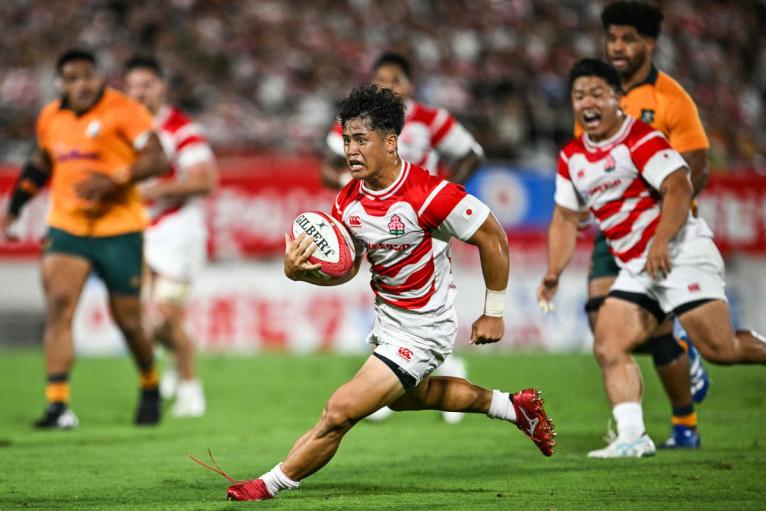
That’s going to be an urgent item to address for the Wallabies this week. Kiss spoke specifically during the pre-Japan camp in Sydney of wanting the defence to remain connected. It was when they weren’t able to maintain this that the Brave Blossoms were quick to pounce as they lifted the tempo on attack.
“What we’ll do is just look back through the skillsets and the structure that we had worked on to date, certainly a couple of little things to work with for sure,” Kiss told Stan Sport immediately after the win.
“They attacked back over the ruck a little bit, so we’ve got to make sure that’s right, but generally we’ll just go through the process. What was our structure, what are the skillsets that serve our structure, and we’ll go back and look at that closely. We’re going to need to be good next week.”
The ‘what was our structure?’ question feels like a key one, because at times it didn’t feel like there was a lot of it on the field – or that it could be reset as swiftly as they needed. It will need to be a lot better in Townsville on Saturday.
Composure gave way to chaos too often
It might be a circular argument as to whether Australia losing their composure led to the Brave Blossoms creating the chaos on which they thrived, or whether the chaos created caused the loss of composure. Either way, composure was not something the Wallabies had in abundant supply for large periods of the game.
For about 50 minutes either side of half-time, they seemed hell-bent on trying to out-Japan Japan, and that’s as bad an idea as trying to out-Fiji the Fijians. The more Australia tried to match Japan’s tempo, the more passes started missing their marks, the more defenders started over-reading and the more they invited the opposition to control territory and possession.
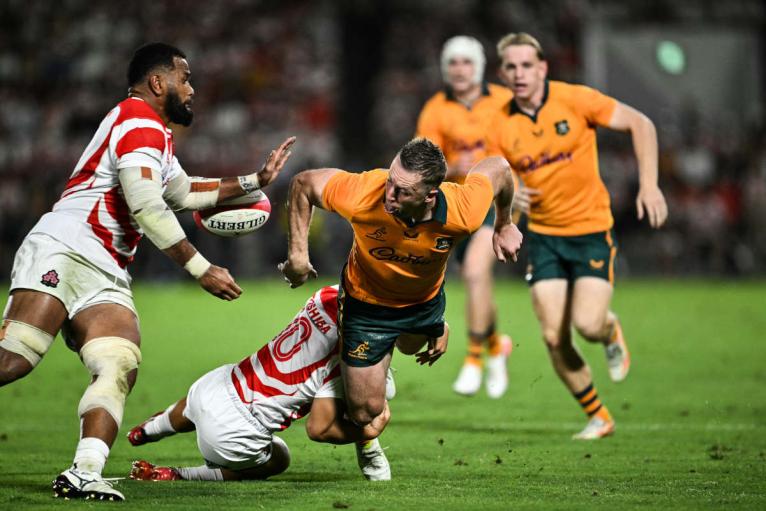
A quick tap going wrong, the captain being marched for throwing the ball away; they’re all little glimpses into a mindset that is struggling for clarity when they most need it.
And maybe that will be one benefit of being back on home turf this week. Everyone can relax, the routines will feel normal again, ‘let’s just get back to trying to play our game the best we can’.
The sooner they can convert off-field comfort into on-field composure, the much better team will they become.
They proved that to themselves through the last 20 minutes of the game, when they got out by 10 points on the back of a dominant scrum and less chaotic rugby. They certainly can be, and hopefully will be, better this Saturday.
 Register your interest to receive priority updates on RWC27 ticket releases. Don't miss out, stay in the loop!


I had a chaotic viewing experience with a Stan subscription for a month and VPN being the only option from UK. That Sky picked up full coverage of the provincial matches on the AB tour and the full SA v Argentina game tells us where the Wallabies are in world rugby.
I got around to watching a full replay and you’ve covered things well. I’d be a little sympathetic to our defensive effort though as it felt like the biggest issues were from the base of breakdowns and that largely from fatigue. I expect a way better effort this week.
Good things from the game - stacking the bench works (going back to Lions 3 and Joburg finally), Wright’s form continues to grow, Potter is remarkably good (Joe saw something the rest of us missed), Canham continues to shine (Joe, again), Lonergan continues to be excellent (and his defence was better), Meredith isn’t a test flyhalf, and Gordon is fit again.