Cut off the head of the snake and the body will die, or so the old adage goes. After Rassie Erasmus received a six-match ban, South African rugby has an opportunity to demonstrate its success is not entirely dependent on the brilliance of one man.
HSBC SVNS returns to Cape Town this December!
Don't miss your chance to see the world’s best rugby teams take centre stage 5-6 December in Cape Town.
Whatever the outcome of this turbulent November, the Springboks will one day have to contemplate a future without their talismanic coach, who is contracted until the end of the 2031 World Cup. His greatest legacy might be to leave behind a system capable of sustaining the success he has engineered.
That is where Dave Wessels comes in.
“Rassie’s responsible for winning today, and I’m responsible for winning in the future,” explains SA Rugby’s general manager of high performance.
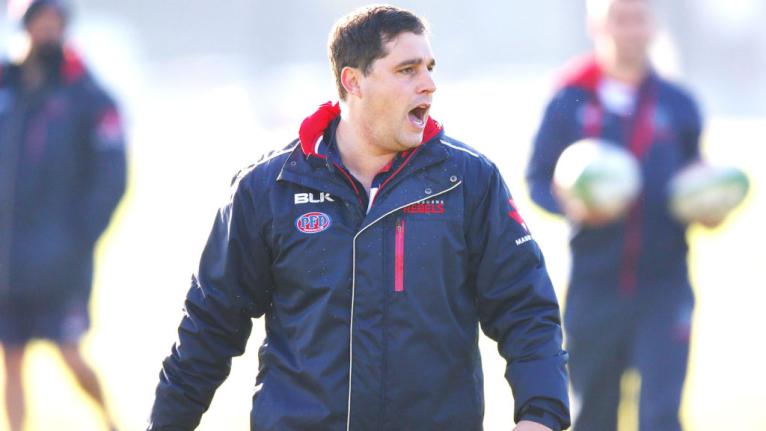
Succession planning extends beyond identifying the next generation of Springboks. Physiotherapists, doctors, conditioning specialists, team managers and coaches are being prepared for positions that might only become available several years from now.
Until recently, those working with South Africa’s various national teams operated largely in isolation from their counterparts. Wessels has brought people with similar jobs together, regardless of which team they serve. A solution to a problem encountered by the sevens coaches might now benefit the Junior Springboks or women’s side.
“We don’t necessarily want a revolution one day in the Springbok team,” Wessels says. “We simply want evolution.”
But where does South Africa find its coaches? Wessels’s own career provides some answers. His first assignment was coaching the under-nine Cs at Reddam House primary school in Cape Town, an experience more akin to babysitting than coaching rugby. There he encountered Les Kiss, the current Wallabies head coach, who was then working with the Springboks and ran sessions at the school as a favour to the headmaster.
Some of the best coaches in the country are actually coaching at school level. You really are coaching against really world-class coaches, many of whom have got senior franchise experience.
“I just remember thinking, geez, I’ve never seen someone talk about rugby like this,” Wessels recalls.
After spending time with Kiss in Australia, Wessels applied for a coaching position at Bishops, one of South Africa’s most prestigious rugby schools, but was rejected. He travelled two minutes down the road to Rondebosch Boys’ High, requesting an apprenticeship alongside former Springbok hooker Shaun Povey. Together they coached the under-16 As before graduating to the first XV.
A presentation to schoolmasters brought Wessels into contact with Erasmus, then in charge of the Stormers. Armed with his phone number, Wessels persistently badgered him until he was offered work with Western Province and subsequently the Stormers.
Wessels also coached at the University of Cape Town before joining Jake White’s Brumbies as a defensive consultant. In 2016, aged 33, he became the youngest head coach in Super Rugby history when appointed by the Western Force. He subsequently guided the Melbourne Rebels to their first finals appearance in Super Rugby AU in 2020 before returning to South Africa in 2022.
“Some of the best coaches in the country are actually coaching at [school] level,” Wessels says. “You really are coaching against really world-class coaches, many of whom have got senior franchise experience.”
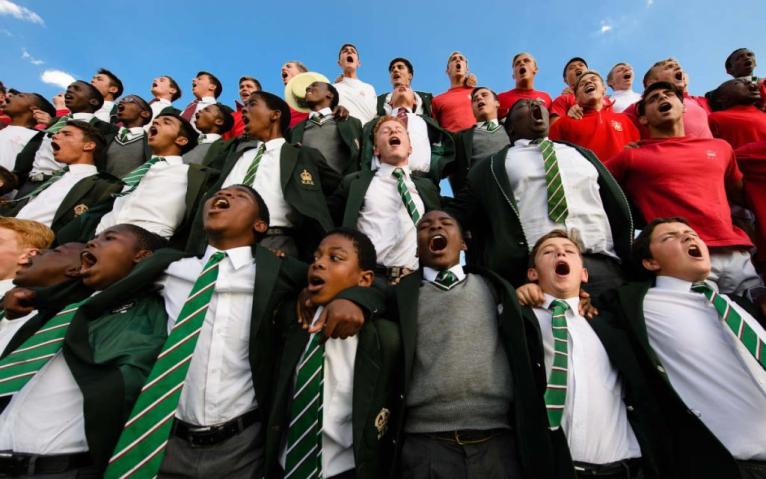
South Africa’s leading rugby schools, with their specialist coaches, sophisticated conditioning programmes and fiercely contested inter-school fixtures, are effectively a network of rugby academies funded by educational institutions.
SA Rugby is increasingly harnessing that expertise. In 2025, four school coaches, all qualified to World Rugby Level 3, were appointed to the national schools and under-18 structures under the mentorship of Junior Springboks head coach Kevin Foote.
At the time of our conversation, 17 schoolboy coaches were due to spend time with Foote’s staff. School coaches also accompany players to Elite Player Development camps, sharing feedback among colleagues back home.
South Africa’s greatest structural advantage, however, might exist on the next rung of the ladder.
Launched in 2008 and co-founded by former Springbok captain Francois Pienaar, the Varsity Cup initially comprised eight universities before the introduction of the second-tier Varsity Shield in 2011. National television coverage afforded student athletes unprecedented exposure while the tournament became a laboratory for experimental laws.
You can’t keep up the facade of being someone else or having somebody else’s personality under pressure.
Among its 61 Springbok graduates are Eben Etzebeth, Handré Pollard, Malcolm Marx, Ox Nche and Kurt-Lee Arendse. Less celebrated is its significance as a finishing school for coaches.
“The Varsity Cup put me on the radar as a coach,” Stormers head coach John Dobson told the competition’s website in 2021.
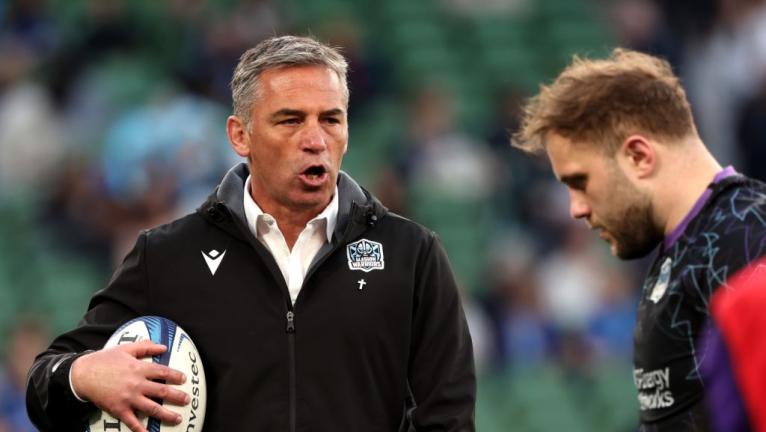
Franco Smith won the tournament with the University of the Free State in 2015 and was appointed Cheetahs head coach within a month. He subsequently coached Italy before guiding Glasgow Warriors to the 2024 United Rugby Championship title.
Together with community club competitions, the SA Cup and Currie Cup, the tournament allows coaches to hone their craft in progressively more demanding environments before taking charge of professional teams.
But the existence of a ladder does not guarantee that everyone is permitted to climb it.
Jonathan Mokuena, a former Springbok sevens captain who guided North-West University to their maiden Varsity Cup title in 2016, has questioned whether success at university level translates into professional opportunities.
“Your success should also be your selector, but sometimes, unfortunately, that doesn’t happen,” Mokuena told IOL in 2020, identifying provincial unions as particularly important gatekeepers.
In South Africa, the question of who gets those opportunities is inseparable from race.
In 2022, 101 candidates were nominated by provincial unions for SA Rugby’s bespoke Elite Coaching Programme aimed at developing black coaches. Of the 18 selected, only 11, including Mokuena, completed the intensive 18-month programme.
Alongside masterclasses delivered by Erasmus and Jacques Nienaber, participants studied leadership, diversity management, media relations and strategic planning.
“Although SARU can’t make promises, we will look at you first when there are opportunities,” Erasmus told the graduates in 2023.
If you have a group of coaches that think exactly the same, you never challenge your own game
SA Rugby formalised the programme in 2024 and hopes to give its graduates an accredited university qualification.
This month, 48 South African coaches and two Zimbabweans were invited to undertake World Rugby Level 3 courses, including former Springboks Jongi Nokwe and Keegan Daniel. This followed the country’s first standalone Level 3 course for women.
Wessels admits overseeing the women’s programme was initially something he thought he had to “begrudgingly do”. He now believes South Africa could win a women’s World Cup within the next two cycles if sufficient resources are committed. He estimates 75% of the support staff at the last women’s World Cup were female. Aspiring female coaches are gaining international experience with the national under-18, under-20 and A teams.
Not everything that makes a good coach can be measured by a qualification. As a younger coach Wessels would have someone film his sessions, scrutinising his body language, where he stood during drills and whether he was giving as much attention to some players as he was to others.
“The technical, tactical side is the easy part,” he says. “It’s the soft stuff that takes time.”
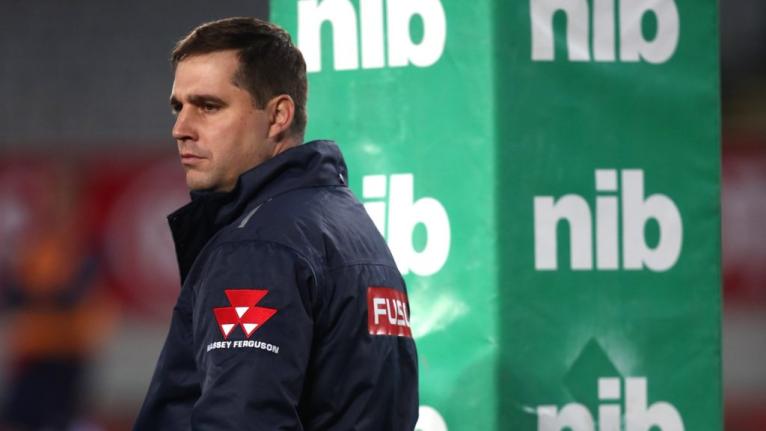
Wessels views coaching as an extension of teaching. How do you persuade a player to sacrifice something of themselves for the collective, particularly when their own ambitions are not being served? There is no easy answer to that in a classroom.
The danger of sustained Springbok success is that aspiring coaches might seek to reproduce Erasmus rather than develop their own philosophies.
“You can’t keep up the facade of being someone else or having somebody else’s personality under pressure,” Wessels says.
Nor does he want assistants who instinctively defer to their head coach. From his time in Australia, Wessels recalls a maxim favoured by Michael Cheika: “Disagree and commit.”
Coaches should vigorously contest ideas behind closed doors but present a united front to their players. Wessels has encountered coaches who, having lost an argument with colleagues, seek validation among disaffected players. Under pressure, those competing factions can splinter a team.
It is also why Wessels welcomes the presence of foreign voices in South African rugby. New Zealander Tony Brown and Irishman Felix Jones have brought fresh perspectives to the Springboks, while South Africans such as Smith, Nienaber and Johann van Graan are broadening their own horizons overseas.
What might ordinarily be regarded as a brain drain to wealthier northern hemisphere clubs could ultimately benefit South African rugby. Those coaches might one day return home with ideas they would never have encountered had they stayed.
“If you have a group of coaches that think exactly the same, you never challenge your own game,” he says.
Ask Wessels what success in his current role would look like and he makes no mention of how many coaching certificates SA Rugby might distribute. He wants to see the people currently working with South Africa’s junior and other national teams helping the senior Springboks win.
Perhaps the ideal candidate to eventually succeed Erasmus is not the person who most closely resembles him, but someone sufficiently equipped, educated and emboldened to challenge his ideas.
The greatest testament to Erasmus’s genius might ultimately be a Springbok team that continues to win without him.
NEW IN THE APP: Official World Rugby Rankings hub! Compare team rankings side-by-side, with data going back 20 years.
Download the RugbyPass app on the App Store (iOS) and Google Play (Android) now!


Y’er boy will certainly be responsible for whining in the future
That much is certain