
There is a box somewhere in Jack Hanratty’s garage containing an Olympic Games opening ceremony jacket, a signed rugby jersey, a medal-winning mascot and a collection of souvenirs that he once considered leaving behind.
HSBC SVNS returns to Cape Town this December!
Don't miss your chance to see the world’s best rugby teams take centre stage 5-6 December in Cape Town.
He had just been appointed head coach of the United States women’s rugby team and was preparing to move on from Canada, where he had spent a dozen years building a career that culminated in an extraordinary silver medal at the Paris Olympics.
As he packed, he looked at the accumulated Olympic memorabilia and wondered whether he really needed to bring it all with him.
He was about to start again, after all. A different country, a different team, a different challenge.
A colleague looked at him. “Yeah, you do,” she said.
Perhaps she understood something that he had not quite grasped himself. One day, his children might be rummaging through those boxes, asking about the strange-looking jacket or the teddy bear with a silver stitch running through it. And he would be able to tell them that their father had once coached an Olympic medal-winning team.
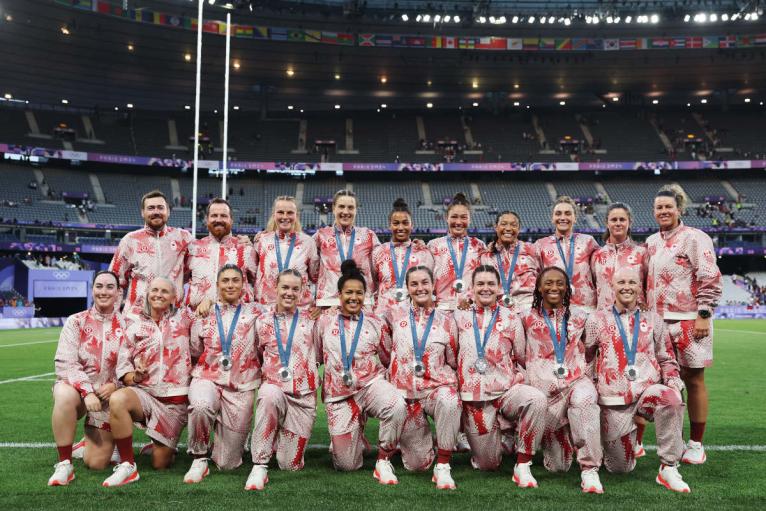
For now, though, Hanratty is 37, an Irishman living in San Diego, and his attention is elsewhere. He has another national team to build, another sporting culture to understand and another enormous opportunity to make something of.
The United States will host the Women’s Rugby World Cup in seven years. Hanratty has a target that is ambitious enough to sound improbable, but he sees no reason to be apologetic about it.
“I want to get to a World Cup semi-final,” he says. “Why not?”
It is a question that runs through much of his coaching philosophy. Why not pick an 18-year-old centre to play out-half in her first international? Why not convert a former hammer thrower from a winger to a loosehead prop? Why not build a development programme around the particular circumstances of American rugby rather than importing somebody else’s blueprint?
And why not believe that a country with such an extraordinary pool of athletic talent can become one of the leading forces in the women’s game?
My mindset is: how can we come up with a USA Rugby solution for American problems?
Hanratty is not interested in pretending that the United States is Ireland, England or New Zealand. In fact, he believes that is precisely where some of the game’s visiting coaches go wrong.
“The biggest challenge in the United States is not the opportunities to play, but the opportunities to compete,” he explains.
The country has players spread across an enormous geographical landscape, with some excellent university programmes, a developing semi-professional league and a growing appetite for the game. What it does not have is the same concentration of competitive rugby that exists in established nations.
Getting the best players regularly playing against each other is difficult. Building a coherent pathway is another challenge.
But Hanratty’s response is not to complain about the shortcomings. “My mindset is: how can we come up with a USA Rugby solution for American problems?”
It is an approach informed by experience, much of it acquired far from home.
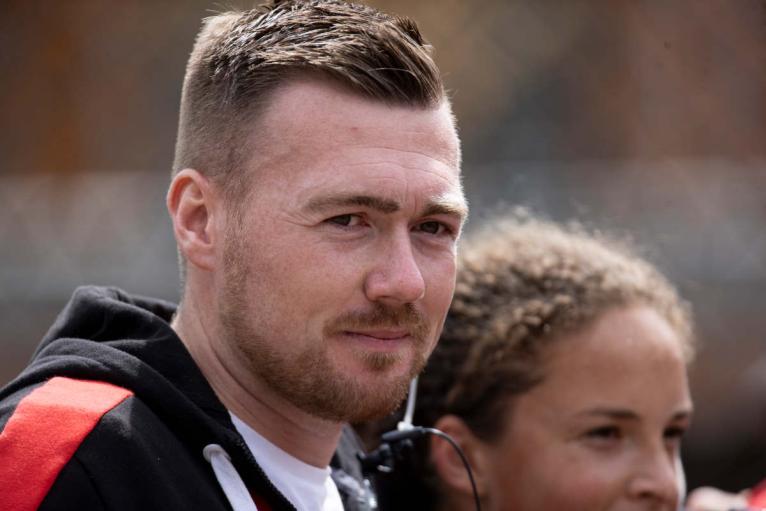
Hanratty’s relationship with rugby began in Skerries, north county Dublin, where he was never going to be mistaken for an exceptional player. What he found instead was a community that kept drawing him back.
He began coaching at 15. By 18, he was team manager of the club’s first XV, recording matches and doing the less celebrated jobs that keep a club functioning.
He remembers washing jerseys and doing whatever needed doing. He also remembers the value of those experiences.
Somebody suggested to him recently that his greatest professional strength was not necessarily his attention to detail, but the fact that he had done practically every job in rugby. It is a distinction he understands.
I was so conscious of my age that you’re almost scared to say anything wrong or to not know anything. But in the end, it probably made me learn a lot quicker.”
“You’re interested in the media part, or the community engagement day, or whatever it is,” he says. “If you come straight from being a professional player into coaching, you probably don’t think about those little nuances. I’ve had every job.”
That awareness has followed him into international rugby. When his staff travel, he makes a point of recognising the work of everyone involved. On a recent trip to Ireland, his touring party numbered 51, 35 players and a staff of 16.
For Hanratty, match day is not the only one worth celebrating. The people organising the travel, looking after the players and making the operation function deserve their moment too.
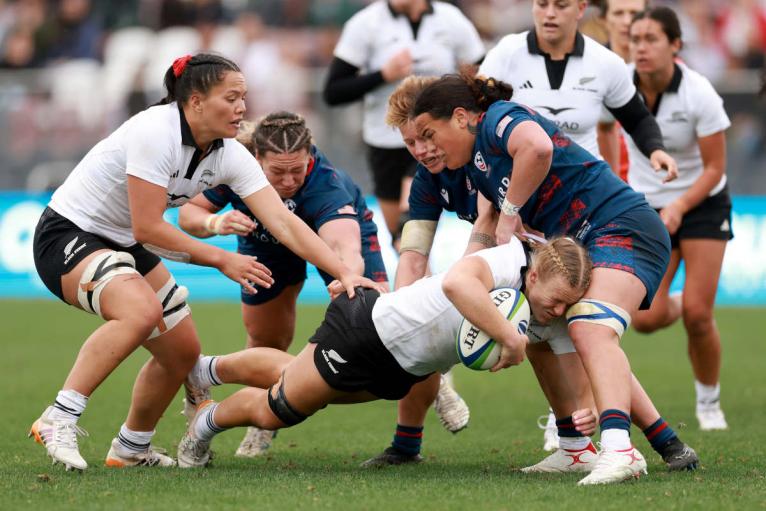
It is a perspective he acquired early, although his first major professional opportunity arrived almost before he was ready for it.
At 18, he interviewed for the inaugural rugby course at what was then Carlow IT. He believed he had performed well, having already immersed himself in coaching and video analysis, but was rejected.
He was furious. He had convinced himself that his extra-curricular involvement would get him over the line.
Instead, he contacted David Ross at Leinster Rugby and asked for feedback. Ross told him to ring back in a week.
When he did, the conversation took an unexpected turn. Ross said he had actually been impressed and asked whether Hanratty would interview for a development officer position. He got the job.
It was an extraordinary opportunity for somebody so young, although he admits that the first couple of years were intimidating.
“I was so conscious of my age that you’re almost scared to say anything wrong or to not know anything,” he says. “But in the end, it probably made me learn a lot quicker.”
Every New Zealander that came over to Ireland in the ‘90s, we copy-pasted and loved everything they did. We can’t do that in Canada or the US because I think we devalue the reality of rugby in this region and in these countries.
At 23, he asked Leinster for a sabbatical and went to Halifax, Canada, having been introduced to an opportunity through the province.
He arrived with his boots in a plastic bag and discovered that the coaching education he had received in Leinster could not simply be transplanted into another environment.
The players were different. The structures were different. The game existed in a different sporting landscape. He made mistakes and had to rethink plenty of things.
“Every New Zealander that came over to Ireland in the ‘90s, we copy-pasted and loved everything they did,” he says. “We can’t do that in Canada or the US because I think we devalue the reality of rugby in this region and in these countries.
“It’s very easy to criticise the coaching or the club structure. But it’s not the same game.
“As soon as I focused my coaching on the North American athlete and North American rugby player, I became a much better coach.”
That understanding would eventually take him to the Olympic Games, where Canada arrived in Paris ranked 10th and left with silver medals.
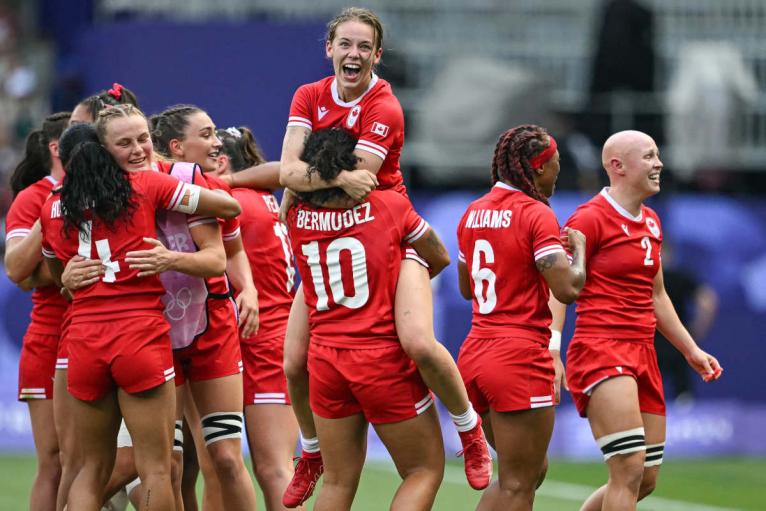
(Photo Carl De Souza/AFP via Getty Images)
The journey was not a straightforward one. Hanratty inherited a fractured environment, accepted a considerable gamble and worked with people he considered smarter than himself to put it back together.
He is refreshingly candid about the circumstances of his appointment.
“I was very available and, I’ll be honest, I was very affordable,” he says.
Some people, he suspects, wondered whether he was ready for the job. He responded by working relentlessly and trying to create an environment in which the players could thrive.
I don’t think you grow up in Ireland saying, ‘I’m going to be head coach of an Olympic team.’ That wasn’t even a thing.
The results were remarkable. Canada beat Fiji, France and Australia on their way to the Olympic final, producing one of the tournament’s great stories.
He remembers returning to Skerries with an Olympic medal, bringing the Canadian squad to the club and seeing his family and community experience something that had once seemed entirely outside the boundaries of his world.
That, he says, was closer to the dream than anything he could have imagined as a teenager.
“I don’t think you grow up in Ireland saying, ‘I’m going to be head coach of an Olympic team.’ That wasn’t even a thing.”
There was another adjustment after Paris. Hanratty had announced that he would leave Canada following the Olympics, even though the team was performing well and the players had another four years together.
His brother asked him a question that stopped him in his tracks. Did he really have another four years in him?
He took a university coaching job, which gave him the opportunity to concentrate on his craft without the same public scrutiny. He enjoyed the work, but watching the Women’s Rugby World Cup convinced him that the sport had reached another stage.
The conversation had changed. It was no longer simply about celebrating the existence of major women’s rugby events. It was about demanding that teams win them. He wanted back in.
The American opportunity has allowed him to return with a different perspective, and perhaps a greater understanding of his own strengths.
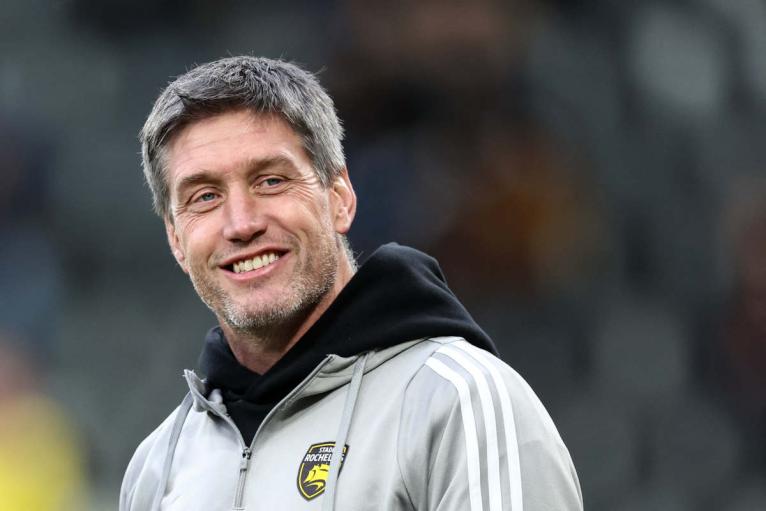
“I found the Canadian job incredibly pressurised. Like you’re just so invested in it and there were times when you just don’t feel good enough, and this new freedom that I have with this job is—it’s not because I’m sitting around overconfident about winning the Olympic medal, it is more because (the medal) allows me to kind of be myself because being myself rather than pretending to be Joe Schmidt or Ronan O’Gara or Andy Farrell has done me okay. The medal validated that for me and allowed me to be a bit more comfortable in my own skin.”
For a long time, he searched for somebody who looked and sounded like him, somebody whose career might provide a template. A mentor eventually offered him a different way of thinking. ‘Will you stop looking for the first you? Why don’t you just be the first you?’
He is an outgoing character, somebody who grew up playing rugby and doing drama, with a theatrical father. For years, he was embarrassed by that side of himself. He was also heavily dyslexic, something he had struggled to embrace.
Now he regards both as part of what makes him effective. “It – the theatre, the dyslexia – is part of my brand. Until a couple of years ago I was so uncomfortable about it.”
That has changed. Now he believes his dyslexia helps him see patterns and solve problems in a more holistic way. He is comfortable under pressure and enjoys the storytelling, imagery and identity that can help shape a sporting environment.
For a long time, he searched for somebody who looked and sounded like him, somebody whose career might provide a template. A mentor eventually offered him a different way of thinking. ‘Will you stop looking for the first you? Why don’t you just be the first you?’
It is advice he has taken seriously.
He has sought out people such as Ronan O’Gara, Joe Schmidt and Lynne Cantwell, and has been struck by their generosity with their time.
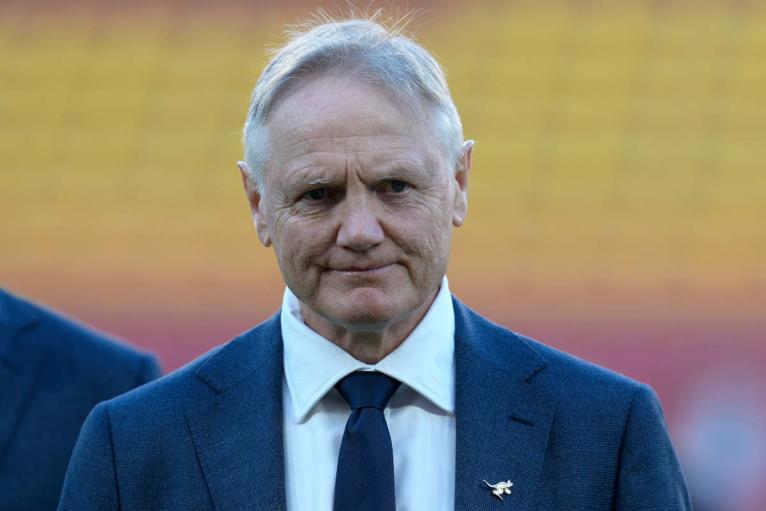
O’Gara spent an hour talking to him during Covid, when Hanratty was coaching Canada’s Under-20 women. What impressed him was not simply the willingness to help a younger coach, but the genuine curiosity.
“He was so inquisitive,” Hanratty says. “He wanted to learn about what my realities were. I thought that was incredible.”
Schmidt has also left a lasting impression. After Hanratty returned from his first three-month spell in Canada, the former Ireland coach asked him two questions: what had he learned, and what had he left behind?
More recently, over coffee, Schmidt offered another piece of advice: “Don’t be nervous about jumping off a cliff for the next challenge.”
It is a sentiment that fits a career built on taking chances, although Hanratty is no longer convinced that the next challenge has to be about climbing another rung on the coaching ladder. The Olympic medal also helped him become more comfortable with his own identity.
“I don’t think I’m the world’s best coach,” he says. “I think I have X-factors in my personality that make me good at what I do.”
The challenge is identifying athletes who might never have considered rugby, rather than limiting recruitment to those already established in the sport.
That confidence is now being channelled into the United States, where he believes the potential is considerable. Ten games into his reign, he has chalked up victories over South Africa, Italy, Wales, Ireland and Australia. A winning streak of five was their best run of success in 20 years.
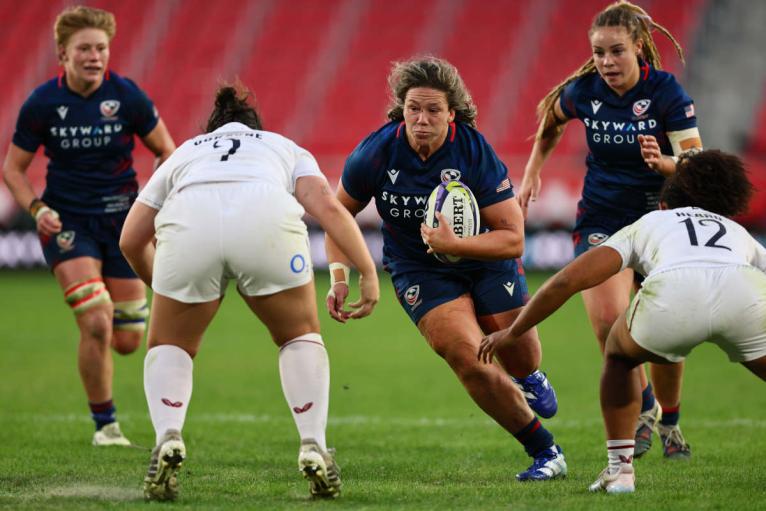
The athleticism of American women is a major part of his belief that he can reach a World Cup semi-final. The challenge is identifying athletes who might never have considered rugby, rather than limiting recruitment to those already established in the sport.
In Ireland, England and New Zealand, many of the country’s best athletes are already playing rugby. In the United States, some of the best might not encounter the game until they are 18, 24 or even later.
Hanratty’s example is Lauryn Carlton, a former high-level varsity hammer thrower who has only been playing rugby for five years. At 27, she has already made an impression as a loosehead prop, having previously played on the wing.
She made her front-row debut against Italy, scoring a try and delivering some of the team’s most impressive defensive work. The following week, she found out what it meant to scrum against England.
There are no shortcuts, but Hanratty believes the investment is worthwhile. “You have to be willing to invest in the athletes.”
He has applied the same willingness to experiment to Bella Vogel, an 18-year-old who had barely played a single game at out-half when he selected her at 10 for her first USA international.
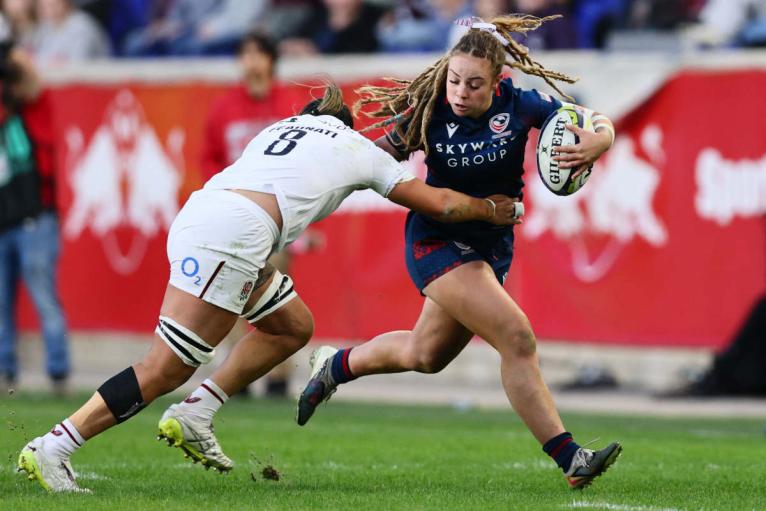
She could kick off both feet. That mattered to Hanratty because the United States had been the worst kicking team at the previous World Cup.
Rather than simply choosing an older, more experienced player, he backed the youngster and built a programme around her development. She subsequently played for the senior team, USA A and their Under-20s, accumulating 15 games in a year, becoming the first American player nominated for World Rugby’s Breakthrough Player of the Year award.
It is an example of the kind of thinking Hanratty wants to encourage although he is realistic about the distance the US Eagles still have to travel. They have moved from 10th to sixth in the world rankings, which he considers the upper end of their current standing rather than a reflection of their ultimate potential.
There is also a practical reason for optimism. Hanratty has been working to place American players in professional rugby in England and France. He expects 30 to be playing in the top two leagues across those countries, a significant development for a programme trying to close the gap on the established nations.
Hanratty is conscious that coaching can become an all-consuming business. He found the pressure of his Canadian job difficult at certain stages and has learned to take a little more perspective since he crossed the border.
His own working week offers an indication of the scale of the operation. After a seven-week international tour, which included five Tests, he spent five days driving between seven universities, meeting coaches and players at Princeton, West Point, Sacred Heart, AIC, Brown, Harvard and Dartmouth.
He returned to San Diego, reviewed the tour, watched sevens sessions, met players and worked on getting American internationals into professional contracts.
Two signings were secured that week, with more announcements to follow. There is no shortage of work. There is also no shortage of ambition.
Yet for all the international rugby, the Olympic medals and the prospect of a home World Cup, Hanratty is conscious that coaching can become an all-consuming business.
He found the pressure of his Canadian job difficult at certain stages and has learned to take a little more perspective since he crossed the border.
A friend once invited him to coach an Under-18 Canadian girls’ team on a tour to Ireland. Hanratty agreed, partly because it offered a free trip home.
During a warm-up, somebody approached him and remarked that the last warm-up he had conducted was for an Olympic final. The implication was that he had fallen a long way. Hanratty saw it differently.
“I’ve coached multiple teams since the Olympics. Every single person does the exact same job. It does not matter. When I sit there coaching with the Under-8s coach of the San Diego soccer team, you’re talking about exactly the same stuff. It’s relationships, it’s warm-ups, it’s substitutions.
“The buzz and the nerves for me at the Olympic final were exactly the same as when I was coaching Nova Scotia against Balbriggan.”
It is a perspective that might seem surprising from somebody who has reached the summit of Olympic rugby, but it is consistent with the teenager who started out washing jerseys in Skerries.
He still believes that the fundamentals of coaching are the same, regardless of the size of the stadium or the importance of the occasion. The responsibility to the players remains. So does the vulnerability that comes with caring so much about the outcome.
He still wants to improve, still wants to find the next solution and still wants to see how far he can take a group of players. But he has stopped looking for somebody else’s version of success.
He has a little ritual for the difficult days. During his time in sevens, when Canada and Brazil were struggling, he and the Brazilian coach made a pact to meet for a beer on the Sunday.
The idea was simple. Whatever happened during the week, there would still be a Sunday. Life would continue.
Hanratty also reminds himself that the bins will not take themselves out, whether his team wins or loses. He laughs when he says it, but there is something important underneath.
He is still addicted to coaching. He still wants to improve, still wants to find the next solution and still wants to see how far he can take a group of players. But he has stopped looking for somebody else’s version of success.
And perhaps that is why the colleague who told him to keep the Olympic boxes was right.
There is no need to throw away the past when you are busy building the future. One day, somebody will want to hear the story.

The HSBC SVNS series heads to Dubai on 28-29 November! Get your tickets now


Comments
Join free and tell us what you really think!
Sign up for free