
Steve Redgrave and Matthew Pinsent, Mike Tyson and Cus D’Amato, Morecambe and Wise. Sometimes, the best things come in pairs, and it is impossible to think of one without the other entering the mind. Whether it was coach and trainer, wise-cracker and straight man or simply the complementary coupling between two elite oarsmen, the special kind of synergy which existed in all those partnerships would have been absent without either one of the pair.
Watch Nations Championship - Round 4 LIVE
Hemispheres collide in the new Nations Championship. Stream live, replays and highlights free on RugbyPass TV.
Rays of sunshine in English rugby have broken through the cloud cover all too rarely in recent times, with the national side only winning three out of eight games in 2026 after a traumatic Six Nations, and Prem clubs emerging from the first round of the Investec Champions Cup with a solitary win in six attempts, courtesy of champion side Northampton.
The secret sauce in English rugby has been in short supply, but after the announcement of Steve Borthwick’s 36-man training squad ahead of the Nations Championship, there is at least a glimmer of a chance to sprinkle some autumnal magic dust with the conjunction of ex-Saints full-back George Furbank and Marcus Smith at Harlequins in West London.
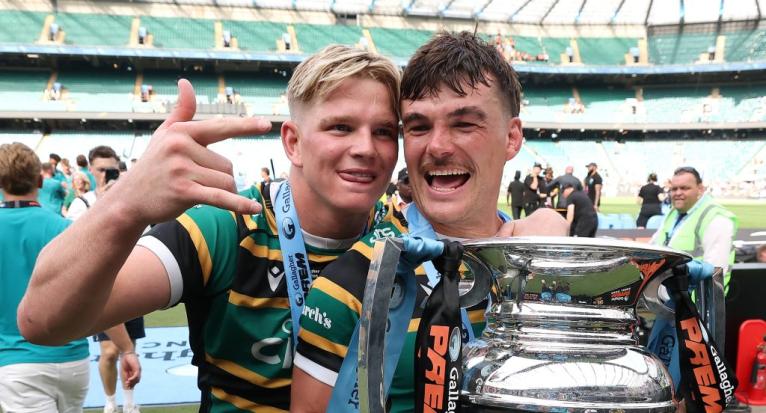
It will be an uphill battle to make that new pairing matter. For most of the last 12 months, Borthwick has struggled to gel his historical preference for a strong set-piece and kicking game with the explosion of try-scoring attack in the league on which his selections must be based.
Only a few weeks ago, the England supremo pushed for an overhaul of refereeing interpretations in the Prem at a meeting with the league’s directors of rugby; specifically for increased policing of the brake-foot law at scrum, and incentives for more competition at the breakdown. Borthwick would prefer the league to move towards the game model he favours, rather than adopting the attacking methodology which has made clubs such as Northampton so successful. If the Mahomet will not go to the mountain, then the mountain must come to Mahomet, apparently.
The Six Nations was a mélange of confused messages for supporters of the Red Rose. England averaged 40 kicks per game against Wales and Italy, but they ran versus Ireland and France, with the two matches averaging a massive 18 kicks per game fewer. Instead of George Ford starting at number 10 in the two kick-fests and Saints man Fin Smith running the show with ball in hand, Smith started in the kick-based duel in Rome in the fourth round and Ford was picked to run the ball against Ireland in the third. Evident continuity of thinking there was not.
Although it will undoubtedly change with additions for the second instalment of the Nations Championship – Charlie Atkinson of Gloucester, for example, has been called in after an injury to Fin Smith – Borthwick’s initial group also shows a clear regional bias, with the four West Country clubs – Bath, Exeter, Bristol and Gloucester – only providing eight players, despite finishing second, third, sixth and eighth respectively in the 2025-26 Prem table. The two London clubs, Harlequins and Saracens, supply nine between them, while the seventh-placed club last season, Sale Sharks add another six. The two Midlands powerhouses, Leicester and Northampton, provide the rump of the squad with 13 players.
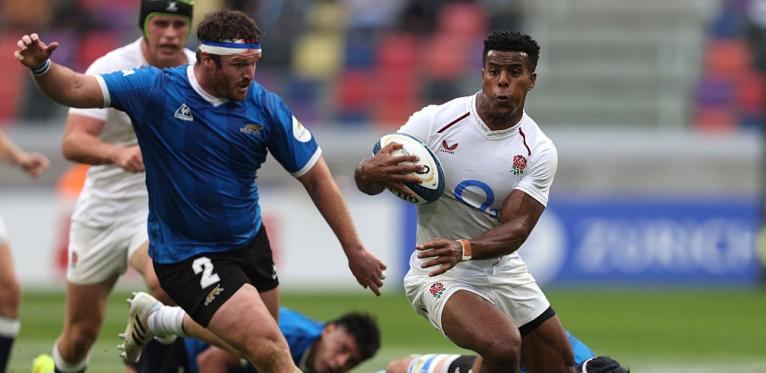
The return from injury of Seb Atkinson, Immanuel Feyi-Waboso, Benhard Janse van Rensburg and Guy Pepper will help even up the balance, but the absence of George Kloska, Beno Obano, Ted Hill and Billy Sela up front, and Ben Spencer and Ollie Lawrence behind is still noteworthy.
There will probably be a straightforward correlation between the number of backs picked from the Northampton Saints in Borthwick’s 23-man matchday squad for the opener against Australia on 8th November and the style of play he will be looking to embrace for the final stages of the tournament.
If the names of Alex Mitchell, Archie McParland, Fin Smith, Fraser Dingwall, Tommy Freeman and Furbank [late of Franklins Gardens] all appear on the team sheet, then Borthwick will have come down firmly on the side of Prem-style, all-out attack; if only Freeman, Mitchell and Fin Smith make the cut, look out – he will be reverting to the kick-heavy style of November one year distant.
One of the keys to unlocking the mystery will be at full-back. If Freddie Steward starts, then set-piece and the kicking game will have won the day; if Furbank runs on to the field at the start of proceedings, it automatically brings either of the Smiths, Fin or Marcus, closer to selection in the 10 jersey. Furbank is one of those rare gems who makes everyone around him look better; most especially, the outside-halves with whom he combines so seamlessly on attack. His talent as an extra first receiver and his work off the ball are the essential glue in multi-phase continuity.
It seeps out in the way Furbank talks about the playmakers he supports so well. Of his new partner at the Stoop, mercurial Marcus Smith, he observed: “He’s a one-of-a-kind player.
“I think people take him for granted sometimes in terms of the player he can be. The things he can do on a rugby pitch – I don’t think many others many others can do.
“He’s obviously a massive threat with ball in hand and has a great passing game as well, so it’s just about trying to understand what he’s going to do in certain moments then making my move off that.”
The first opportunity the pair had to play together arrived against Sale Sharks in round three of the Prem, and the synergy between them in attack was immediately on show.
https://t.co/ae0SOuFX2r
— William Bishop (@RPvids1994) October 26, 2026
https://t.co/I03g62fkht
— William Bishop (@RPvids1994) October 26, 2026
It is not just the accuracy of the handling skills, it is the work off the ball to get into position to use them when they really matter. In the first clip, Furbank is the first cleanout out on the wide left of the field, but within three more phases he is delivering the money pass for a score out on the right.
Likewise in the second sequence, he is involved twice in two plays to create a try for Smith, first throwing an inch-perfect long pass off his left hand, then appearing at first receiver to create a scoring chance for the little Quins magician.
The pair have started together in only two of Marcus Smith’s 33 appearances in the England 10 jersey, so the combination at international level can be marked ‘untried’. Smith has arguably lacked the right support in that position, most notably when Owen Farrell was shoehorned into the 12 role alongside him early in his international career. The dominant personality of Farrell tended to overwhelm the youngster and influence the play unduly, even though he was not the official pivot in the team. It never really looked like working.
With Furbank back in harness at the Stoop, Smith has the right sort of character alongside him: willing to fill in the playmaking DNA, while never demanding to be the main man in the limelight. The partnership had proved its worth within three minutes of the opening whistle in the local derby versus Saracens last weekend.
https://t.co/FJXp7HOaDS
— William Bishop (@RPvids1994) October 26, 2026
Smith and Furbank start on the open side of the play, then work their way back to the near side to provide the essential linkage on a score from lineout, with Furbank supplying the killing offload for another try by the resident Stoop wizard.
As Quins head coach Jason Gilmore commented after the game: “Danny Care is the quintessential Harlequin but I think Marcus is number two because of the work that he puts in and the care that he’s got for the club.
“He’s only 27 years old and has played 200 games for us. We’re so lucky to have him and we’re so proud of him.
“Everyone knows Harlequins – when we’re at our best, we can play a really free-flowing style of rugby. If Marcus isn’t going to die on plays, then we’re in the contest.”
But even when Smith takes centre stage, he needs a floor manager looking after all the details in the background, changing the scenery and flipping the light switches and oiling the wheels of the performance – and that is the role Furbank can play to perfection.
The duo combined on two successive plays later in the first half to effectively put the game beyond the reach of the North Londoners.
https://t.co/ywvUXkBwu6
— William Bishop (@RPvids1994) October 26, 2026
https://t.co/uw5cQAf2bP
— William Bishop (@RPvids1994) October 26, 2026
The first sequence is asterisked by a short drop in alignment by the two lines of Harlequins’ attack, which allows the firm of Smith and Furbank to create space down the right. The first man up on the next wave of attack? That’s right, it’s Furbank, carrying into the teeth of the Sarries inside defence with all the enthusiasm of a much bigger forward. From the ensuing lineout drive, the twin playmakers are working back to their left, to create a try for England squaddie Cadan Murley on the opposite side of the field.
England selection and tactics are still in a state of flux as the second chapter of the Nations Championship approaches. In order to succeed in his aim to qualify for the first-place final between north and south played out on 29 November, Borthwick will have to find some well-grooved combinations which can do the business.
That may mean going all-Northampton in the backs – or as close to it as possible – but with Fin Smith in a race against time to face the Wallabies, the newly-minted playmaking partnership at the Stoop could yet upset the apple cart. England has yet to see the best of Marcus Smith, the 18-year-old prodigy Eddie Jones first brought into a training camp while he was completing his A-levels at Brighton College, and Furbank could just be the man to realise the dream.

NEW IN THE APP: Official World Rugby Rankings hub! Compare team rankings side-by-side, with data going back 20 years.
Download the RugbyPass app on the App Store (iOS) and Google Play (Android) now!


Great article NB - I think the one thing you immediately notice in these clips is the width of the Quins attack. With Furbank coming into the line and distributing, it allows them to hold the full width of the pitch, which stretches the defence wider and creates more space for the rest of the backline to attack.
ENG have been narrower in attack over the last year and I think that’s knowing Steward would come through the middle, or due to the kicks we were chasing.
I think the big blunder of last season was changing the style of the attack but selection not moving with tactics. As you correctly point out, we asked Randall and F Smith to kick and then asked Spencer & Ford to run and were then surprised it was all sub-optimal.
We are either in, or out and we can no longer be half pregnant - the game plan clarity needs to be consistent with selection. If Steve is kicking, then go with JvP, Ford & Steward and give it your all. If we plan to run with the ball, then Mitchell, McPartland, Smith, Dingwall, Freeman & Furbank is the way forward.
I also hope we stop this Marcus Smith at 15 lunacy - he’s a great 10 playing in the right system but trying to shoehorn him in the team at 15 has been consistently poor. If we think Furbank is fragile, pick Hendy to cover - these are the areas where we seem to flip flop and that’s down to poor selection process from Steve.
Let's see what happens this Autumn but I am yet to be convinced we are that committed.
Completely agree with you on Smith and Furbank as a partnership but think you are being a little unfair to Borthwick. It’s clear that the Prem is delivering free flowing attacking rugby when conditions permit and the skill levels on display are wonderful. However if Borthwick is asking for a change in refereeing at the breakdown or the scrum it is surely because he’s seeking consistency with the international game where aggression at the breakdown and in the scrum is rewarded? Without that consistency Prem players will find adaptation to the international stage much harder
You typically see the Investec allowing more of as contest at the breakdown, more bodies coming over the top of the ruck and more bodies being committed to the breakdown, so it’s a messier breakdown area with more secondary contest for the ball. That usually takes a round or two for teams to get used to it and it’s less of an issue by the 2nd round of the Investec block.
ENG were good at the breakdown 12 months ago and lost part of that last season, so I am not sure that’s a PREM issue per se, more a reflection of the age profile in SB’s back row playing Pollock & Pepper over the breakdown specialists of T Curry & Underhill, who were always stronger in those areas.