
It’s close to 8pm on a cold and wet Tuesday evening and I’m sitting inside the Saracens players’ dressing room. To my left, along a sprawling dining table, is the club’s new chief executive, Ed Coetzee. Opposite me, George Martin makes light work of the bread basket. Two places to my right, Owen Farrell engages in private banter with fellow Northerner and Prem’s Rugby’s record try-scorer, Chris Ashton.
In front of us we each have eight empty wine glasses, thin-stemmed and reflecting the bright lights of the TNT cameras that circle around us. At the head of the long table, littered with journalists, board members and players, stands Brendan Venter, holding court in a tightly fitted white T-shirt, waving his arms about as he draws links between two of his favourite passions.
“Wine is very much like rugby,” Venter says. “You never get to beat wine. You can never fully understand wine.”
Tonight, Saracens’ head of culture and technical director will try to impart his knowledge as best he can. Across an evening that includes a pretty decent rib-eye steak and a sweet lemon dessert, he encourages us to sample eight hand-picked wines in a blind tasting, then to share our thoughts.
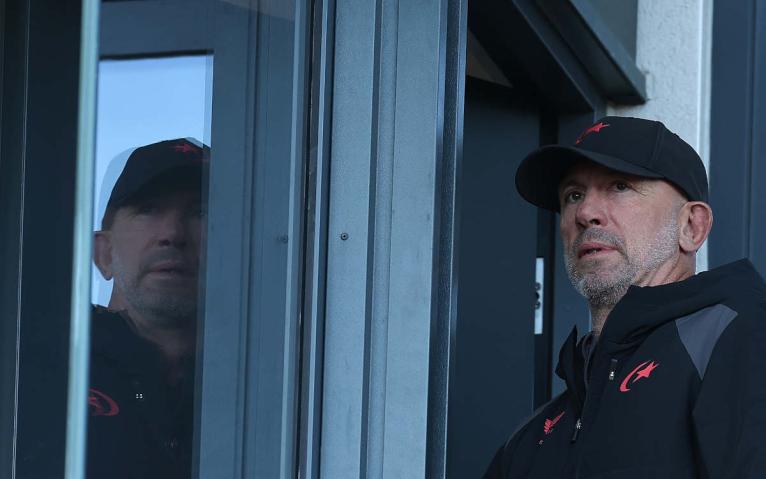
As press events go, this is not the norm. It is also an odd setting for a man whose relationship with journalists has often been lukewarm. Venter has made clear that he dislikes routine media duties. So why is he holding court in a dressing room full of reporters?
To understand the peculiar nature of the evening, it helps to rewind to December 2010. Saracens had just lost 25-23 to Leinster in the Heineken Cup, with Venter criticising referee Christophe Berdos and receiving a £25,000 fine. A week later, Saracens lost 24-21 at home to Racing Métro 92. The defeat, sealed by a late try from Fijian wing Sireli Bobo, was their third in a row in the competition.
Asked by Sky’s Martin Gillingham whether Bobo’s try had turned on “a bit of genius”, Venter responded with a string of deadpan repetitions: “Bit of genius, bit of magic, Sireli Bobo, very interesting, very good ja. Three cheers for Sireli Bobo.” He agreed that Saracens had been happy with everything, conceded that they had not won, then said they would have to “think very deeply” about how to improve.
Prem Rugby fined Saracens over missed media appearances. Venter criticised the league’s approach as “autocratic”
A contemporary account reported that the interview had apparently been inspired by the satirical mockumentary Mike Bassett: England Manager. Gillingham later told The Times: “Had he been intelligently difficult then he could have made me look very silly – rather than just himself!”
Sixteen years later, the circumstances have changed, but the friction has not. Venter returned to Saracens this season, initially appointed director of rugby after Mark McCall stepped down. Amid a dispute over his media obligations, the club’s description of his role shifted. “Wine consultant” briefly became part of the story; Saracens later clarified that his official title was head of culture and technical director.
Prem Rugby fined Saracens over missed media appearances. Venter criticised the league’s approach as “autocratic”, arguing that head coach Joe Shaw was the more useful person to speak for the team.
At the dinner, Venter described the post-match media circuit as one of the things he has learned to avoid. He calls such experiences “joy stealers”; the things he enjoys are “joy givers”. “I do so few shit things in my life. I don’t do them,” he said.
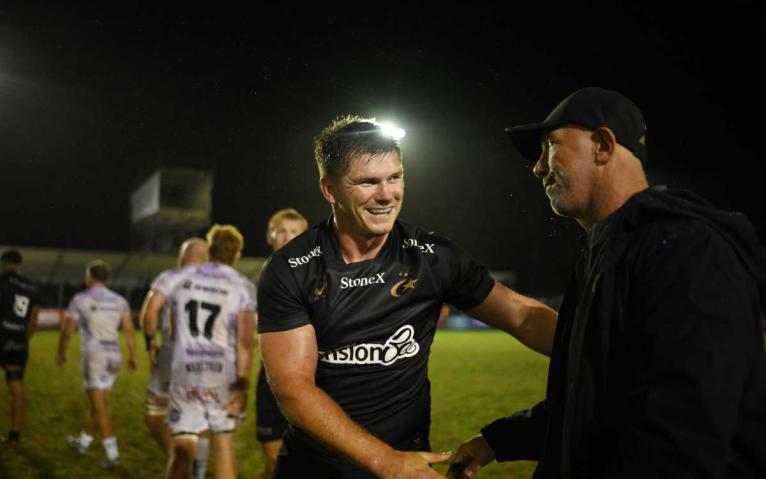
He said he had once become angry with journalists, but realised that the enmity was affecting him and chose to step away. He compared the irritation to a taxi driver cutting him off on the morning school run in his native South Africa. It could be frustrating, perhaps, but not worth swearing at drivers who themselves were in a rush. He also acknowledged that reporters have their own job to do: “It’s your job to be inquisitive and enquiring and find stories.”
The candour sat oddly beside the formal argument. Venter was relaxed and great company, answering questions at length and in detail. That does not mean he accepts every media obligation. But it complicates the idea that he simply rejects the press. He understands its function, though he objects to the form, the frequency, or the feeling of being compelled. He told me he knows his weaknesses and tries to remove himself from situations where he might “explode”. It was less a defence of his preferred silence than an explanation of how he manages himself.
Rugby competes for attention. Venter is one of the figures capable of making the game interesting beyond the score.
There is a practical counterargument. Elite sport’s broadcast agreements come with media obligations. Access is part of the commercial arrangement between clubs, leagues and broadcasters. In On the Record & On the Ball, Tim Percival, the England men’s team communications lead, describes how “media engagement is mandated through participation agreements”, tying access to the broadcast contracts that fund the game. That is the social contract behind the post-match interview where the sport receives exposure and commercial value, while supporters get access to the people who shape it.
There is also a case for coaches to do more than simply comply. Recalling his time with the Brumbies, Eddie Jones tells Percival that “part of the head coach’s job … is to sell the sport”. For rugby, which competes for attention, that matters. Venter is one of the figures capable of making the game interesting beyond the score.
But access is not valuable simply because it is compulsory. A rushed interview that produces nothing is different from a post-match conversation that helps supporters understand a decision or performance. The challenge is to make the exchange worthwhile without allowing clubs or coaches to decide which questions are acceptable.
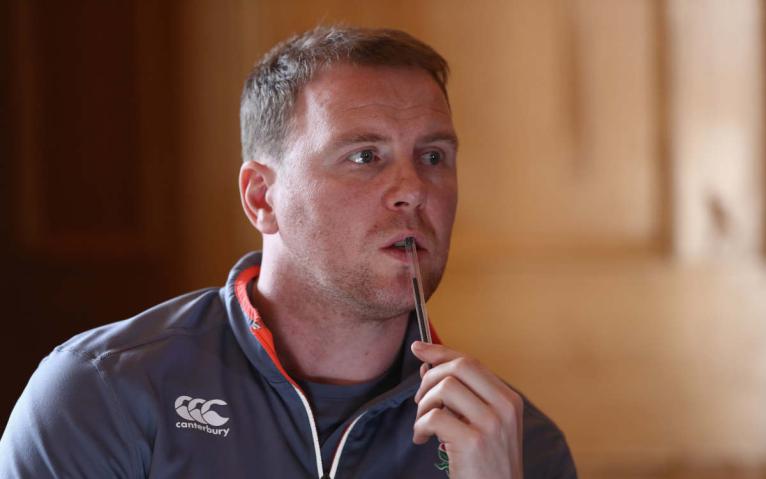
The dinner could be read as a reset. Percival’s book argues for the value of relationships between coaches and journalists, including the possibility of a “circuit breaker” meeting when those relationships have become strained. But a convivial evening cannot replace the less choreographed encounters that journalism depends on. Eight wines and a good steak allow a different conversation from the one after a defeat, when a coach may be asked about selection, tactics or a decision that went wrong. Both settings can be revealing, even if neither guarantees the other.
The club’s own relationship with the press came into view on the same day. Saracens published a message from the board defending Coetzee against a Times report describing the club as gripped by an “identity crisis” and “executive-level chaos”. The statement listed Coetzee’s recent achievements, reaffirmed the board’s confidence in him and named journalist Alex Lowe, saying it was a shame his “agenda” had prevented him from writing a more balanced and informed piece.
Venter is a curious figure in this landscape because he is both wary of the media and exceptionally good company in the right circumstances.
Saracens shared the message on X. The backlash was swift and critical. The central objection was hard to miss: a statement presented as reassurance for supporters had devoted space to attacking a named journalist. Rather than closing down the story about turmoil at the club, the board’s response created a new one about how Saracens handles scrutiny.
That is the parallel with Venter, though the two episodes are not the same. He resists the league’s demands for media access; the board chose to answer a journalist’s reporting in public. In both cases, Saracens is negotiating who gets to set the terms of its relationship with the press. The club can publish its own account directly, but it cannot control how supporters, journalists and critics receive it.
Venter is a curious figure in this landscape because he is both wary of the media and exceptionally good company in the right circumstances. That contradiction makes him more interesting than a coach who offers a sequence of safe, polished answers. It also makes his absence more noticeable. He is not Saracens’ head coach, as he is quick to point out, but he is a senior technical figure with influence across the club. That makes rugby questions inevitable, even if he would rather talk about life, culture and wine.
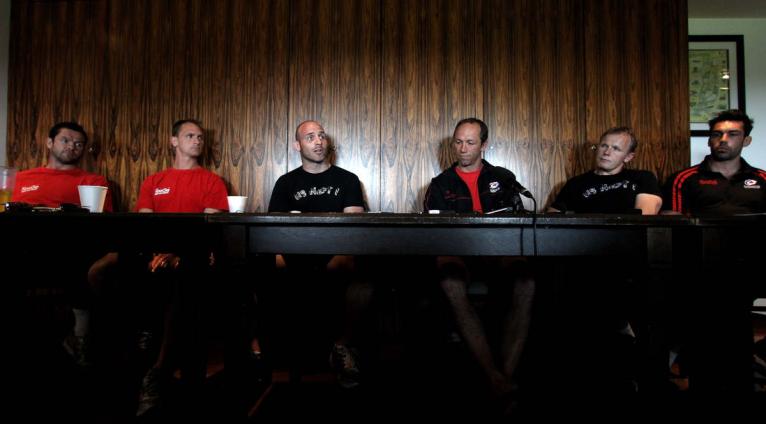
By dessert, the press event has become exactly what makes Venter such a compelling subject: an occasion that is difficult to categorise, and a conversation that refuses to follow an expected script. He may want to avoid the routine interview, but when he chooses to engage, he gives journalists and supporters something they crave. The question is whether rugby can make room for that kind of access alongside the less comfortable kind.
 Register your interest to receive priority updates on RWC27 ticket releases. Don't miss out, stay in the loop!


Comments
Join free and tell us what you really think!
Sign up for free