
George Ford’s charged down drop goal was a key moment in England’s loss to Scotland. I’ve seen lots of people criticising why he would attempt it at that stage of the game, but I think that if you take the hindsight of the outcome away, the decision was a sound one.
Relative to other current 10’s, Ford has a club and international drop-goal highlight reel that is unmatched and clearly, the drop goal has become a big part of Borthwick’s armoury. If you look at a lot of his big wins as coach, a drop goal has featured. You’ve got Freddie Burns (who replaced the injured Ford) for Leicester, at 12 all in the Gallagher Prem final in 2022. Then you’ve got Ford’s three against Argentina at the 2023 World Cup. As recently as last summer and the Autumn Series, you have his clutch drop goals against Argentina and New Zealand to keep the scoreboard ticking over.
So, to be clear, I don’t think George Ford was going off script, saying, ‘to hell with it, I fancy a drop goal’. Fordy is the most trusted general England have in terms of gameplan execution. Every coach he’s ever worked with loves him for his ability to go, ‘right this is what we’re doing’, even if it’s not the popular option, particularly with the crowd. Borthwick and Ford both have a similar mentality – statistically what’s our best chance to win from ‘X’ scenario. That’s why I thought it was the right decision but badly executed.
Let’s look at it forensically. It’s 53 minutes in and they’re only 11 points down. Yes, you can say, ‘you need more than just the three if they’re 11 points down’, and England were enjoying some rare match pressure, but during a game where England had been completely outplayed and were not taking scoring opportunities, with 12 entries into the red zone and a very poor conversion rate, what’s the plan? Big comebacks require you to shock the opposition. In essence, you’re trying to create dislocated expectations. You want the opposition thinking, ‘this is brilliant, we’re cruising home to victory’, but suddenly to start to feeling like they’re being reeled in and under pressure not to throw away such a dominant position. Scoreboard pressure on Saturday was the key because of Scotland’s quick start, where they raced into 15-0 lead, so England needed to chip away at that, even when Scotland weren’t doing anything wrong.
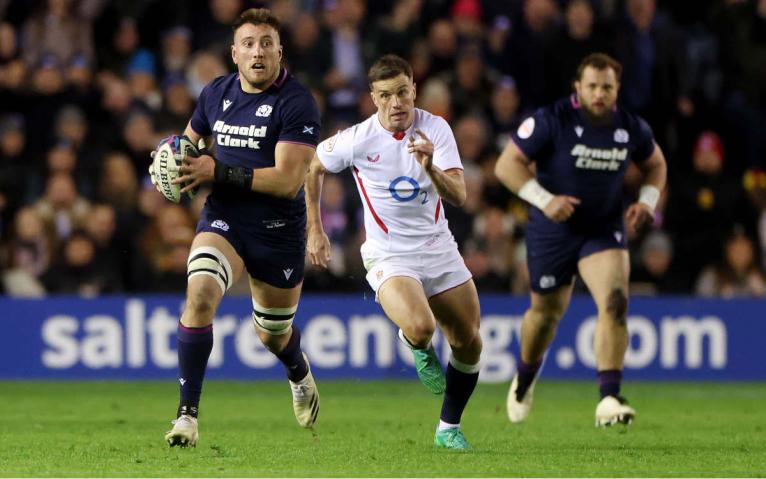
I’ll give you an example. I remember an interview between Jannie de Beer and Martin Johnson after South Africa had knocked England out of the 1999 World Cup. I know we’re going back to the dark ages, but de Beer launched the world record number of five drop goals in a game. De Beer said, ‘I sort of felt sorry for them, because you’re like three, six, nine, 12 points up without them doing anything wrong and they are powerless. And Johnno agreed. He said, ‘the team had felt helpless’, and it’s not often you hear the big man say that! The point is you want to change the narrative, particularly against this Scotland team, under massive psychological pressure not to surrender a lead after what happened to them against the All Blacks and especially Argentina in the Autumn.
I think the rationale was, ‘right, knock the three over, we’ll get back down the field, try and force another penalty, as we’re on top in the scrum. Then it’s a one score game. With his record, you couldn’t blame him for going for it. Amazingly, he had four international drop goals this year and only six penalties, which is incredible from where we were at with a scarcity of drop-goals versus penalty kicks a few years ago.
Once a team stops playing and starts trying not to make mistakes, particularly if they’re psychologically fragile, you affect the defender’s awareness, because next time you’re in the opposition 22 and they’ll be trying to cover that drop goal threat and potentially offering opportunities out wide. What the chasing team has to do is try and change the feel of the game for both sides. A drop goal is still a bit of a rarity, so it provides a jolt to the norm. The problem England had is they completely cocked up their set-up.
So, the question for Borthwick ahead of a World Cup, rather than shying away, is let’s make sure that the set up is perfect every time to give the kicker the best possible chance.
In 2003 Clive (Woodward) used to make us run though our drop goal routine at the end of every session and we were bored silly of it. We’d say to him. ‘Come on Clive, not again,’ and he’d say, ‘In a World Cup final, it might come down to it’ and we were like ‘yeah, yeah, yeah’. And we all know what happened next…
To set up the perfect drop goal, you need everyone playing as though you’re not going for a drop goal, pressurising defenders so they have more on their mind than a charge down. You need the element of disguise. If you look at England on Saturday, they had three forwards on either side of the posts all standing a little passively and looking like they’re not a genuine threat, so by reading body language, Matt Fagerson is not worried about them. He’s seen Ford drop back into the pocket and knows he has to get to him, but the ball comes out too early for Ford from Mitchell. If he has enough distance between him and the onrushing defence, even if the pass isn’t perfect, he’s got time to adjust. On Saturday, if you looked closely at the pass, it’s slightly up towards his left shoulder, so he has to reorientate. Every drop goal specialist that you speak to says your weight has to be over the top of the ball and put your weight through it. When Ford receives the ball he is still backtracking into position which means he has to take time to change the direction of his momentum.
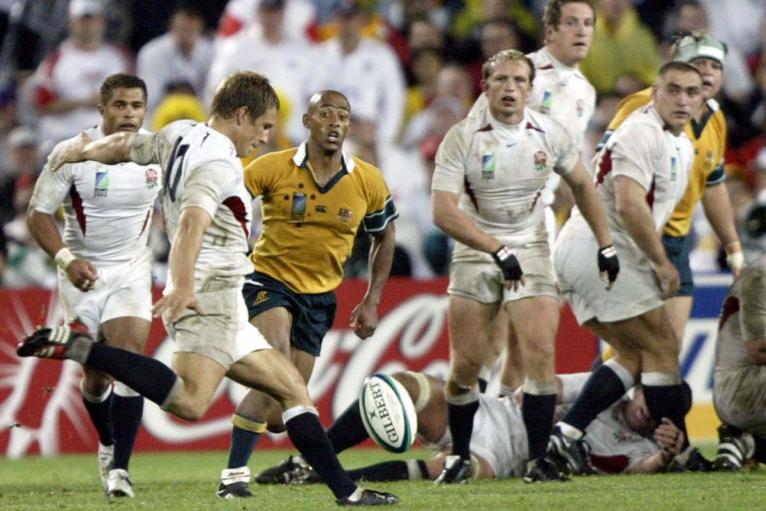
If any one of those elements had been better executed, Ford might have nailed that, but the optics were awful because it looks like he’s just rushed it and been charged down.
Interestingly, in 2003, Jonny (Wilkinson) and Daws (Matt Dawson) had a secret call for when Jonny was ready that none of the rest of the team knew, the idea being that if we knew when the drop goal was coming during the routine the forwards might switch off and stop being a threat to the opposition.
On scoreboard pressure, Dan Biggar, who I think is a brilliant pundit, said he thought it was the wrong decision post-match, but I’d say, just having something tangible to show for the momentum England had and starting to shift the scoreboard is vital. Another turnover with no points ion the board would have fed Scotland and the Murrayfield fans.
England have often been criticised for not having a Plan B during game, but I felt they did on this occasion. I’m sure Ford and Borthwick at half-time would have been saying, ‘it’s gone disastrously so far, but let’s put it behind us. We’ll get down there, we’ll get points on the board, ramp up that scoreboard pressure and win the game’. Obviously, the charge down was a 10-point swing so the game ends there. It’s easily fixable, but clearly, it’s not a mistake they can’t afford to make again.
England’s attacking selection
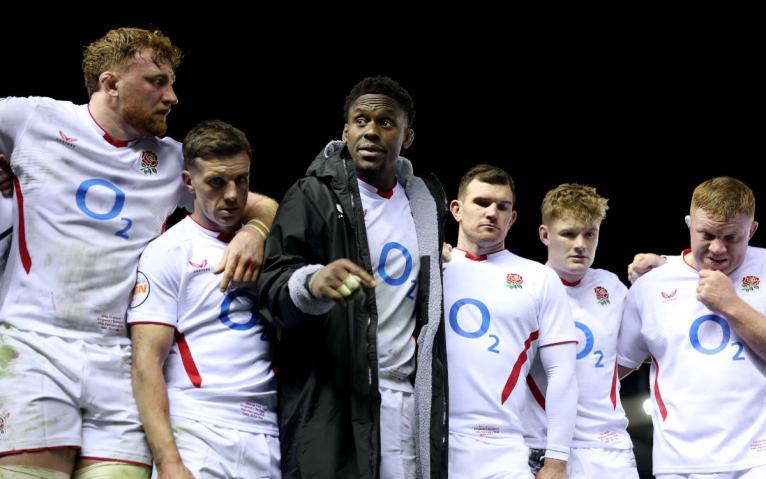
I’m glad Borthwick hasn’t made too many unforced changes. He’s backed the majority of that team to play their way out of this blip. Personally, I’d have no problem picking Finn Smith to start for England but with a 6-2 bench, Marcus Smith almost seems like he’s the perfect fit for the No 23 shirt because he can come on and mix things up a bit. The one thing I’d put out there is, do England have enough other on-field leaders or is Ford almost too dominant? Maro is never going to be a real shouter of a captain, that’s why they seem to put so much stead into naming their vice-captains and in those dressing room shots, you can hear Gengey or Jamie George doing the motivational stuff, but on the field, do they have the people who can grab the game by the scruff of the neck when it is getting away from them? That is why Ford is so fundamental to Borthwick because he is the one who will say, ‘right, this is what we change and how we’re going to recover’.
In the backrow, Guy Pepper has had a brilliant start to his England career, but he didn’t have his best game up in Murrayfield and Underhill is a bit more defensive. At home, I can see why they’ve gone with Tom Curry and Henry Pollock. They want to get off on the front foot and punish Ireland. You understand those changes with the level of competition and resource England have in the back row.
Are Ireland wobbling?
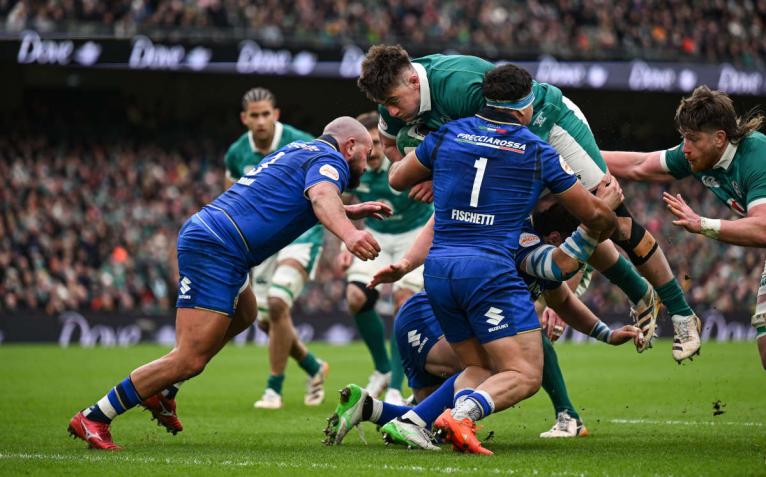
I was out in Dublin and there’s a feeling Ireland are teetering. If they’d lost to Italy there would have been a massive uproar, but that in itself shouldn’t be an embarrassment, Italy are developing into one of the stronger Six Nations teams with plenty of injured stars still to return. The concern is the areas people have started to question since the 2023 World Cup. At the scrum, Italy really went for them and had a lot of success. I think Ireland picked a bigger pack to counteract Italian power but still couldn’t cope and that weakness spread to ball-carrying around the field and tackle dominance. I also think England will look at how Ireland play and try and accentuate massive pressure on the No 10 because the ongoing discussions around who is Sexton’s successor only heaps more pressure on whoever starts for them.
Ireland are still a massive danger to England because they’ve got that muscle memory of being a World No 1 team and winning at Twickenham. If it clicks in a game, they can still deliver but I think their problem is momentum. For the past four or five years, they’ve been used to dominating teams and suddenly it’s not like that. They might just feel they have a bit of pain to go through to sort out all their problems.
While England lost – and progress is never linear – I think they’ll still feel like they’re on the way up rather than trying to arrest a slide. We lost plenty of games on the way to 2003, and only won the Grand Slam in 2003. I don’t think this England team is on the same part of their development curve as we were in 2002 but you could say that we’d probably peaked by the start of the tournament and were flatlining, whereas I think this vintage will hope they’re getting better until right up until the tournament. If they’d won up in Scotland after a George Ford drop goal, the narrative would have been, ‘that’s the sign of a champion team and how far they’ve come’, because they’ve just had their worst game and been outplayed, and they’ve still found a way to win. If they can build resilience from the scars of Saturday, that blip may turn out to be a blessing in disguise.

Plot your team's route to the Six Nations title with our Six Nations score predictor game!


I don’t say this often - but I actually enjoyed reading that. Ben Kay is okay in my books.
I think he’s spot on. It was the right call in the moment to go for a dropgoal.
I’ll admit I didn’t think so at the time, while I choked on my Doritos, calling him a clown. But we learn.
I think there are two points to consider within this one argument, firstly the decision was probably the right one (so Ben Kay is correct) but secondly, the organisation and execution was poor, which needed to be better from Ford.
ENG struggled throughout that match, they were on the back foot but they were edging their way back into the game. The one thing that was poor all game was their composure and patience in the key moments and the drop goal was no different, it was all a bit rushed and ended with poor execution.
They had carried to the right part of the field, they had lost their shape but they weren’t organised and it needed one more carry, Ford needed to be better positioned and they needed to take away the SCO defenders - do those things better and it’s probably a different end result.
However, Fagerson is literally waiting for the drop goal and gets out of his blocks far quicker than Ford. Not only is Fagerson aware but so are the other SCO players and their reaction was so much better than ENG, which ends up changing the game.
ENG should have done better and they will know it. I think it’s also fair to ask why ENG waited so long for the replacements when fatigue was clearly evident having played for 14 men for so long.