
“I learned to move out of the way”. If you talk to him now, that is how Sir Graham Henry describes one of the critical turning points of his rugby coaching career. He started as a highly-successful coaching autocrat with the Auckland Blues and Wales, but he transformed himself into one of the first great coaching democrats with the All Blacks from 2004 onwards. He learned the art of delegation, trusted the coaching team around him to do the work; above all he empowered the players to make their own decisions on and off the field.
NEW: Follow Your favourites in the App 📱
You can now follow their favourite teams, tournaments and players in the RugbyPass App!
“Great leaders create more leaders, not followers” and they do it by moving out of the way; by directing, and redirecting energy in the collective. They do not try to do it all themselves. They build relationships and linkages between people far more than they issue orders and commands to them. They ask the right questions rather than dictate all the answers, and give players the power to resolve problems as they arise in real time out on the pitch.
It is why players are becoming ever more important in the process of analysis and game forecasting. As long-time England coaching guru and mentor Brian Ashton commented on the TGG Podcast:
“Coaches can learn from players as well as players learning from coaches. They’ve got a different perspective on things, they see the game in a different way out on the field than you do, stood on the touchline or sat in the stand.
“They very often pick up on cues and emotions in the middle of a game that you just don’t feel. It’s really important to engage and listen to what they’ve got to say.”
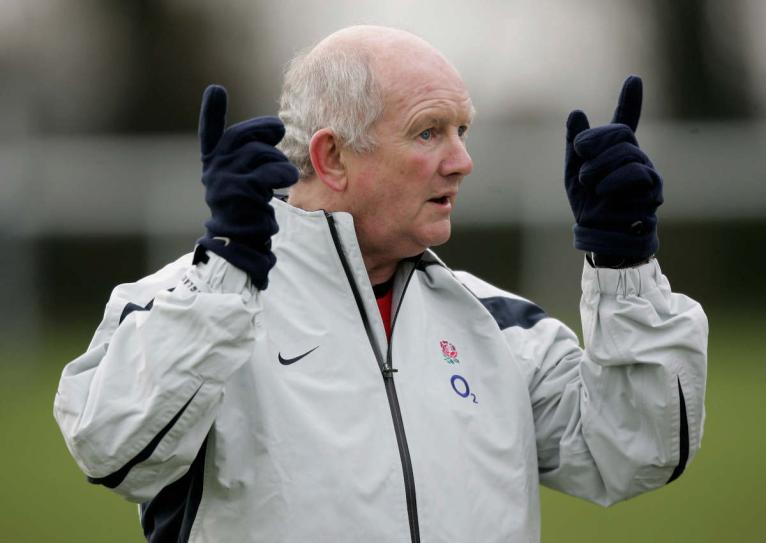
The X’s and O’s seen from a privileged perch up in the coach’s eyrie on high look very different to the high-intensity traffic chaos, the minute-to-minute car crashes players experience all around them on the field. When you can combine the two elements together, the outcome is ‘foresight analysis’, rather than the kind of hindsight analysis which has become so prevalent on social media.
As England No.10 George Ford phrased it so eloquently, “You come in on a Monday morning to the meeting and get bombarded, ‘Why didn’t we do this? We should have done this.’ And it’s like, ‘Thanks, we’ll learn the lesson, but we could have done with that in the middle of the game.’”
It is one reason why blue-sky concepts like ‘Tactical Periodization’ have gained currency in rugby coaching. Instead of doing laps of the field to gain fitness in isolation, strength and conditioning goals are fully integrated into training sessions with a specific tactical aim. You accumulate fitness within the context of the situations you expect to face out on the field, and physical strain is joined up with cognitive load. As Eddie Jones explained during his England tenure, “Every day we train a specific parameter of the game. We don’t do any extra fitness. It’s all done within those training sessions.”
Jones’ England career began with a bang back in 2016, with the Australian mastermind winning all of his first 17 matches in charge and 24 of the first 25 games. One of the areas which particularly benefited from his training methods was the last 20-30 minutes of the game, and this is the time when the tactically-periodized cream rises to the top. The best teams step up and the best players take control of proceedings when the intensity is white-hot and the chaos is complete.
The last quarter was the key factor in two semi-finals last weekend, one south of the equator and one in the north. Up north, Bath Rugby started with a bang at the beginning of their Prem semi-final, leading 26-10 at oranges against the Exeter Chiefs. It was a handy lead and it should have been enough to propel the league champions into a third consecutive Prem final, but the blue-black-and-whites finished with a whimper after conceding 17 unanswered points in the second half.
Baxter and his cohorts had clearly identified that Du Toit could be attacked in the dying embers of an overlong stint.
Bath were after all, the class-leader in points scored and conceded in the final quarter, with a massive +97 points differential in the course of the regular season, two places above Exeter on +62 points. Johann van Graan would have been expecting his charges to close the game out, but Rob Baxter and his henchmen were perfectly ‘periodized’ to prevent that outcome.
In their pre-game prep, they would probably have noticed that Bath were at their most effective when South African man-mountain Thomas du Toit could be launched down the runway for 30 minutes of intensive scrum action at the finish of games. Up until round 15 of the competition, Du Toit had started three games but come off the bench in nine others.
But over the final three rounds ‘The Tank’ had started, and he stayed on the field for anywhere between one hour and 75 minutes. Although Bath beat Newcastle comfortably in round 16, they lost to West Country neighbours Bristol in the next round and edged home in a nailbiter, 24-22, against Leicester Tigers in round 18. With Du Toit starting in those last two games, their opponents won the final quarter cumulatively by 12 points to nil.
Baxter and his cohorts had clearly identified that Du Toit could be attacked in the dying embers of an overlong stint. With the two starting front rows on the field, he was at his Springbok-supreme best, winning two penalties at scrum-time over ex-Wallaby Scott Sio. But his own nemesis arrived off the pine in the 44th minute, ironically enough in the form of South African duo Joseph Dweba at hooker and 140-kilo Ethan Burger at loose-head prop.
With those two on the field, Exeter took control of the set-piece in particular and the game in general, winning the second period 17-0 and milking three penalties out of a tiring Du Toit along the way:
— William Bishop (@RPvids1994) June 15, 2026
TNT Sports analyst, and ex-Bath and England loosehead David Flatman, was standing less than 20 metres from the scrum, and he foresaw the big issues to come:
“Bath were doing what they were doing in the first half – really trying to explode with that second shunt. But there were no guts in it. It all looked right, the body-shapes were right, but Ethan Burger absorbed [the pressure], went back at Du Toit and really got an edge. If that ball had stayed in another couple of seconds, that would have been a Chiefs penalty.”
The ‘Flats’ judgement was prophetic:
— William Bishop (@RPvids1994) June 15, 2026
— William Bishop (@RPvids1994) June 15, 2026
On the other side of the equator, the Hurricanes were winning the final half-hour of their semi-final by 26 points to seven to put the result of their Super Rugby Pacific semi-final against Vern Cotter’s Blues beyond any reasonable doubt. It was confirmation of their excellence during the regular season, where they finished with a +60 points differential in the final quarter, a goodly 21 points more than the next best team in the league.
The key moment arrived when Ruben Love left the field in the 51st minute, and Jordie Barrett grabbed the game by the scruff of its neck:
— William Bishop (@RPvids1994) June 15, 2026
— William Bishop (@RPvids1994) June 15, 2026
— William Bishop (@RPvids1994) June 15, 2026
Although No.15 Callum Harkin nominally took over the reins from Ruben Love at first five-eighth, make no mistake – it was Jordie pulling the strings on attack and defence. Whether it was ghosting up in rush D to force handling errors from the Blues midfield, or pinpointing cross-kicks to the far edge, or overcalling for the ball when spotting opportunities down the skinniest of short-sides, Jordie was ‘the man’, changing the complexion of the game at a key moment.
If Rob Baxter and Clark Laidlaw go on to win the Prem and Super Rugby Pacific titles with their clubs, it will be because they have successfully moved out of the way and empowered their charges to win the games that count.
Rugby coaching is becoming more holistic. Long gone are the days where the head coach’s word was unimpeachable law, and all dissenters were bawled out with Gordon Ramsay-like levels of verbal invective. No more hairdryer treatment. Now the emphasis is on inclusiveness, with coaches and players working together and the latter empowered to make changes ‘on the hoof’ and in the heat of the action. It is but a short step to ‘foresight analysis’, yoking together the best insights of coach and player; and tactical periodization, which mimics the pressure on both physical and mental fitness at every stage of the game.
No aspect of rugby has changed more than the use of the bench and the attitude towards the last 20 minutes of play, which is now seen as a ‘game within a game’. New players, new energy-in-motion. That is where both Exeter Chiefs and the Hurricanes won their semi-final matches at the weekend, north and south of the equator.
If Rob Baxter and Clark Laidlaw go on to win the Prem and Super Rugby Pacific titles with their clubs this Saturday, it will be because they have successfully moved out of the way and empowered their charges to win the games that count.
As Hurricanes’ supremo Laidlaw observed of Barrett, his chief on-field coach: “Jordie’s ability to keep talking, keep putting other people in position, is genuinely world class. He’s an outstanding rugby player. We missed him last year. You can feel the difference, can’t you? – off the ball.”
Meanwhile, the Exeter Chiefs advance to their own grand final one year after finishing ninth in the league and shipping 79 points at Kingsholm. Baxter nods imperceptibly in acknowledgement: “They are the same players, but they’re different men.”

Watch Super Rugby Pacific live and free on RugbyPassTV in the USA!


Haha
You were just describing this as the way coaching used to be done.
It’s going to be the death of the armchair critic if everything they say is going to be countered “but you weren’t one the field so you don’t know what you saw”!