
It’s possible everyone in New Zealand is continuing to ask a question to which they already have the answer. Three games into his All Blacks tenure as head coach and the nation feels it still doesn’t know what style of rugby Scott Robertson wants his team to employ.
The All Blacks have beaten England twice and Fiji, and in doing so provided evidence they have a formidable scrum, game-breaking talent in Beauden Barrett and Ardie Savea, and a promising generation of youngsters coming through. According to sections of the Kiwi public and media, this has been achieved without establishing a clear sense of stylistic identity.
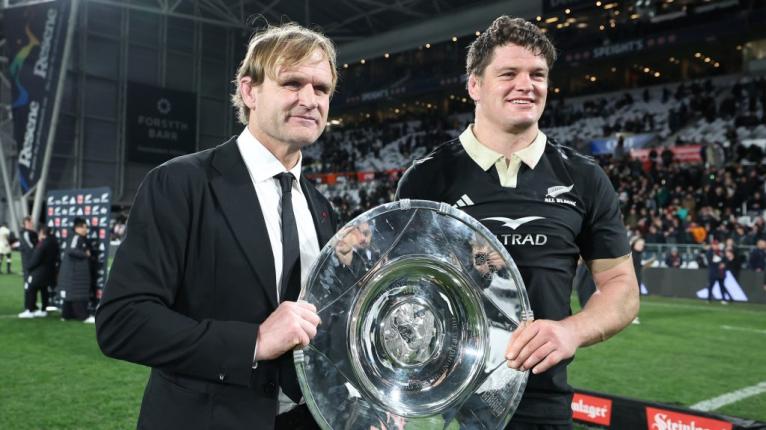
But everyone may have missed the point. Robertson is not going to build an All Blacks team wedded to one particular style of playing, but instead, his vision is to develop enough strategic flexibility in the system to adapt to any opponent and any conditions.
He’s said as much already – in a season in which the All Blacks will play 14 Tests in nine different countries and an inevitable variety of weather conditions, his team will need to be prepared to change things up tactically week to week.
He hasn’t been explicit about this bit, but historically this inability to adapt to the sort of defensive and set-piece pressure teams such as South Africa, Ireland, England and France have been able to exert, has been the All Blacks’ achilles heel.
The perpetual failing of the All Blacks has been their inability to adapt their approach when plan A hasn’t worked, and if Robertson has one overriding goal, it is to become the coach who set up his team with workable alternative game plans.
Under previous coaching regimes, the All Blacks have perhaps been too wedded to playing up-tempo, ball-in-hand rugby where the attack game is all about generating width.
When it comes off it is deadly, but too often in the last decade, the All Blacks were susceptible to being stifled by the rush defence systems favoured by their main rivals and the pressure these teams could exert through relatively low-risk, kick-based rugby.
The perpetual failing of the All Blacks has been their inability to adapt their approach when plan A hasn’t worked, and if Robertson has one overriding goal, it is to become the coach who set up his team with workable alternative game plans.
Already, we have seen how the strategy adopted in the Auckland winter against England, evolved when the team flew to play Fiji in the Californian sun seven days later.
Three wins in three games against two vastly different opponents would say that Robertson is on track towards building the flexibility he wants, but the Rugby Championship will ask a whole new series of questions about the All Blacks and the tests against England and Fiji highlighted the need for a few personnel changes to be made if the victories are to keep coming.
Robertson may only just have his feet under the desk, but his first three Tests have delivered strong evidence he needs to be bold enough to make a few major selection calls and ease big names out or into different roles.
Coming into the series against England, it was apparent Robertson was worried about his lack of experience at half-back, hence the decision to start veteran TJ Perenara and put Finlay Christie, the next most experienced number nine, on the bench.
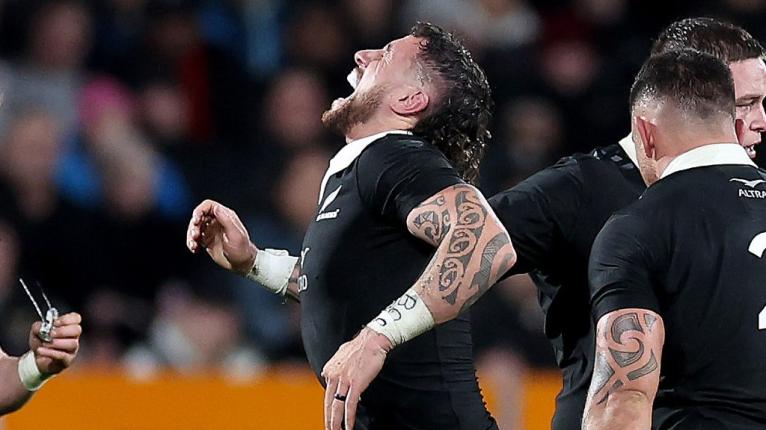
But the picture has changed dramatically since that first selection was made and the previously uncapped Cortez Ratima has reshaped the pecking order after playing superbly in two short bursts – off the bench at Eden Park and then as a starter against Fiji.
If the main priority is to build different tactical elements to the gameplan, then Ratima is the man in whom Robertson needs to trust and promote.
What Ratima brings that neither Perenara nor Christie do, is an ability to play a high-tempo game. When he came on against England, his speed to the breakdown, clarity of thinking once he got there and precise execution changed the game.
England’s defence lost some of its sting because the All Blacks were moving the point of attack too quickly and there is a sense Perenara and Christie both like to deliberate with their decision-making which shuts off the number of available options as a result.
The other advantage to starting Ratima is it pairs him with his Chiefs 10 Damian McKenzie, who has established he is going to be Robertson’s preferred playmaker.
He’s owned the 10 jersey, and owned the team. He asked and demanded more of others.
McKenzie became more comfortable in the jersey the more he played in it, and while his strategic kicking is a definite work-on, Robertson made it clear he was happy with what he saw.
“He’s owned the 10 jersey, and owned the team,” said the coach. “He asked and demanded more of others.
“Obviously there’s parts of the game where he can grow – as we all can. But he’s started to own that jersey, and that’s what we’ve asked of him.”
A commitment to playing McKenzie at 10 means there has to be a similar commitment to starting with Beauden Barrett at full-back to shore up the tactical kicking options, give a stronger decision-making presence in the backfield and provide the team with a second play-maker.
Again, if the quest is for flexibility, picking Barrett at full-back is the way to get it as he showed defences can be broken by intelligent kicking, well-angled intrusions into the attack line and astute timing of the pass.
There will be a media and public campaign to bring in the returning Will Jordan in the number 15 jersey, but his limited kicking game and inexperience operating as a first receiver, immediately cuts down the variety of ways in which the All Blacks can play.
If they put him on the wing, however, it’s another big win for variety as Jordan showed last year he can be a useful retriever of contestable kicks and, most significantly, he’s the master at coming off his flank in unexpected places and catching defences cold.
But the biggest change Robertson is going to have to consider is whether to install Billy Proctor as his first-choice centre ahead of Rieko Ioane. Proctor made a high-impact debut in San Diego where he showed the full array of his skillset – particularly his ability to pass under pressure and exploit space.
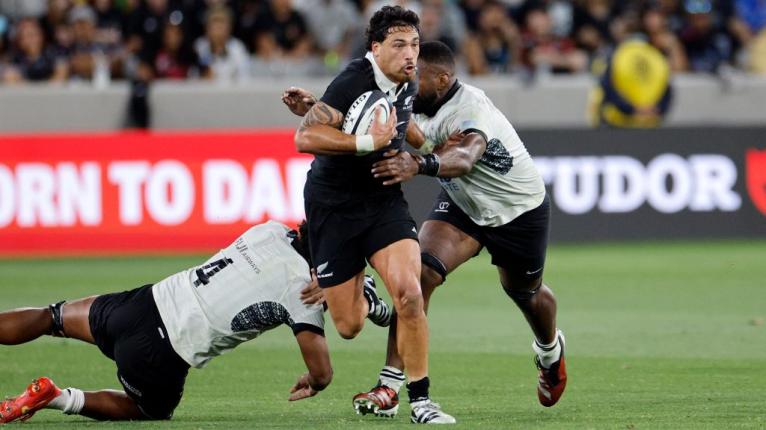
He gave the All Blacks attack the width it didn’t have against England, which may be partly because Fiji didn’t operate the same effective rush defence and Proctor had more time to play than Ioane ever did in the first two Tests.
But Ioane has never been a renowned distributor and against England he twice failed to pass when there were chances to exploit. He plays in the midfield with his head down and a default desire to beat players himself.
Sometimes his strength and pace get the job done, but seeing Proctor play with his head up, his hands out and his brain switched on to assess the options, provided a real sense the All Blacks attack may have been limited against England because Ioane’s own toolkit is limited.
Ioane needn’t be cast to the wind if he’s ousted from his preferred centre role as he remains a viable option to start on the wing, and again, using him in either the number 14 or 11 jersey is another ingredient to add to the strategic melting point.
Ioane is a different wing in style to Jordan, Mark Tele’a, Sevu Reece and Caleb Clarke, and his experience playing at centre opens various possibilities in how he can be used in strike moves and phase play. His height and size also give the All Blacks the sort of defensive presence they need to make them less vulnerable to cross-kicks having conceded three tries so far this year to that particular tactic.
It would be a big call by Robertson to shift Ioane, who set out to establish himself as the All Blacks first choice centre after the 2019 World Cup and managed to do so by the end of 2021, but it feels like be the right call.


Comments
Join free and tell us what you really think!
Sign up for free